Lapka
Where to start
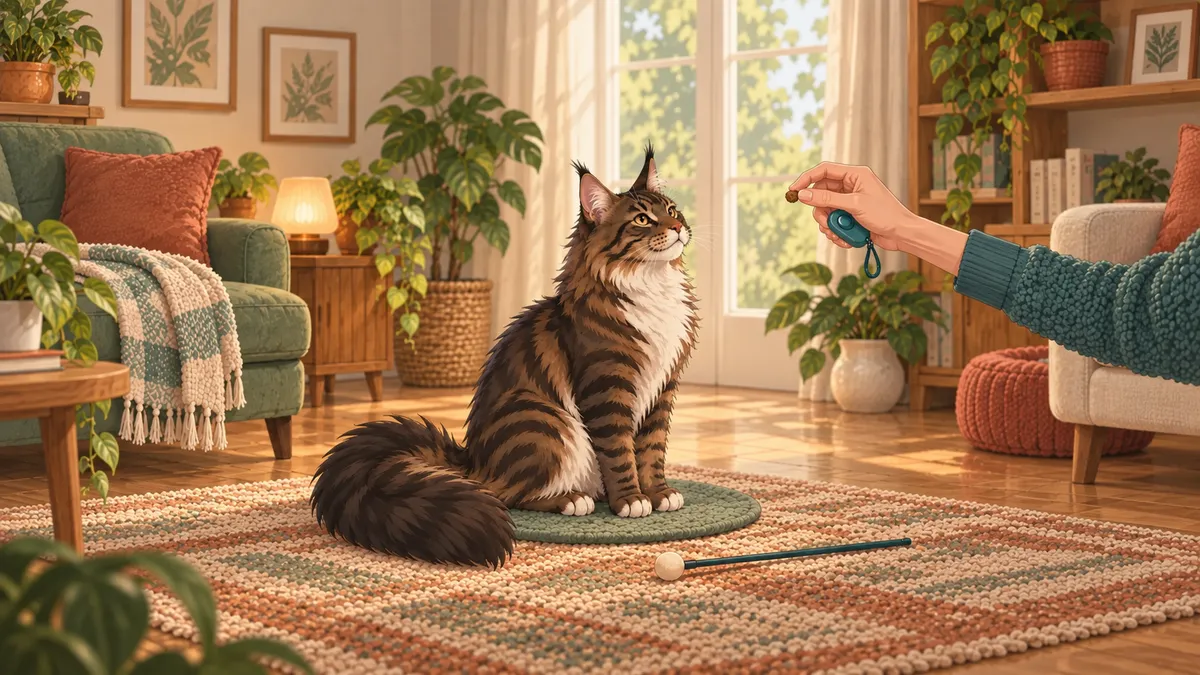
Yes, you can teach a cat to sit. Hold a treat one to two centimetres from your cat’s nose, raise it slowly, then move it a little back towards their tail. The moment their bottom touches the floor, say “yes” and give the treat. Keep sessions to three minutes at most, swap the treat for a hand signal, then add a cue word. Never press your cat into a sit.
Yes, cats can learn to sit on command
People often assume cats can’t learn commands the way dogs do. Cats Protection, the UK cat charity, has a step-by-step method for exactly this, with treats, a marker word and three-minute sessions.
A sit is handy in everyday life too. Cats Protection suggests it for getting your cat used to grooming and handling, and for keeping them still while you get their dinner ready.
What you need before you start
A quiet room with no distractions, and a time when your cat is relaxed but awake. If you’d be leaning over your cat, sit or kneel instead. Some cats prefer it.
Small, tasty treats that are quick to eat and don’t need much chewing. Set aside a small portion and stop the session when it runs out. Then give a little less of their usual food that day.
Battersea suggests keeping the treats hidden in your pocket rather than in an obvious packet.
Pick a marker: a word or a clicker
A marker tells your cat “that’s it” at the exact moment they get it right, and the treat follows straight after. Cats Protection’s sit method uses the word “yes”. Battersea suggests a word such as “good”, said in an upbeat but calm way. Once your cat links the word with food, it gives you a few more seconds to get the treat ready.
A clicker works the same way. Teach it first: click, give a treat immediately, and repeat until your cat expects food when they hear it. Click exactly as the behaviour is happening. If the sound startles your cat, click inside your pocket or behind a cushion, or use a distinct word instead.
Step by step: lure your cat into a sit
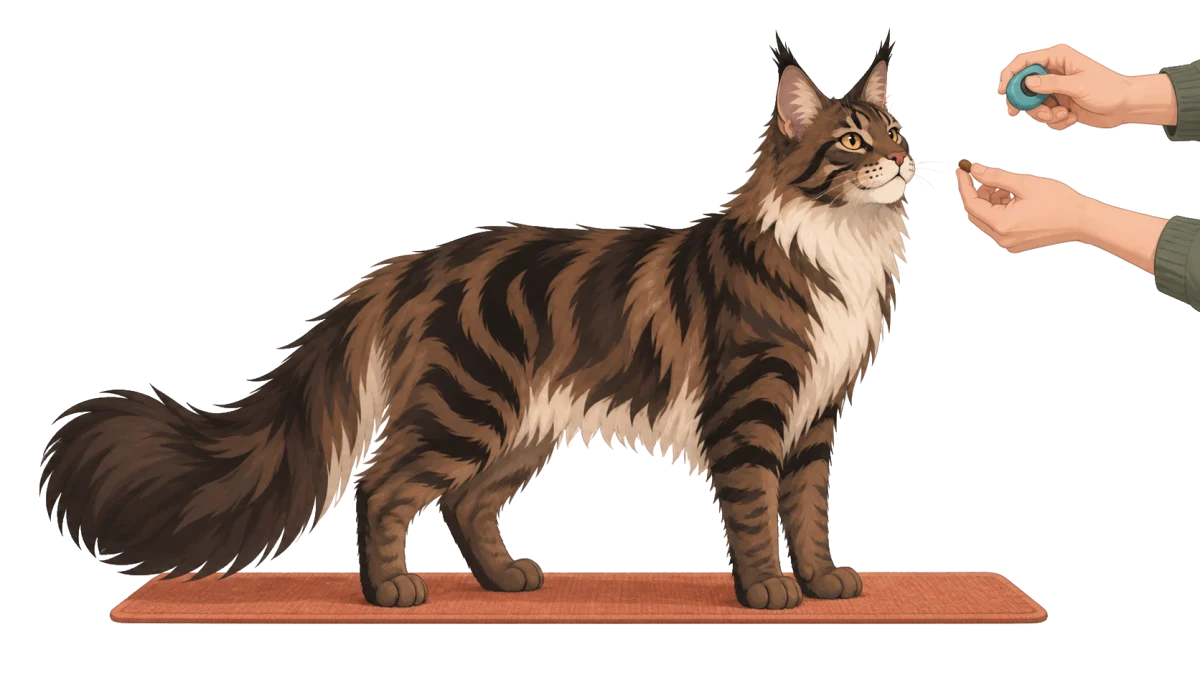
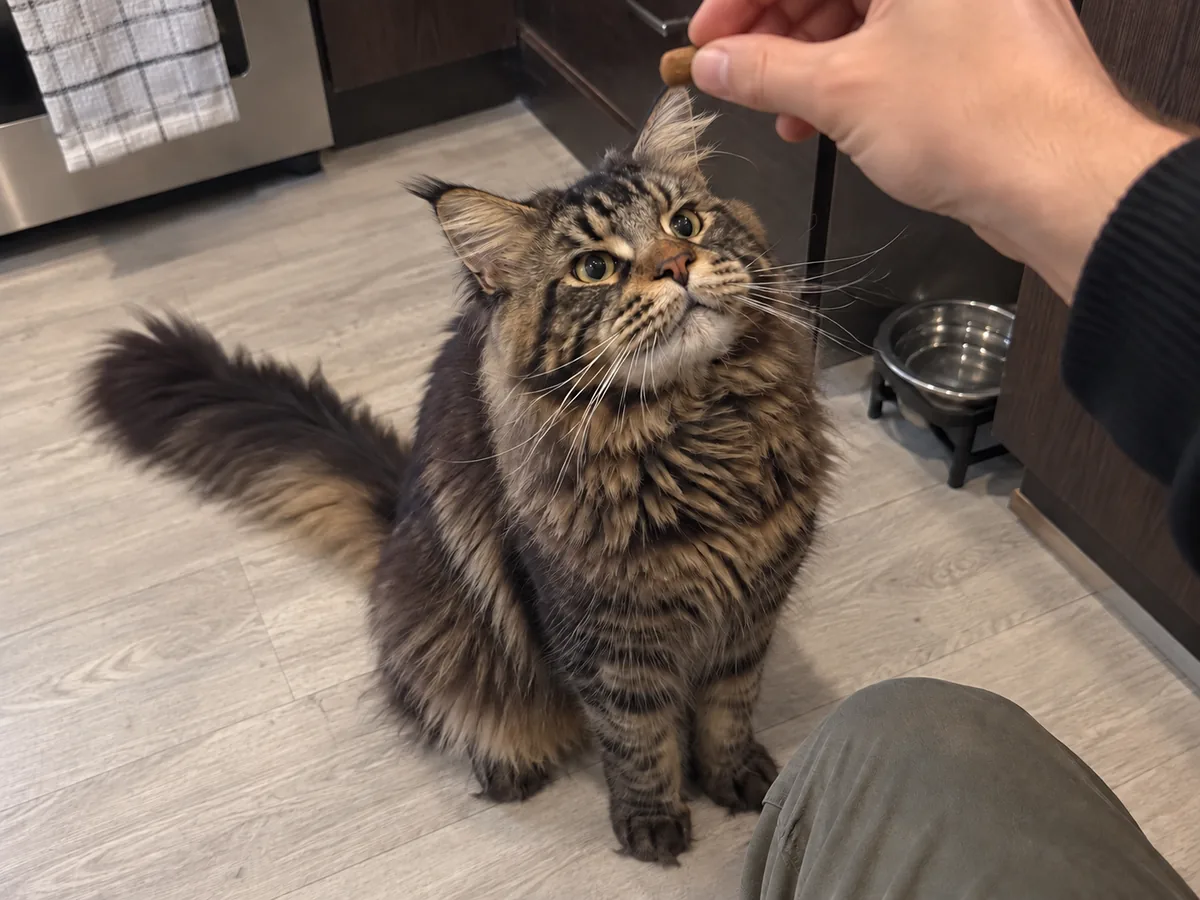
Hold a treat between the tip of your index finger and your thumb, palm facing up, one to two centimetres from your cat’s nose.
Slowly lift it so your cat follows it with their eyes. Once it’s about five centimetres up, move it slowly a few centimetres back towards their tail. Your cat should settle into a sit. If they don’t sit straight away, hold the treat still for a moment.
As soon as their bottom is on the floor, say “yes” (or click) and give the treat. Then reset: toss a treat a short distance so your cat gets up to fetch it, or give the treat and move yourself so they stand. Repeat a couple of times.
Never push your cat’s bottom down. Cats Protection warns that forcing a cat into a seated position stresses them and could lead to behavioural or medical problems.
Keep sessions to three minutes
Cats Protection suggests three minutes at most per session, three sessions a day, with a break in between. Stop sooner if your cat has had enough. They should always have the choice to walk away.
If you feel yourself getting frustrated, take a break and come back to it later. Don’t punish your cat for getting it wrong: Battersea says punishment won’t help with training and may have the opposite effect.
Add a hand signal, then fade the lure
When your cat sits every time you lure them, turn the movement into a signal: show your hand, then flick your wrist upwards. Keep marking and rewarding every sit.
Next, take the treat out of the signalling hand. Put your hand into the treat bag or bowl without taking anything out, give the signal, and still reward the sit. Then drop the pretend grab altogether: signal, sit, “yes”, treat.
If your cat stops following the empty hand, go back a step.
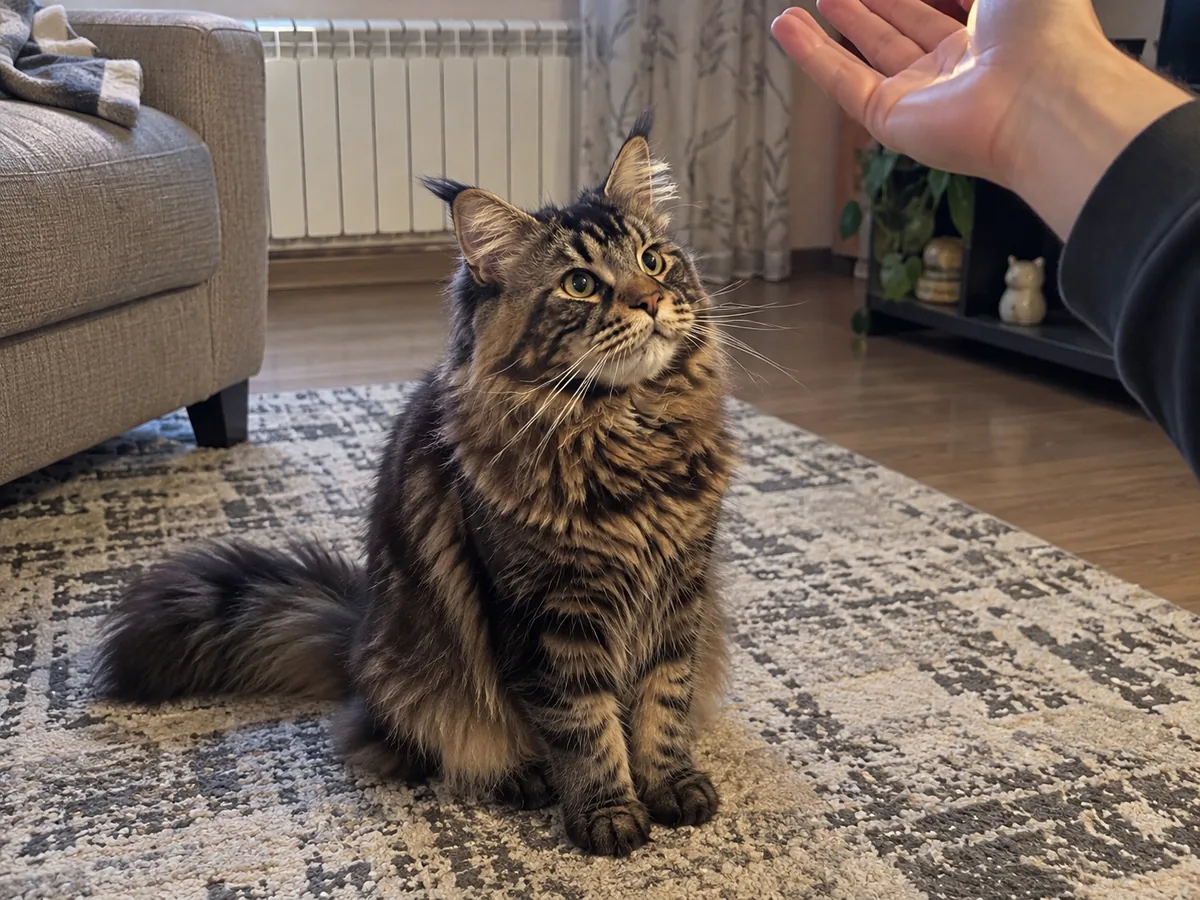
Add the cue word
Once the hand signal works, say your cue word one second before you give it. Any word will do, because your cat responds to the sound, not the meaning. Cats Protection’s examples are “sit”, “flamingo” and “banana”.
After several repeats your cat will start sitting when they hear the word, before your hand moves. Cats Protection’s method aims for a sit on the word within seven days, and says some cats take longer than others.
If your cat stands up or walks off
If your cat stands on their back legs or reaches for the treat with a paw, go back to Cats Protection’s numbers. Start one to two centimetres from the nose, raise it by only about five, then move it back towards the tail.
Reward only a full sit, bottom on the floor. In a study of 100 shelter cats, many came quite close to the floor without touching it, and the researchers didn’t count that as a sit.
If your cat walks off, let them go and end the session there. Try again later, when they’re relaxed but awake.
If your cat bites or grabs your hand
Some cats get so excited about treats that they grab at the hand holding them. Battersea’s advice for a cat like this is to stop feeding treats from your hand: put them on the floor near you, or throw them a little distance away.
Use treats that are quick to eat and don’t need much chewing, and keep the session short.
If your cat isn’t food-motivated
Battersea says food is usually the best way to motivate a cat, so first try a different treat. Cats Protection suggests one your cat loves and finds irresistible.
Food isn’t the only reward. When researchers offered pet and shelter cats a choice of food, toys, scents and time with a person, most cats preferred the person, and food came second. In the shelter training study, the few cats who stayed uninterested in food but enjoyed being stroked were rewarded with stroking instead.
Whatever you use, Cats Protection says you always need to reward your cat in some way.
Which cats can learn to sit, and at what age
Cats Protection says cats can be clicker trained at any age, and that temperament matters more than age. Younger cats may pick it up more quickly. Nervous, shy and anxious cats may struggle, and so might older or unwell cats.
A 2017 study shows how long it can take. One hundred shelter cats, aged six months to 12 years, had 15 five-minute clicker sessions over two weeks. Their sitting improved, but only 27% mastered a full sit within two seconds of the cue. Counting the cats who came close, it was 59%. Age and sex made no difference, and the bolder cats gained more.
Cats Protection says clicker training can take anywhere from a few days to a few months.
Miso’s first week of sit
Monday. Treat at his nose, up and back. He stood on his back legs twice, so I lowered my hand. Third go he sat: “yes”, treat. Three minutes, six treats.
Thursday. Empty hand, flick of the wrist: four sits out of five. The fifth time he went to the window, so we stopped.
A line on what went wrong, like a hand held too high, shows which step to go back to.
When it does not go to plan
Can you teach a cat to sit?
Yes. Most cats can learn to sit on cue with treats, a marker word and a few three-minute sessions a day. Some take longer than others, and nervous, older or unwell cats may struggle. Never press your cat into position.
How do I teach my cat to sit and stay?
Wait until your cat sits reliably on the word. Then, as Cats Protection suggests, ask for the sit while standing a little further away, or encourage your cat to stay sitting a little longer. Change one thing at a time.
Can I teach a kitten to sit?
Battersea recommends starting training young if you can, and Cats Protection says younger cats may learn more quickly. The 2017 shelter study took cats from six months old. Our guide to training a kitten covers the other first cues, such as their name and coming when called.
My cat used to sit for treats and now won’t. Why?
First check what has changed: a new treat, a noisy room, a different time of day. If your cat also seems stiff after resting, hides more, is reluctant to jump down from furniture or crouches hunched with squinty eyes, take them to the vet for a health check. Cats Protection says cats are particularly good at hiding pain.
How do I get my cat to sit on my lap?
That’s a different job from sitting on cue, because your cat has to choose your lap. We cover it in How to get your cat to like you (and sit on your lap).
Sources and further reading
- Cats Protection — How to train your cat to sit on command
- Cats Protection — Tips for clicker training your cat
- Cats Protection — Signs of pain
- Battersea — Cat training
- Animals — Assessment of clicker training for shelter cats (Kogan, Kolus and Schoenfeld-Tacher, 2017)
- Behavioural Processes — Social interaction, food, scent or toys? Pet and shelter cat preferences (Vitale Shreve, Mehrkam and Udell, 2017)