Lapka
Lapka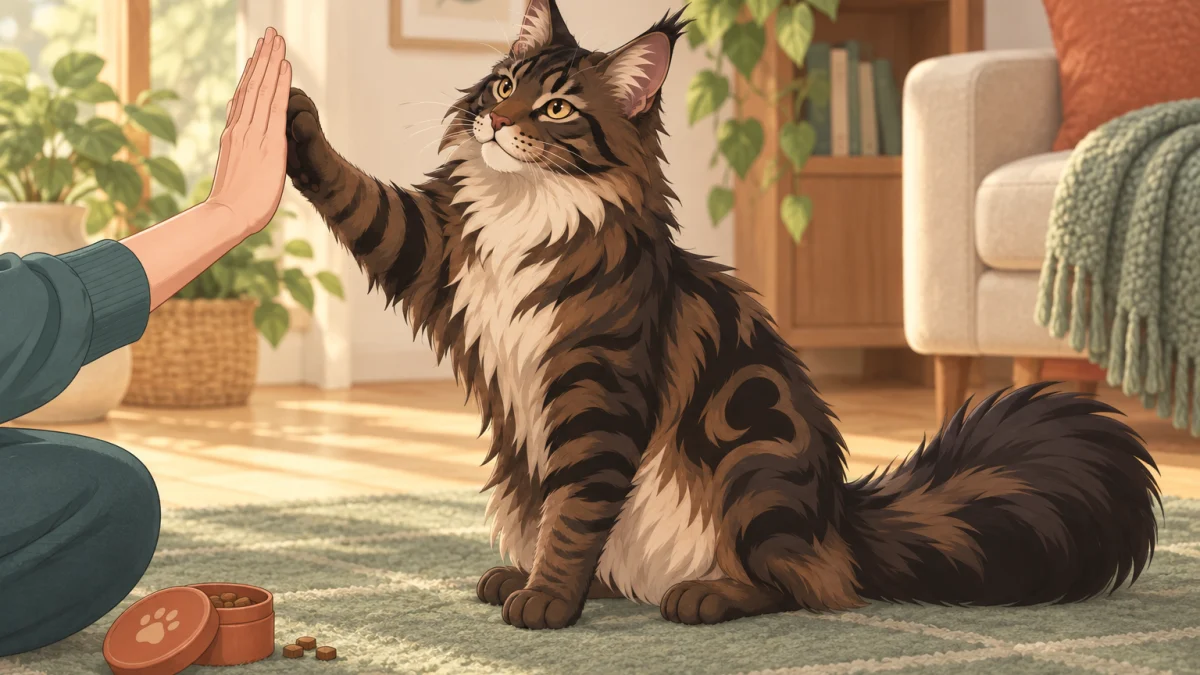
Where to start
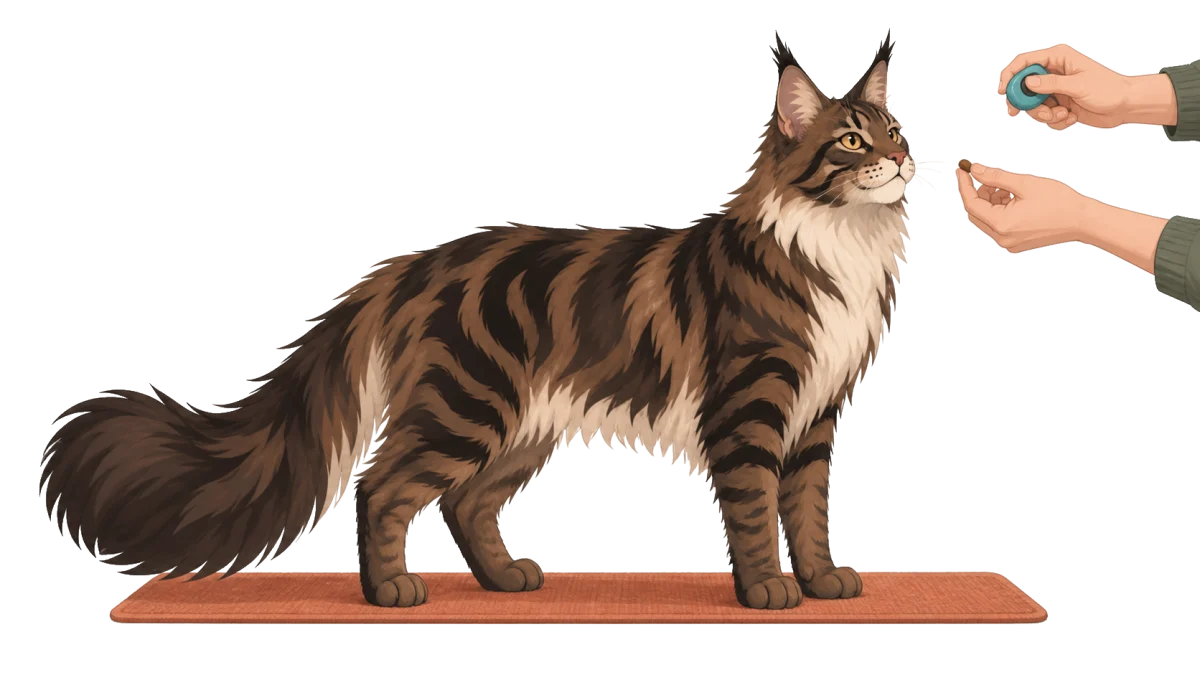
Hold a treat inside a closed fist at a low, comfortable height. Mark and reward the moment your cat touches the fist with a paw. Gradually raise the fist, then replace it with an empty open palm. Add the verbal cue only when the paw touch is already predictable.
Prepare a very small lesson
Choose a quiet place with secure footing and remove distractions. Prepare tiny rewards your cat is happy to work for and decide on a marker: a clicker or one short word such as “yes”. If the marker is new, pair it with a reward separately before using it to teach the trick.
Begin when your cat is awake and interested, not when they are sleeping, hiding or trying to leave. A session can end after a few useful attempts. High five is an invitation to play together, not a test the cat must pass.
Invite the first paw touch
Place one reward inside a closed fist and hold it close to the floor, within easy reach. Let the cat investigate. Some cats will sniff, lick or nudge first. Wait quietly for a paw to touch the hand; mark that instant and deliver the reward from your other hand.
Do not take the cat's paw and place it on your fist. That changes the movement from something the cat chose into handling they may dislike. If no paw appears, stop after a short attempt. Next time, try a more interesting reward, a different time of day or a lower hand position.
Make paw-to-hand contact predictable
Repeat at the same height until the cat begins to offer the paw touch soon after the fist appears. Mark only the action you are building. Sniffing and licking are information, but rewarding every investigation can make the criterion unclear.
Keep the reward out of sight in the delivery hand once the closed fist itself has become the target. This prevents the cat from needing to see food inside the target forever. Give the reward after the marker, with a short pause between attempts so each new fist presentation is easy to recognise.
Raise the target in small steps
Lift the fist a little, still below or around chest height. Reward a paw touch at that new position. Increase height gradually over several successful attempts or sessions. The cat should not need to balance awkwardly, jump or stretch beyond a comfortable reach.
If the paw disappears at a higher position, return to the last height that worked. One easier repetition can restore clarity. Progress is not a straight line, and lowering the target is useful information rather than a reset to zero.
Change the fist into an open palm
When a raised paw touch is reliable, present an empty open palm close to the familiar fist position. Keep the palm still, fingers together and at a comfortable distance. Mark the first gentle paw contact and reward from the other hand.
The new shape can be a real change from the cat's perspective. If they only sniff the palm, briefly alternate an easy closed-fist attempt with an open-palm attempt. Avoid moving your hand forward to meet or grab the paw; let the cat complete the touch.
Add the words after the action is working
Say “high five” just before presenting the palm once the visual cue reliably produces the paw touch. At first, the hand is doing most of the communication. With repetition, the words can begin to predict that familiar opportunity.
Avoid repeating the cue while the cat looks away or walks off. Saying it five times does not make it clearer. Give it once, offer the palm, then either mark the response or end the attempt. A cue stays useful when it has a consistent meaning.
Build reliability without removing every reward
Practise in the original room until the behaviour is easy, then change one detail: sit in a different position, use the other hand or move to another quiet room. Expect the new setting to make the trick temporarily harder. Return to generous rewards while the cat works out that the same cue applies there.
Later, rewards can vary while still keeping the trick worthwhile: sometimes a treat, sometimes play or another reinforcer your cat values. Do not rush to stop rewarding altogether. A relationship built on voluntary participation needs a reason for the cat to keep choosing the game.
Record the exact step, including zero successes
Write what you offered and what happened: fist or palm, height, attempts, paw touches and one body-language detail. “Open palm at chest height: 4 offers, 2 paw touches; left after the fourth” tells you where to begin next time. “Knows high five” hides too much.
If there were several attempts and zero paw touches, do not repeat until frustration takes over. End warmly and report the result. Lapka can use that session to suggest a smaller next step, while the programme keeps preparation, practice and success criteria together.
A high-five session note
Step: closed fist at floor level. Attempts: 5. Paw touches: 3. Other responses: sniffed twice. Body language: stayed nearby and accepted rewards; walked away after the fifth offer. Next session: repeat the same height before raising the fist.
The numbers describe one imaginary session, not a quota. Your cat can finish sooner. What matters is recording the actual action without turning it into a judgement about intelligence or motivation.
When it does not go to plan
My cat only sniffs or licks the fist. What should I do?
Give the cat time to investigate, but keep the paw touch as the criterion. Try a lower position, a shorter attempt or a reward they value more. End and return later if the paw never appears; do not lift it for them.
Can I teach high five without a clicker?
Yes. Use one brief, consistent marker word and deliver the reward after it. The timing matters more than the device: mark the instant the paw touches, then reward.
When should I say “high five”?
Add the words after the open palm already leads to a predictable paw touch. Say the cue once just before presenting the palm. Introducing it too early can attach the words to sniffing, waiting or walking away.
Why does the trick work at home but not elsewhere?
Cats notice context. A different room, person, hand or noise can make the same request feel new. Change one detail at a time, make the first attempts easier and reward generously while the cat generalises the skill.
Sources and further reading