Lapka
Lapka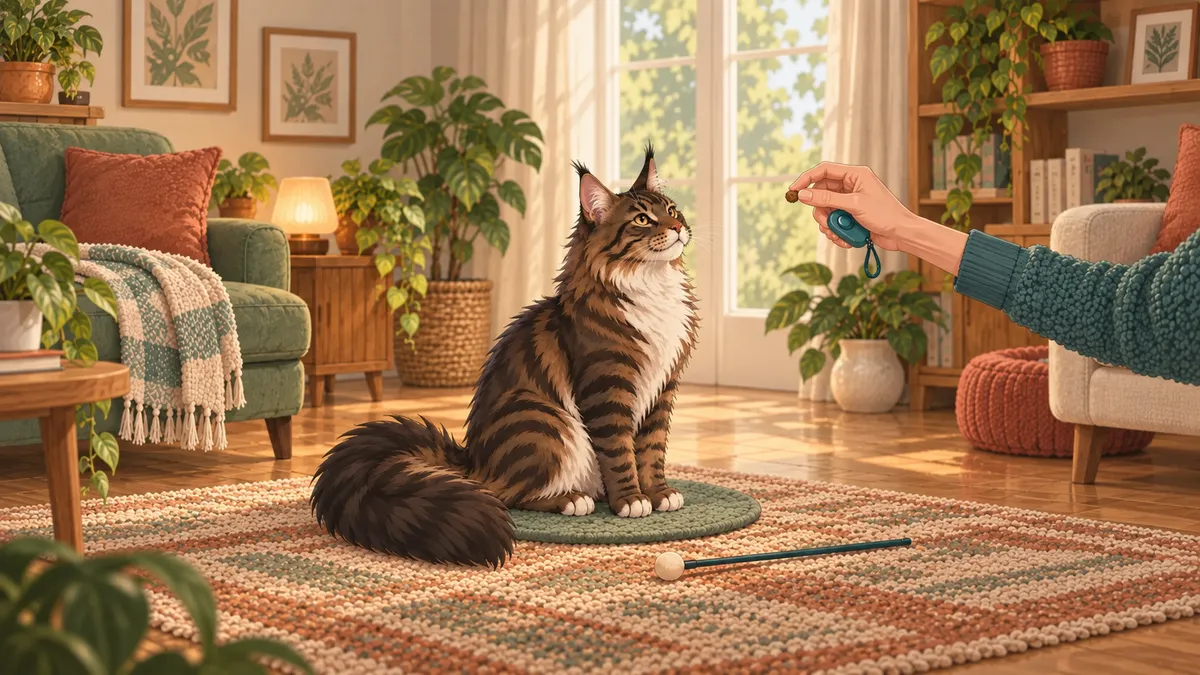
Where to start
Yes, you can train a cat. Reward the behaviour you want the moment it happens, using something your cat really values, and keep sessions to two or three minutes while your cat is relaxed but awake. Break each skill into small steps, never force or punish, and start with simple skills such as responding to their name, touching a target or sitting.
Yes, cats can be trained
Cats are often called untrainable, but that reputation doesn’t hold up. If your cat comes running when you call them before dinner, they have probably already linked that sound with something good. Training makes this learning deliberate through positive reinforcement: you reward the behaviour you want, so your cat is more likely to repeat it.
Cats probably don’t share a dog’s wish to please us, so every lesson needs a reason that makes sense to your cat. In return, training gives them something to think about and can make everyday care easier, from carrier trips to health checks.
Find the reward your cat will work for
Food is usually the best motivator, and the tastier your cat finds a treat, the more likely they are to repeat what earned it. Choose something they love that is quick to eat and needs little chewing. Set aside a small portion, stop when it runs out, and feed a little less that day so treats don’t add weight.
Some cats also value a stroke, a favourite toy or a trip into the garden, which can take over part of the job once a skill is reliable. If your cat gets overexcited around food, place treats on the floor rather than offering them from your fingers.
Keep sessions short and well timed
Two or three minutes is enough. Start when your cat is relaxed but awake, in a quiet room, and never try to train a cat who is nervous or scared. If your cat enjoys it, a few short sessions a day are plenty.
If food is the reward, try a session shortly before a meal, when your cat is a little hungry, not straight after one. Stop while your cat is still keen, ideally right after an easy success. If lessons only end when your cat has had enough, walking away becomes the way to end them.
Mark the moment, then reward
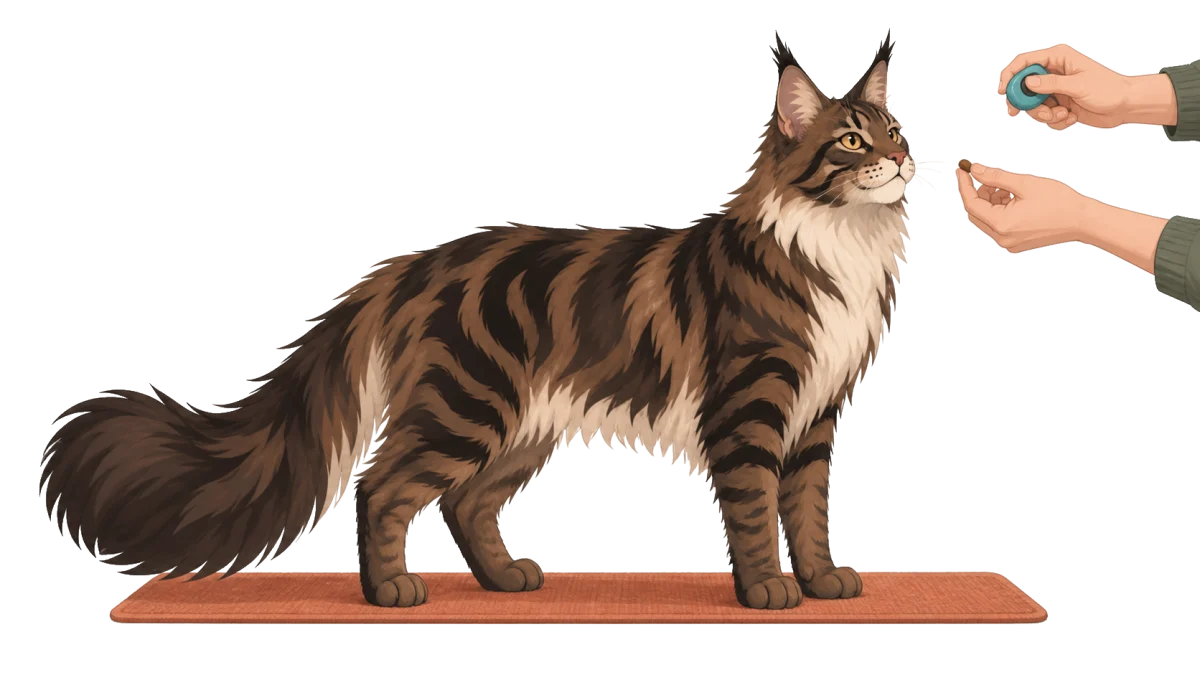
Timing matters most. Reward as soon as possible after the behaviour; if the gap is too long, your cat is unlikely to connect the two. A marker bridges that gap: a short, distinct sound made the instant the right thing happens, which buys you a few seconds to deliver the treat.
Use a clicker or one short word such as “yes”, kept for training only and always followed by a reward. Before teaching anything, click or say the word and give a treat straight away, repeating until your cat looks for the treat as soon as they hear it. Click a little away from your cat, or muffle the clicker in a pocket, so the sound never startles them. If you mark a fraction too early or late, reward anyway. Our clicker training guide covers this first stage in detail.
Build each skill from tiny steps
Most behaviours are too big to teach in one go, so you shape them: reward any small action in the right direction, then gradually ask for a little more. To teach your cat to walk into a carrier, you might reward a glance towards it, then a step closer, then a sniff, until they walk in of their own accord.
Work on one goal at a time and change one thing at once: distance, duration or place. If your cat hesitates or looks uncomfortable, go back to the last step that worked. Add a cue word or hand signal only once the behaviour is reliable. Later you can reward less often, but don’t stop altogether.
Good first skills to teach
Responding to their name is a gentle first lesson. Say your cat’s name once; the moment they look at you, mark it and give a treat, ideally within two seconds. When that is easy, try from a little further away. This is the groundwork for coming when called, which helps when you need your cat to come home or move away from something risky.
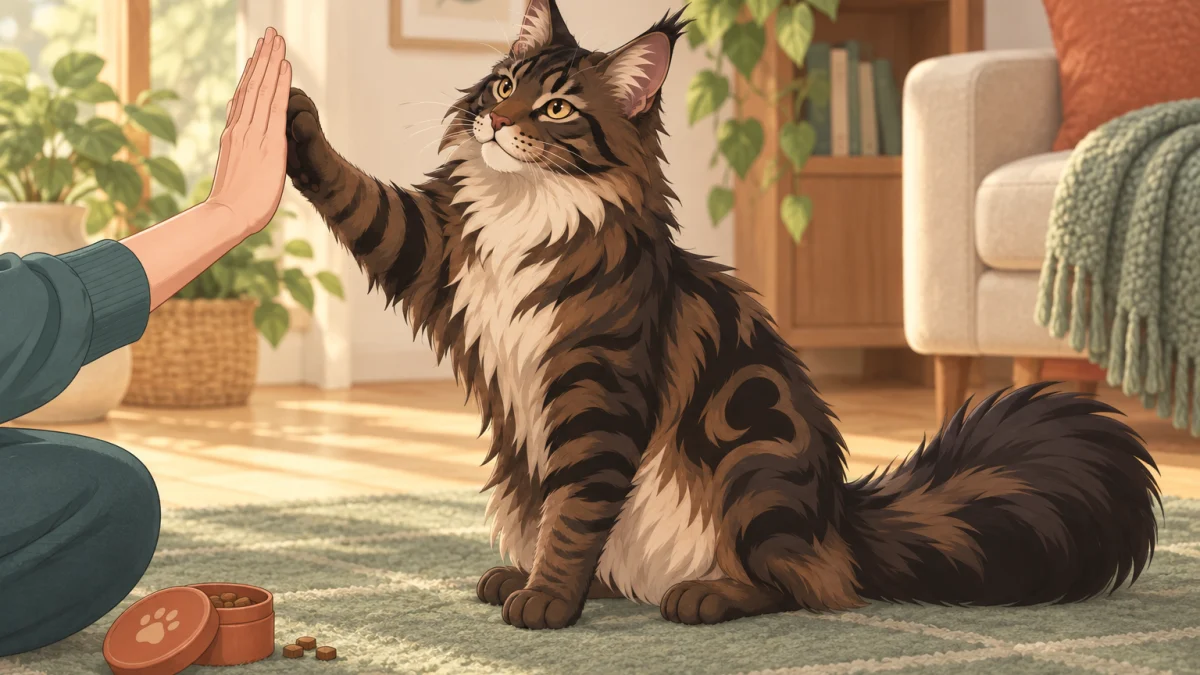
Touching a target is another easy start. Hold a target stick, or simply your hand, close to your cat’s nose, then mark and reward each touch; once touches are reliable, move it a little further away. A cat who follows a target can be guided onto a mat or into a carrier, and the same idea with a paw instead of a nose grows into the high five.
Sit is a classic, and our sit guide walks through it step by step. Going into a carrier is less glamorous but very practical: keep it out as part of the furniture, with familiar bedding and the odd treat inside, shape each step, and close the door only once your cat is happy to stay in for a few minutes.
Read your cat and know when to pause
Signs that your cat would rather stop include moving away, freezing or tensing, ears turning sideways or flattening, a swishing tail, skin rippling along the back, licking the nose, a sudden burst of grooming and very wide pupils. Some cats simply go still, so a quiet cat is not always a comfortable one.
When you see these signs, pause, make the next step easier or end the session; your cat should always be free to walk away. If they dislike being touched somewhere, or their behaviour, eating or toilet habits change, talk to your vet first, because pain or illness can be behind it. For a very fearful or aggressive cat, ask your vet about a qualified behaviourist.
What not to do
Never punish your cat. Shouting, squirting water, physical punishment or putting them out of the room won’t teach the behaviour you want: your cat is unlikely to connect it with what they did and more likely to become anxious or afraid of you. Behaviour punished only when you are around may simply move to times when you are not.
Don’t push, pull or hold your cat into position; forcing a sit causes stress, and restraint takes away their choice. Sit or kneel rather than leaning over them, and avoid staring, which cats can see as a threat. Don’t repeat a cue louder or keep going once your cat loses interest. If you feel frustrated, take a break and try again another time.
Keep a short session log
A few lines after each lesson tell you more than a general impression: what you asked for, attempts and successes, the reward, one body-language detail and why you stopped.
Describe rather than judge. “Target at nose height: 6 offers, 4 touches; licked her nose and walked off after the sixth” is something you can act on; “lazy today” is not. Zero successes is still information: the step may be too big or the reward not tempting enough. Lapka can turn the details you record into a personal programme and suggest the next small step from what actually happened.
A beginner’s session note
Skill: touch a target with the nose. Setup: kitchen, before dinner, 8 tiny treats set aside. Attempts: 8. Touches: 5. Body language: tail up at the start; licked her nose and looked away after the seventh try. Ended on an easy touch at the starting distance. Next time: repeat that distance, then move the target slightly to one side.
The numbers describe one imaginary session, not a goal. What matters is writing down what really happened, including the attempts that didn’t work, so the next step starts from there.
When it does not go to plan
Can you train an adult or older cat?
Yes. Cats can learn at any age, and temperament matters more than age. Choose skills that suit your cat’s body, keep lessons short and check with your vet first if your cat is elderly or unwell.
Do I need a clicker?
No. A clicker gives a consistent sound your cat is unlikely to hear anywhere else, but a short word such as “yes” works too if you keep it for training and always follow it with a reward. If the click startles your cat, use the word.
How long should a training session be?
Two or three minutes is enough, and several short sessions a day are fine if your cat is keen. Stop sooner if they lose interest or show signs of discomfort, or when the treats you set aside run out.
What if my cat isn’t food-motivated?
Try a tastier treat offered shortly before a meal, or a different reward such as a game with a favourite toy or a stroke they enjoy. If your cat has lost interest in food generally, or their eating habits have changed, talk to your vet.
How long does it take to train a cat?
There is no honest universal answer. Some cats pick up a simple skill quickly, others need many short sessions, and some never take to a particular trick. Judge progress by the small steps in your notes, not by a deadline.
Sources and further reading
- Battersea — Cat training
- Cats Protection — Tips for clicker training a cat
- Cats Protection — How to train your cat to know and respond to their name
- Cats Protection — How to train your cat to sit on command
- Cats Protection — How to train your cat to be comfortable with handling
- Cats Protection — How to choose and use a cat carrier
- Cats Protection — Cat body language
- Cats Protection — Bringing a cat home
- International Cat Care — Cat Friendly Interaction
- International Cat Care — Taking your cat to the vet
- RSPCA — Understanding your cat’s behaviour
- Cornell Feline Health Center — Feline Behavior Problems: Destructive Behavior