Lapka
Where to start
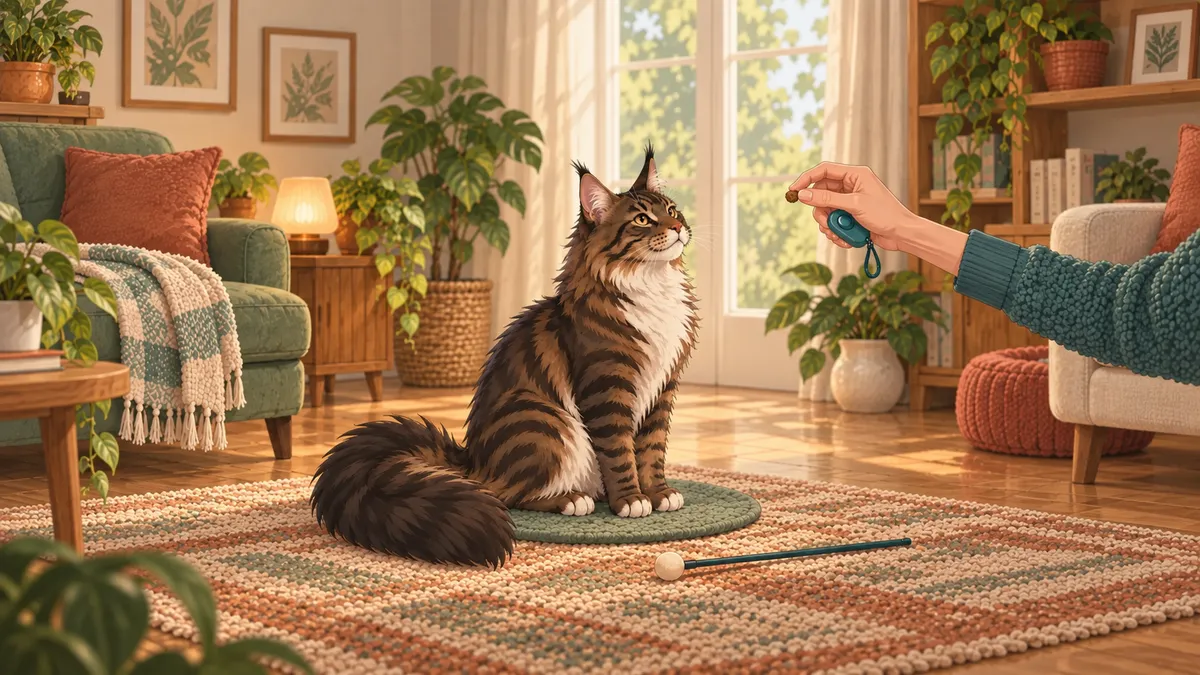
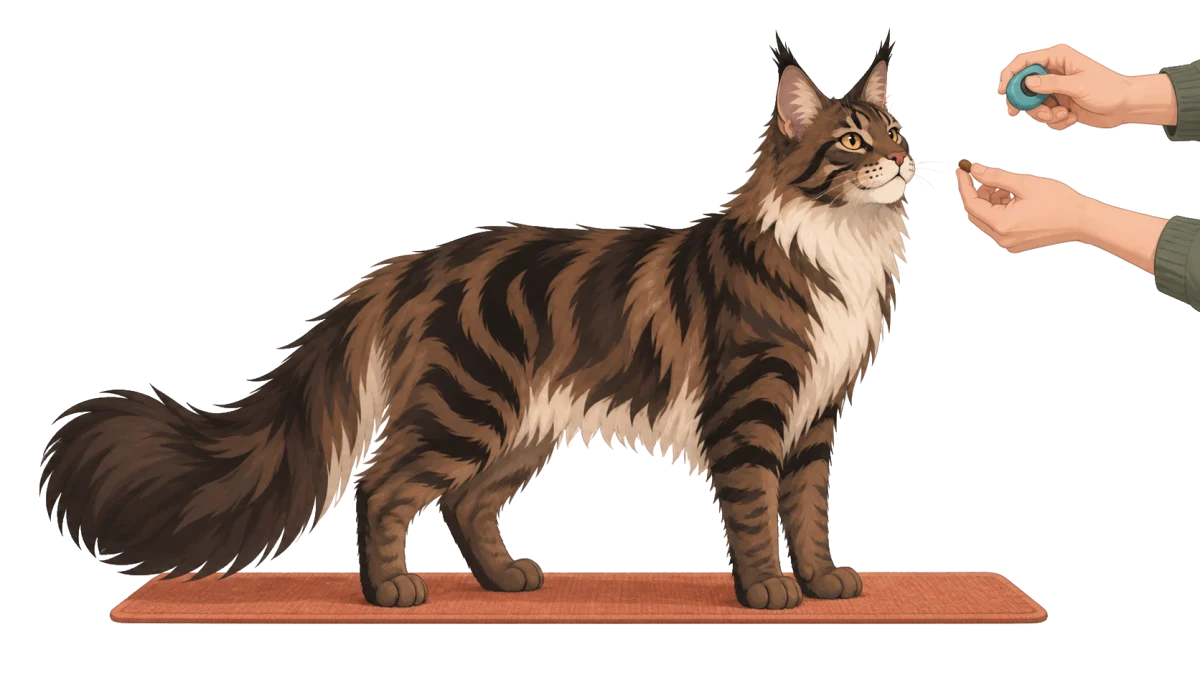
Clicker training uses a short click to mark the exact moment your cat does something you like, and a treat follows straight away. First charge the clicker: click, give a treat, and repeat until your cat looks for food at the sound. Then click as they touch a target, come to their name or sit. Keep sessions to about three minutes, never punish, and use a word such as “yes” if the click scares them.
What a cat clicker is and why the click works
A clicker is a small device that makes the same short click every time you press it. In training, the click is a marker. It tells your cat that what they did just now is the thing that earns the treat. Cats Protection describes it as positive reinforcement: the click, then the treat, makes your cat more likely to do it again.
The click matters because of timing. Battersea says the reward has to come as soon as possible after the behaviour, or your cat is unlikely to connect the two. You can’t always get a treat to your cat in that instant, but you can click, and the treat follows within a second or two.
Cats Protection prefers a clicker to a spoken word because the sound is the same every time and your cat is unlikely to hear it anywhere else. That also helps when more than one person in the house trains the cat.
What you need: the cat clicker training kit
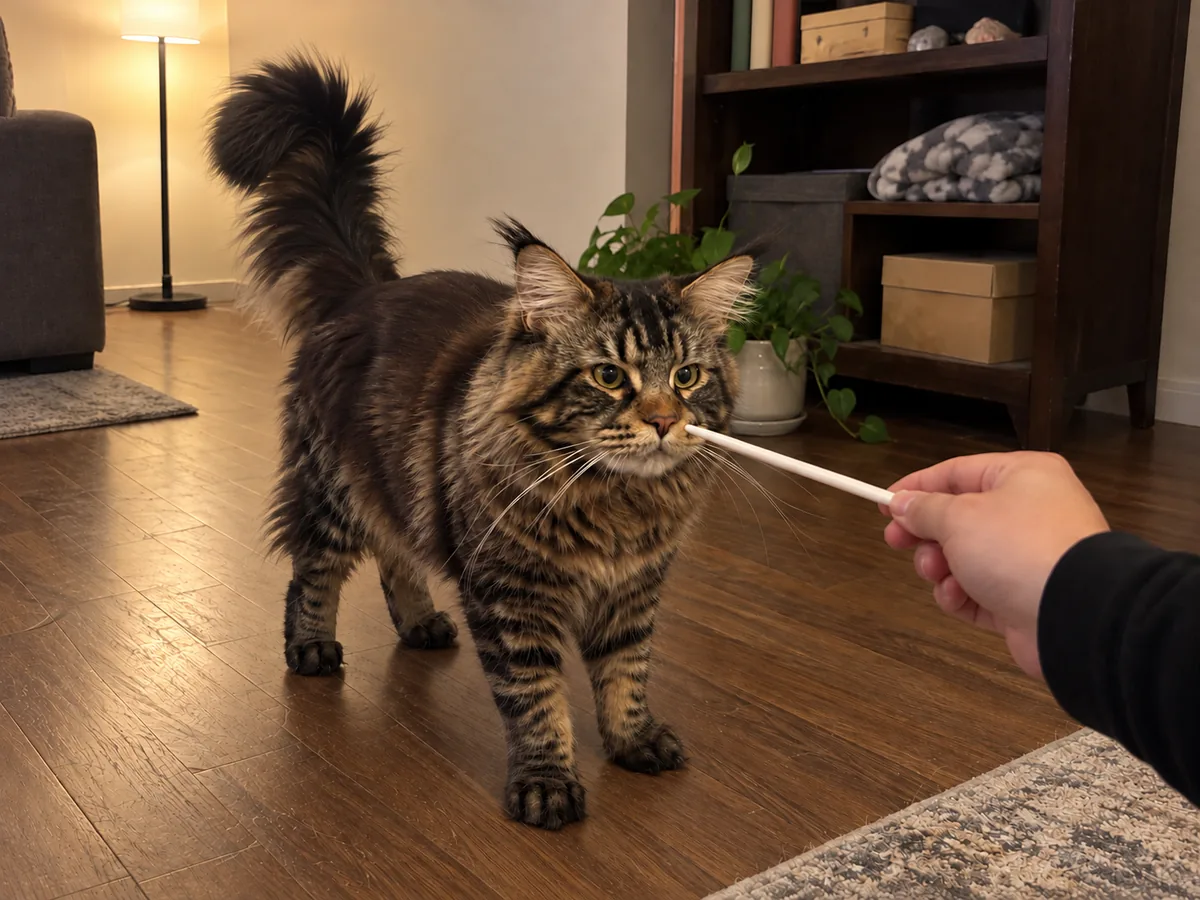
Three things: a clicker, small treats and something your cat can touch with their nose. A target stick from a kit works, but Cats Protection says your hand will do, and in one study the target was a plastic chopstick or a finger. You can try a clicker sound on this site before buying one.
Pick a treat your cat loves that is quick to eat and needs little chewing, so the session doesn’t stall. Set aside a small portion before you start and stop when it’s gone, then give a little less food that day so the treats don’t add weight. Keep them in your pocket rather than in a packet on show. Battersea says that keeps your cat’s attention on you. If your cat grabs at fingers when food is about, put each treat on the floor instead.
How to charge the clicker
Charging means teaching your cat that the click always means a treat. Don’t ask for anything yet. Choose a moment when your cat is relaxed but awake, in a room with nothing else going on. Click a short distance from them, then give a treat immediately. Make no other sound with it, so no “good boy” on top of the click.
Repeat until your cat looks for the treat as soon as they hear the click. Cats Protection gives no number, just “several times”, and you’ll see the moment yourself: their head turns to your hand at the click. If the sound makes them flinch, click inside your pocket or behind a cushion to soften it.
Cats Protection also suggests a vet check before you start, because a cat who is unwell may struggle with training.
First trick: teach your cat to touch a target
Touching a target makes a good first trick. In a study of 100 shelter cats given 15 five-minute clicker sessions over two weeks, 79% learned it. That’s more than any of the other three behaviours tested: spinning (60%), high-fiving (31%) and sitting (27%).
Hold the end of the stick, or a finger, close to your cat’s nose and wait. The moment their nose touches it, click and give a treat. Then move it a short distance away and do the same, a little further each time.
Once your cat follows the target, you can use it to lead them to a particular spot. The same click and treat works for walking into the carrier, which makes vet visits easier.
Teach your cat to come when you call their name
Coming when called starts with your cat’s name. In a quiet room, with your cat sitting relaxed in front of you, say their name once. The moment they look at you, click and give a bit of food. Cats Protection aims for the food to arrive within two seconds of the look.
Repeat in short sessions over the next few days, no longer than three minutes each. When your cat turns to you every time, stand further away or sit down instead, and make each change gradual. While they learn, try not to use their name outside these sessions, and never say it louder when they don’t respond, because that could scare them.
Cats Protection points out that this is what helps you call your cat home, or away from something dangerous.
Clicker training your cat to sit
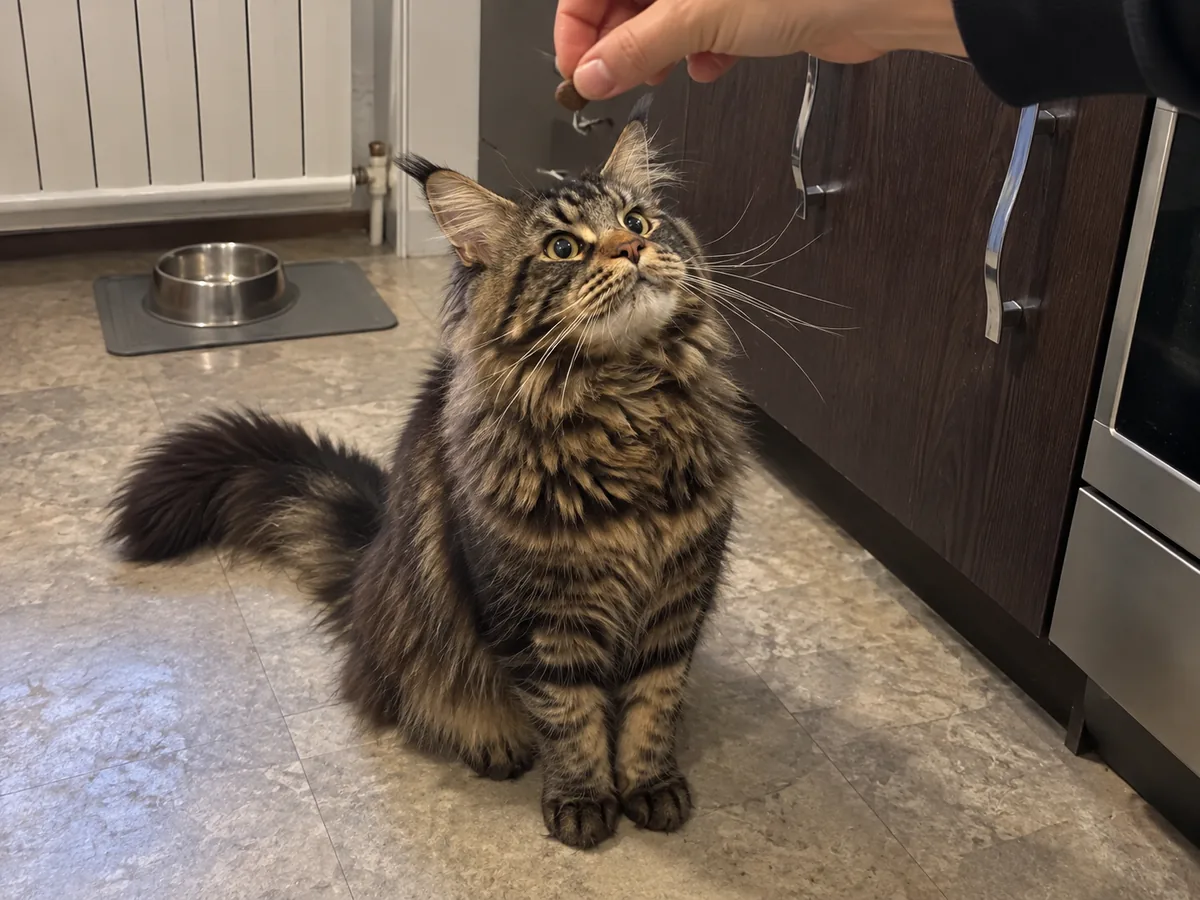
Hold a treat one to two centimetres from your cat’s nose, palm up. Lift it slowly by about five centimetres, then move it a few centimetres back towards their tail. As their eyes follow it, they should sit on their own. Click the moment they sit and give the treat.
Toss the next treat a short distance away so your cat stands up, and start again. Never press them into a sit. Cats Protection warns that forcing the position causes stress.
Expect sit to take longer than the target. In the shelter study only 27% of cats had it after two weeks. Cats Protection suggests three three-minute sessions a day and hopes for a sit on a spoken cue within seven days, while saying some cats take longer and some never get it.
When to click: timing and short sessions
Click while the behaviour is happening, not a second later. If you click as your cat gets up from a sit, you’ve paid for getting up. Cats Protection suggests practising on a person first: ask a friend to touch their nose now and then, and click as fast as you can.
If you click at the wrong moment, give the treat anyway. The clicker only works while the click always means food.
Keep sessions short. Cats Protection’s guides keep them to three minutes at most, and the cats in the shelter study had five. If you feel yourself getting frustrated, stop and try again another day. Lapka keeps each lesson this short and adjusts the next step from the notes you leave.
A marker word instead of a clicker
No clicker? A short word does the same job. Battersea suggests saying “good” in an upbeat but calm voice and giving a treat straight away, until the word on its own means something nice is coming. Cats Protection uses “yes” in its guides.
The word has to stay special: always the same, said the same way, and never part of everyday chat with your cat. Each time you say it without a treat, the link gets weaker. That’s why Cats Protection finds a clicker often works better. It sounds the same whoever presses it.
If your cat is scared of the clicker
Some cats are frightened by the click. If your cat flinches at the sound, you’re clicking too close or too loud.
Move further away, or click inside your pocket or behind a cushion. If your cat still doesn’t like it, switch to a quiet marker word. Cats Protection suggests a distinct verbal cue for cats the clicker scares.
Shy cats may find clicker training harder whatever you use. Cats Protection says nervous, shy and anxious cats may struggle, and in the shelter study bolder cats made bigger gains than shyer ones. Never train a cat who is nervous or scared at that moment. Wait until they’re calm.
Clicker training mistakes to avoid
Working on two things at once. Stick to one goal until your cat has it, then move on, and ask for the old trick every so often so they don’t forget it.
Stopping the treats overnight. Once a behaviour is reliable, add a word or hand signal for it, then reward less often bit by bit: every other time, and later every fourth time. Stop altogether and your cat will stop responding too.
Punishing a miss. Battersea says a punished cat is likely to become anxious or frustrated and to link that feeling with you. If your cat doesn’t get it, make the step easier or the reward more tempting.
Mila’s first three sessions
Monday, before dinner. Charged the clicker behind a cushion: click, treat, about a dozen times. By the end she turned to my pocket at the click.
Tuesday. Chopstick 2 cm from her nose: 7 offers, 6 touches. Moved it about 20 cm to the side: 2 touches, then she went to the window. Stopped there.
Wednesday. Started with the chopstick close again: 5 touches out of 5, then one step further away.
Noting where the target was each time shows you where to start the next session.
When it does not go to plan
How long does it take to clicker train a cat?
Cats Protection says anywhere from a few days to a few months. In the shelter study, most cats learned to touch a target within two weeks of short sessions, while only 27% learned to sit in that time.
Can you clicker train an older cat?
Yes. Cats Protection says cats can be clicker trained at any age, and that temperament matters more than age. In the shelter study, age and sex made no difference to learning, while cats keener on food made bigger gains at targeting and high-fiving.
Is clicker training good for cats?
Cats Protection says training gives a cat mental stimulation, can stop them getting bored, and makes everyday things easier, such as using the cat flap or the carrier. The authors of the shelter study suggest it may also ease stress for cats in shelters, through the enrichment and time with people it brings.
When do I add a word like “sit”?
Once your cat does the behaviour reliably. Cats Protection suggests saying the word about a second before your usual hand signal. After several repeats your cat starts to sit at the word alone. Any word works, because your cat learns the sound, not the meaning: “sit”, or even “banana”.
Sources and further reading
- Cats Protection — Tips for clicker training a cat
- Cats Protection — How to train your cat to know and respond to their name
- Cats Protection — How to train your cat to sit on command
- Battersea — Cat training
- Kogan, Kolus and Schoenfeld-Tacher, Animals (2017) — Assessment of Clicker Training for Shelter Cats