Lapka
Lapka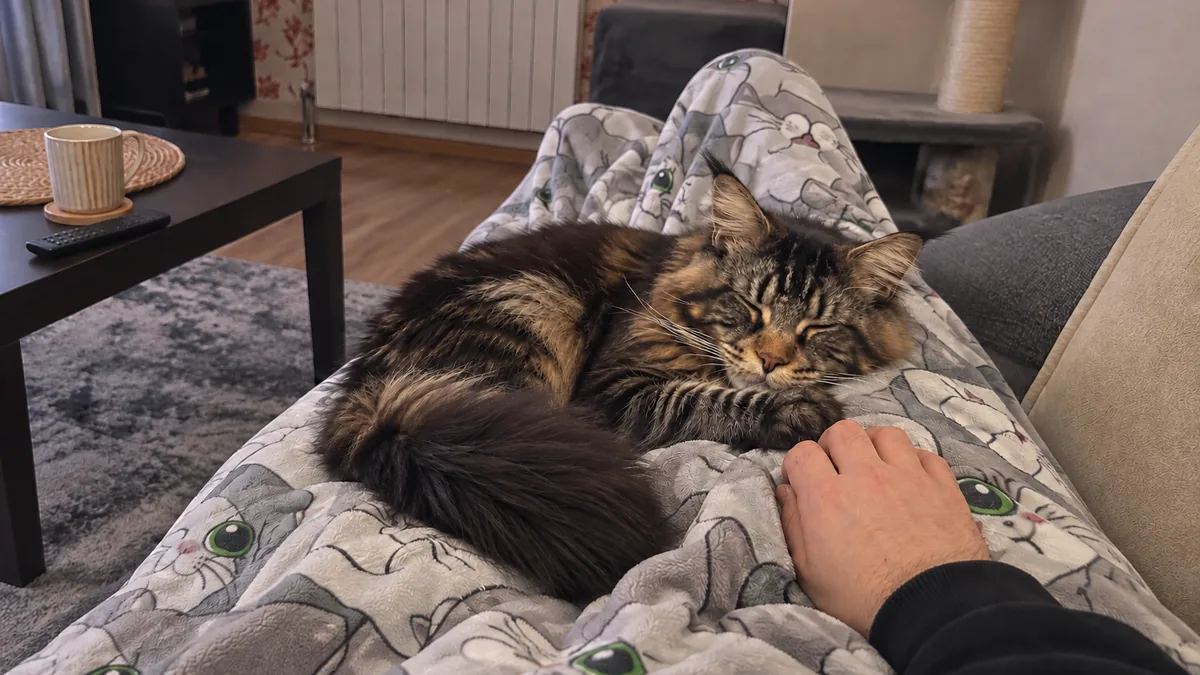
Where to start
To get your cat to like you, let them make the first move. Hold out a still hand, low down, for them to sniff. If they rub against it, stroke their cheeks and chin for three seconds, then pause: do they want more? Play with them daily, keep their routine predictable, and don’t chase them, pick them up for cuddles or punish them. For lap time, sit somewhere warm with a blanket and wait for them to join you.
Let your cat make the first move
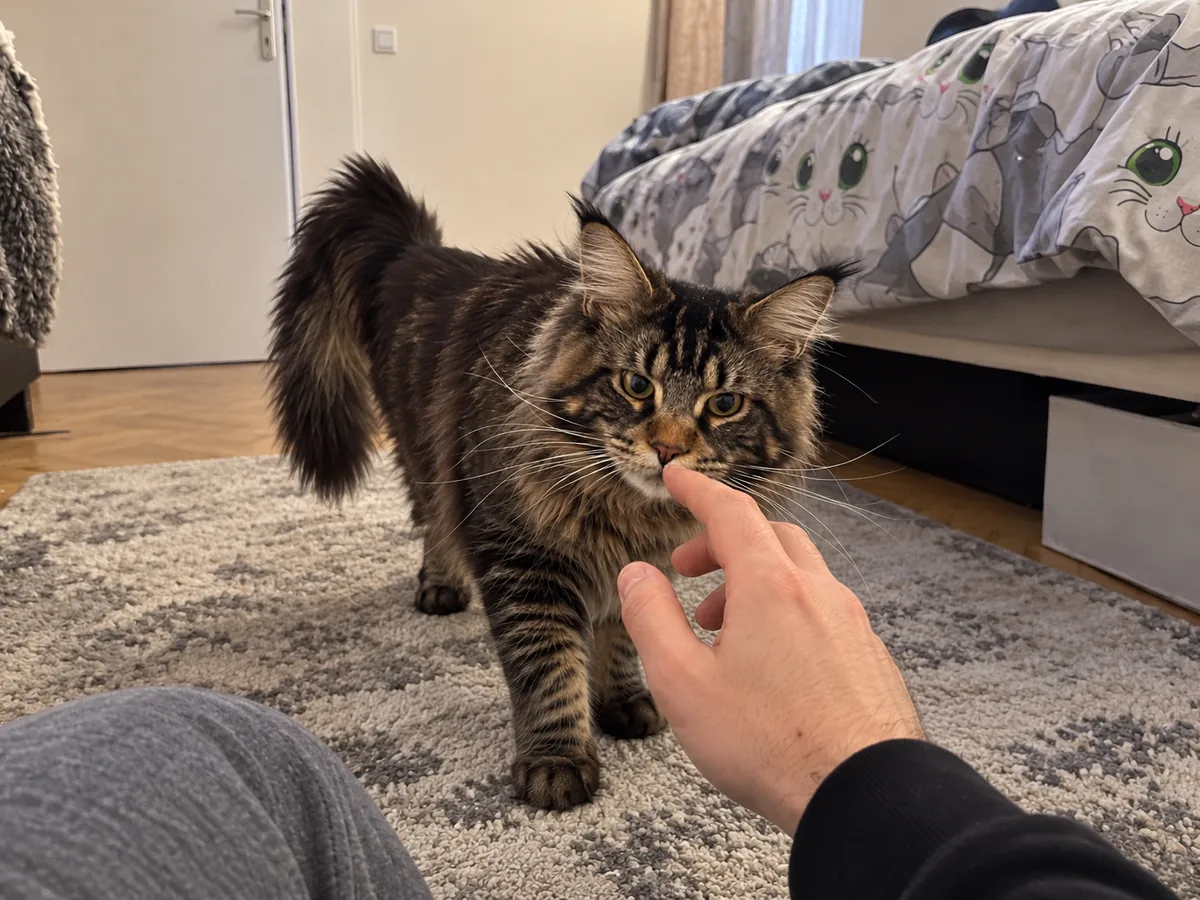
Wait for your cat to come to you. Sit or crouch so you’re not towering over them, and turn a little sideways. International Cat Care, a cat welfare charity, says a cat finds you less threatening side-on than face to face.
Then hold out your hand, low and still. If your cat wants to say hello, they’ll come and sniff it, and they may rub their cheek along your fingers. That rub is a good sign: they’re leaving their scent on you.
If your cat hasn’t come over after a minute or two, they don’t want to be touched right now. Don’t follow them when they walk off. You can leave your hand out a little longer in case they change their mind.
Where cats like to be stroked, and where they don’t
Most friendly cats like being touched at the base of the ears, around the cheeks and, for some, under the chin. Cats have scent glands in their cheeks and chin and often rub them against things, so a touch there doesn’t feel like a threat.
Go carefully along the back, sides, legs and tail, and watch how your cat takes it. Leave the belly and the base of the tail alone. When a cat rolls over and shows you their tummy, they’re showing trust. The UK charity Cats Protection calls the belly rub that follows ‘the ultimate betrayal’.
Stroke gently, in the direction the fur grows.
Stroke for three seconds, then pause
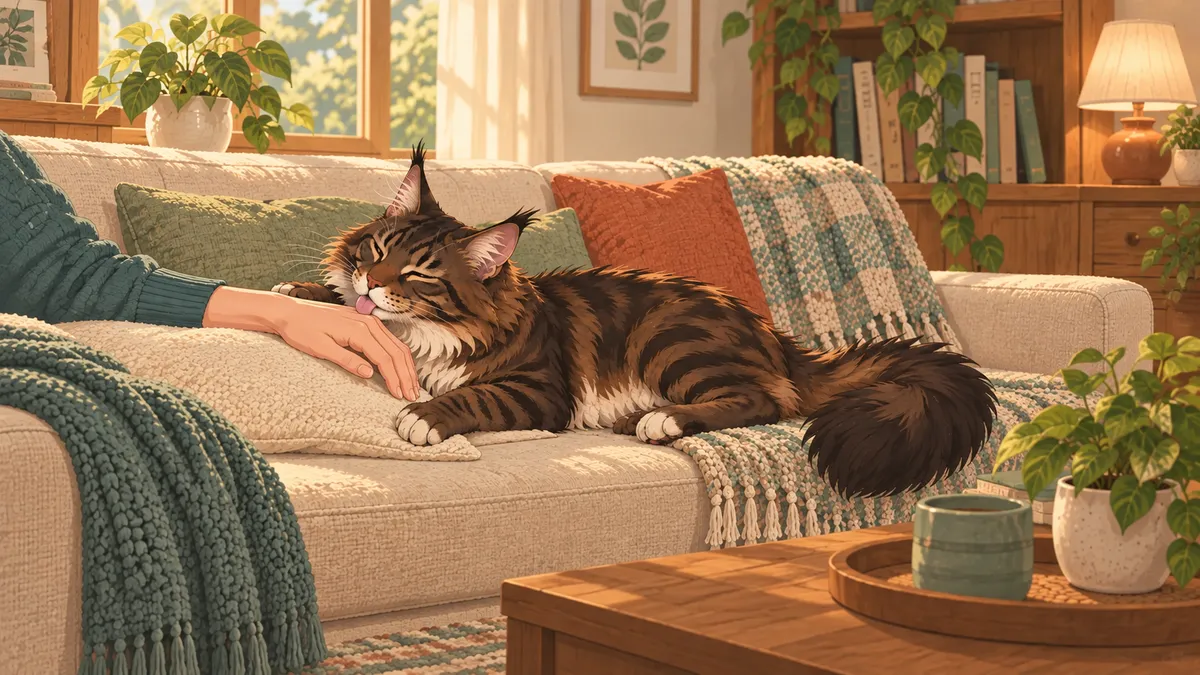
Most cats prefer short, gentle strokes with breaks in between. Stroke for about three seconds, then lift your hand. If your cat pushes into it or rubs against you, carry on. If not, they may be ready for a break.
This pause is part of the CAT guidelines from Dr Lauren Finka of Nottingham Trent University: give the cat Choice, pay Attention to their body language, and think about where you Touch. In a study at Battersea, the London rescue centre, 100 cats met 120 members of the public, before and after the people had learned the guidelines. After the training, the cats spent less time in contact with people, yet rubbed against them more often. The share of cats that hissed, growled, swiped or bit at least once fell from 27% to 16%.
Watch for the signs that your cat wants a break: ears flattening or turning back, the skin on their back rippling, a tail that starts to swish, a quick lick of the nose, a sudden short groom, or going still and stopping purring. Stop then, before it turns into a swipe. Battersea’s trainers warn that if you only stop once your cat lashes out, you teach them that lashing out is the best way to make you stop.
Try the slow blink
Cats slow-blink at people they feel relaxed around: the eyes narrow, close for a moment, then open again. You can do it back. Researchers at the Universities of Sussex and Portsmouth found that cats slow-blinked more when their owners slow-blinked at them than when the owners were in the room but didn’t interact. And when a researcher the cats had never met slow-blinked at them, they were more likely to come up to her outstretched hand than when she kept a neutral face.
To do it, narrow your eyes as you would in a relaxed smile, then close them for a couple of seconds. That’s how Professor Karen McComb, who led the study with Dr Tasmin Humphrey, describes it. Afterwards, look away for a moment, because being looked in the eye can make cats uncomfortable.
If your cat blinks back, that’s a friendly reply. It isn’t necessarily an invitation to stroke them, though.
Play with your cat every day
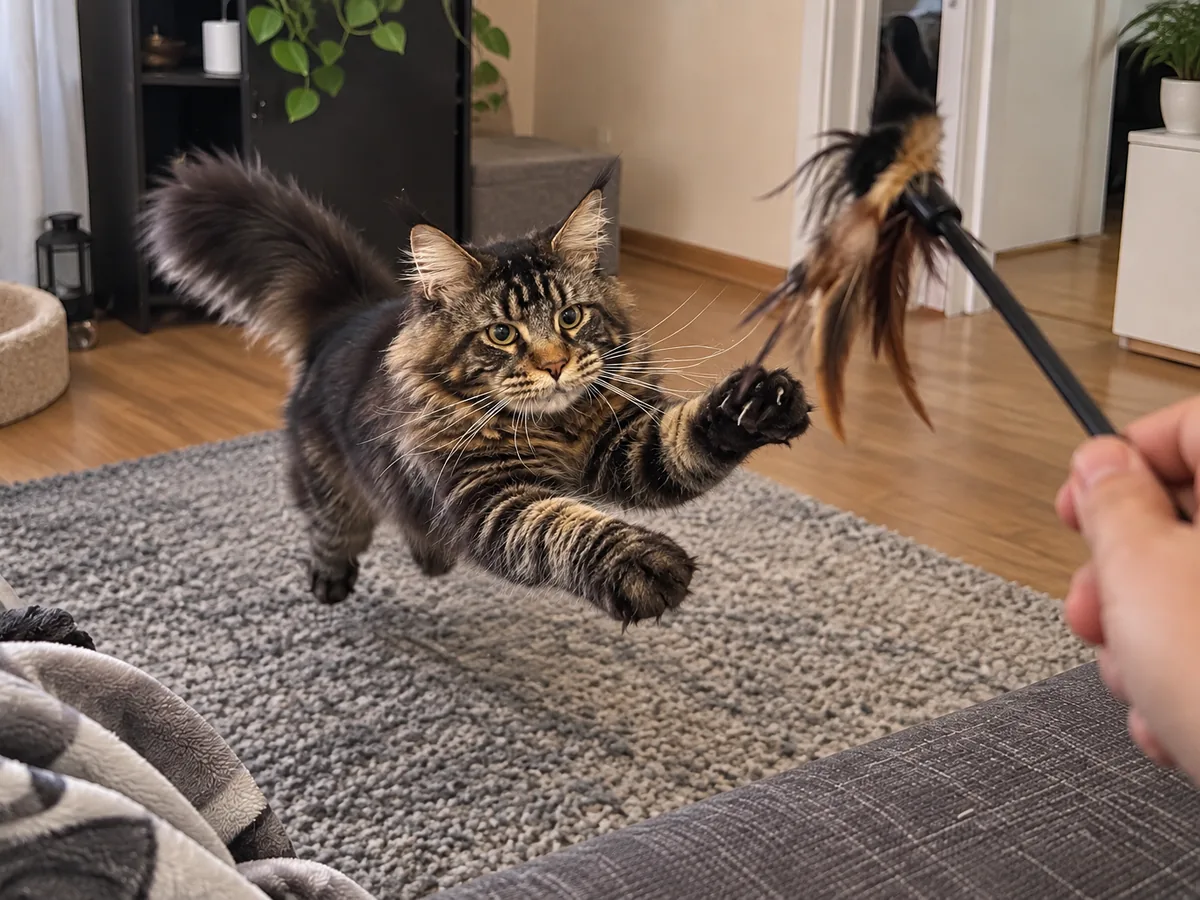
Play lets you get close without touching at all. Aim for three to four play sessions a day, each no longer than five minutes. A wand toy, a stick with a feather or toy mouse on a string, keeps your fingers away from claws.
Move the toy like prey, in jerky, random movements. Let your cat catch it about once in every three pounces, and always end the game with a catch. Play releases feel-good hormones, and a cat who plays with you starts to link those good feelings with you.
Cats are sprinters, so one minute of wild chasing is a good result. Many are liveliest around dawn and dusk. Keep your hands and feet out of the game. Skip the laser pointer too: chasing a dot they can never catch is frustrating. Put the wand away when you finish.
Use food and a steady routine
Cats like to know what comes next. Feed, play with and stroke your cat at roughly the same times each day, because cats feel calmer and safer when they know what to expect. If the routine has to change, change it gradually, over a few weeks.
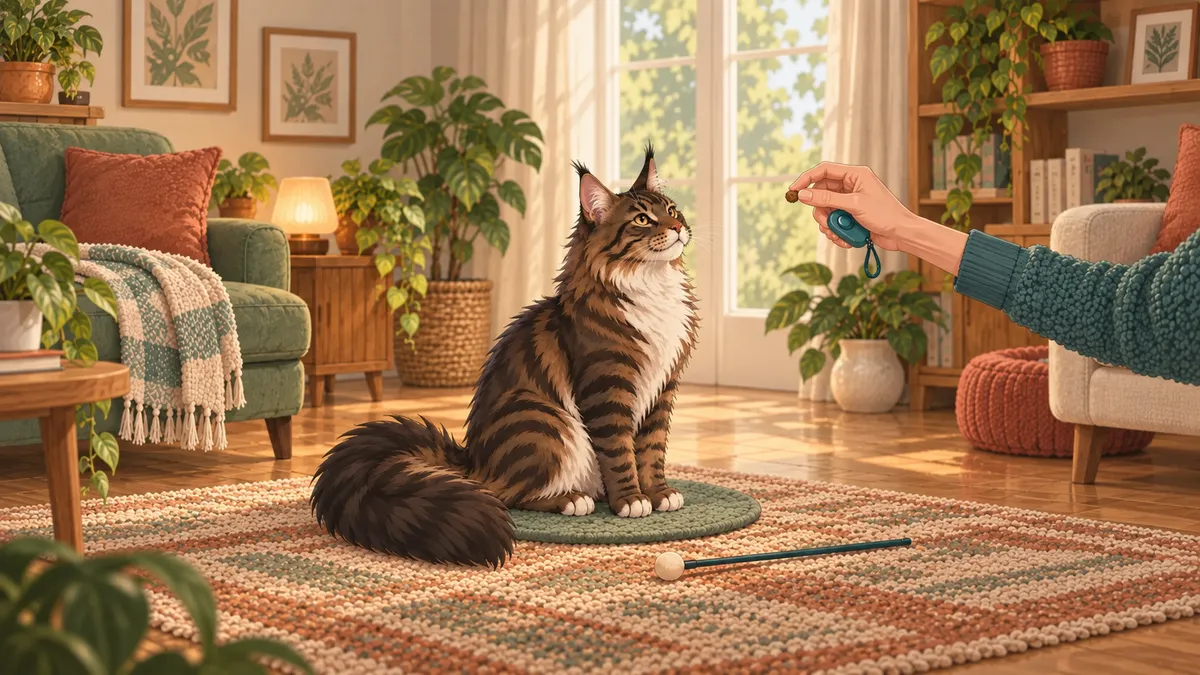
Food is also the reward most cats care about. They’re much more interested in food than in praise, so when your cat comes to you, a piece of their daily food says more than ‘good cat’. If your cat grabs at your fingers when food appears, put the treat on the floor beside you.
Split the day’s food into several smaller meals, since cats need to eat little and often.
Give your cat places to hide and climb
Cats hide when they feel stressed, and hiding helps them calm down. Leave a few hiding places around the home: a cardboard box, an igloo bed, a gap under the bed.
They also feel safer off the ground, where they can watch the room. Shelves, a cat tree, a windowsill or a sturdy box up on a shelf all work.
Never pull your cat out of a hiding place: disturbing them there can damage their trust in you. Keep the rest of the house calm as well. Talk softly, and say something as you walk into a room so you don’t wake them with a fright.
Shy, new or rescue cats need time
Some confident cats make friends in minutes. Nervous cats can take several weeks or months, and a cat who had little or no contact with people as a kitten may always be afraid of them.
A cat in a new home can take a few weeks to relax. Start them in one quiet room with food, water, a litter tray, somewhere to hide and a high spot. If they hide, let them. Sit quietly in the same room, talk to them gently and let them come to you.
Hiding at first is fine as long as they’re eating, drinking and using the litter tray. If your cat is too shy to eat, move the food bowl closer to their hiding place and leave the room. If they stay stressed for a long time with no small steps forward, ask your vet for advice.
A cat who isn’t ready to be stroked may still want to play. Try moving a fishing rod toy slowly across the floor a metre or two away, and see if they stalk it.
How to get your cat to sit on your lap
Some cats are lap cats and some aren’t. One is happiest on a lap being stroked, while another prefers to sit nearby with their own space. Some cats like a lap but don’t want to be stroked on it.
You can make your lap a good place to be. Cats seek out warmth, and your lap is one of the warm spots they pick, along with places you’ve just been sitting. Soft blankets draw them too, and a cat who trusts you finds comfort in things that smell of you. So choose one spot on the sofa, sit there each evening, and put a soft blanket over your knees.
Then keep still and quietly busy: read, or watch a film. Calm company like this lets a cat choose whether to come close, sit nearby or rest on your lap. Reward each step with a piece of food: sitting beside you, a paw on the blanket, then all four feet. Battersea’s trainers teach any new habit this way: they reward each small step towards it as soon as it happens.
Once your cat settles, keep strokes short or skip them, and let them leave whenever they like. Never lift your cat onto your lap or hold them there. Cats Protection says most cats are only comfortable being held for a minute or two, and advises against training a cat to be picked up just for cuddles.
If you’d like a plan to follow, Lapka’s programme How to build a bond that lasts works towards exactly this: your cat coming over to sit with you, unasked, at their own pace.
What pushes cats away
Picking a cat up takes away their choice. Cats are usually most comfortable with all four paws on the ground, where they know they can run to safety. Hugs and kisses feel lovely to us, but International Cat Care says they can be stressful for cats.
Following a cat who walks away can make them feel threatened, especially if they end up cornered. Staring, standing over them, or walking straight at them from the front or from behind can do the same. Loud noises and sudden movements can spook them too.
Never punish your cat. Battersea says cats don’t connect shouting, smacking or being put out of the room with what they did. They connect the bad feeling with you, or with the place it happened, and the problem can get worse. Give your cat something they’re allowed to do instead: a scratching post for their claws, a wand toy for pouncing.
Why a cat suddenly avoids you
A cat who suddenly avoids you, hides more or lashes out when touched may be in pain. Cats are good at hiding it. Cats Protection lists becoming less tolerant of people, hiding more than usual, sleeping more and hesitating to jump down from furniture among the signs. Some cats even purr when they hurt.
Battersea adds that a cat in pain may stop jumping onto beds and other raised surfaces because they expect it to hurt. A cat who has stopped coming up onto your lap may be one of them. Long-term pain, such as arthritis, can show very few signs.
If your cat’s behaviour has changed, book a vet check. If you think they’re in pain, Battersea says to have them seen as soon as possible. Signs include crying out when they move or use the litter tray, limping, eating less, or sitting hunched with their eyes squinting.
An owner’s note: three weeks of short strokes
Week 1. Stopped picking him up. Every evening I sit on the floor and hold out my hand. Most nights he sniffs it and walks off. Five minutes with the feather wand before his dinner.
Week 2. He rubs his cheek on my fingers now. Three seconds, then I stop. Twice he pushed his head back under my hand.
Week 3. Blanket on my knees while I read. Tuesday he sat next to it. Sunday he climbed on and slept for twenty minutes. I didn’t stroke him.
Written down, the small steps show: the first cheek rub, the first paw on the blanket. From one day to the next, they’re easy to miss.
When it does not go to plan
How long does it take for a cat to like you?
It depends on the cat. A confident cat can become your friend in minutes, while a nervous one may take several weeks or months. A cat in a new home also needs a few weeks just to settle. Watch for small signs along the way, like a tail held upright when they see you, or a slow blink back.
Why does my cat like someone else more than me?
International Cat Care says cats prefer gentle, brief strokes from people who behave predictably, and don’t enjoy being held for long. Think about who picks your cat up, follows them around or strokes them for longest. Let your cat come to you and keep strokes short. Then make one daily play session yours.
Why does my cat bite me when I stroke them?
Often the bite comes after quieter signs that were missed: ears turning back, the skin on the back rippling, a twitching tail. Keep to the cheeks and chin and pause every three seconds. Stop at the first of those signs. If biting is new for your cat, ask your vet to check for pain.
Why does my cat sit next to me but not on my lap?
Sitting beside you is already a choice to be with you. Some cats find comfort in simply being near you without being touched, and some like to sit close by with their own space. If you’d like to try for the lap, start with a warm spot and a blanket, and reward each step.
Does ignoring a cat make them like you more?
In a way. International Cat Care recommends staying still and letting your cat decide whether to come over. But when your cat does come to you, answer them: a still hand to rub against, and a few seconds of strokes on the cheeks.
Sources and further reading
- Cats Protection — 10 tips to get a cat to like you
- Cats Protection — How do you pet a cat?
- Cats Protection — How to make friends with a nervous cat
- Cats Protection — 5 tips for keeping your cat happy
- Cats Protection — 6 ways to bond with your indoor cat
- Cats Protection — Why do cats like sitting on things?
- Cats Protection — How do you pick a cat up?
- Cats Protection — Bringing a cat home
- Cats Protection — Signs of pain
- International Cat Care — Handling and interactions
- International Cat Care — Cat Friendly Interaction
- International Cat Care — Playing with your cat
- Battersea — Cat training
- Battersea — How do I tell if my cat is in pain?
- Frontiers in Veterinary Science — Best practice handling guidelines during human-cat interactions (Haywood et al., 2021)
- Scientific Reports — The role of cat eye narrowing movements in cat–human communication (Humphrey et al., 2020)
- University of Sussex — Feline friendly? How to build rap-paw with your cat