Lapka
Lapka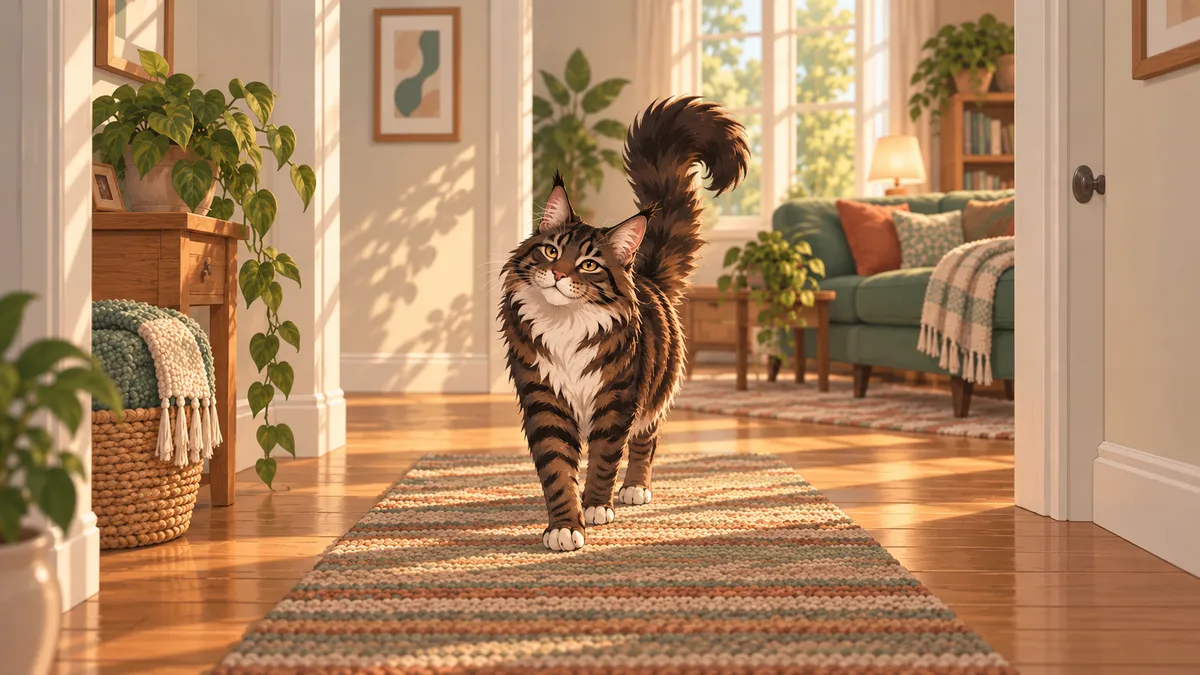
The short answer
Read the whole cat, not one part: ears, eyes, whiskers, tail, posture and sound, together and in context. Forward ears, soft eyes and an upright tail usually mean your cat is comfortable; flattened ears, wide pupils, a tucked, puffed or lashing tail and a crouched body usually mean they need space. When unsure, give room and let your cat come to you.
Read the whole cat, not one signal
A cat’s face is less expressive than a dog’s, and many cats hide fear or pain, so small changes matter. One signal alone can mislead: a purr may come from a relaxed cat or a stressed one, and wide pupils may mean fear, an exciting game or simply a dim room.
Look at everything together, notice what has just happened and compare it with your cat’s normal. Describe before you interpret: “ears sideways, pupils wide, tail tucked, crouched after the doorbell” tells you more than “grumpy”.
Ears and whiskers
Ears facing forward and relaxed are the usual sign of a calm cat, even as they swivel towards sounds. Ears turned to the side or back mean your cat is less comfortable. Flat against the head with wide pupils, they often signal fear; upright but rotated outwards with narrow pupils, usually frustration.
Whiskers resting relaxed against the face suggest calm. Pushed forward, they mean interest or tension, so check the ears and pupils: forward ears and small pupils suggest curiosity, flat ears and wide pupils suggest stress. Flattened against the cheeks, whiskers suggest fear.
Eyes, pupils and the slow blink
Relaxed eyes look soft and almond-shaped, with small pupils, and may be half closed. Wide eyes with large pupils often go with stress or fear, but pupils also widen in dim light and in an exciting game. A threatened cat may look away or blink quickly. Avoid staring, which cats can take as a threat.
A slow blink is a gentle, deliberate close and open of the eyes. If the rest of your cat looks relaxed, blink slowly back and turn your head slightly to the side. If they look tense, give them space instead.
What the tail is saying
An upright tail usually means a confident, friendly cat; with a curved tip, like a question mark, it is a hello. A tail wrapped around your legs is a friendly greeting too. A quivering upright tail can mean excitement, but it also goes with spraying, which can be a sign of stress.
Movement matters too. A slow sweep can mean your cat is undecided, frustrated or about to pounce; a fast wag means anger or upset; a twitching or flicking tail, agitation. A puffed-up tail means fear or threat, and a tucked tail, fear or stress. Unusual tail movement alongside other changes is a reason to call your vet.
Posture, and the belly on show
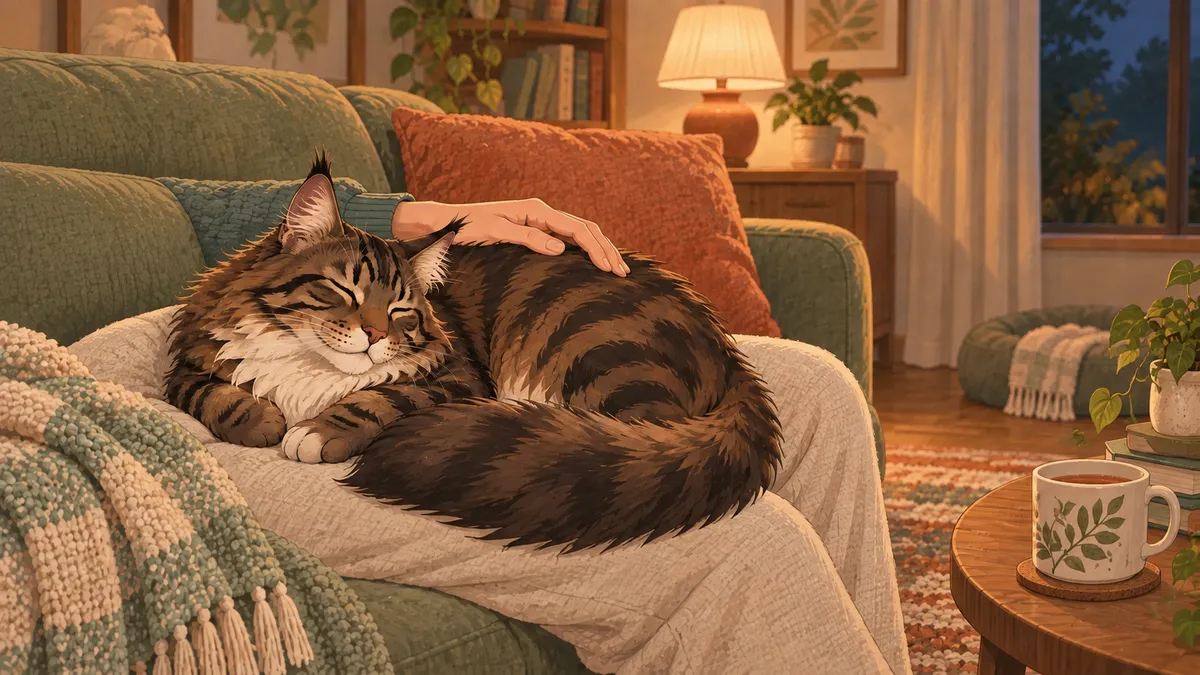
A relaxed cat stretches out, curls up or lies on one side, with no obvious tension. A cat crouched tight, head lowered and tail tucked, is worried and does not want you near. A frightened cat pulls the head in and keeps low, ready to run.
An arched back, sideways stance and raised fur say “stay away”. A belly on show is not always an invitation either: rolling over to greet you usually means your cat feels relaxed, not that they want a tummy rub. A cat flattened and half rolled onto one side, ears flat and mouth open, is warning you off.
Purrs, chirps, hisses and growls
Closed-mouth sounds such as the purr and the chirrup are mostly friendly, used for greeting and attention; the chirrup is a hello that some cats use with people too. Adult cats rarely meow at each other, so most meows are meant for you.
Hisses, growls and spits come with an open mouth and signal fear or hostility: your cat is asking you, or another animal, to stop or back off. Never punish a warning; it can make your cat more nervous of you. Give space, then look for the cause.
Signs of stress, fear and pain
Stress often shows as a change rather than a pose: hiding more, overgrooming, lip licking, slow and guarded movement, looking hunched when resting, changes in eating or toileting, or spraying indoors. A frightened cat may also start avoiding people or show new aggression.
Pain can look much the same. Signs include becoming less tolerant of people, hiding or sleeping more, crouching hunched with squinty eyes, vocalising when moving or using the litter tray, and sometimes purring. If your cat’s behaviour has changed, or you notice signs like these, contact your vet before any training.
Give space, or come closer?
Invitations: your cat walks up with the tail high, chirrups, rubs their face on your hand or follows your hand when you stop stroking. Requests for space: moving away, rotating ears, nose licking, a sudden groom, a flicking or lashing tail, widening pupils, hiding, a hiss or a growl.
To invite contact, sit or crouch rather than lean over, never corner your cat, look past them rather than at them, and offer a loosely closed hand. If they rub against it, stroke the cheeks or chin for a few seconds, then pause. A cat who wants more will usually rub against you again. Leave a cat alone while they eat, sleep or hide.
Using body language in training
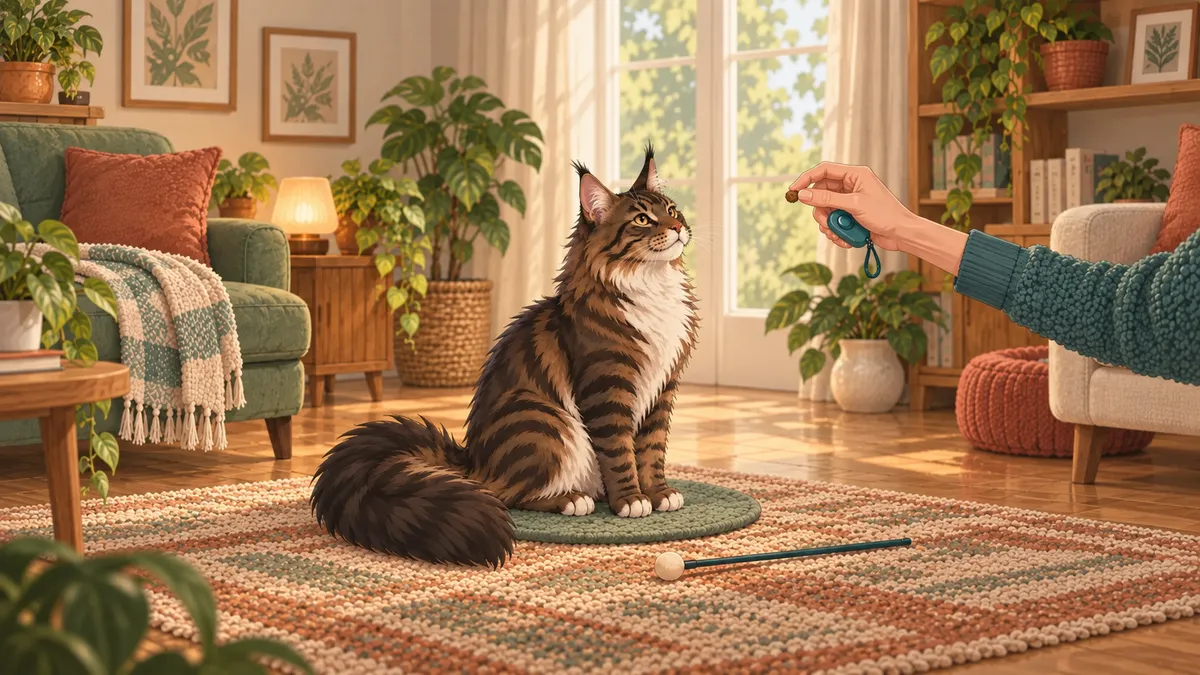
In a session, body language is your cat’s running feedback. Teach in small steps at your cat’s pace and watch for early tension: ears turning sideways, a flicking tail tip, lip licking, looking away. When you see it, stop or make the step easier: fewer tries, more distance or a simpler version.
Stop before your cat is obviously uncomfortable. If contact only ends when they swipe or bite, they learn that this is how to end it. Finish on a step your cat can do while they are still relaxed. Lapka asks after every session whether your cat stayed relaxed, so these signals become part of the record.
A body-language note from one session
Trick: paw to palm, living room, before dinner. Start: tail up, ears forward, took treats gently. Fourth try: ears turned sideways, tail tip flicking, licked lips. Changed: back to a simple paw lift, two easy tries, ended with a treat once the ears were forward. Next time: stop after three tries.
Note what you saw before what it meant; a few notes like this show where your cat tips from relaxed to tense.
Questions people ask
Why do cats purr?
Often because they are relaxed or want attention; kittens purr from birth to let their mother know they are fine. But cats also purr when stressed, for example at the vet, and when unwell or in pain, possibly to soothe themselves. Relaxed ears and whiskers and small pupils point to contentment. If your cat purrs much more than usual, or in unusual situations, talk to your vet.
Why do cats knead?
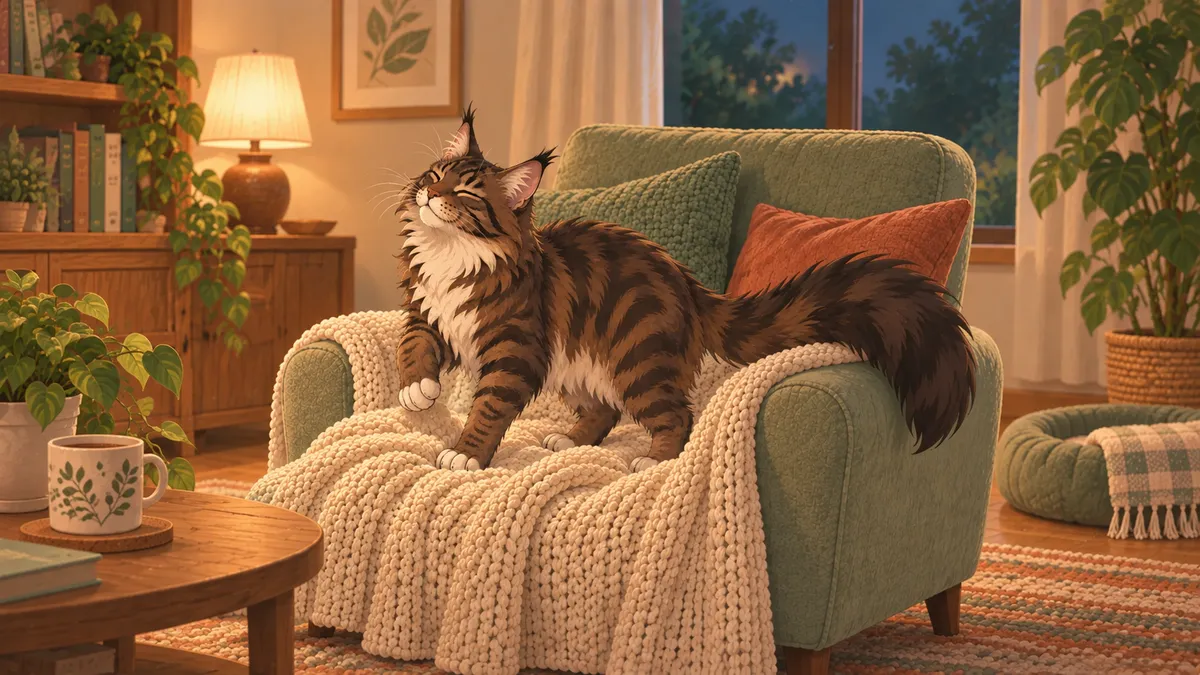
Kittens knead their mother to help the milk flow. Nobody knows for certain why some adults keep doing it; the most widely shared idea is that it still feels good. Those who do often knead soft blankets or people they feel safe with. It is normal, so never punish it; if the claws hurt, put a folded blanket between you.
What does a slow blink mean?
Often that your cat feels comfortable with you, but the evidence is limited and some cats slow blink when stressed, so read the rest of the body. Not every cat does it, and that is fine. Squinting or frequent blinking is different: speak to your vet.
What does a swishing tail mean?
Usually tension, not happiness: a slow sweep can mean frustration or a coming pounce, and a fast swish, lashing or thumping, agitation, upset or defensiveness. If it starts during stroking or play, stop and give your cat a break. A gentle, rhythmic wave of a raised tail can belong to a happy cat.
Sources and further reading
- Cats Protection — Cat body language
- Cats Protection — Cat tail meanings
- Cats Protection — Why does my cat purr?
- Cats Protection — Why do cats knead?
- Cats Protection — Why do cats slow blink?
- Cats Protection — Signs of pain
- International Cat Care — Cat communication
- International Cat Care — Why do cats..?
- International Cat Care — How to greet a cat
- Battersea — Cat body language
- Battersea — Is my cat happy?
- Battersea — How to stroke a cat and interact with them
- Battersea — Cat training
- RSPCA — Understanding your cat’s behaviour