Lapka
Lapka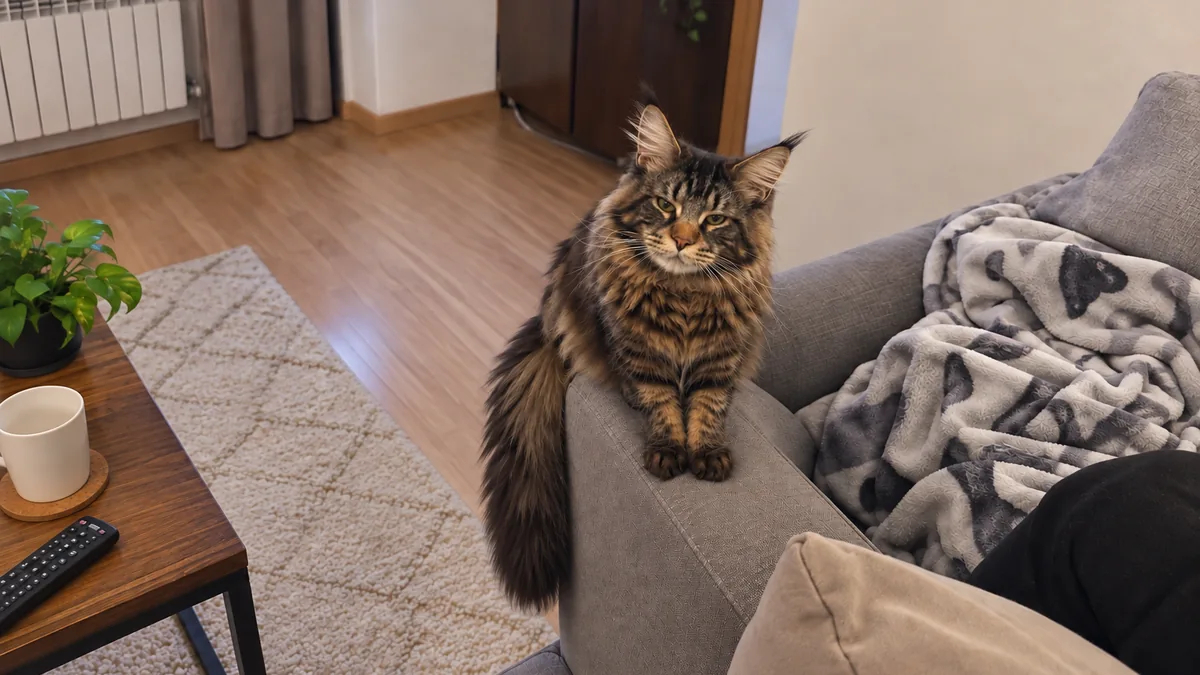
The short answer
Often your cat is asking for something, like food or attention, because staring has worked before. A calm stare is also a sign of trust: cats are unlikely to hold eye contact with someone they don’t like. Read the stare with the rest of the body. Soft, half-closed eyes and slow blinks mean a relaxed cat. Wide eyes, big pupils and flat ears mean they want space. If the staring is new, mention it to your vet.
Why your cat stares at you all the time
Often it’s simple: staring works. Cats don’t naturally use eye contact to talk to each other, but they’ll try it on people if they think it gets them something. If a stare once earned a treat or a bit of fuss, your cat made the link and will try it again.
Every time it pays off, the habit gets stronger. Meowing at people grew the same way: cats have no need to meow at other cats, but they learned that we answer. If you’d rather your cat asked by sitting and waiting, that’s a small trick a Lapka programme can teach.
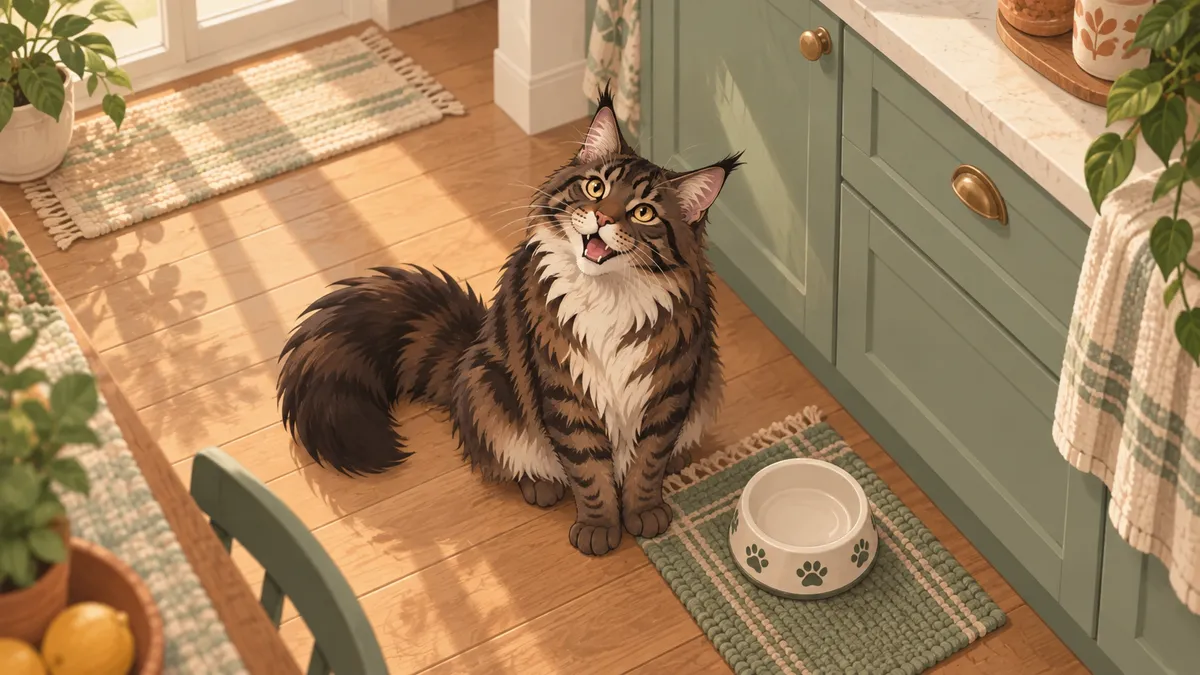
When the stare happens tells you a lot. Expectant looks tend to come just before meals, when your cat wants a fuss, and when you go near the cupboard where the treats and toys live. Their eyes are also much more sensitive to movement than ours, so someone moving about the kitchen is worth watching.
A calm stare is a sign of trust
Not every stare is a request. Cats Protection calls staring a sign of a close bond, because cats are unlikely to hold eye contact with someone they don’t like or trust.
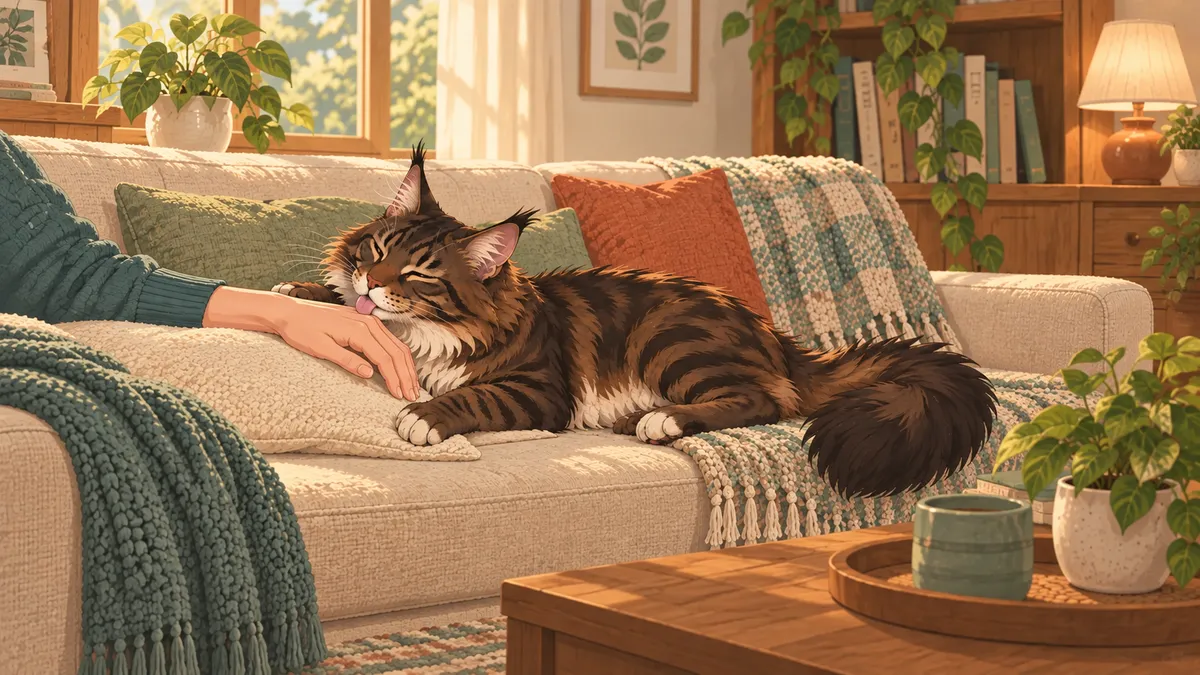
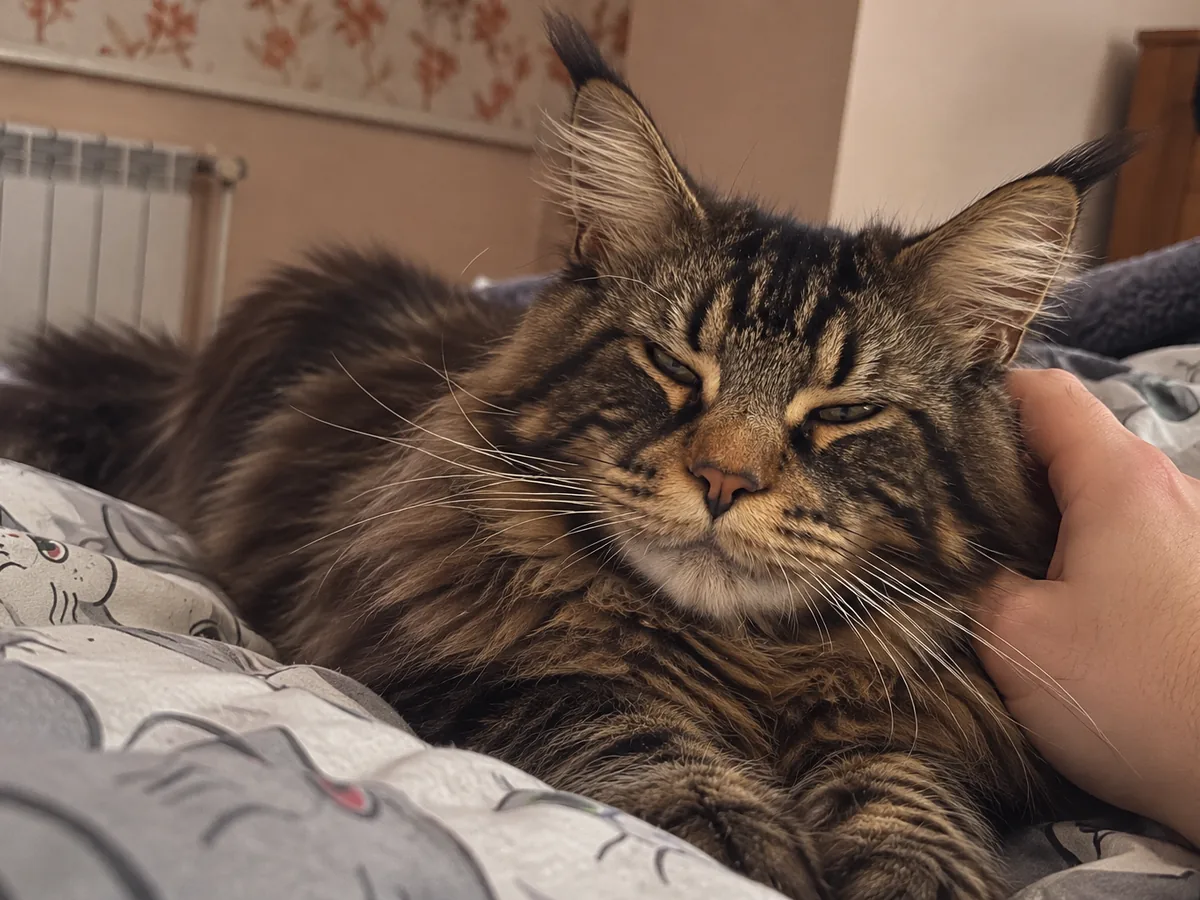
The friendly version is easy to spot. Your cat sits or lies loosely, ears up and facing forward, eyes more almond-shaped than round, sometimes half closed. If they slowly close their eyes while looking at you, they trust you enough to shut them with you right there.
Read the stare with the rest of the body
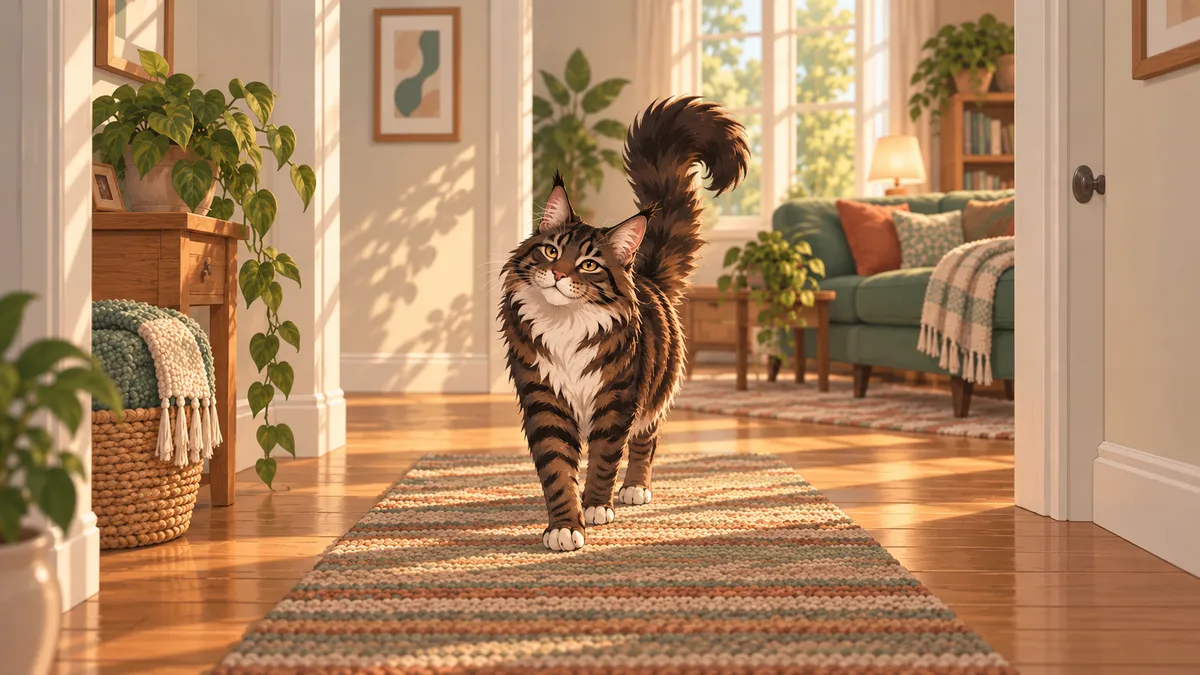
The eyes alone can mislead, so take in the whole cat. A relaxed cat has soft eyes, open or half closed, not wide and staring. The fur lies smooth, and the tail is often held straight up, sometimes with a curl at the tip.
A worried cat looks different. The eyes go wide and the pupils big, the ears swivel sideways or flatten, and the body tenses into a crouch with the tail tucked in tight. A tail flicking fast from side to side is often a sign your cat is getting upset.
That cat isn’t asking for anything. Look away and give them space. If they want to hide, let them. Moving closer and holding eye contact is likely to make them more unhappy.
The slow blink, and how to blink back
A slow blink is a gentle, deliberate blink: the eyes narrow, close for a moment, then open again. Researchers at the universities of Sussex and Portsmouth tested it in 2020. In the first experiment, with 21 cats in their own homes, the cats slow blinked more at their owners after the owners slow blinked at them. In the second, cats were more likely to come to a stranger’s outstretched hand after the stranger slow blinked than when the stranger kept a neutral face.
You can try it on the sofa tonight. Wait until your cat is calm and looking at you. Professor Karen McComb, who led the study with Dr Tasmin Humphrey, suggests narrowing your eyes as you would in a relaxed smile, then closing them for a couple of seconds. Turn your head slightly to the side as well. If you’re lucky, your cat blinks back.
Some cats never do, and that’s fine. They show affection in other ways, like rubbing against you or choosing to sit near you. Cats Protection also points out that the evidence is still limited and that some cats slow blink when they’re stressed, so read the blink together with the body around it.
Why a hard stare can feel like a threat
Between cats, a long direct stare is a challenge. International Cat Care says staring at another cat is perceived as threatening. It’s one of the quiet ways cats compete, like sitting between another cat and the litter tray. In an open standoff, their eyes are often wide, in a fixed stare.
Your cat can read your stare the same way, so don’t hold one. When your eyes meet, blink slowly or look away. Dr Humphrey even suggests the slow blink may have started as a way for cats to interrupt an unbroken stare.
Staring without blinking
Cats blink less often than we do, so a long look with hardly a blink is normal. It can simply be focus: on a toy, a bird outside, or the fork halfway to your mouth.
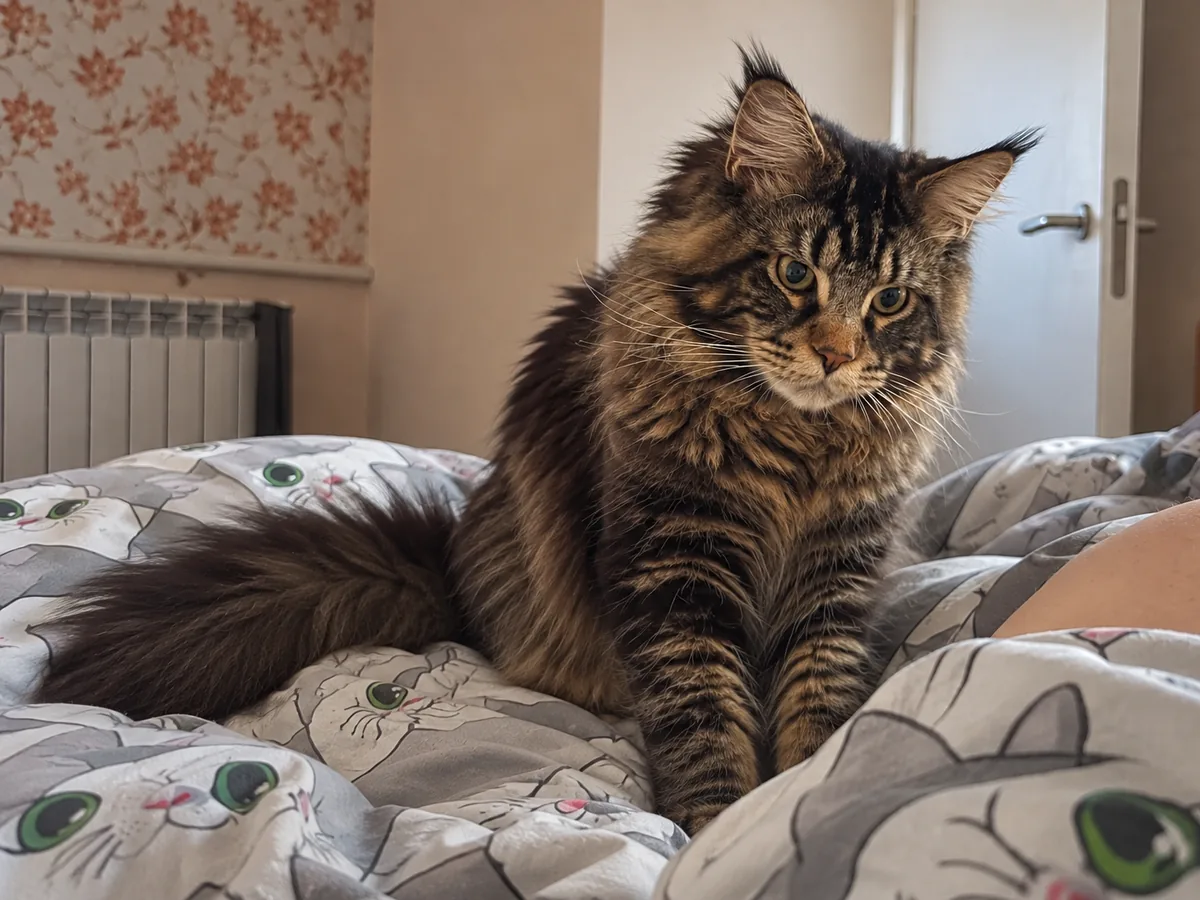
A curious cat has ears forward and pointed, eyes open with small pupils, and whiskers pushed forward toward whatever they’re watching. If the body is loose, that’s interest. If it’s stiff, with flat or sideways ears and a flicking tail, your cat is tense, and the kind thing is to look away and give them room.
Why your cat stares at you while you sleep
Cats are most active at dawn and dusk, and many wake at the first sight of sunrise, ready for breakfast. Most owners know what follows the stare: a meow, or a paw on the face.
Getting up the moment you feel the stare teaches your cat that staring at a sleeping person works. Instead, try smaller, more regular meals through the day, or an automatic feeder set to open in the early morning. Plenty of play in the daytime uses up energy, and a fishing-rod toy is a good start.
Don’t tell your cat off. Cats Protection warns that some medical conditions make cats wake in the night, cry a lot or seem restless and confused. If night waking is new, see your vet.
When your cat stares with big pupils
Big pupils don’t always mean fear. First, check the light: a cat’s pupils can open wider than ours to let more light in, so in a dim room or at dusk they look big whatever the mood.
Excitement does it too. A cat waiting for food or a toy can look at you with rounder eyes and large pupils, though in bright light you may not see it. So does play: a cat tearing round the house in a burst of energy has a flicking tail and widely dilated pupils, often at dusk, sometimes after a long stare at a top corner of the room.
Fear and anger make pupils big as well, and then the rest of the body agrees: ears flat or turned sideways, a low, tense body, a tail tucked in or held stiff. A cat like that needs space and somewhere to hide. Look away.
When staring needs a vet
Staring on its own is usually nothing to worry about. But if your cat has only recently started, Cats Protection suggests mentioning it to your vet, who can rule out medical causes. In an older cat, staring can be a sign of sight loss, so get them checked as soon as possible.
Look for other changes alongside it. Cornell’s vets say a cat that is losing their sight may bump into familiar furniture, struggle to find the food bowl, and freeze in place when startled instead of running off. Check the eyes, too. A cloudy eye, a change in the colour of the iris, two pupils that don’t match, or a big pupil that stays big in bright light are reasons to see a vet soon.
Speed matters. In older cats, sight loss that seems sudden is often linked to long-term high blood pressure, and early treatment can sometimes bring some vision back. Once a cat is fully blind, the sight rarely returns.
A week of stares, written down
Mon, 5:50. On the bed, staring at my shoulder. Ears up, tail wrapped round his paws. Got up and fed him. Tue, 5:45. Same stare, then a paw on my cheek. Wed: set the automatic feeder for 6:00. He sat by it and waited. Thu evening, sofa: long look, half-closed eyes. I blinked slowly and turned my head. He blinked back.
Written down, the two kinds of stare are easy to tell apart: the morning one had breakfast behind it, and the evening one asked for nothing.
Questions people ask
Is it creepy when my cat stares at me?
It can feel that way, especially at three in the morning. Usually your cat wants something or is simply keeping an eye on someone they trust. Look at the ears and the body: if they’re relaxed, so is your cat.
Does my cat love me if they stare at me?
Often, yes. Cats are unlikely to hold eye contact with someone they don’t like or trust, and a slow blink during the look is an even better sign. Cats that don’t stare can be just as attached; they show it in other ways.
Should I stare back at my cat?
Not for long, because a fixed stare can feel like a threat. Look away, or narrow your eyes and close them slowly for a couple of seconds. If your cat blinks back, you’ve just had a small conversation.
Why does my cat stare at me when I eat?
They’re most likely hoping for a share. If a stare at the table ever earned a bite, your cat remembers. The more a stare is rewarded, the more your cat will use it, so keep your plate to yourself.
Why does my cat stare at the wall or at nothing?
Sometimes it’s the start of a burst of play: a cat may stare into a top corner of the room, then launch across the carpet. If staring at nothing is new, or comes with confusion or bumping into things, see your vet.
Sources and further reading
- Cats Protection — “Why does my cat stare at me?” and other behaviour FAQs
- Cats Protection — Cat body language
- Cats Protection — Why do cats slow blink?
- Cats Protection — Cats at night
- Cats Protection — Can cats see in the dark? And other cat eyesight facts
- Scientific Reports — The role of cat eye narrowing movements in cat–human communication (Humphrey et al., 2020)
- University of Sussex — How to build rap-paw with your cat: new psychology study
- International Cat Care — Conflict between cats
- International Cat Care — Why do cats..?
- PDSA — Cat body language
- Battersea — How do I know if my cat is excited to see me?
- RSPCA — Understanding your cat’s behaviour
- RSPCA — Cat body language
- Cornell Feline Health Center — Sudden blindness
- Cornell Feline Health Center — Feline glaucoma