Lapka
Lapka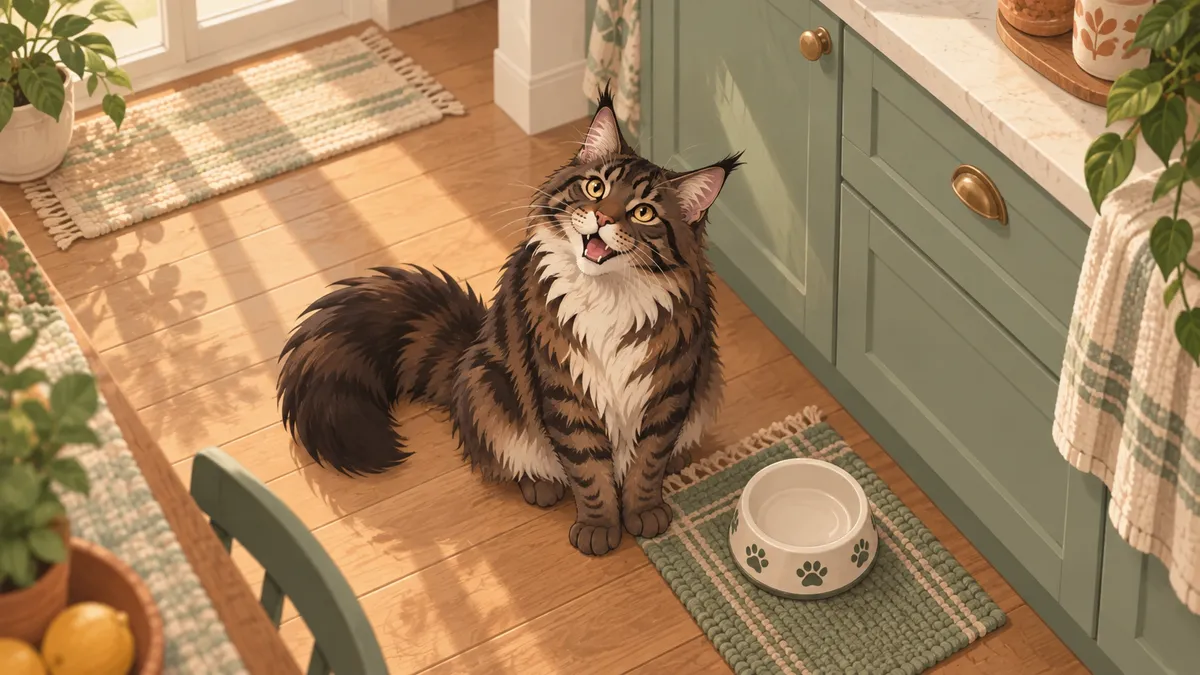
The short answer
Cats meow mainly to talk to people: adult cats rarely meow at each other, but they use the meow to say hello and to ask for food, attention or an open door. A cat who meows a lot has often learned that it works, or has a need that isn’t being met, such as hunger, boredom or long hours alone. Meowing that is new, louder or different, especially in an older cat, is a reason to see your vet.
Meowing is mostly for people
Kittens mew to tell their mother they are hungry, cold or in distress. Grown cats rarely meow to each other, relying on scent, body language and other subtle signals instead. Yet they keep meowing at people all their lives, probably because it gets us to do what they want.
Because we respond, the meow takes many forms, varying in pitch, length and loudness, and each cat develops their own set of meows that their people learn to recognise.
What your cat may be asking for
Most meows ask for something ordinary. Many cats meow hello when you come home or speak to them. Some want attention: a stroke, a game or a chat. Some meow whenever anyone walks into the kitchen, just in case, or to wake you for breakfast. And a cat who wants to go out, or back in, usually learns to meow at the door.
Different requests often sound different, such as a short meow for attention and a longer one for food. Note the time, the place and what happens next, and each meow gets easier to read.
Why some cats meow so much
Cats vary in how much they talk, and some breeds are noisier than others: the Siamese is known for being talkative. So how much your cat meows matters less than whether that has changed.
Part of it is learned. If a cat meows and we reply with food or attention, they are very likely to do it again, and a cat who gets what they want every time they cry learns that crying works. Even shouting is a kind of attention.
When more meowing means a vet visit
If your cat starts meowing more than usual, or the sound changes, see your vet before treating it as a habit. Pain, an overactive thyroid, high blood pressure, failing senses and cognitive decline can all increase meowing. Even a cat who has always meowed for food is worth a check.
Frequent, urgent or unpleasant-sounding meows or groans can mean pain, especially with hiding, eating less or a hunched posture; if you suspect pain, see your vet as soon as possible. In cats aged ten or older, loud crying, often at night, with confusion or changed sleep can point to cognitive dysfunction, similar to dementia in people, though other, sometimes treatable illnesses can look the same.
Check the everyday needs
If the meowing isn’t new, look for a simple reason before deciding your cat is being demanding. Is the water bowl empty? Can they reach the litter tray? Are they shut in somewhere?
Then look at their day. Cats left alone for long hours may meow more for attention, and a midday visit with a game can help. Indoor cats with little chance to stalk, chase and pounce can get bored and frustrated. Ears turned out to the side or back and wide eyes suggest worry rather than a request.
Meet needs on a schedule, then reward the quiet
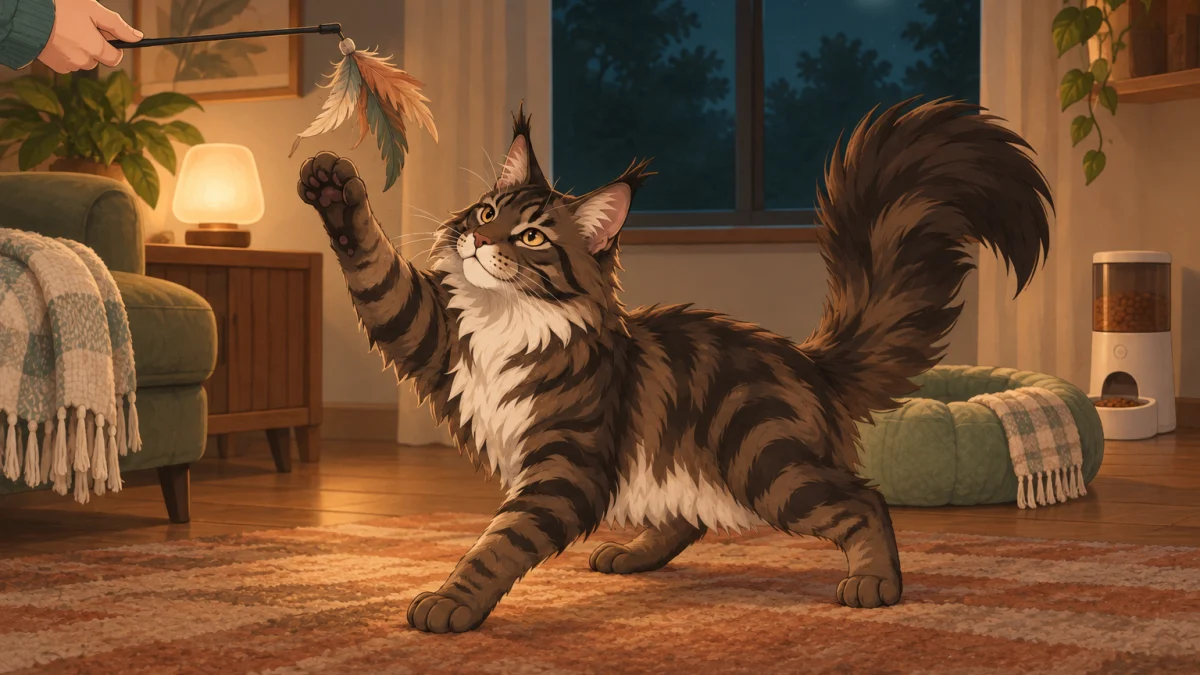
Once health and the basics are covered, make the good things predictable. Feed at set times, so asking in between stops paying off; an automatic feeder can take over early breakfasts. Play with a wand toy at least twice a day and give attention at roughly the same times. If the meowing starts at a certain hour, offer a game just before.
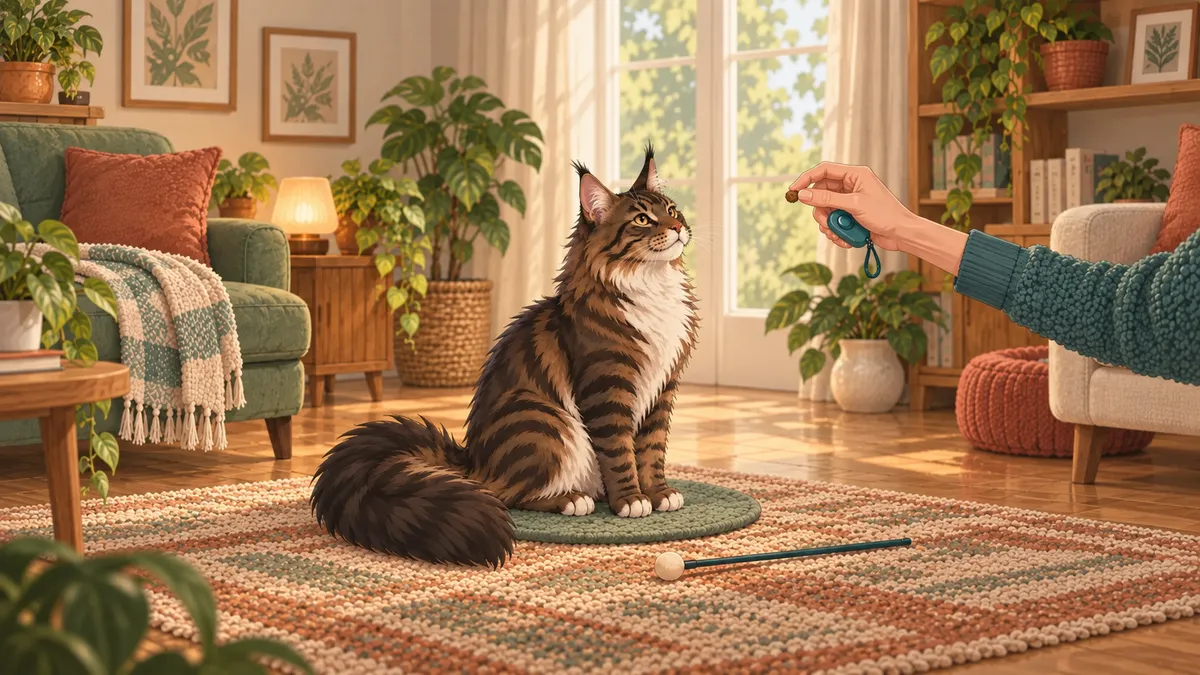
When a meow is clearly a demand, don’t answer it. Wait for a moment of quiet, even a brief one, then give attention straight away, so your cat learns that quiet is what brings you over. If they have had their daily food and still cry, offer play instead. Lapka’s “Talking all day” programme works on daytime meowing in the same small steps: a game before the usual meowing time, attention in the quiet pauses.
What not to do
Don’t shout at, scold, spray or hit your cat for meowing. Punishment is unlikely to have a lasting effect and can make your cat fearful of you, more defensive and prone to new unwanted habits. In an older cat, it can add to their anxiety and make the meowing worse.
Don’t ignore a meow until you know what it means, either. And agree on the rules at home, so a demand meow gets the same calm response whoever hears it.
Meowing at the door
Cats who go outside usually learn to meow at the door, and one used to going out who now has to stay in is likely to meow at doors and windows for a while. A cat flap gives an outdoor cat their own way in and out; a locked one can leave them meowing and scratching at the door in frustration.
Indoor cats need plenty to do instead: toys, cat trees, puzzle feeders and regular play.
Yowling in cats who aren’t neutered
Cats who aren’t neutered are more likely to yowl. A female in season calls or wails to attract males and may spray, try to escape and wander; she can come into heat every two to three weeks. Unneutered males yowl to get to females and roam further from home.
Neutering is the best way to reduce this kind of meowing. Welfare charities recommend neutering kittens at around four months, when females can start getting pregnant. If your adult cat isn’t neutered, talk to your vet.
A day of meowing, noted down
Tue · 06:15 meowing at the bedroom door until I got up; breakfast is at 07:00 · 17:40 short meows, following me around; wand game at 17:45, then quiet · 18:10–18:30 long meows in the kitchen; waited for a pause, then fed · water full, litter tray clean.
A few days of notes show which meows gather around meals, doors or your routine, and where a set time or an earlier game could take their place.
Questions people ask
Why does my cat meow at night?
Often from boredom or hunger, so play during the day and consider smaller, more regular meals or an automatic feeder for the early hours. Don’t tell your cat off: night-time crying can be a sign of pain, or of confusion in an older cat, so if it is new, see your vet. The guide on cats waking you at night covers the bedroom routine.
Should I ignore my cat’s meowing?
Only once you are sure it is a demand, like asking for food between meals. Check the basics first: water, litter tray, a closed door. Then give attention as soon as your cat is quiet, so they learn what brings you over.
Why is my older cat meowing so much?
Ask your vet to check them first. Older cats are more prone to an overactive thyroid and kidney disease, night-time meowing is relatively common with an overactive thyroid or high blood pressure, and loud crying at night can be a sign of cognitive dysfunction. Some of these can be treated. At home, stay patient: punishment can make an anxious older cat worse.
Do cats cry?
Not with tears, as people do: a cat’s tears just keep the eyes moist and healthy. A cat’s “crying” is a loud meow or yowl, or a faint whine or whimper, and usually means they want something or something is wrong. Call your vet if their eyes water more than usual or you see discharge, sores or scabs around them.
Sources and further reading
- ASPCA — Meowing and Yowling
- Cats Protection — Why do cats meow and what does it mean?
- Cats Protection — Why do cats cry?
- International Cat Care — Cat communication
- International Cat Care — Why do cats..?
- FelineVMA (formerly AAFP) — Training Techniques for Addressing Undesirable Behaviors
- Cats Protection — Cats at night
- Battersea — How do I tell if my cat is frustrated?
- Battersea — How do I tell if my cat is in pain?
- Cornell Feline Health Center — Cognitive Dysfunction
- International Cat Care — Cognitive dysfunction syndrome (senility, dementia) in cats
- ASPCA — Older Cats with Behavior Problems
- Battersea — Caring for an older cat
- Cats Protection — Neutering your cat
- Battersea — Cat neutering