Lapka
Lapka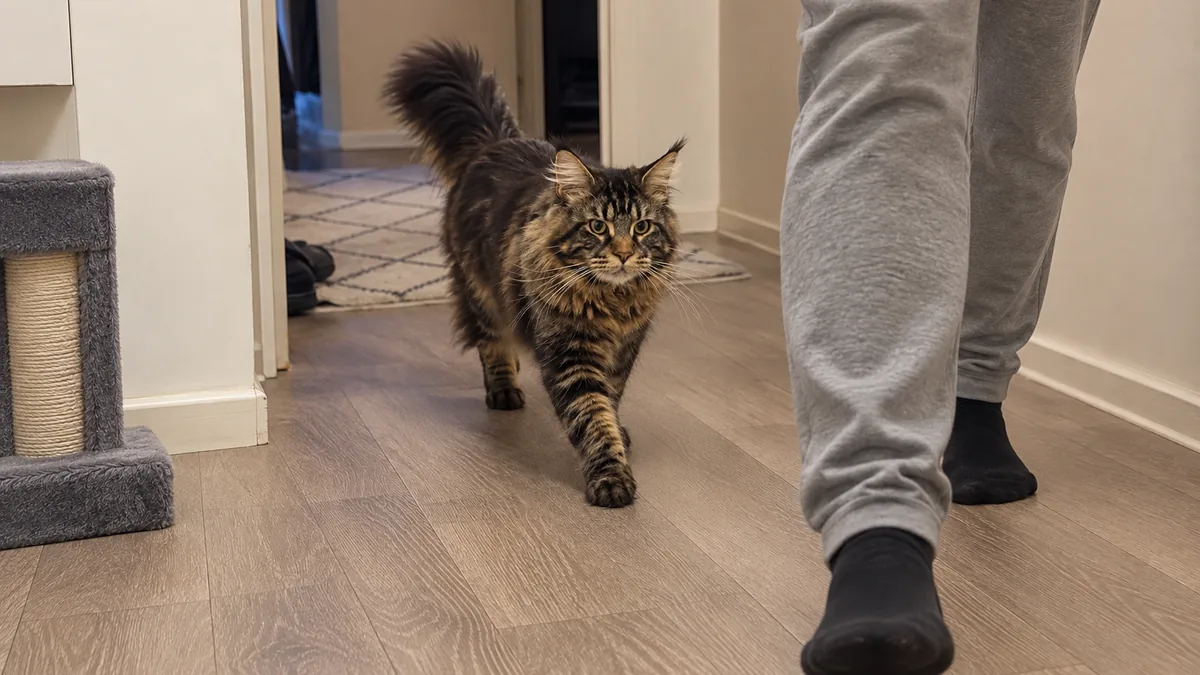
The short answer
Plenty of cats follow their owners around. Usually your cat wants to be near you, or is after something: food just before a meal, some fuss when you get home, or a game because they’re bored. Following you into the bathroom is probably curiosity, since it’s a room they’re often shut out of. If your cat suddenly becomes much clingier than usual, see your vet, who can check for a medical cause.
Do cats get attached to their owners?
Yes. In a 2019 Oregon State University study, each cat spent two minutes in a new room with their owner, two minutes alone, then two minutes with their owner again. Of 38 adult cats, 65.8% were securely attached. For human babies, it’s 65%. When the owner came back, these cats were less stressed than the others: they watched their person but kept exploring the room.
At home, a cat with a strong bond may follow you just to be near you and see what you’re up to. Some are waiting for you to sit down so they can climb onto your lap for a nap.
Why your cat follows you to the kitchen
Your cat may simply be hungry. That’s most likely just before their usual mealtime, or at dawn and dusk, when cats are usually at their busiest.
You may also have taught them this without meaning to. If a trip to the kitchen often ends with something in the bowl, your cat learns that you heading for the kitchen means food, and comes along every time.
Why your cat follows you from room to room
If you’ve just come home after a while out, your cat may want some fuss. Give them a stroke, a head rub or a chin tickle, or get out their favourite toy and play for a while.
A cat who doesn’t get enough chances to hunt or play may also follow you around the house out of boredom.
Why your cat follows you to the bathroom
Many owners know the scene: you go into the bathroom for some privacy, and your cat slips in after you and sits there staring. Cats Protection, a UK cat charity, says it’s probably curiosity. The bathroom is a room cats are often shut out of, so when the door opens, they take the chance to look around.
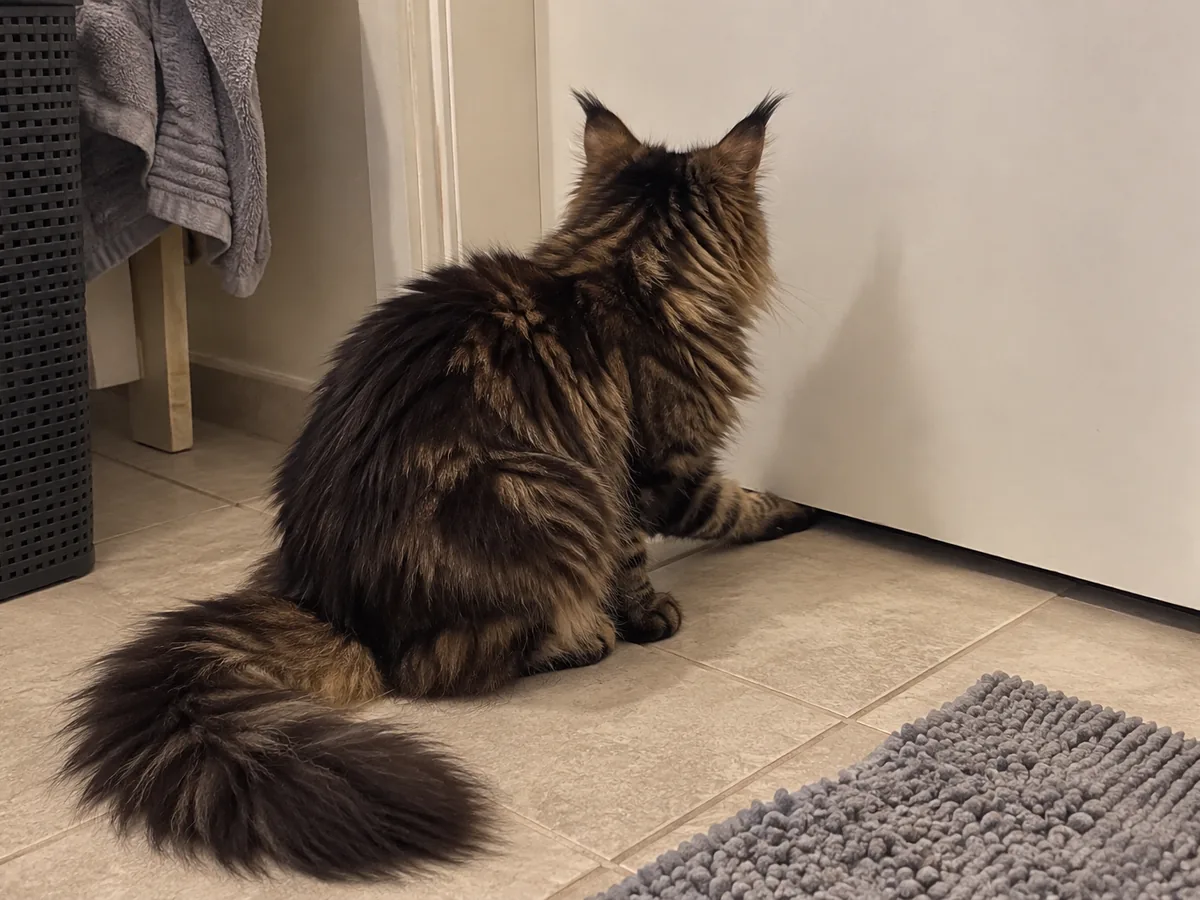
What your cat wants in the bathroom
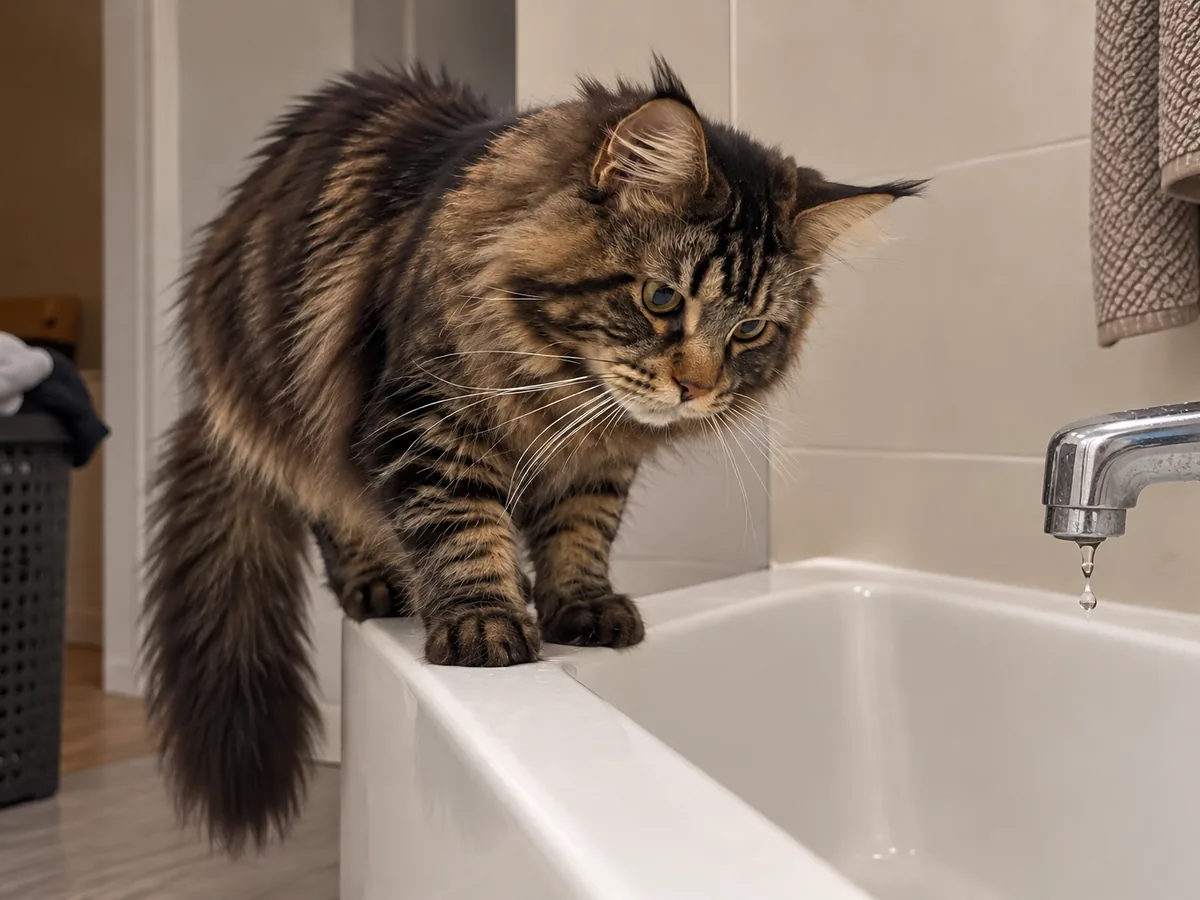
There’s a lot in there for a cat. They might want a drink from the tap, a nap in the sink, or a climb along the shelves and the edge of the bath.
Some just want your attention. If you give them a fuss, wash your hands first.
Why is my cat so clingy all of a sudden?
If your cat has become a lot clingier than usual, talk to your vet, who can check for a medical cause. The change is what counts: some cats are simply clingier than others, and older cats follow their owners more than young ones, who are often too busy exploring and playing.
Cats hide pain well. Instead of limping, a cat in pain may just act a little differently or seem out of sorts. The Feline Veterinary Medical Association says to contact your vet straight away if your cat starts eating less, hides, moves less or hesitates to jump, grooms less, changes their litter tray habits, squints, sleeps hunched up instead of curled up, or seems sensitive or makes a sound when you stroke or touch them.
When your cat struggles to be left alone
Some cats find it hard to be left alone at home. Cats Protection lists the signs: restlessness, lots of meowing, being more startled by noises than usual, refusing food, hiding more than usual, toileting outside the litter tray, a lot of scratching at the furniture and, in extreme cases, vomiting or diarrhoea. To see what happens while you’re out, you could leave a camera recording.
In a Brazilian survey published in 2020, owners answered questions about 223 cats and described signs of separation-related problems in 30 of them (13.45%). The most common were destructive behaviour, too much meowing and peeing in the wrong places.
The trouble can be tied to one particular person leaving, even if someone else is still at home. It can also start after a change in routine, such as going back to the office after working from home, and it’s more likely in a cat who has never been left alone for long in their current home.
Start with your vet, because these signs can have a medical cause. If your cat is healthy, your vet may refer you to a qualified cat behaviourist. It’s usually best not to wait, because long-standing problems can be harder to sort out.
Give your cat attention at regular times
Give your cat the fuss they ask for, but spread it through the day, at roughly the same times. A head rub can turn into a grooming session, which also keeps their fur in good condition. Cats like routine and find sudden changes stressful, so keep meals, play and rest to regular hours too.
A few short bursts of play burn off some of that clingy energy. A fishing-rod toy works well: let your cat chase it, then put it away out of reach. A game just before you go out helps too. If you’d like to spend part of that time teaching a trick, a Lapka programme plans the sessions and adjusts them after each one.
When you go out, skip the big goodbye. A lot of fuss at the door can make your cat more stressed.
Things for your cat to do while you’re busy
Give your cat things to do that don’t need you. A puzzle feeder makes them hunt for their food, and at mealtimes you can also hide some of their dry food for them to find.
Leave out toys they can play with on their own, such as ping-pong balls, and a cardboard box to explore or hide in. Cats feel safest when they can get up high and look around, so give them a cat tree, a clear windowsill or a shelf. The radio or TV on low may help some cats relax.
Never punish a cat for following you
Don’t shout at your cat or punish them for following you. The RSPCA says cats are very unlikely to understand it and can become more nervous or scared. Cats don’t act out of spite, and any change in behaviour can be a sign of pain or another health problem. If your cat has only recently started following you, book a vet check.
What a week of notes can look like
Mon, 6:40: walks me to the kitchen, twenty minutes before breakfast. Later sits outside the bathroom door with a paw under it.
Wed: I’m out all day. In the evening, follows me from room to room until we play with the fishing-rod toy for ten minutes. Then sleeps on the sofa.
Sat, 6:40: the same walk to the kitchen. Eating, grooming and litter tray all as usual.
Notes like these show when your cat follows you. Here it lines up with breakfast and with long days alone, and nothing else has changed. If something does change, the same notes help your vet see what’s different.
Questions people ask
Is it normal for my cat to follow me everywhere?
Yes. Plenty of cats follow their people, and it’s more common in older cats, while young ones are often too busy exploring and playing. What’s worth a vet visit is a sudden change: a cat who has become a lot clingier than usual.
Can a cat be too attached to you?
In the Oregon State study, 34.2% of the adult cats were insecurely attached. When their owner came back, they showed signs of stress, such as a twitching tail and lip licking, and either kept their distance or clung on: they jumped into their owner’s lap and stayed there without moving. Kristyn Vitale, who led the study, says insecure cats may also run and hide or seem aloof, while most cats use their owner as a source of security. If your cat seems to struggle when you go out, start with your vet.
Why does my cat follow me in the morning?
It may well be about breakfast. Following for food is most likely just before a meal, and at dawn, when cats are usually at their busiest. Check you’re feeding the right amount for their weight (the packaging tells you), and try spreading their food through the day. A puzzle feeder makes them hunt for some of it.
Does my cat follow one person more than the others?
It can happen. A cat may follow someone they have a strong bond with, or the person who feeds them, because they’ve learned that a trip to the kitchen with that person means food. Separation-related behaviour can also be tied to one particular person leaving, even when others are still at home.
Should I let my cat into the bathroom with me?
That’s up to you. There’s a lot in there to interest a cat, from the tap to the sink and the edge of the bath, and some just want your attention. If you let them in, wash your hands before you give them a fuss. If you’d rather keep the door shut, give them something else to do at that time, like a puzzle feeder or a toy they can play with on their own.
Sources and further reading
- Cats Protection — Why does my cat follow me around?
- Cats Protection — Does my cat have separation anxiety?
- Cats Protection — Managing cat behaviour
- RSPCA — Understanding your cat’s behaviour
- Feline Veterinary Medical Association — How do I know if my cat is in pain?
- Oregon State University — Cats, like children and dogs, develop attachments to their caregivers, study shows (2019)
- PLOS ONE — Identification of separation-related problems in domestic cats: a questionnaire survey (2020)