Lapka
Lapka
Where to start
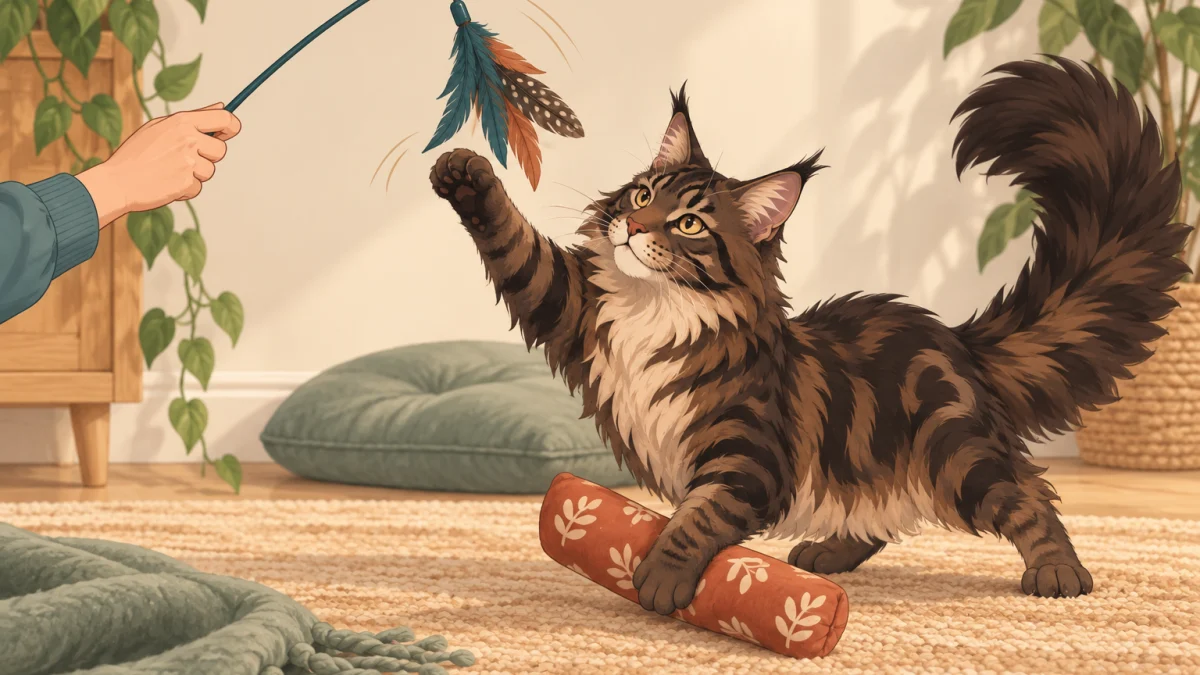
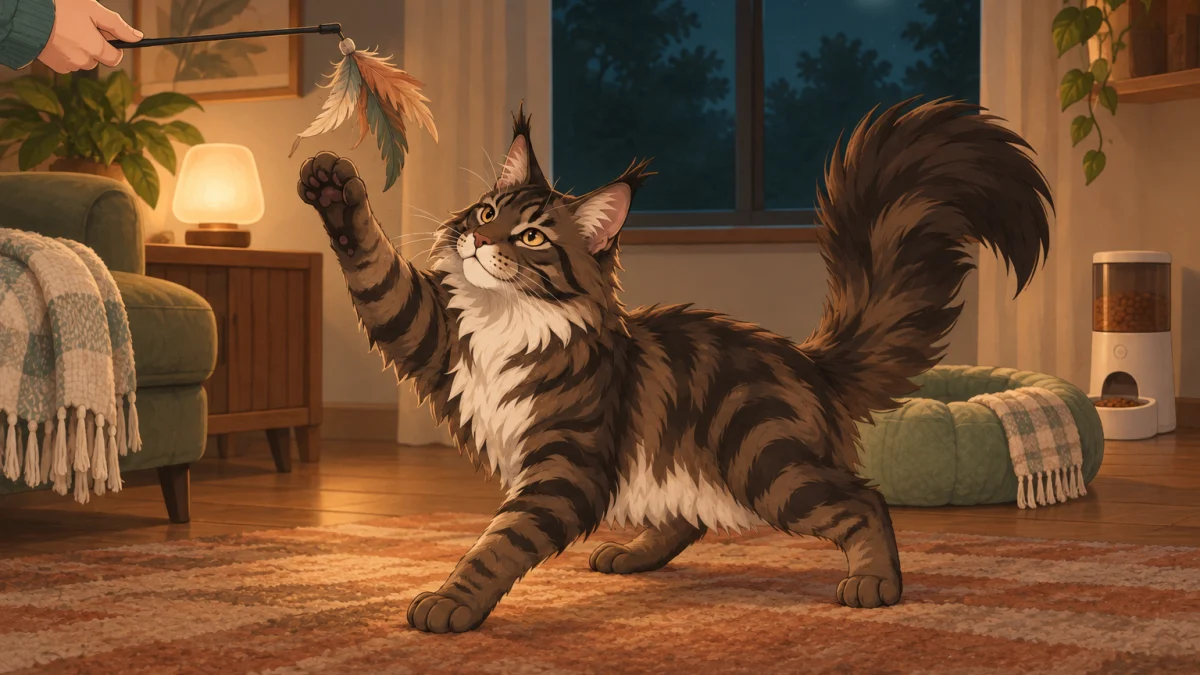
Try a wand toy or a cardboard box for a short shared activity. Let your cat catch the toy, supervise string toys and leave room for them to walk away.
Choose a simple game
Try a wand toy, letting your cat catch it occasionally, or offer a cardboard box to explore. Keep string toys supervised and put them away afterwards. Use a toy rather than your hands as the play target.
Make a tiny play plan
Choose one game, one spot and a point at which you will stop. For example: “I will offer the wand toy in the living room and finish if my cat leaves.” This is a suggested plan, not a quota. Leave room for your cat to decline instead of treating the activity as something to complete at any cost.
Notice which part they chose
Afterwards, note the actual response: watched the toy, followed it, pounced, caught it or walked away. Add which toy you used and where you played. These details make it easier to compare your own sessions without labelling your cat lazy or deciding that a single quiet afternoon proves boredom.
Find your next game in Lapka
The Games section gives you activities to try together. Choose one, open its instructions and record how it went. For a longer training goal, create a personal programme using your cat’s details. Lapka’s games guide real play with your cat; they are not moving fish or mice for your cat to chase on your phone screen.
Example play note
Toy: wand. Place: living room. Response: watched, followed twice, caught once, then left. This is an illustrative record, not a target score.
When it does not go to plan
Do I need to buy lots of toys?
A cardboard box is one starting option. For your own play notes, compare what happened with the toys you already have before making a shopping list.
My cat watched but did not chase. Was the game a failure?
Watching and chasing are different observations, not a pass or fail. Write down the toy, its movement and your cat’s response. That single session does not tell you why your cat chose to watch.
Sources and further reading