Lapka
The short answer
Cats rarely attack for no reason, even when it looks that way. Most often it’s play and hunting aimed at your hands and feet. It can also be irritation during stroking, fear, or redirected aggression: your cat sees another cat through the window and lashes out at whoever is nearest, sometimes hours later. If the attacks are new, see your vet first, because pain can cause them.
Why does my cat attack me for no reason?
“Cats don’t behave randomly or do things out of the blue, even if we can’t see a logical explanation,” says Nicky Trevorrow, a clinical animal behaviourist, writing for Cats Protection. When a cat seems to bite out of nowhere, there were often signs we missed.
Vicky Halls, a veterinary nurse and cat behaviour counsellor, puts the usual reasons plainly. Cats are mostly aggressive towards people because they are terrified, under heavy social pressure or sick. And a lot of what we call aggression is play or hunting aimed at the wrong target. Cats have sharp teeth and claws, she writes, but no bad intent.
Play is the most common reason. The ASPCA calls play aggression the most common type of aggressive behaviour that cats direct at their owners.
Why does my cat attack me when I walk past?
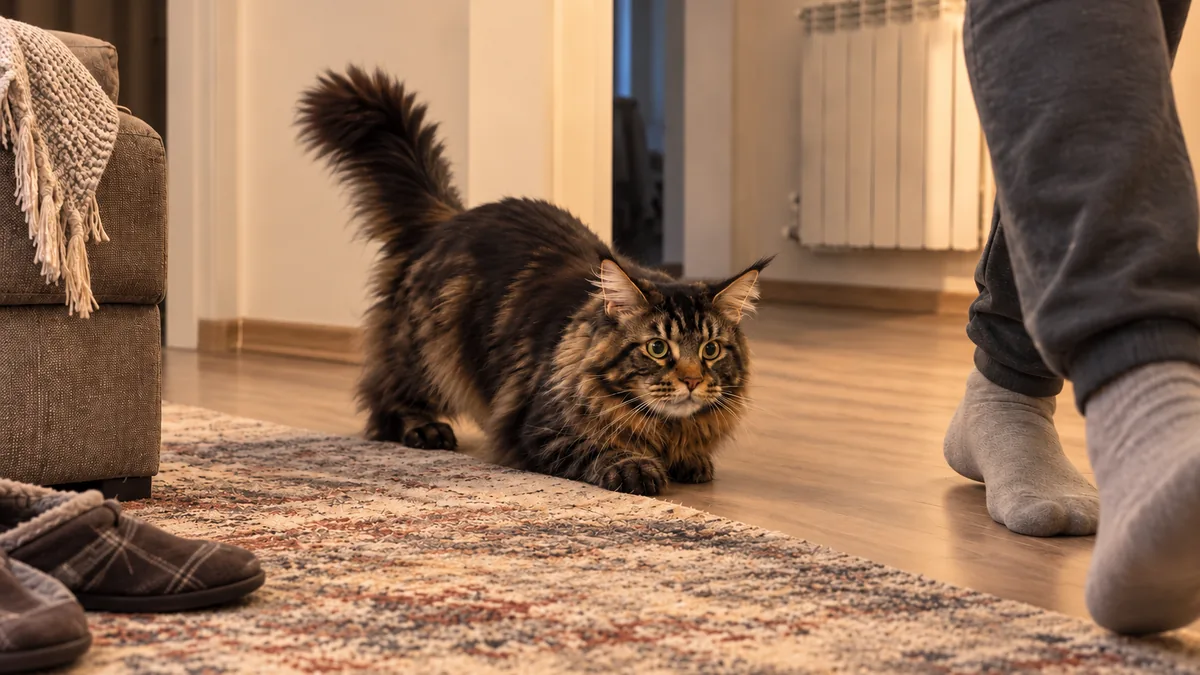
This is usually hunting, and your ankles are the prey. Cornell Feline Health Center says a cat about to play-attack often thrashes their tail, pins their ears back and has wide pupils. They may stalk their target and often pounce from a hiding place as it passes by.
It’s most common in kittens and young cats: the ASPCA says rough play is common and natural in cats under two. It can get worse when a cat spends long hours alone with no chance to play, or when people have encouraged them to chase and attack hands and feet.
A kitten who learned that fingers and toes are toys will keep going for them as an adult, with much sharper teeth and claws.
Look for a pattern: the same doorway, the same time of day. Then get there first with a game, before the ambush. A bell on a breakaway collar can help you tell where your cat is lurking.
Why does my cat attack me out of nowhere?
When an attack really does seem to come out of the blue, think about what your cat saw earlier. Redirected aggression happens when a cat is wound up by something they can’t reach, such as another cat on the other side of the window. They can’t get to it, so they turn on whoever is nearby.
The ASPCA says the gap between the trigger and the attack can be as long as hours. That’s why owners describe these attacks as unprovoked: they never saw the cat outside who passed by 30 minutes earlier. The bites are uninhibited, which makes this probably the most dangerous type.
Common triggers are another cat or birds seen through a window, the smell of another cat on someone’s clothes, loud or high-pitched noises, and a fight with another cat in the house.
A redirected attack happens only when someone comes close. In the ASPCA’s words, the cat won’t go looking for someone to attack. So if your cat is staring tensely out of the window, leave them be: don’t pick them up, talk to them or try to soothe them. Pulling down the blind where the outside cat shows up removes the trigger.
Why does my cat attack me when I stroke them?
Your cat asks for a fuss, then bites. Nicky Trevorrow points out that being stroked by a person isn’t a natural thing for a cat to accept. How comfortable they are with it depends partly on how much friendly handling they had as a kitten, between two and seven weeks old.
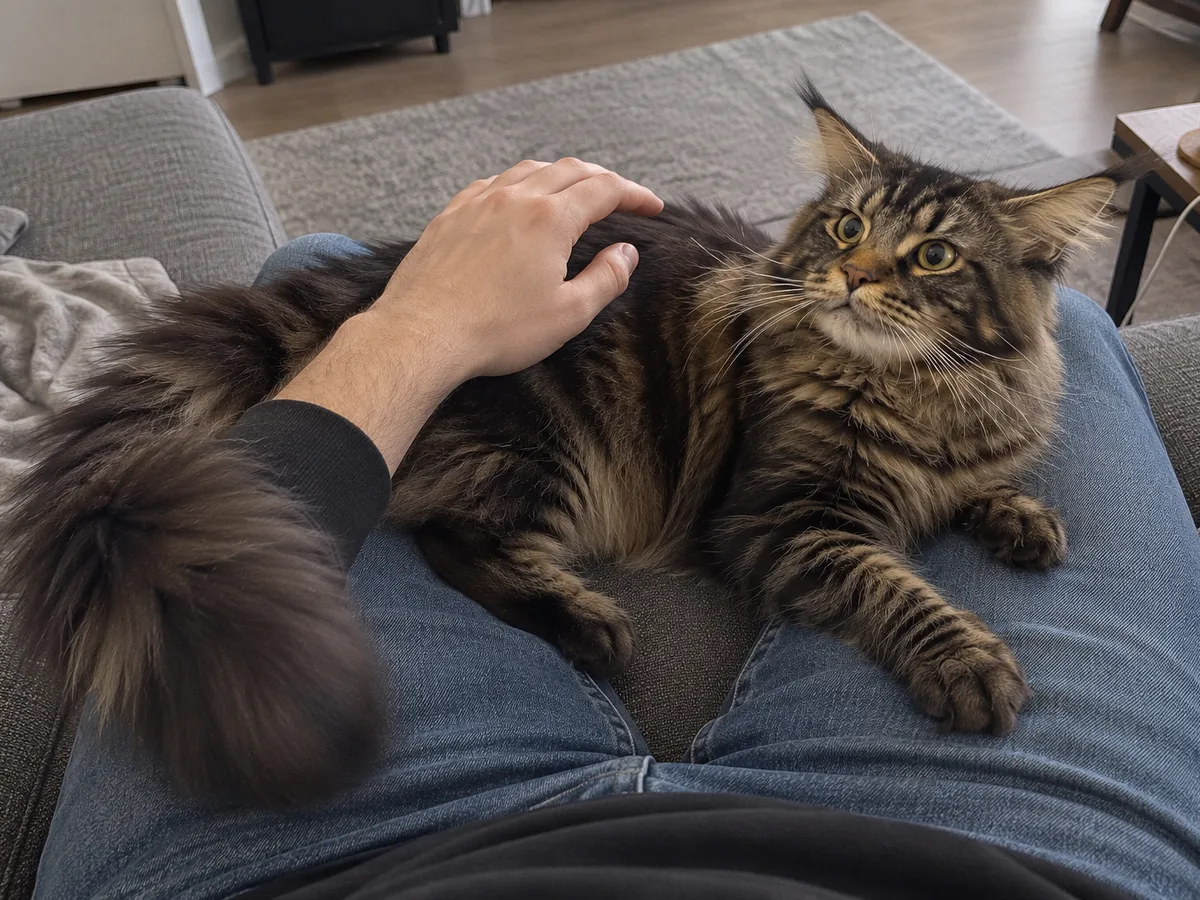
Stroking the same spot over and over can cause arousal, excitement, pain and even static electricity in the fur, the ASPCA says. What felt good a minute ago starts to irritate. Watch for the head turning quickly towards your hand, a twitching or flipping tail, ears flattening or rotating, restlessness and widening pupils. When you see them, stop.
Keep it short. International Cat Care suggests stroking for 3 to 5 seconds, then pausing to let your cat decide whether to carry on. Stick to the cheeks and chin. Many cats don’t like being touched on the belly, paws, legs, lower back or the base of the tail, and might lash out. A cat who rolls over to show their tummy is usually saying hello, and it isn’t an invitation for a belly rub.
Why does my cat attack me at night or when I go to bed?
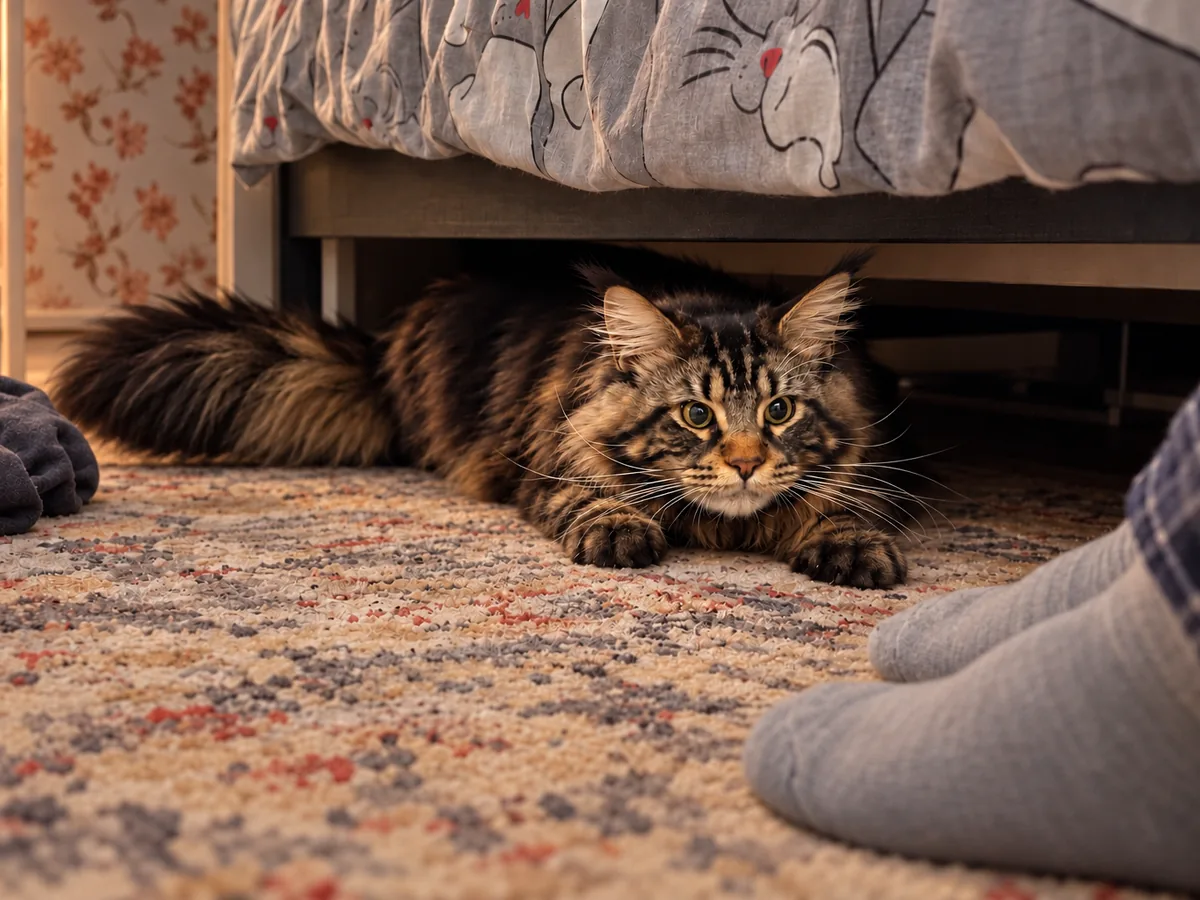
Cats are naturally more active at dawn and dusk, kittens and young cats especially, so the evening is their hunting hour. Cats Protection also notes that a fidgety person who moves their fingers and toes around a lot can set a cat off more than someone sitting still. Feet shifting at the edge of the bed are exactly that kind of movement.
If your cat hides under the bed and ambushes your ankles as you get in, Cornell suggests blocking off the hiding place. Cats Protection suggests plenty of play during the day to use up spare energy, and a fishing-rod toy is ideal for it.
If your cat pounces on you in your sleep or wakes you in the night, try not to tell them off. Cats Protection says some medical conditions make cats wake at night, cry a lot or feel restless and disorientated, so a cat who has only just started doing this should see a vet.
Why does my cat attack me but not my husband?
Cats Protection says it depends on why your cat bites. A scared cat may be afraid of one person in particular: someone new in the home, or someone who once frightened them.
If the bites come from overexcitement, the one who gets bitten is often the one who is around more and plays with the cat more, who once let them chase fingers and toes, or who jumps and moves when bitten. Fidgety hands and feet may get attacked more than someone calm and still.
The ASPCA adds that a cat can be territorial towards some family members and not others, and that the smell of another cat on someone’s clothes can set off an attack.
My cat started attacking me for no reason: see a vet first
A cat who has always been gentle and starts attacking needs a vet check before anything else. Cats Protection says new biting may be a sign that your cat is in pain, and that cats are masters of disguise when they hurt.
Cornell names hyperthyroidism, osteoarthritis, dental disease and central nervous system problems among the diseases that may cause aggression. A cat with sore joints may hiss, bite or scratch when they are touched. The ASPCA adds that older cats can suffer from confusion and insecurity, which can lead to aggression too.
International Cat Care says to contact your vet if your cat suddenly starts growling, hissing, swiping or biting when they didn’t before, or if it keeps happening. Your vet can also refer you to a behaviour specialist if needed.
The warning signs before an attack
Most cats warn you first. Vicky Halls lists the signs that mean it’s time to turn away: dilated pupils and a direct stare, a thrashing or twitching tail, hissing, growling or spitting, ears flattened against the side of the head or turned backwards, and a crouched or tense body.
International Cat Care adds quieter ones: skin twitching or rippling along the back, sudden freezing, head shaking, and licking the nose or lips when they haven’t just eaten. If you see these, stop touching and give your cat space.
Cornell describes a relaxed cat as one with normal-sized pupils, upright ears and a tail held up with no flicking or twitching. Save play and treats for when your cat looks like that.
What to do when your cat attacks you
Stay as still and calm as you can. Sudden movements and loud noises make a scared or overexcited cat more likely to bite again. Then move away and give your cat time to calm down, with a clear route to run and hide.
Never punish your cat. Cornell says any kind of physical punishment can increase a cat’s fear and make aggression worse, and Cats Protection says the same of telling them off. Don’t block their way out or try to comfort them while they are still wound up.
After a serious attack, Vicky Halls suggests leaving your cat alone for several hours to wind down, unless your vet says otherwise. With play attacks, Cornell says simply walking away can teach your cat that rough play means no play at all.
How to stop the attacks: give the hunter something to catch
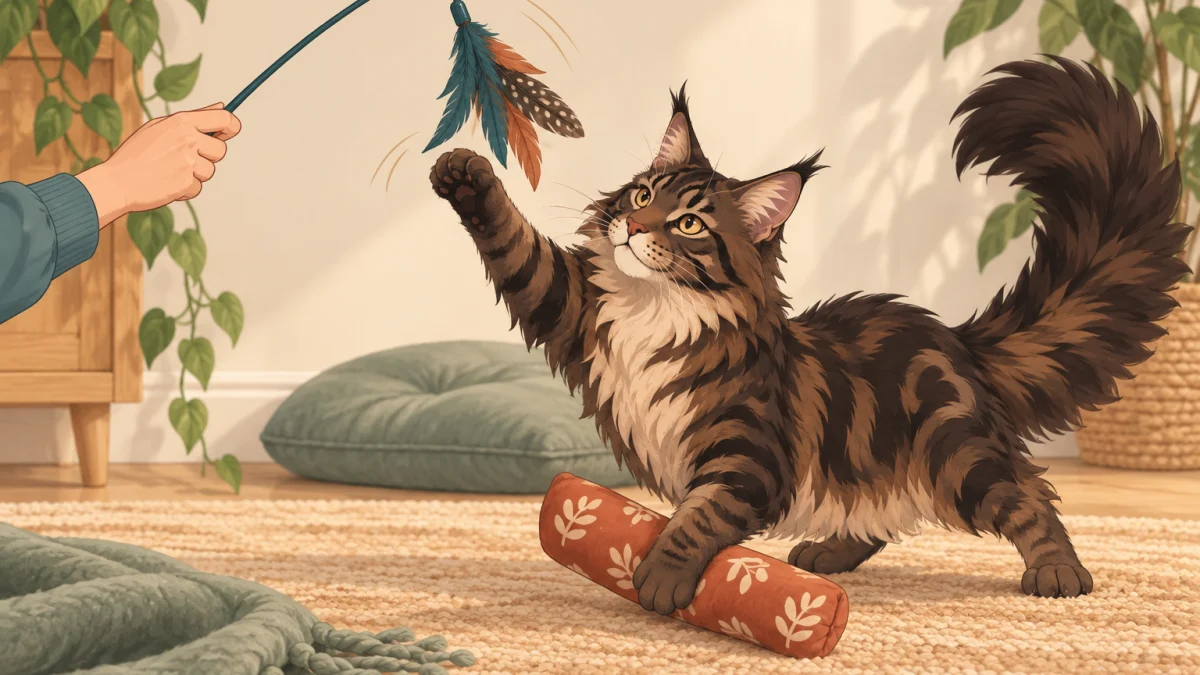
A cat who pounces on you needs something better to pounce on. A fishing-rod toy keeps your hands out of reach, and a kicker toy gives your cat something to grab and bunny-kick. Puzzle feeders let them hunt for their food.
Short and often works best. Cats Protection says most cats are happy with play and petting for a couple of minutes at a time, spread through the day, and International Cat Care says one minute of frenzied activity is a good result. Let your cat catch the toy at the end, then wind the game down and turn their attention to something else, such as food. International Cat Care gives this advice for kittens, to prevent ambushes on people.
Play at the times your cat usually ambushes you, before they start. If you’d like those games planned for you, a Lapka programme sets short daily sessions and adjusts them after each one.

What a week of notes can look like
Mon, 7:30 pm: swatted my ankle from behind the sofa on my way to the kitchen. Tail twitching just before.
Wed, 7:15 pm: five minutes with the fishing-rod toy before dinner, ending on a catch. No ambush tonight.
Fri, 3 pm: growling at a ginger cat in the garden. About an hour later, bit my hand when I went to pick him up.
Notes like these show when and where the attacks happen. Here the evening ambushes come on days without play, and Friday’s bite followed a cat at the window.
Questions people ask
Is my cat attacking me or playing?
Often it’s play. Play attacks come with stalking and pouncing, usually at moving hands and feet, and the bites are usually fairly gentle, though they can still hurt and leave a wound. A cat who hisses and crouches low with flat ears and wide eyes is scared. Leave them alone and let them hide.
Why does my cat grab my leg and bite it?
Cats Protection calls hugging your arm or leg and biting a classic hunting move. With large prey, cats grab it with their front legs and bite while kicking with their back legs. Give your cat a kicker toy to do this to instead.
Why does my cat bite me and then run off?
That’s typical of petting-induced aggression. The ASPCA describes a cat who suddenly feels irritated by being stroked, nips or lightly bites, then jumps up and runs off. Next time, stop at the first twitch of the tail or turn of the head.
What should I do if my cat bites me and breaks the skin?
Clean the area straight away, for at least five minutes with soap and water, even if the skin isn’t broken. Cats Protection says to seek medical advice straight away if the skin is broken or bleeding. Fever, headaches, swelling, redness or pain soon after a scratch need medical advice urgently, even when the skin wasn’t broken.
Can an older cat suddenly become aggressive?
Yes, and it’s a reason to see the vet. Painful joints, thyroid problems and dental disease can all play a part, and the ASPCA says older cats can suffer from confusion and insecurity. International Cat Care adds that senior cats may want less contact with people, or sometimes more.
Sources and further reading
- Cats Protection — Why does my cat suddenly attack me?
- Cats Protection — Why does my cat bite me?
- Cats Protection, The Cat magazine — When cats attack! The truth about cat aggression to humans (Vicky Halls, 2014)
- Cats Protection — Cats at night
- Cornell Feline Health Center — Feline Behavior Problems: Aggression
- ASPCA — Aggression in Cats
- International Cat Care — Handling and interactions
- International Cat Care — Playing with your cat