Lapka
Lapka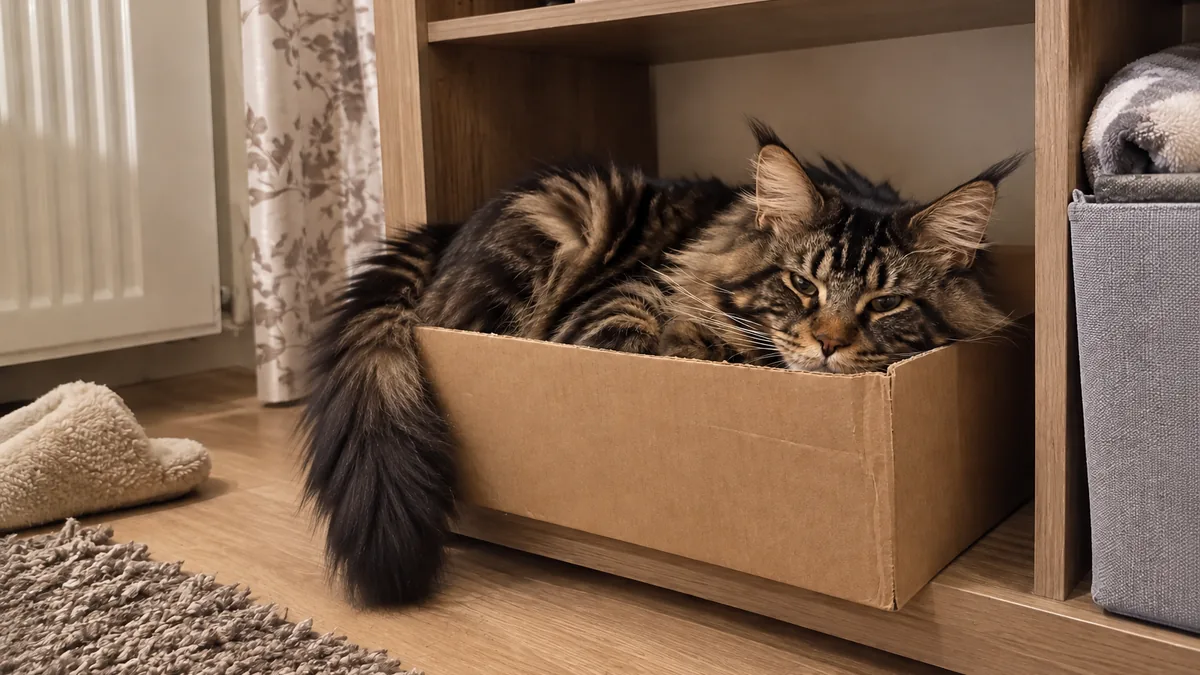
Where to start
First work out which kind of upset you're looking at. A scared cat makes themselves small and looks for a way out: give them somewhere to hide and leave them be. An over-excited cat stalks and pounces: keep still and give them a toy they can catch. Don't hold, chase or tell off either one. If the change is sudden, or your cat is hiding and not eating, call your vet.
Scared or over-excited? How to tell
A scared or stressed cat makes themselves small. They crouch low with the head down and the tail tucked under, flatten their ears or turn them sideways, and their eyes go wide with big, round pupils. Many freeze, slip off to hide or climb somewhere high.
An over-excited cat comes at you instead. They stalk your feet, grab your hand in the middle of a stroke, or lick you and then bite. A twitching, flicking tail means they're agitated. If the fur at the base of an upright tail puffs up while you're stroking them, stop before you get bitten.
A swishing tail can go with either, so read the whole cat. For comparison, a relaxed cat has soft, rounded ears, half-closed eyes with small pupils, and whiskers lying close to the face.
Give a scared cat space and somewhere to hide
Hiding is how a frightened cat copes. Let them stay put until they feel safe enough to come out. Cats Protection warns that coaxing a cat out can make them more anxious and keep them hidden for longer.
Make sure there's always somewhere to go: a quiet spot, ideally up high and covered, away from the food, water and litter tray. A cardboard box, an empty drawer or the top of a wardrobe all work. When visitors come, a quiet room to themselves is even better.
Then carry on as normal. Tiptoeing and whispering can backfire: International Cat Care says the tension it creates may make an anxious cat more anxious. If it's fireworks or a storm, close the curtains and put some music or the TV on.
What makes a frightened cat worse
Picking them up for a cuddle. It's what we'd want, but most cats would rather be left alone when they're scared. They'll come to you when they want a fuss.
Following them, reaching under the bed or blocking the way out. A cat who feels trapped may bite or scratch as a last resort.
Telling them off. The RSPCA says cats are very unlikely to understand being shouted at or punished, and can become more nervous or scared.
Rushing it: holding them on your lap so they get used to it, or pushing them into the carrier. Forcing it only reinforces the fear.
Let your cat come to you
Once your cat is out and about again, let them make the first move. Sit on the floor or a chair nearby, because a person towering over a cat looks frightening, and keep your movements slow.
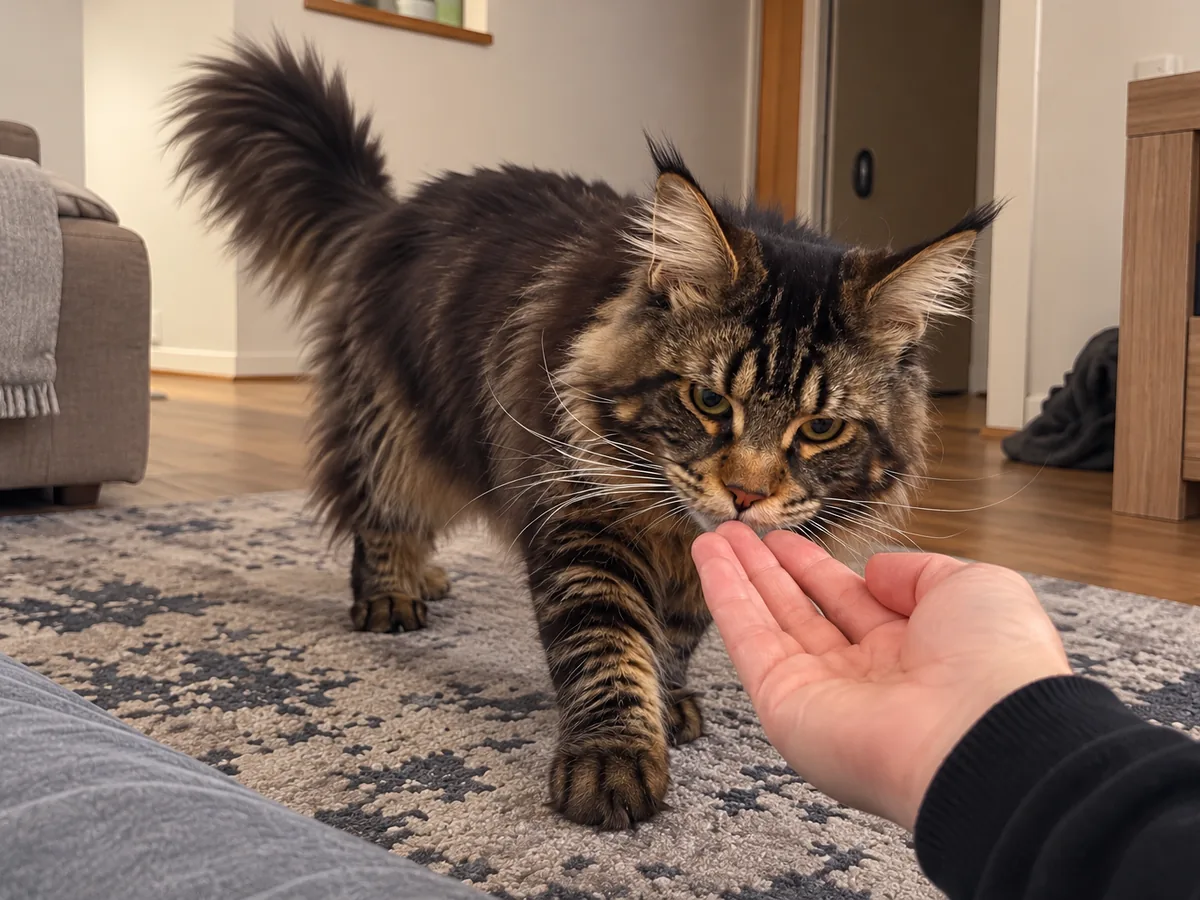
Don't stare. Look away, or try a slow blink: let your eyes half close, then shut them for a moment. If your cat comes close, hold a hand low and a little to one side for them to sniff. A cheek rub against it is a good sign. If they lean their weight away, they're still unsure, so leave it there for now.
Treats help. Scatter a few near you, and once your cat eats those happily, offer them from your open palm.
How to calm an over-excited cat
If your cat is grabbing your ankles or hands, stop moving. Sudden movement makes an over-excited cat more likely to bite again, and touching or picking them up mid-game does the same.
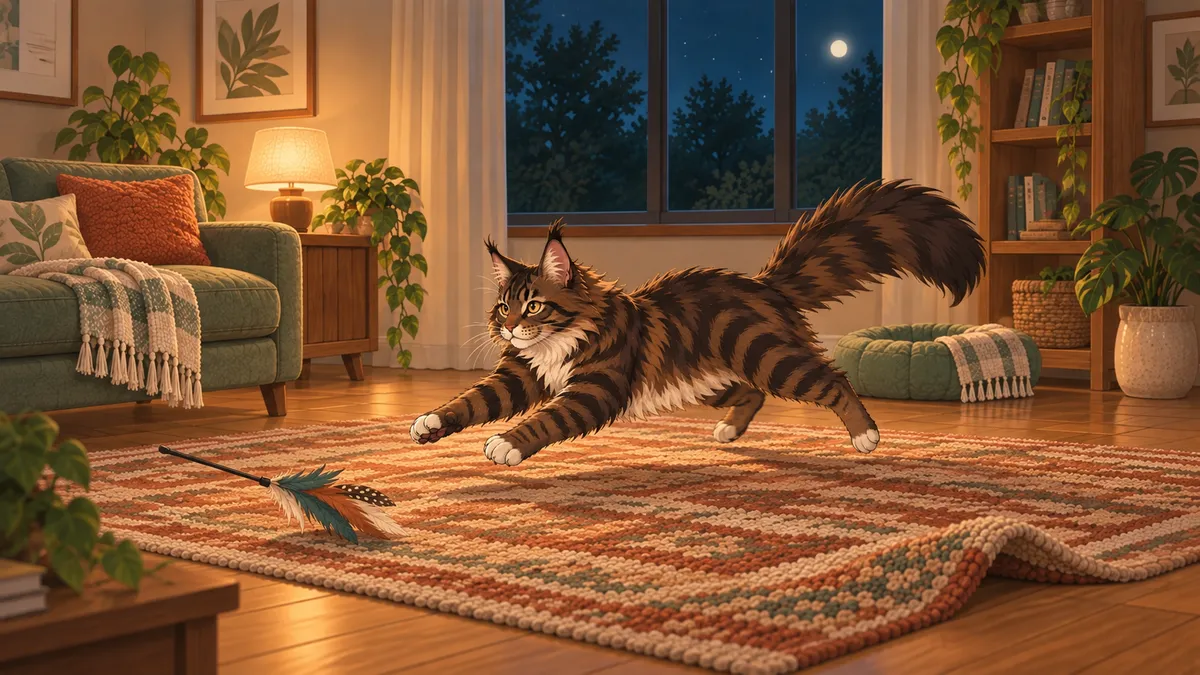
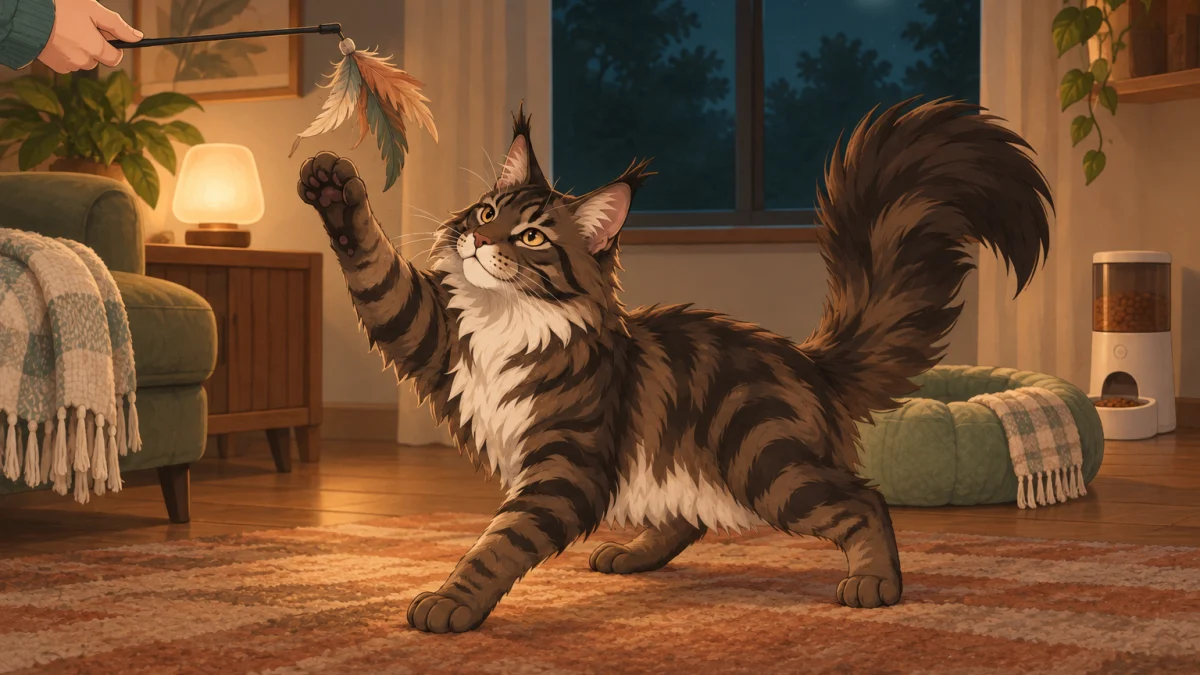
Then give the energy somewhere to go. A fishing-rod toy keeps your hands out of reach. Let your cat catch it: most of the fun of play is the catch, and a laser dot or a video of mice they can never get hold of leaves them frustrated. If you do use a laser, finish with the fishing-rod toy so the game ends on a catch.
Short and often suits most cats: a couple of minutes of play or stroking at a time. Stop as soon as they start to get wound up.
How to calm a cat down at night
Cats are naturally busiest at dawn and dusk, kittens and young cats most of all, so a burst of racing about in the evening is normal. Zoomies every single day can mean your cat isn't getting enough to do.
Spread the play through the day. Swap one long 15-minute game in the evening for a few five-minute games with a fishing-rod toy. For the small hours, leave out something quiet: a soft ball that makes no noise when batted, or an egg box with some of their daily dry food inside.
If hunger is what wakes your cat, give smaller, more frequent meals during the day, or use an automatic feeder set to open in the night or early morning. And don't tell them off for waking you. Cats Protection points out that some medical conditions make cats restless or cry at night, so mention a new night-time habit to your vet.
Get your cat used to the carrier at home
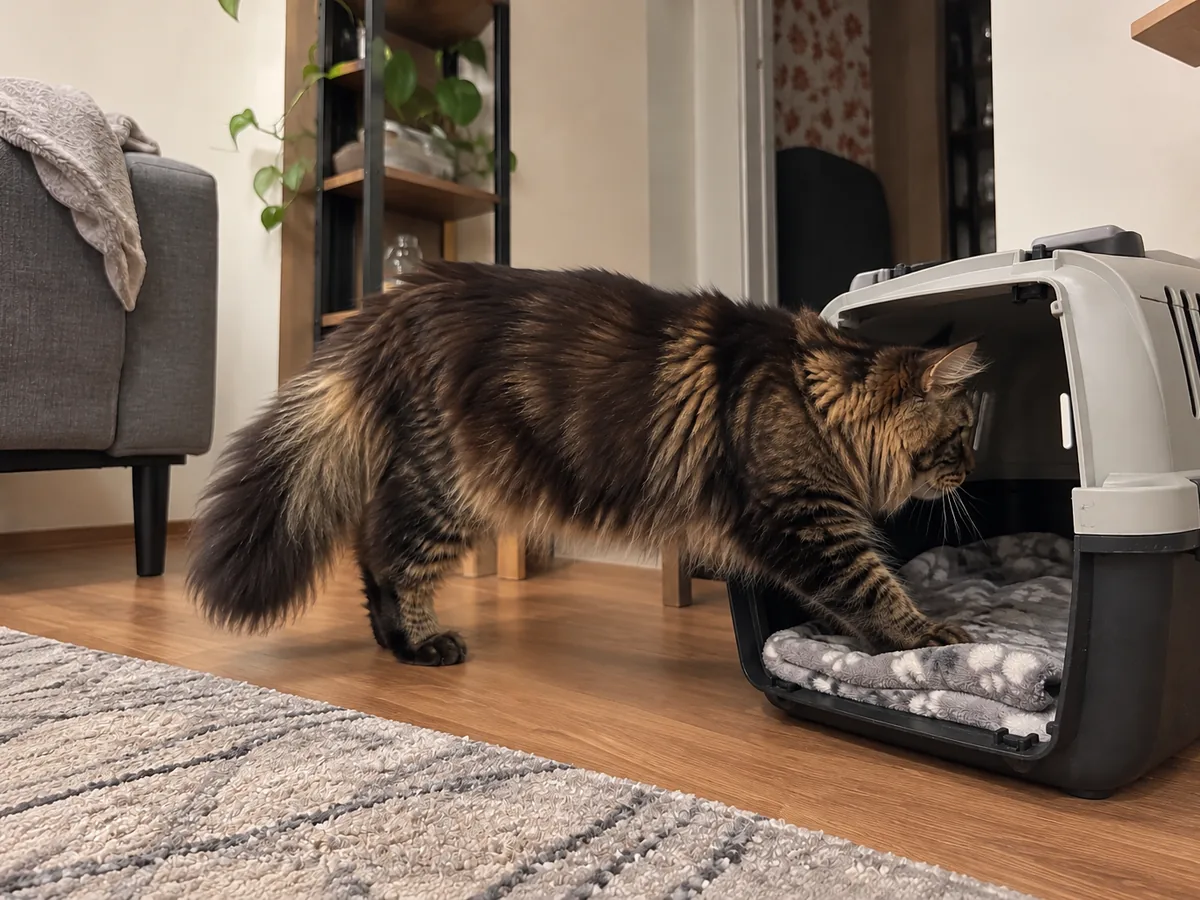
For most cats the carrier means one thing: the vet. Battersea calls keeping it hidden until the day you need it a common mistake. Leave it out in a quiet spot your cat already uses, with a soft blanket inside and the door off or open. If the top comes off, start with just the bottom half.
Then go one small step at a time, with a treat at each one: treats inside with the lid off, then with the lid on, then the door closed for a few seconds while your cat eats. Build up to a couple of minutes with the door shut, then lift the carrier for a few seconds.
Only move on when your cat is completely relaxed, and go back a step when they aren't. PDSA expects it to take several sessions over at least a week or two, so start well before a trip. Lapka has a programme for this, aimed at a cat who walks into the carrier on their own.
How to calm a cat in the car
Keep your cat in the carrier for the whole journey, and fix the carrier in place: in the footwell behind a front seat, or belted onto a back seat. Never put it in the boot. If the seat slopes, level the carrier with a rolled-up towel.
Cover the carrier with a blanket or sheet so your cat isn't watching everything go by. For a nervous cat, a pheromone spray on the bedding may help. Spray it at least 15 to 20 minutes before they go in, because it smells of alcohol at first. Take out strong air fresheners and drive gently.
Unless your vet has said otherwise, skip food for about four to five hours before you set off in case your cat is sick, but offer water until you leave. Many cats meow at first, and some keep it up the whole way. Talk to them calmly and keep the door shut. In the end, the steady motion and noise of the car help them settle, or even sleep.
Never leave your cat alone in a parked car, because it heats up fast. If every journey ends in vomiting or real distress, talk to your vet, who may be able to help.
How to calm a cat in heat
A female cat in heat calls loudly, rolls about, arches her back with her tail to one side and turns very affectionate. The yowling can sound like pain, but PDSA says a season very rarely hurts. Mostly it leaves her unsettled and out of sorts.
You can't switch the hormones off at home. You can keep her busy with games and something to work at, such as a treat-filled toy. Keep her indoors and away from unneutered males for the whole season, including any that live with you.
The long-term answer is spaying, which stops the seasons for good. PDSA says most cats can be neutered at four months; ask your vet about the right time for yours. Call them too if you think her crying is about something else.
Never give her anything from your own medicine cupboard. PDSA warns that human anti-anxiety medicines can make a cat's anxiety worse and some are dangerous. Give her only what your vet has prescribed.
When to see a vet
Start with the vet if the change came on suddenly: a confident cat who now hides all day, hisses or seems frightened of everything. International Cat Care says a change like that shouldn't be ignored, because it can be a sign of illness or pain.
Call your vet if your cat hasn't eaten for over 24 hours, hiding or not. Cats hide pain well, and it tends to show as a change in behaviour rather than a limp. The signs Cats Protection lists include hiding more, being less tolerant of people, sleeping more, sitting hunched with squinting eyes, not wanting to jump down from furniture, and crying when moving or using the litter tray.
One sign can't wait. If your cat keeps going to the litter tray, strains and passes no urine, phone your vet straight away. PDSA calls this an emergency, and stress can set off the bladder inflammation that leads to it.
Two evenings with Leo
Tuesday, 7 pm. Doorbell, friends round. Leo under the bed in seconds: ears flat, tail tucked, eyes huge. Left him alone, didn't call him. Came out at ten when it went quiet, ate, then slept on the arm of the sofa.
Wednesday, 9 pm. Ambushed my ankles twice, tail flicking. Stopped walking and got the feather wand. Five minutes, three catches. Asleep by half nine.
Noting what happened just before shows which kind of upset it was, and what settled it.
When it does not go to plan
What if my cat is still hiding the next day?
Many cats come out at night, once the house is quiet. Keep food, water and the litter tray close by, but not right next to the hiding spot. If they haven't eaten for over 24 hours, or hiding like this is new for them, call your vet.
What if my cat won't go near the carrier at all?
Start further back. Put the carrier out while your cat is in another room, lay their bedding a little way from it, and move the bedding closer bit by bit until it ends up inside. Wash the carrier with mild soap and water first, so it doesn't smell of the vet's.
How long does a cat stay in heat?
Usually four to ten days, according to the ASPCA. If she doesn't mate, it comes back every 18 to 24 days through the breeding season, roughly February to September in the northern hemisphere, and indoor cats may come into heat all year. Spaying stops it.
Can I give my cat something to calm them down?
Only what your vet gives you. Some anxious cats need medicine alongside a behaviour plan, and there are medicines licensed for cats. Never use your own pills. A plug-in pheromone diffuser may help as one part of the plan, Cats Protection says, but may not do much on its own.
Does catnip calm a cat down?
Usually the opposite. International Cat Care describes catnip as a herb that excites many cats, though not all, and Battersea suggests not handling a cat while they're playing with it. It's better for getting a game going.
Will neutering calm my cat down?
It calms the behaviour that sex hormones drive. Cats Protection says neutering at four months prevents a lot of it, including yowling at night, spraying, roaming and fighting. A spayed female also stops having seasons.
Sources and further reading
- Cats Protection — Cat stress
- Cats Protection — Cats hiding
- Cats Protection — Why does my cat bite me?
- Cats Protection — Cat tail meanings
- Cats Protection — How to make friends with a nervous cat
- Cats Protection — 6 tips for stopping your cat getting the zoomies
- Cats Protection — Cats at night
- Cats Protection — Why does my cat want to play at bedtime?
- Cats Protection — How to choose and use a cat carrier
- Cats Protection — Signs of pain
- Cats Protection — How long can cats go without food?
- Cats Protection — What happens to cats during puberty?
- International Cat Care — Anxious cats
- International Cat Care — Travelling with your cat
- International Cat Care — Playing with your cat
- PDSA — Cat fear: how to help a nervous cat
- PDSA — How to get your cat in a carrier
- PDSA — Cats in heat/coming into season
- PDSA — Feline Idiopathic Cystitis (FIC)
- RSPCA — Understanding your cat's behaviour
- Battersea — Travelling with cats
- Battersea — Playing with your cat
- ASPCA — Meowing and yowling