Lapka
Lapka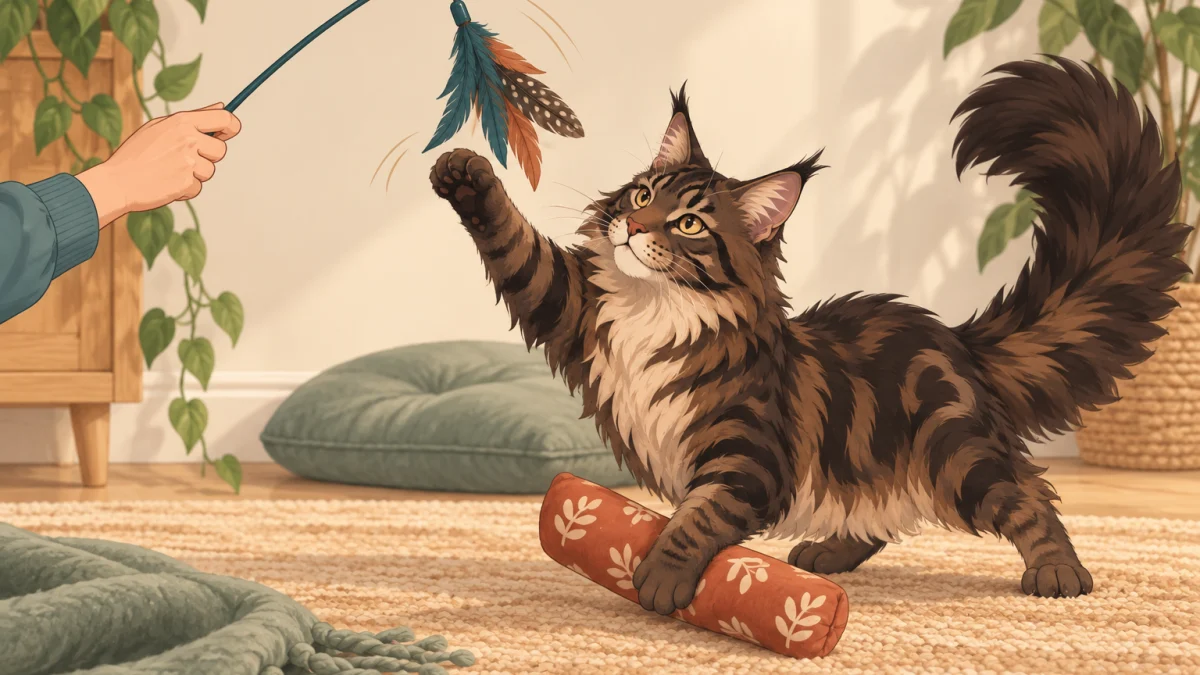
Where to start
Keep hands and feet out of the game, pause calmly when teeth or claws reach you, and redirect the next play opportunity to a wand, ball or kicker toy. Regular short sessions with a clear chance to catch the toy give hunting behaviour a safer target.
First, check that it really is play biting
Play biting often appears during stalking, chasing, pouncing or bunny-kicking. A cat may hide beside a doorway, rush an ankle, grab a moving hand or wrap both front legs around an arm. The movement can be quick and painful even when the cat is not trying to start a fight.
Context matters. Biting during petting, handling, fear or conflict needs a different plan. Flattened ears, a tense body, growling, hissing, repeated attempts to escape or a sudden change in a normally calm cat are reasons to stop the interaction and give space. If biting is new, unusually intense or paired with signs of pain or illness, contact a vet before treating it as a training problem.
Take hands and feet out of the game
Do not wiggle fingers under a blanket, wrestle with bare hands or let a kitten practise chasing toes. The rule needs to be shared by everyone at home: human skin never becomes the toy. A habit that feels harmless with a small kitten becomes much less charming when adult teeth and claws arrive.
When your cat grabs you, avoid turning the moment into faster prey. Stay as still and calm as you safely can, end access to the moving hand or foot, and step away once the cat releases. Shouting, tapping the nose, spraying water or pushing the cat into a confrontation can add fear and excitement without teaching which activity is available instead.
Give the hunt a better target
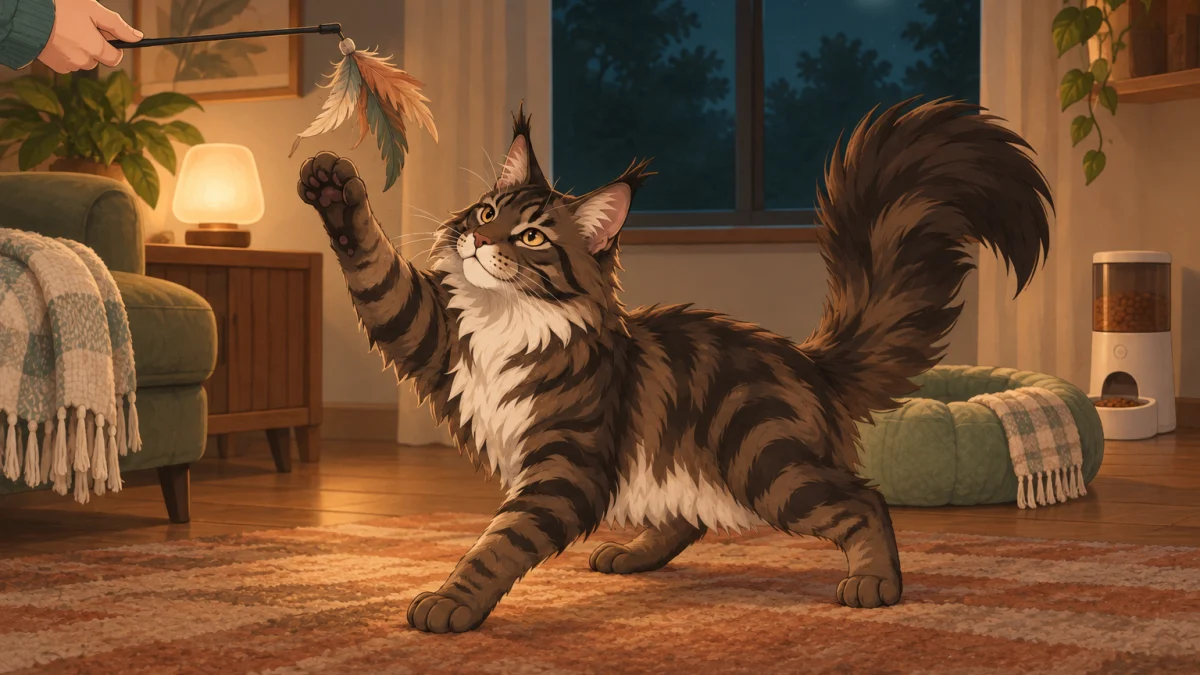
Choose toys that put distance between the cat and your body. A long wand can carry the target across the floor and around furniture; a tossed ball creates a chase away from your ankles; a sturdy kicker toy gives front paws, teeth and back feet somewhere appropriate to work together. Inspect toys regularly and put string or feather toys away after supervised play.
Move a wand like small prey rather than waving it directly into the cat's face. Let it pause, disappear and change direction. Most importantly, allow the cat to catch it periodically. A game made only of unreachable movement can become frustrating. The goal is not to exhaust your cat at any cost, but to complete several satisfying stalk–chase–catch moments.
Build predictable, short play opportunities
If ankle attacks usually happen before dinner or when you walk through one particular hallway, schedule an appropriate game before that pattern begins. Several short play opportunities can be easier for a cat than one long, overstimulating session. End while the interaction is still comfortable rather than waiting for teeth to signal that it went too far.
Make solo options available too: cardboard boxes, safe balls, puzzle feeders and toys that can be rotated help the environment offer more than human limbs. Rotation does not require buying more. Keeping part of the toy collection out of sight and changing what is available can make familiar objects interesting again.
Watch for the moment before the bite
The most useful observation is often not the bite itself but the ten seconds before it. Note where the cat was, what moved, whether play had already been going for a while, and what their body did. A tail that starts lashing, skin twitching, ears rotating back, very wide pupils or a sudden freeze can be your cue to lower the intensity or end the session.
Do not treat every sign as a universal timer. Cats differ, and the same movement can mean different things in different contexts. Look for your own cat's repeated sequence. Once you can recognise the earlier signal, you can finish with a calm catch instead of discovering the limit through your hand.
Track one change at a time
A useful note separates setup, behaviour and outcome. For example: “Played with the long wand before dinner; two stalks and catches; no ankle rush in the hallway.” On another day: “Three minutes of wand play; tail began lashing; ended after a catch.” These observations are more useful than “good” or “aggressive”.
Keep the environment comparable while you test a change. If you swap the toy, time, room and reward at once, you will not know what made the session easier. Lapka can turn the pattern you describe into a personal programme, while your session reports preserve the details needed for the next step.
Know when training is not the next step
A behaviour plan should never ask you to ignore a safety or health concern. Seek veterinary advice when biting appears suddenly, becomes much stronger, happens when a particular area is touched, or arrives with changes in eating, movement, sleep or toileting. A qualified cat behaviour professional can help when the cause is unclear or anyone at home feels unsafe.
If a bite breaks the skin, stop the training session and follow appropriate medical guidance for the wound. The lesson can wait. Lapka supports everyday behaviour work, but it does not diagnose pain, illness or aggression.
A useful play note
Trigger: walked through the hall ten minutes before dinner. Setup: long wand ready beside the doorway. Response: chased twice, caught the toy twice, then lay down. Contact with hands or ankles: none. Next observation: try the same setup tomorrow before dinner.
This is an example of clear observation, not a target every cat should match. A zero-success report is useful too: record what happened, end safely and make the next step easier.
When it does not go to plan
Should I redirect with a toy after my cat bites?
First end the contact calmly and create space. Do not make biting the reliable button that instantly starts an exciting game. Offer planned play at another moment or redirect early, when you see the stalking pattern before contact.
Why does my cat attack only my ankles?
Moving feet are small, fast targets, and hallways can make convenient ambush points. Notice the usual time and route, keep a distance toy ready, and schedule play before the predictable rush rather than using your foot to push the cat away.
Can I teach this without a clicker?
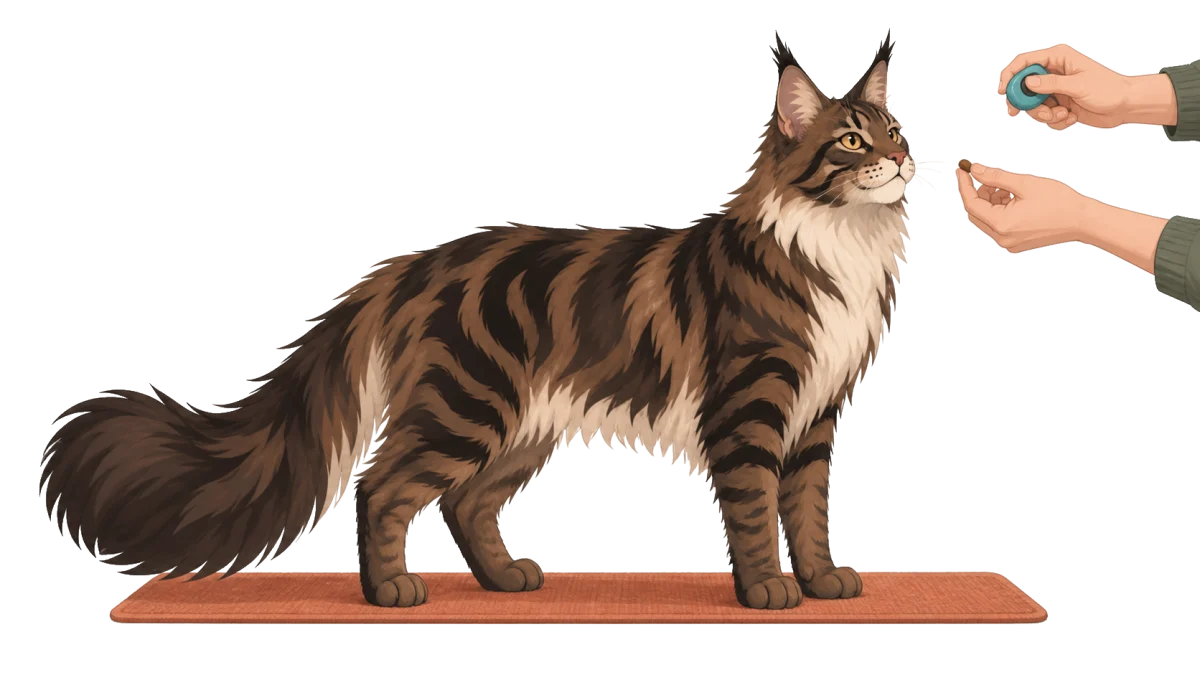
Yes. A clicker is one way to mark a chosen action, but the central change here is clear access: toys are available for hunting and human skin is not. If you use a marker, first teach what the sound predicts and keep it separate from the moment you are trying to escape a bite.
How quickly should play biting improve?
There is no honest universal deadline. Age, previous play habits, daily routine and the reason for biting all matter. Track frequency and context over time; look for safer choices and earlier recovery rather than expecting one perfect session to erase the pattern.
Sources and further reading