Lapka
Lapka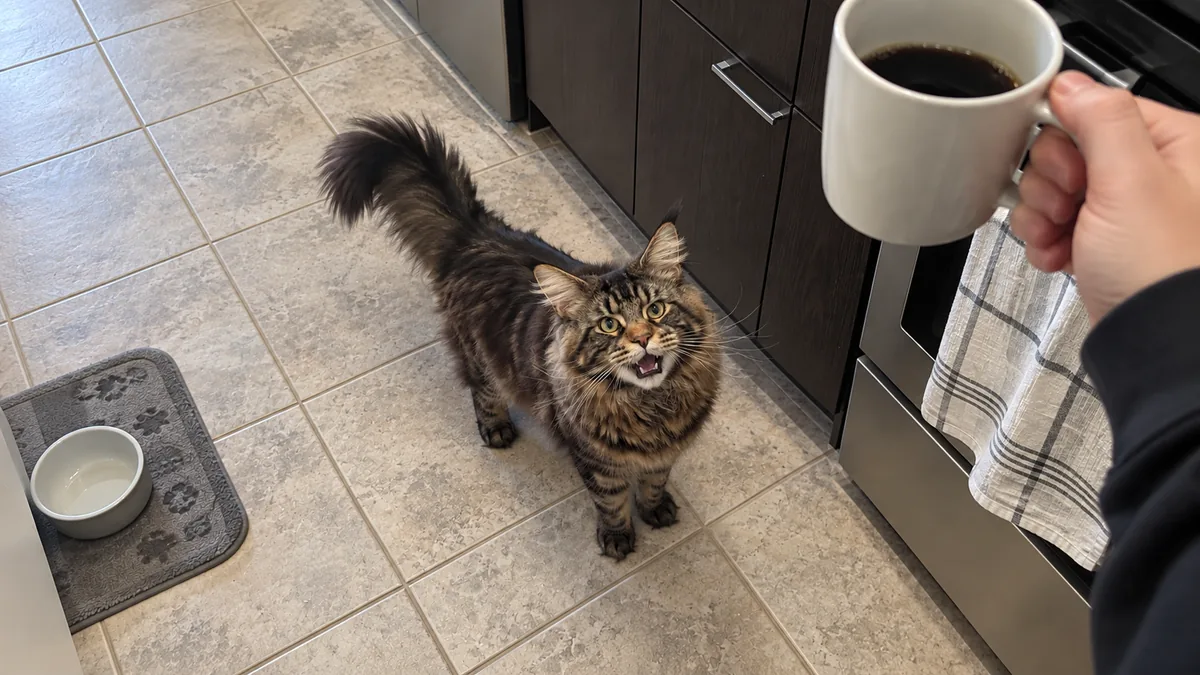
Where to start
A cat who keeps meowing usually wants something and has learned that meowing gets it: food, play, attention or an open door. If the meowing is new or louder, or your cat is older, see your vet first, because pain and illness can cause it. Then check water, litter tray and doors, feed and play at set times, and give attention the moment your cat goes quiet.
Why is my cat meowing so much all of a sudden?
Start with the change itself. Cats Protection puts it simply: cats rarely change their behaviour for no reason. The cat vets’ association FelineVMA lists an overactive thyroid, high blood pressure, pain, hearing loss and cognitive dysfunction among the illnesses that can make a cat meow more, and advises a vet visit whenever the meowing increases or is new.
Go as soon as you can if the meows sound urgent or unpleasant, or come with groaning, hiding, eating less or a hunched back. Battersea lists all of these as signs of pain. Even if your cat just meows a lot, the ASPCA recommends a thorough vet check, because many diseases make cats unusually hungry, thirsty, restless or irritable.
Why is my older cat meowing so much?
In an older cat, more meowing means a vet visit first. The ASPCA says senior cats may meow too much because of disorientation, hearing loss or pain, and that an overactive thyroid and kidney disease, both more common with age, can cause it too. Cornell lists loud meowing, often in the middle of the night, among the signs of cognitive dysfunction in cats aged ten and over. Some causes, such as high blood pressure, can be treated.
At home, make their day busier. Play during the day and in the evening helps an older cat sleep at night. Don’t show your frustration or punish the meowing: in an older cat, that adds to the anxiety and makes the problem worse.
Check water, litter tray and doors
If the vet finds nothing, look for a simple reason before you decide your cat is being demanding. Is the water bowl empty? Can they get to the litter tray? Have they been shut in a room by mistake?
Then keep a log for a few days, as the ASPCA suggests: the time, the place, what happened just before and what made the meowing stop. The pattern shows which of the steps below you need.
Why is my cat whining for food so much?
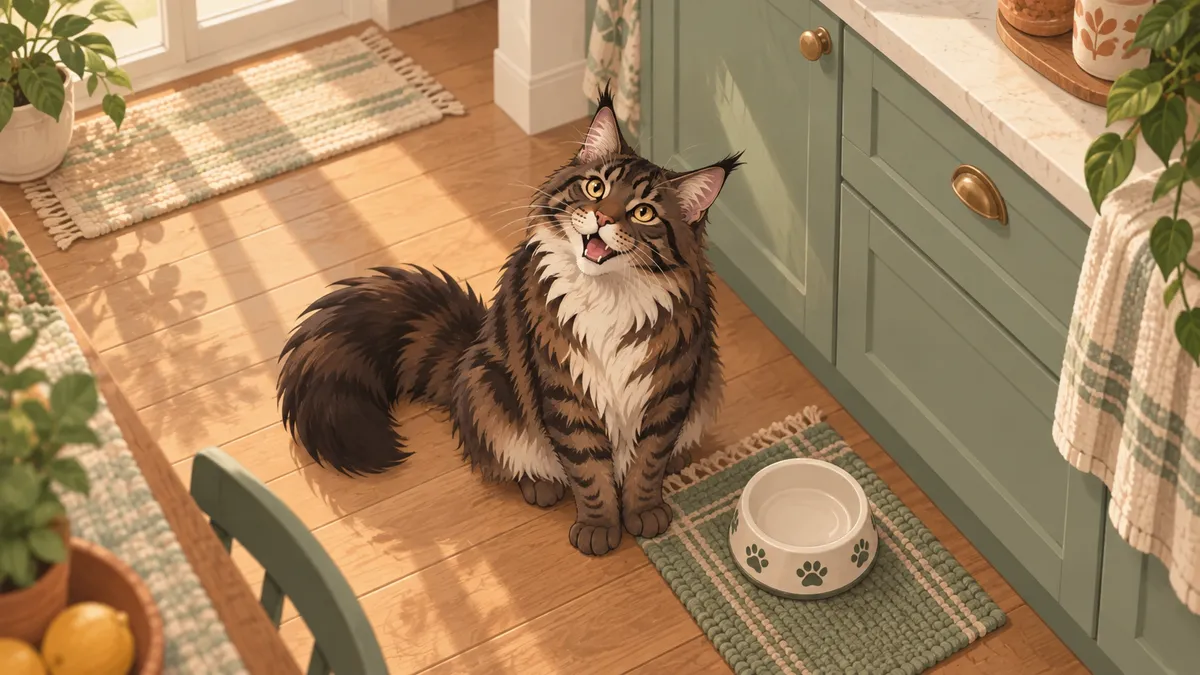
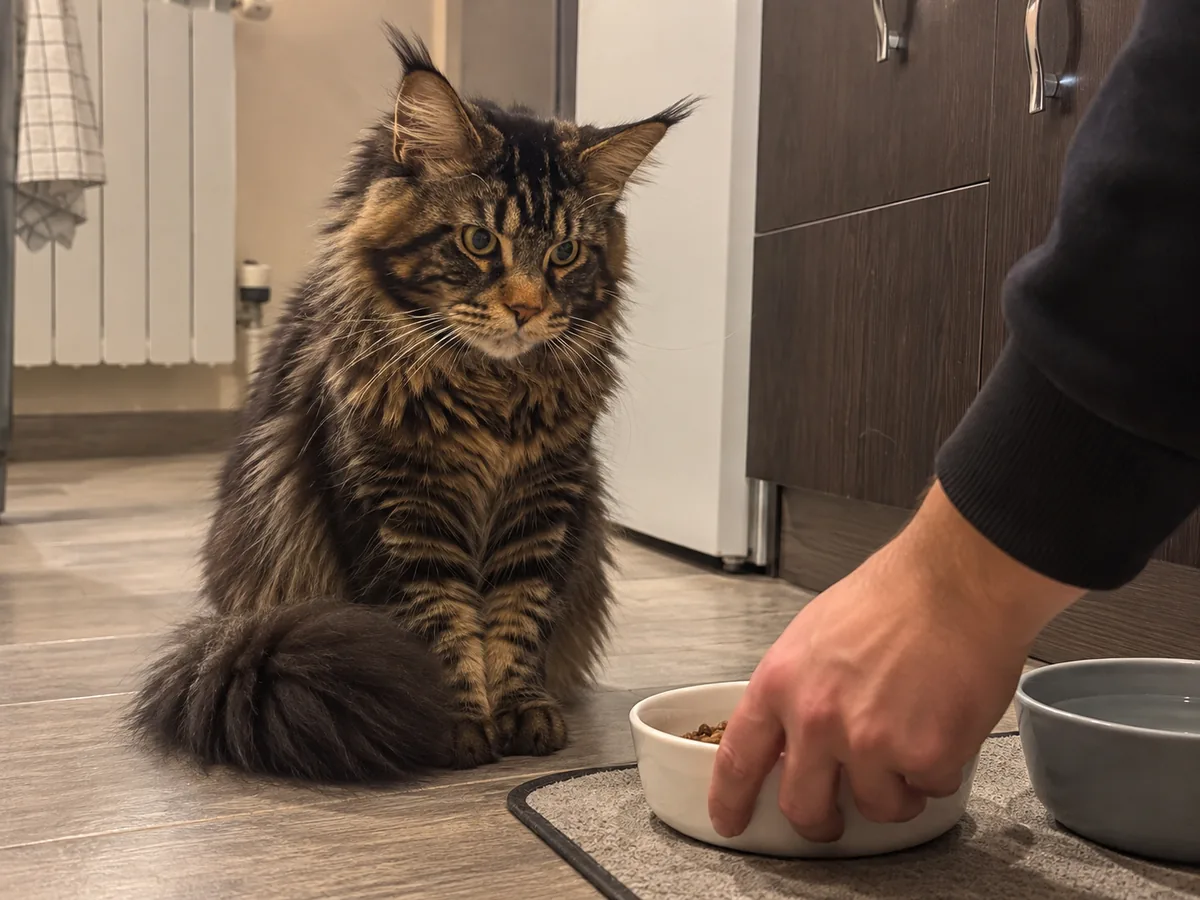
Food is the request most cats learn first. Some meow whenever anyone walks into the kitchen, just in case. Others wake you for breakfast or beg at the table. Cats Protection warns that if you give a cat what they want every time they cry, they learn that it gets results and keep doing it.
So feed at set times, and meowing between meals stops paying off. For early wake-up calls, the ASPCA suggests an automatic feeder you can set to open at fixed times, and Cats Protection suggests smaller, more regular meals during the day for a cat who wakes you hungry.
Meowing for attention: play before they ask
Meowing for attention usually means a need isn’t being met, most often play or time with you, says FelineVMA. Cats left alone for long hours are more likely to do it, and many save it for the moment you come home from work.
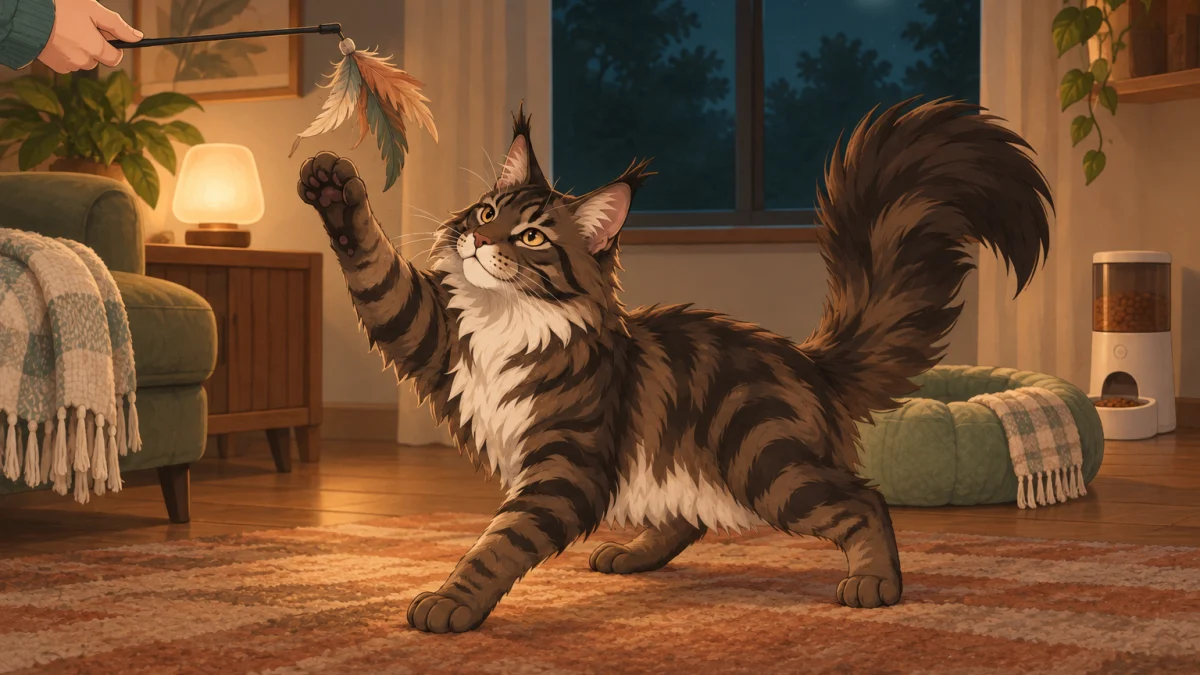
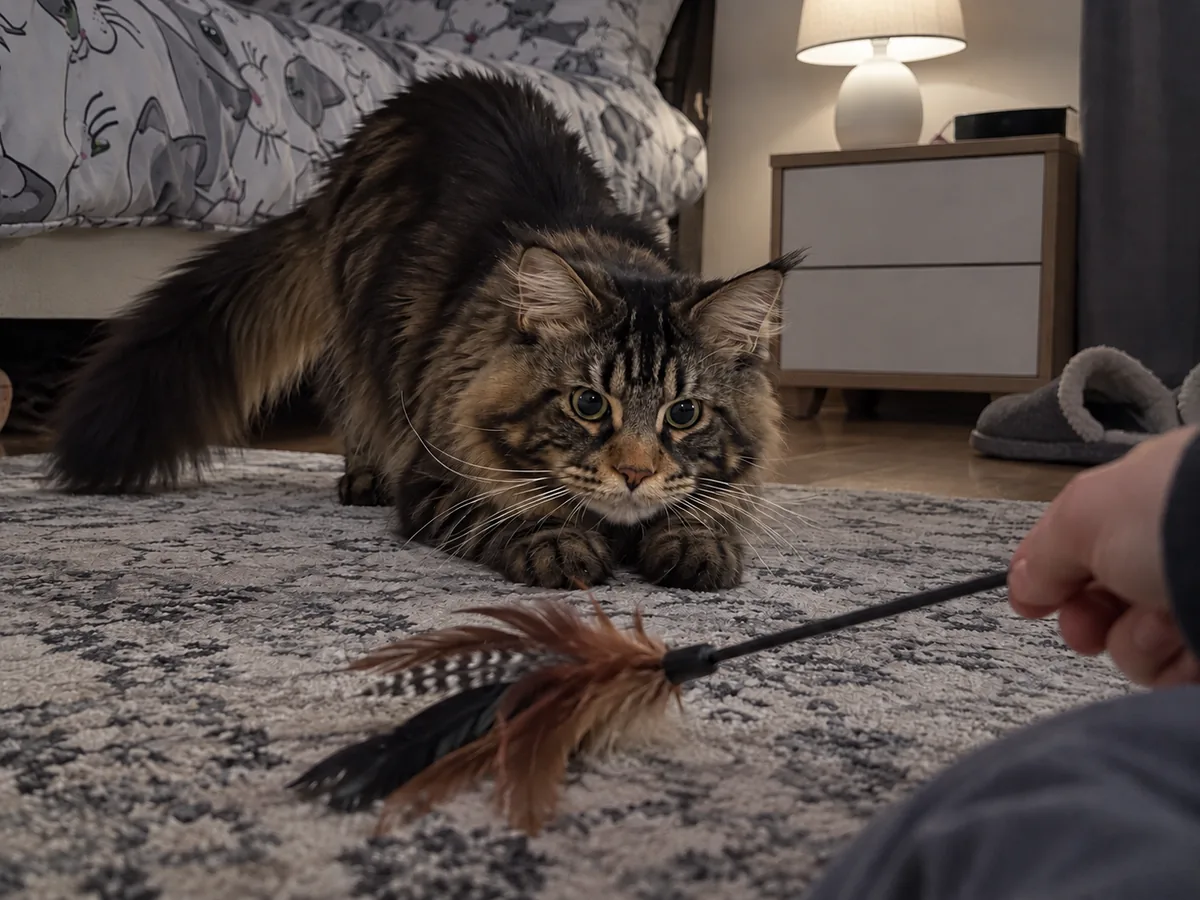
So give the attention before your cat has to ask. FelineVMA recommends interactive play at least twice a day, for example before and after work, or in the evening and before bed. If the meowing starts at the same hour every day, start a game with a wand toy just before it. On long workdays, the ASPCA suggests having someone drop in at midday to play. Lapka’s “Talking all day” programme works on daytime meowing in these same small steps.
Reward the quiet, not the meow
When you know for certain that a meow is a demand, don’t answer it. Wait for a pause, even a short one, and give your cat attention straight away. If the meowing starts again, walk away and come back only when they’re quiet. FelineVMA calls rewarding calm, quiet behaviour with treats and attention an effective way to teach a cat a new habit.
Don’t shout at, scold or hit your cat for meowing. The ASPCA says punishment is unlikely to have a lasting effect and can make your cat afraid of you, and even angry attention is still attention. Agree on the rules with everyone at home, and give it time: changing a habit takes time and consistency, says FelineVMA.
Why does my cat keep meowing at night?
Boredom is the most likely reason, says Cats Protection, especially after a day with little play or attention. Play with a fishing-rod toy during the day and again in the evening, so your cat uses up their energy before you go to bed.
If hunger wakes them, an automatic feeder that opens during the night or early morning can take over. Don’t tell your cat off. Night-time crying can be a sign of pain, or of confusion in an older cat, so if it is new, see your vet. The guide on cats waking you at night covers the bedroom routine.
Meowing at the door
A cat who is used to going out and now has to stay in will meow at doors and windows for a while, and the ASPCA says it can take weeks or even months to stop. A locked cat flap can do the same: Battersea describes a frustrated cat staring at the door, meowing loudly and scratching at it.
An indoor cat needs plenty to do instead. Cats Protection lists toys, cat trees and puzzle feeders, and the daily games from the steps above count too.
Why do cats yowl? Cats who aren’t neutered
A yowl is like a meow, only more drawn out and melodic, and in a cat who isn’t neutered it is usually about mating. A female in heat may meow a lot for four to ten days. If she isn’t mated, she comes back into heat every 18 to 24 days through the breeding season, and indoor cats can do so all year round. An unneutered male who hears or smells her is likely to pace and meow for as long as it lasts.
Neutering is the best way to stop this kind of meowing, in females and males alike. Cats Protection recommends neutering kittens at around four months old, as females can get pregnant from that age. If your adult cat isn’t neutered, talk to your vet.
Three days with Miso, noted down
Mon · 05:40 meowing at the bedroom door; breakfast is at 07:00 · 18:30 long meows by the fridge while I cook · water full, litter tray clean.
Wed · automatic feeder set for 05:30 · 05:30 quiet, waiting by the feeder · 18:15 wand game before cooking · 18:40 two meows, then sat by her bowl; fed her while she was quiet.
Writing down the time and the place shows which meows gather around meals, which around you, and which change made them fewer.
When it does not go to plan
Why does my cat cry so much?
Most often to get your attention, which Cats Protection calls the most common reason cats cry. A cat’s cry usually sounds like a loud meow or yowl, sometimes a faint whine or whimper, and it varies with age, breed and personality. If your cat starts crying more than usual, they may be ill or in pain, so see your vet.
Why is my kitten always meowing?
A kitten’s mew is how they tell their mother they’re hungry, cold or in distress, and Cats Protection says kittens usually stop mewing at around two to three months. A kitten who keeps meowing most often needs food or warmth, so feed at set times and play at least twice a day. If they are also eating less or hiding, see your vet.
Should I ignore my cat when they meow?
Only when you know for certain it’s a demand, such as asking for food between meals. Otherwise the ASPCA’s advice is not to ignore it: first check whether something is wrong, like an empty water bowl or a closed door. Then give attention as soon as your cat is quiet.
How long until my cat meows less?
There is no fixed time. FelineVMA asks for patience, because changing a habit takes time and consistency, and every meow that still gets an answer sets it back. A cat moving from going outside to living indoors may meow at doors for weeks or even months, says the ASPCA.
Sources and further reading
- ASPCA — Meowing and Yowling
- ASPCA — Older Cats with Behavior Problems
- FelineVMA (formerly AAFP) — Training Techniques for Addressing Undesirable Behaviors
- Cats Protection — Why do cats cry?
- Cats Protection — Why do cats meow and what does it mean?
- Cats Protection — Cats at night
- Cats Protection — Neutering your cat
- Battersea — How do I tell if my cat is in pain?
- Battersea — How do I tell if my cat is frustrated?
- Cornell Feline Health Center — Cognitive Dysfunction
- International Cat Care — Cognitive dysfunction syndrome (senility, dementia) in cats