Lapka
The short answer
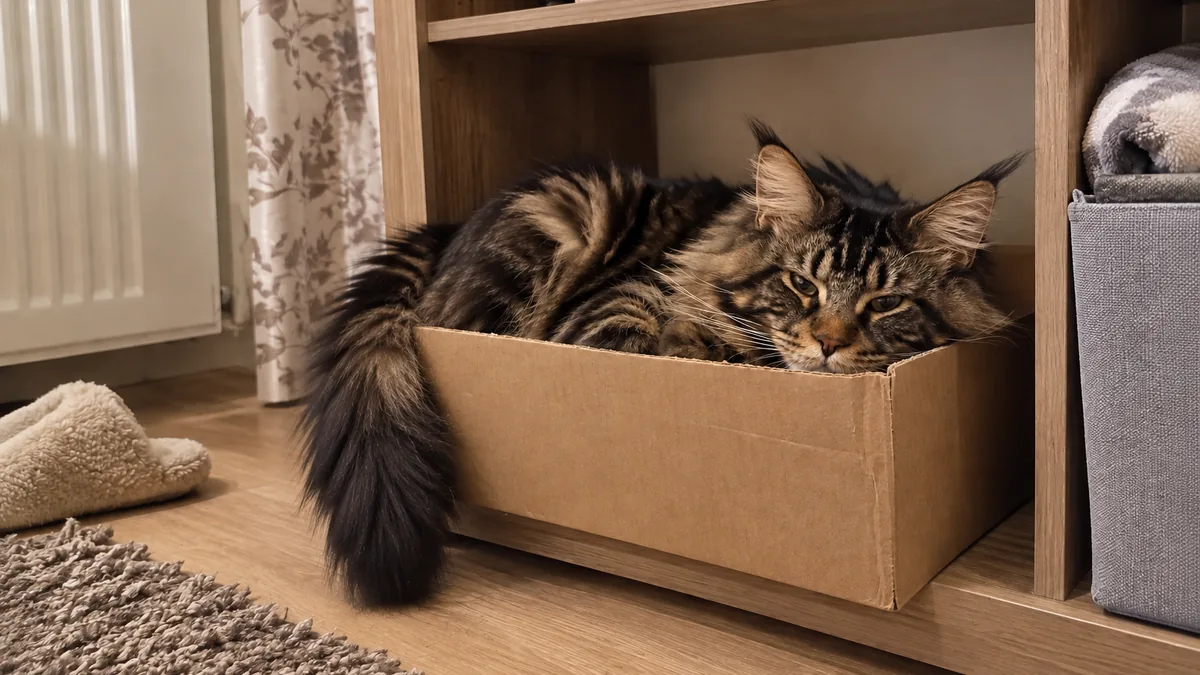
Cats like boxes because a box feels safe. Battersea says cats hide to feel safe and to protect themselves from things they find dangerous or stressful, and a box is a private, enclosed spot with walls on every side. The Feline Veterinary Medical Association says most cats prefer a safe space just big enough for themselves, with sides around it. That’s why a snug box so often beats an open bed.
Why do cats like boxes so much?
A box is a hiding place, and cats need those. Battersea, the London rescue, calls hiding places one of a cat’s basic needs. Cats hide to feel safe and to keep away from whatever they find dangerous or stressful, and to choose a hiding place, a cat has to feel both private and secure there. Four cardboard walls do both.
The need goes back a long way. The Feline Veterinary Medical Association (Feline VMA) says cats are solitary hunters who need to protect themselves from perceived dangers, and that can mean an unfamiliar person or place. Cats Protection says a space where a cat can hide away and still see what’s going on helps every cat feel safe.
Confident cats use boxes too. As Cats Protection’s head of clinical services puts it, even the most confident cats need a place where they are guaranteed some peace and quiet.
Why do cats like boxes and small spaces?
Small is the point. Battersea says cats love having small spaces to hide in and get away from it all, because it helps them feel calm and secure. Some cats pick a spot up high, like the top of a wardrobe, where they can watch without being seen. Others go for a dark, enclosed spot at ground level, as far from the bustle as they can get.
Often, not seeing the worrying thing is enough. Battersea notes that a cat may seem to think they can’t be seen when only their head is under a towel. A box gives them the same feeling with the whole body tucked in.
Boxes are for good days too. Cats also use their hiding places to sleep and rest when they’re relaxed and feel in no danger.
Why do cats like boxes that are too small?
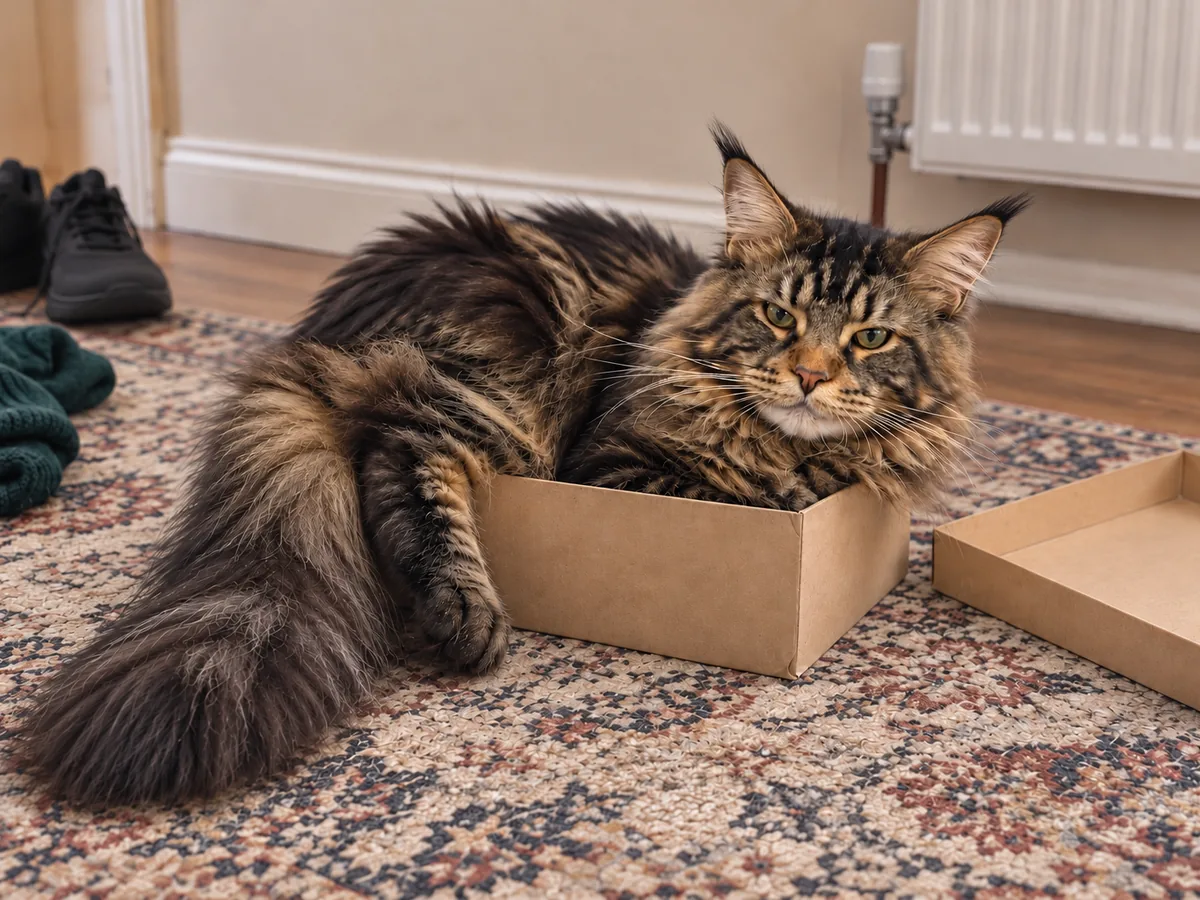
We couldn’t find a study that explains why a cat folds into a box half their size. What the vets say gets close. The Feline VMA’s advice is that most cats prefer a safe space big enough to fit only themselves, with sides around it, raised off the ground. A tight box has walls close on every side and room for exactly one cat.
So a box that looks far too small to you can be the size your cat is after. If they get in and settle, there’s nothing to fix. If they keep squeezing in and spilling out, put a slightly bigger box next to it and let them choose.
Why do cats like boxes more than beds?
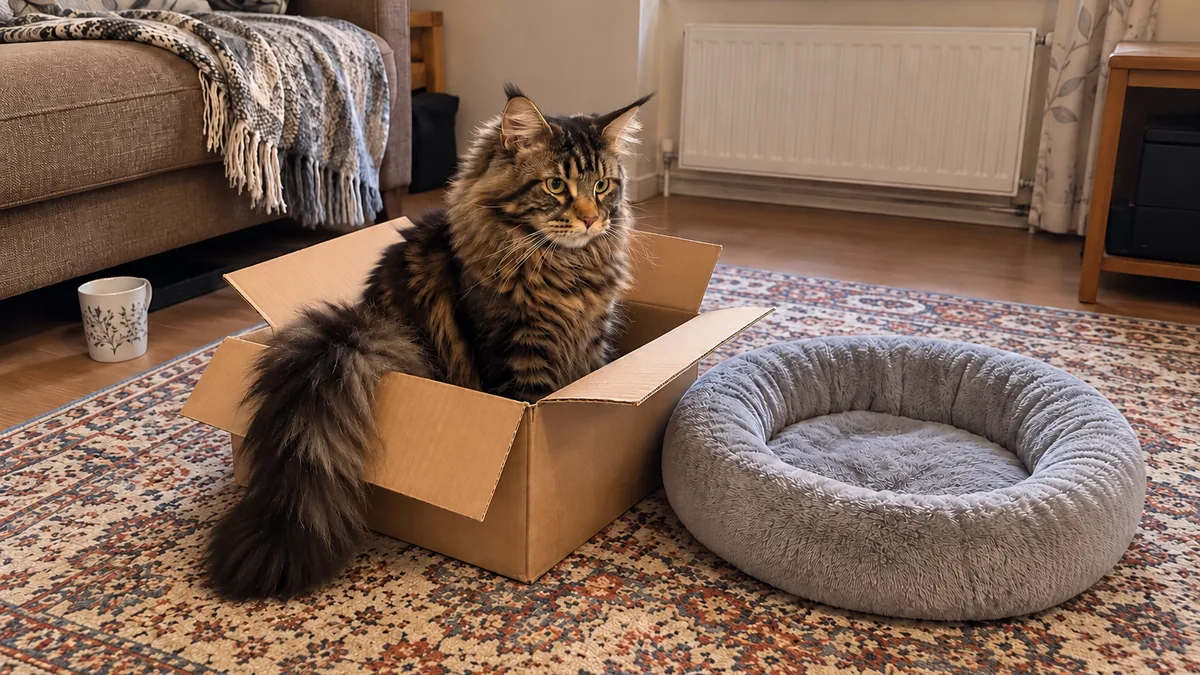
Many beds are open. A flat cushion in the middle of the floor has no walls and nothing to hide behind, and those are what a box offers. Put the two side by side and it’s no surprise the box wins.
Where it sits matters as well. The RSPCA describes a good resting place as raised, easy to reach, and quiet and out of sight. Cats Protection says cardboard boxes work well, particularly above ground level, on a shelf or a low table. If your cat ignores one, it may just be in the wrong spot: keep moving it around the house until you find the place they use.
Give the new bed the same chance. Try it somewhere higher and quieter, or right beside the box your cat already likes, before you decide they hate it.
Does a box help a stressed cat?
In shelters, it seems to. In a 2014 study from Utrecht University, 19 newly arrived shelter cats were split into two groups: 10 got a hiding box and 9 did not. The cats with a box had lower stress scores on days 3 and 4. By day 14 both groups scored the same, but the cats with a box had reached that level around day 3.
A 2019 follow-up watched 23 shelter cats through their first 12 days. The stress scores of the cats with a hiding box fell faster and settled at a lower level seven days earlier than in the cats without one. The box didn’t stop the cats losing weight, though: nearly all the cats in both groups lost significant weight in the first two weeks, and the authors call that weight loss a serious health risk for shelter cats.
It’s a similar story in vet hospitals. A 2025 review in Veterinary Evidence looked at five trials in hospitalised cats. Four of the five showed moderate evidence that hiding boxes reduce fear and stress. Of the three that also measured the body, such as temperature or cortisol in saliva, two found no significant difference.
For cats at home, vet Ruth van der Leij, who did the Utrecht work, suggests a cardboard box or a screened cat house in a quiet corner of the room.
Why cats play in boxes
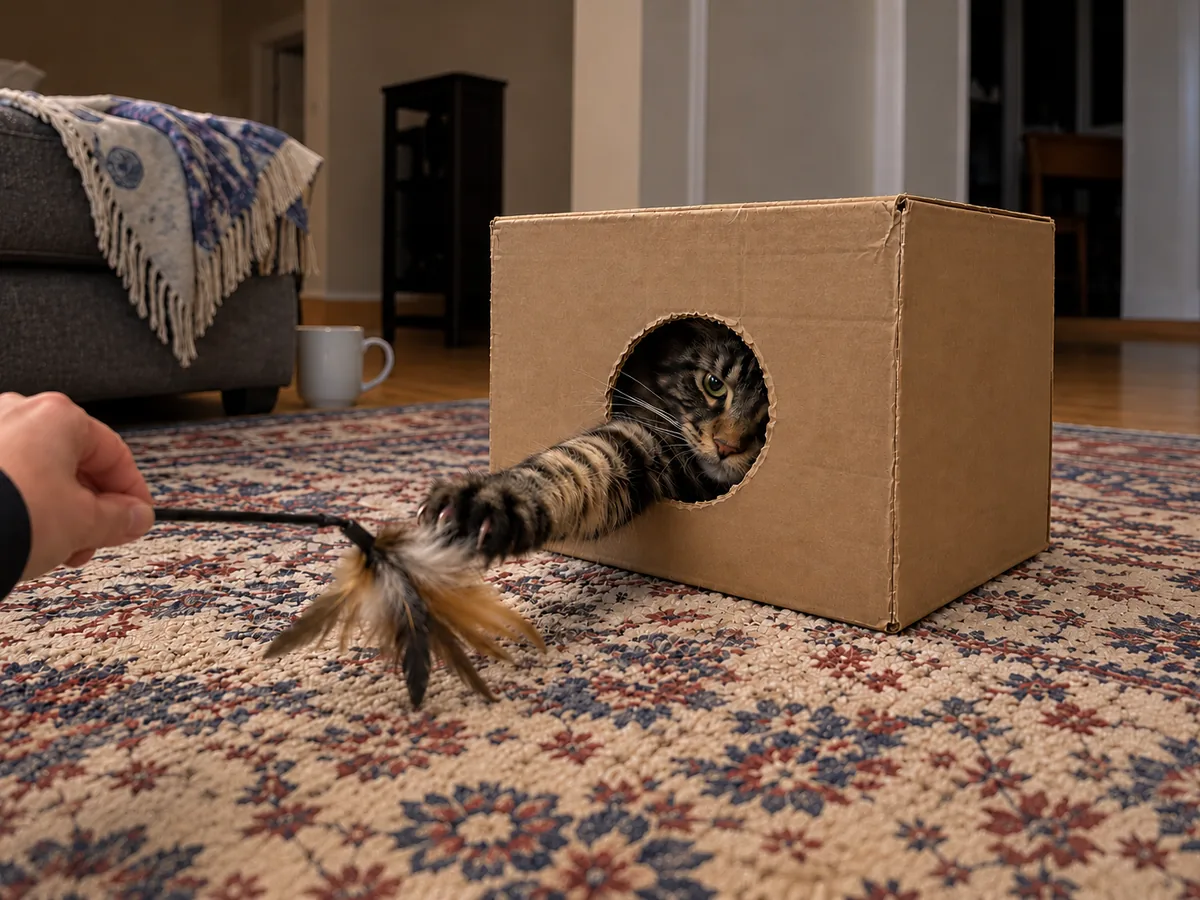
A box is also a good place to lie in wait. Cats Protection says hunting is an innate behaviour in all cats and stays with them for life, and Oregon Humane Society, an American rescue, says most cats enjoy playing in and around cardboard boxes.
Use that. Drag a wand toy past the opening or along the side of the box and let your cat ambush it. The Feline VMA says cats need to catch the “prey” at least now and then, or the game ends in frustration. So let the paw win sometimes.
A box can be a puzzle too. Cats Protection makes a feeder from a cardboard box with two yoghurt pots set into the top. A few biscuits go in the pots first. Once the cat has mastered that, the biscuits go inside the box with the flap open, and after that the flap is closed so they have to work a little harder to “hunt” them. Take those biscuits out of the day’s food, so the game doesn’t turn into extra weight.
A box also makes an easy first target for a trick, like hopping in when you ask. A Lapka programme plans those short sessions and adjusts them after each one.
How to set up a box your cat will use
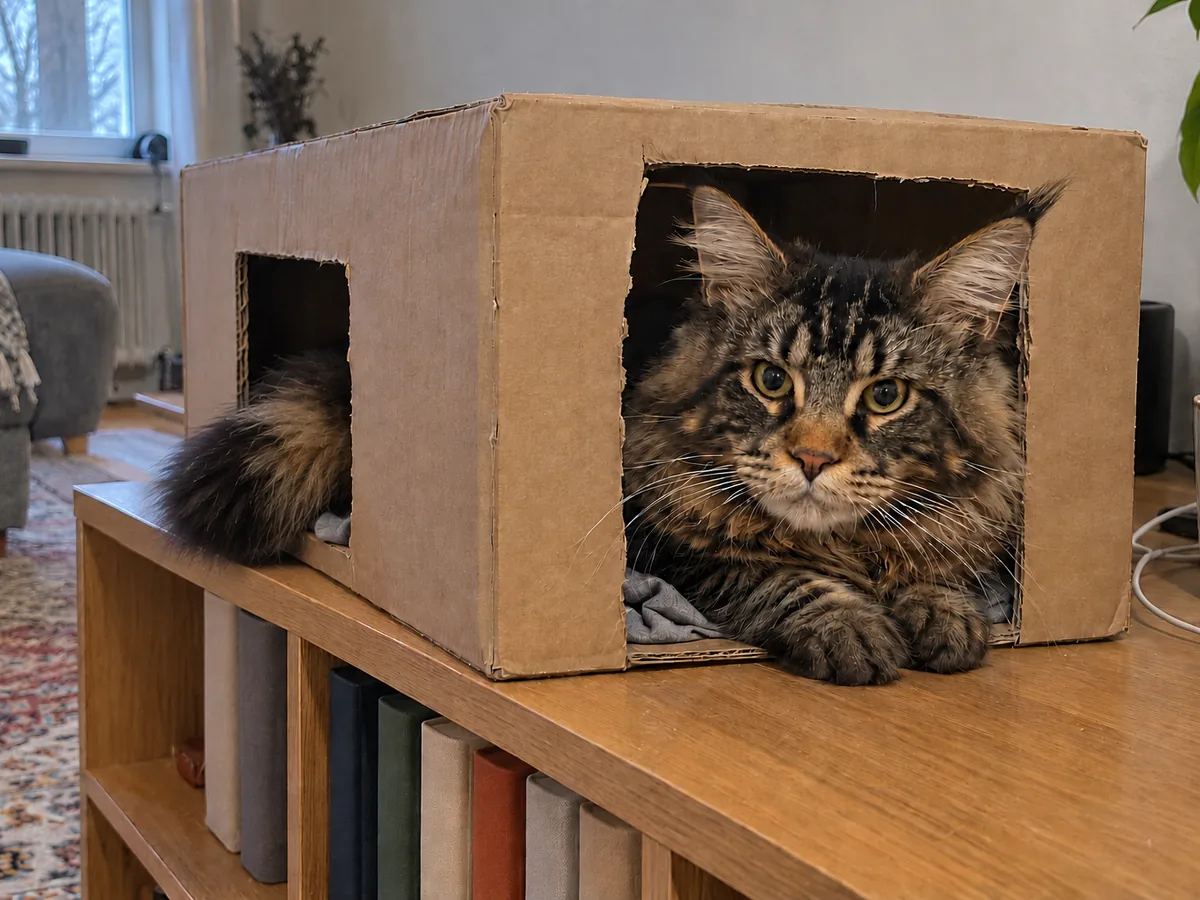
Give it two ways out. The Feline VMA says a cat should be able to get in and out of a safe space from at least two sides if they feel threatened, so cut a second doorway in the box.
Raise it a little. A box on a shelf or low table often does better than one on the floor, and the RSPCA says a raised area offers a sense of security. Older cats can have stiff, painful joints, so Battersea suggests keeping several warm spots with soft bedding at ground level for them too.
Put a quick hideout where the noise is. The RSPCA suggests cardboard boxes as “dart-to” spaces in busy areas with sudden sounds, like the kitchen or the hallway, so your cat always has somewhere close to run to.
Have at least one per cat. The Feline VMA says there should be at least as many single-cat safe places as there are cats, set apart from each other. Otherwise, Battersea warns, the bolder cat can take them all and leave the others out.
Then leave it be. Battersea says not to disturb a cat in a hiding place unless you have to, and not to clean those spots too often. Familiar smells help cats feel secure, says the RSPCA. Battersea even shows how to make a hideaway from a box and an old T-shirt.
When hiding in a box means something is wrong
A cat who naps in a box and comes out for dinner is fine. Battersea says a cat who hides for long stretches may be upset by something that has become a permanent part of home, often another cat, or a person who is too full-on with them.
Hiding can also be a sign of illness. An injured or unwell cat will often withdraw to a safe, enclosed space until they feel better, so if your cat keeps hiding, Battersea advises a vet appointment to rule out a medical problem. The Feline VMA adds that cats often don’t show obvious signs of stress, pain or sickness, so a change in how much your cat hides is worth taking seriously.
What a week of notes can look like
Mon: the new bed arrives. She sniffs it, then gets into the box it came in and sleeps there for two hours.
Wed: builders next door from 9. In the box on the bookshelf most of the morning, out for lunch as usual.
Fri: a quiet day. Box for the afternoon nap. Eating, play and litter tray all as usual.
Notes like these show when your cat uses the box. Here it lines up with noise next door, and everything else stays the same. If the hiding grows and other things change too, the same notes help your vet see what’s different.
Questions people ask
Why do cats like boxes and paper bags?
For much the same reasons: sides around them, somewhere to hide and something to pounce from. Oregon Humane Society says paper bags with the handles removed are good for pouncing, hiding and play. Skip plastic bags: many cats like to chew and swallow the plastic, and they carry a risk of suffocation.
Is it OK for my cat to sleep in a box?
Yes. Battersea says cats use their hiding places for sleeping and resting when they’re relaxed. A box on a shelf or a low table can work as well as any bed, and better than some.
How many boxes do I need for two cats?
At least two, in different places. The Feline VMA says there should be at least as many single-cat safe places as there are cats, set apart so each cat can be on their own. A few extra stop the bolder cat from claiming every one.
My cat has hidden in a box since we moved. Is that normal?
It’s common at first. Cats Protection says a cat newly taken into its care will want to hide until it feels the new environment is safe and predictable, and different cats adapt at different rates. A new home is a new place too. In the Utrecht shelter study, cats with a box settled faster. If the hiding goes on, see your vet.
Should I take my cat out of the box?
Only if you have to. The RSPCA says cats should be free to come and go from their safe space and shouldn’t be disturbed while they’re in it. Battersea gives the same advice for hiding places in general.
Sources and further reading
- Battersea — Why is my cat hiding?
- Cats Protection — The award-winning Hide & Sleep now available for cat owners (2021)
- Cats Protection — Make enrichment toys
- Feline Veterinary Medical Association and International Cat Care — Your cat’s environmental needs
- RSPCA Education — Create a safe space for cats
- Utrecht University — Will a hiding box provide stress reduction for shelter cats? (Applied Animal Behaviour Science, 2014)
- PLOS ONE — The effect of a hiding box on stress levels and body weight in Dutch shelter cats; a randomized controlled trial (2019)
- Utrecht University — PhD research Ruth van der Leij shows: stress in shelter cats decreases with simple hiding places (2025)
- Veterinary Evidence (RCVS Knowledge) — Thinking inside the box: do hiding boxes reduce the fear and stress of hospitalised cats? (2025)
- Oregon Humane Society — Safe and fun cat toys