Lapka
Lapka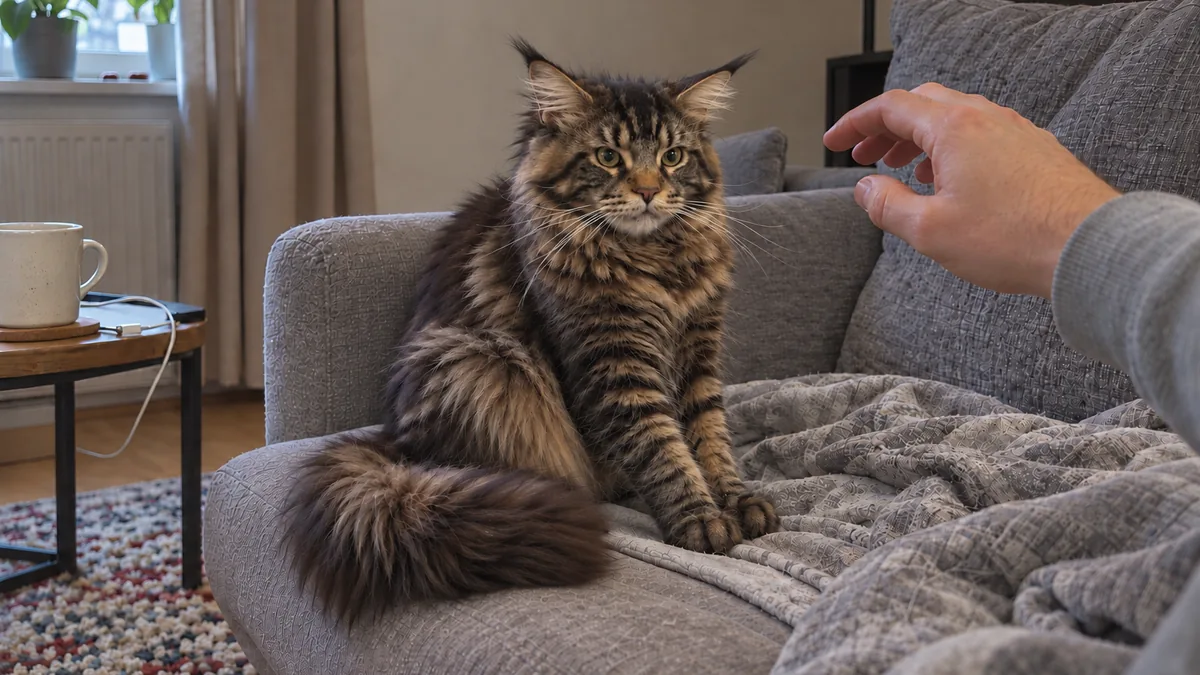
The short answer
Cats hiss to tell you to back off. Cats Protection says the most common reason is fear, and that a hiss is a last resort, usually after quieter warning signs were missed. Pain is another reason, especially if your cat hisses when one spot is touched, and a mother cat may hiss to protect her kittens. Back away, give your cat space and never punish the hiss. If hissing is new for your cat, see your vet.
What does it mean when a cat hisses?
A hiss is a warning. It’s your cat’s way of saying “back off”. Cats Protection explains that most cats would rather avoid a fight, so the hiss is meant to scare a person or another animal away before it comes to one.
The sound is a long breath out through an open mouth, with the teeth showing. A 2020 review of cat sounds in the Journal of Veterinary Science calls it involuntary: it’s set off when an enemy appears by surprise, and the cat’s posture changes and their fur stands up at the same time. Some cats also bare their teeth, arch their back and puff up their fur to look extra menacing.
Hissing is a natural thing for a cat to do. It can still be quite alarming the first time it’s aimed at you.
Why do cats hiss?
Most often, out of fear. Cats Protection lists the usual reasons a cat feels scared enough to hiss: an unfamiliar person or animal in their territory, sudden movements by someone they don’t know, and being touched or picked up when they’re not comfortable with it. Cornell Feline Health Center adds new noises to the list.
Pain is the second reason. If your cat hisses when you touch one particular spot, they may be sore there and warning you not to touch it again.
And a mother cat may hiss at anyone who gets too close to her kittens.
A cat who hisses regularly is very stressed, Cats Protection says. Try to find the cause and sort it out as soon as you can.
Why does my cat hiss at me?
Even a cat who loves you may hiss at you now and then. Cats don’t hiss to be naughty, and a hiss doesn’t necessarily mean they don’t like you. If something has left them scared, sore or stressed, a hiss is how they ask you to leave them alone for a while.
When a cat feels threatened, their body switches to “fight or flight”, and that overrides their usual behaviour. In that state they aren’t thinking clearly. They’re just protecting themselves, and something that looks minor to you can feel overwhelming to them. Once they feel safe again, they’ll most likely go back to their normal, friendly self.
Why does my cat hiss when I stroke them or play?
Often the trigger is your hands. Cats Protection says a common cause of hissing is being handled in a way the cat isn’t comfortable with. Cornell says that before a cat turns on the hand stroking them, they often show dilated pupils, a lashing tail and ears moved back on the head. Its advice is to avoid uninvited handling.
If your cat hisses in the middle of a game, keep play sessions short, so they don’t get overstimulated.
Being picked up is a common flashpoint too. International Cat Care says to let your cat start the contact and decide how it goes and for how long. A cat should never be scruffed, that is, held by the skin at the back of the neck.
The signs that come before a hiss
Cats Protection says cats usually only hiss because earlier warning signs were missed. Catch those, give your cat space, and they may not need to hiss at you at all.
International Cat Care lists the signs that a cat doesn’t want to be approached or touched. They walk away or turn their head away. They lower or rotate their ears as you come closer, or stare at you with wide eyes and large pupils. They suddenly freeze or tense up, thrash or thump their tail, or the skin twitches along their back. Some lick their nose or lips when they haven’t just eaten.
A frightened cat also makes themselves small. The ASPCA describes a crouch, the head tucked in, the tail curved around the body, wide eyes with dilated pupils, and ears flattened sideways or backwards. The cat may turn side-on instead of facing you. The open-mouthed hiss belongs to the same picture.
What to do when your cat hisses at you
Back away and leave them alone. That’s the first thing Cats Protection advises, and the hardest, because you want to make it better. Don’t try to comfort them with a stroke or a cuddle. The ASPCA’s rule of thumb is the same: don’t touch, reassure or punish a cat in that state. Keep your distance until they calm down.
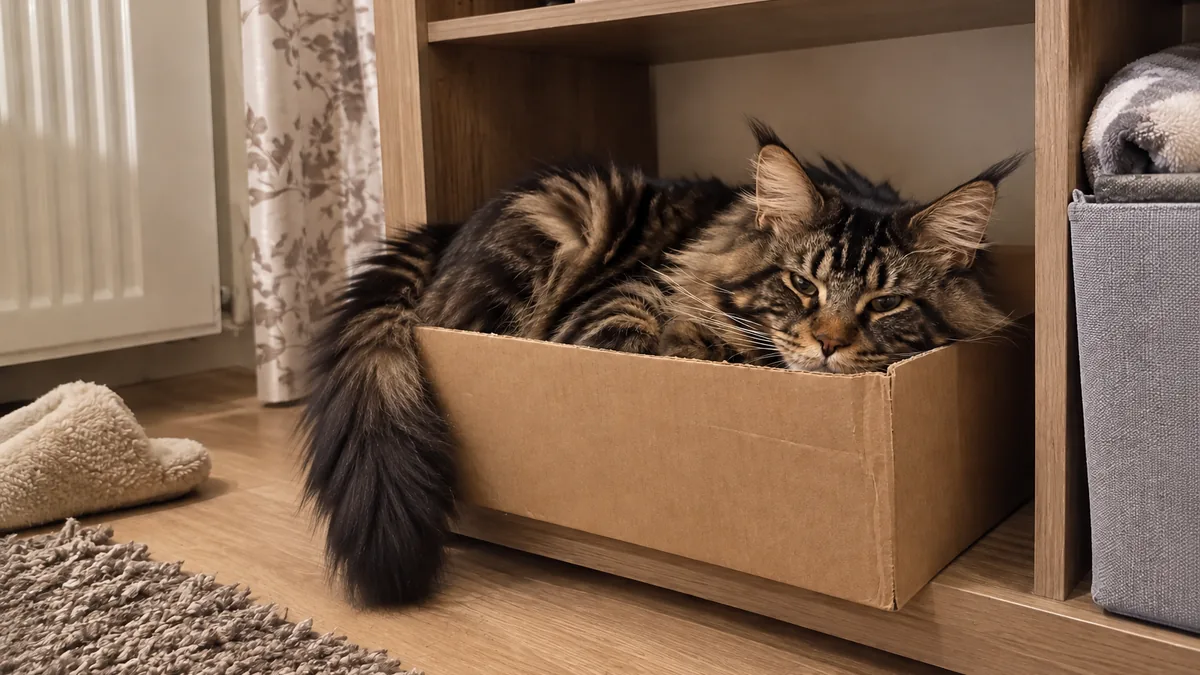
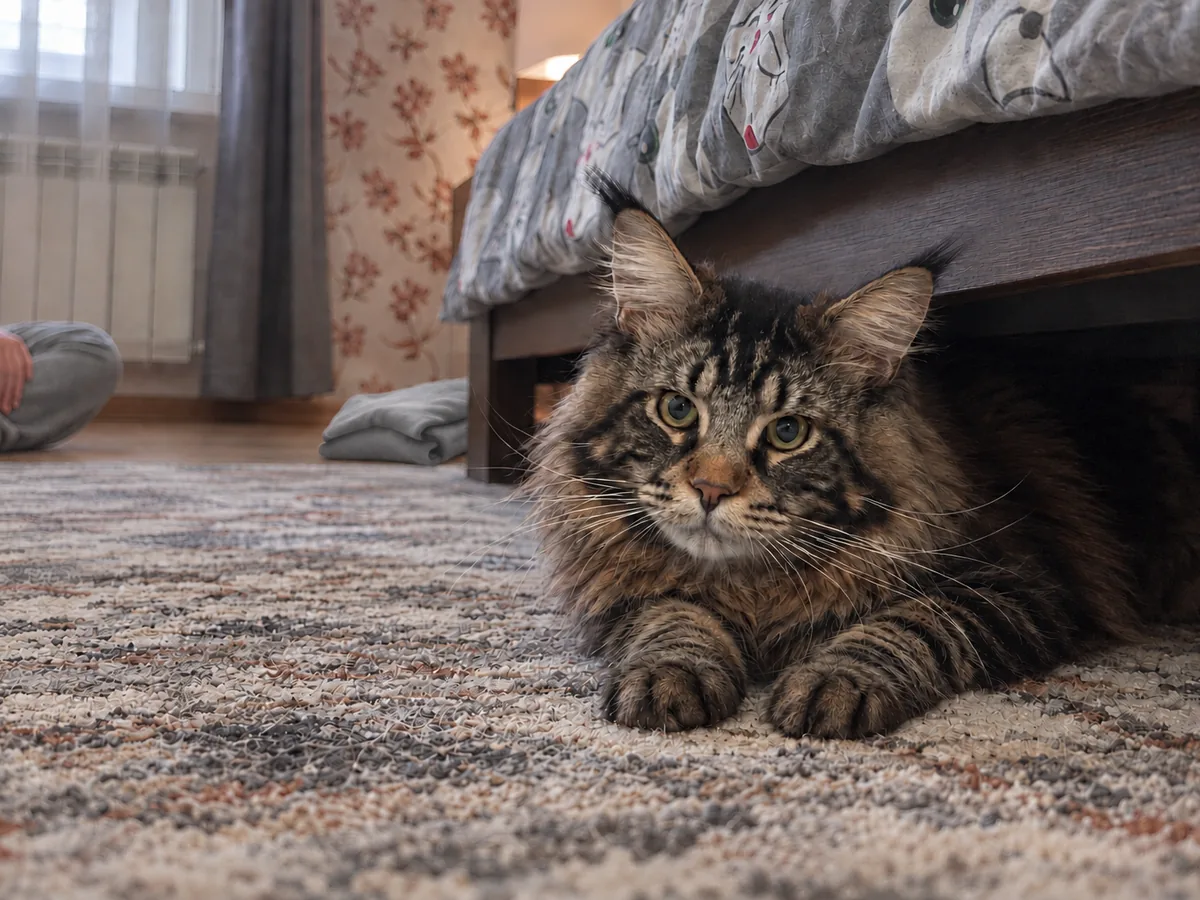
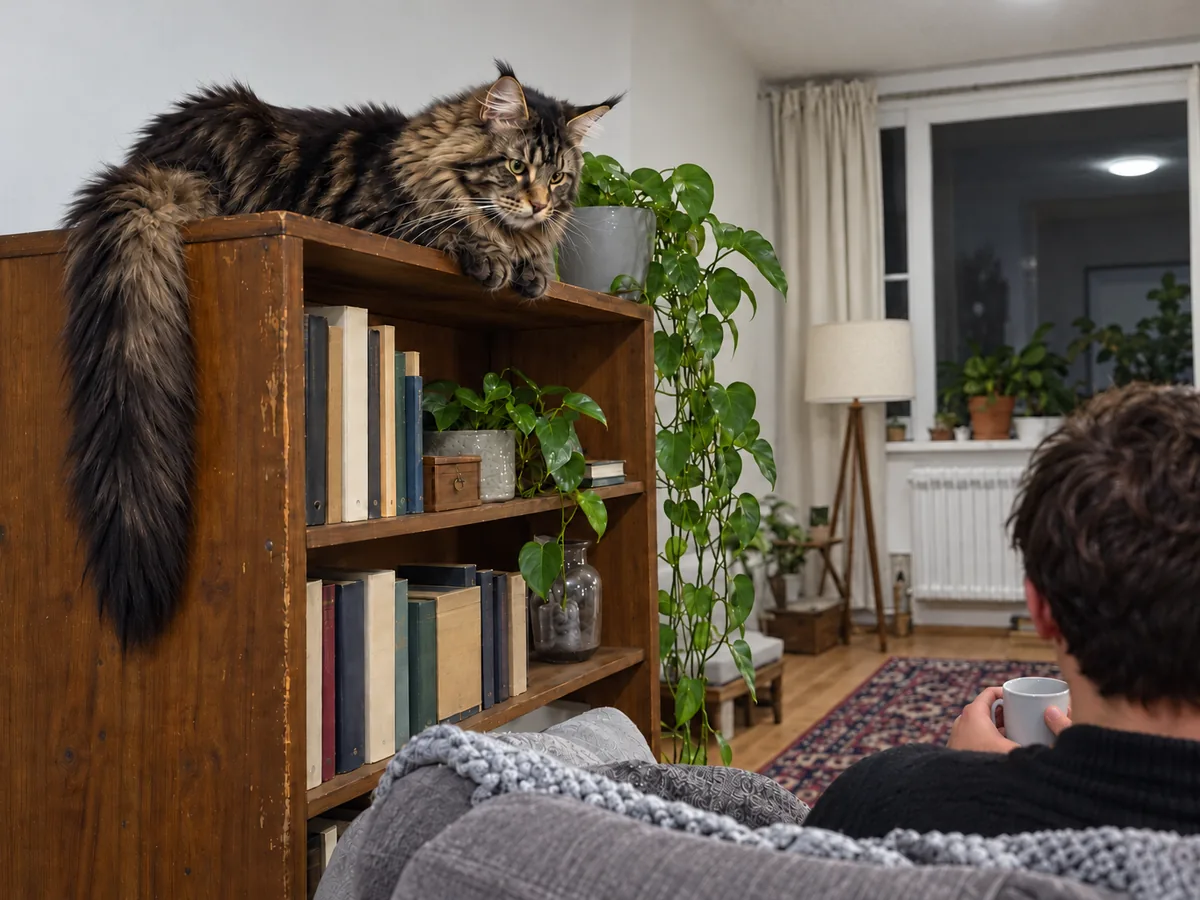
Make sure your cat has a few hiding places around the home, and leave them be while they’re in one. Cats calm down faster when they can hide, ideally somewhere high and dark, like behind the sofa or on a shelf.
When they come out, let them come to you. International Cat Care suggests crouching to their level and keeping any contact short, about 3 to 5 seconds, then pausing so they can decide whether to carry on.
Never punish a hiss, and don’t hiss back
Never punish your cat for hissing. Cornell says any kind of physical punishment can increase a cat’s fear or anxiety and make aggression worse.
Hissing back is a bad idea too. Cats Protection says it’s likely to scare your cat and stress them more, which could make them hiss more or even attack you. Stay quiet and leave them alone for a while instead.
Why is my cat hissing at visitors?
Someone new in the house is one of the classic triggers. If your cat disappears into a cupboard or under the bed when a stranger arrives, Cats Protection’s advice is to leave them to it. Ask friends and family not to go looking for them there.
Cats can feel overwhelmed meeting lots of people at once, especially shy ones, and they’re more likely to bolt if visitors are noisy. Ask guests to sit back and let your cat make the first move, because a direct approach feels very threatening to a cat. An escape route, or somewhere high to hide, helps if they get scared.
Cats Protection also suggests giving a shy cat a treat when they come over by themselves.
Why do cats hiss at other cats?
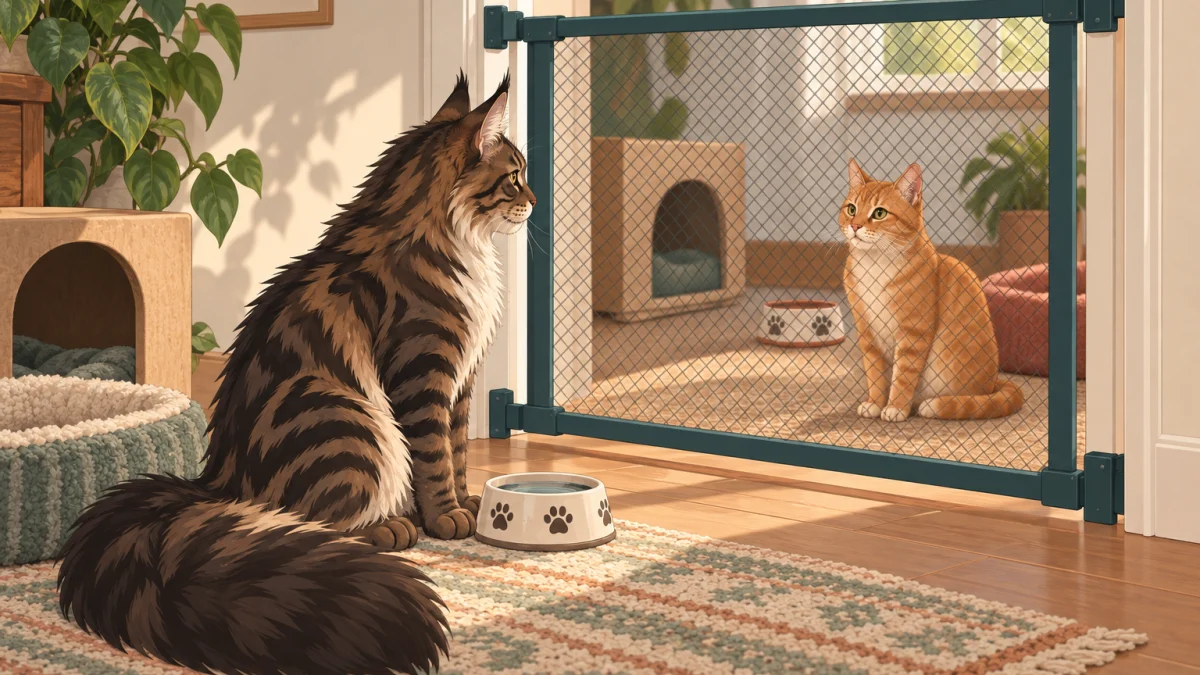
Cats are territorial. Cats Protection says it’s quite common for a cat to feel scared or threatened by another animal in their territory, and the hiss is how they defend it. If two of your cats hiss at each other, they aren’t getting along, and they’re probably both very stressed and unhappy.
Don’t get close or try to pick one of them up, because either could attack you. Cornell adds never to put your hand or any other part of your body between cats that are fighting. Make sure each cat can get away, ideally to rooms far apart. If a real fight breaks out, International Cat Care’s advice is to keep them in different rooms for 24–48 hours, until both have calmed down, and to call your vet straight away, so a health problem can be ruled out. If you try again after that, you may need to introduce them as if they were complete strangers.
Give each cat their own things. International Cat Care’s rule for everything cats use, litter trays included, is one per cat plus one extra, in different places around the home. A new cat or kitten should start in a room of their own, with a separate litter tray, water and food, as Cornell describes. Cats Protection says a proper introduction makes hissing less likely, and a qualified behaviourist may be able to help if the hissing doesn’t settle.
Why does my cat hiss for no reason? When to see the vet
If hissing is unusual for your cat, or they hiss when you touch one particular area, get them checked by a vet, because they could be in pain. A cat who hisses when there are no people or other animals around is showing very unusual behaviour, Cats Protection says. Talk to your vet about that too.
Illness can change a cat’s temper. Cornell names hyperthyroidism, osteoarthritis, dental disease and problems of the central nervous system among the diseases that can cause aggression, and the ASPCA says every aggressive cat needs a medical check-up. A cat in pain may lash out to avoid being touched, so leave the sore spot alone until your vet has seen it.
International Cat Care’s rule is simple. If your cat suddenly starts hissing when they never used to, or the hissing keeps happening, contact your vet.
How to stop a cat hissing
Find the cause. Cats Protection calls this the most important step: once the problem behind it is sorted, your cat should, with luck, have no reason left to hiss.
Where you can, keep your cat away from whatever frightens them. Where you can’t, Cornell suggests gradual desensitisation: brief meetings with the scary thing from a distance, with food and praise each time your cat stays calm. If you’d like a plan for those short sessions, a Lapka programme sets them out and adjusts them after each one.
Day to day, a home that meets your cat’s needs helps most, because happy cats are less likely to hiss. Handle and play with them the way they like, and cut out the stressors you can.
What a week of notes can look like
Sat, 3 pm: four friends over. Hid under the bed, hissed once when someone reached in. Came out at 7, after everyone had gone.
Tue evening: hissed when my hand got to the left back leg while stroking. Fine everywhere else.
Thu: the same leg, the same hiss. Eating and litter tray as usual.
Notes like these show what comes before each hiss. The visitors are a pattern you can plan around. A hiss at the same spot twice in one week is new, and it’s worth telling your vet about.
Questions people ask
Does a hiss mean my cat doesn’t like me?
Not necessarily. Cats Protection says even a cat with a close bond to you may hiss at you from time to time, when they’re scared, in pain or stressed. Once they feel safe again, they usually go back to their friendly self.
Why does my cat hiss at my new kitten?
To your cat, the kitten is a stranger in their territory, and the hiss is meant to keep it at a distance. Start the kitten in a room of their own with their own litter tray, water and food, and introduce the two slowly. Cats Protection says a proper introduction reduces the chance of hissing.
Why do cats hiss and growl?
Both are warnings. International Cat Care puts growling, hissing and spitting among the things a cat does to put distance between themselves and a threat quickly, and says any interaction should stop at once. Some cats growl instead of hissing.
Why doesn’t my cat hiss?
Not all cats hiss, and Cats Protection says it’s nothing to worry about. Your cat may simply be happy, or quieter than most and silent even when scared. Look for other signs of fear instead: wide eyes, flat ears, puffed-up fur or hiding.
Is hissing the same as aggression?
It depends who you ask. The ASPCA puts it at the mild end: aggression in pet cats ranges from cats who hiss and avoid whatever upsets them to cats who attack. International Cat Care says hissing doesn’t mean a cat is aggressive, only that they’re trying to keep themselves safe. Either way, a hiss is a warning, and it’s worth listening to.
Sources and further reading
- Cats Protection — Why is my cat hissing?
- Cats Protection — Shy cats
- Cats Protection — Meeting other people
- Cornell Feline Health Center — Feline behavior problems: aggression
- ASPCA — Aggression in cats
- International Cat Care — Handling and interactions
- International Cat Care — Conflict between cats
- Journal of Veterinary Science — Feline vocal communication (2020)