Lapka
The short answer
Most cats hate water because of where they come from and what wet fur does to them. Pet cats descend from the African wildcat, which lives where water is scarce, and most cat fur doesn’t repel water. Soaked, it turns heavy and cold, slows the cat down and leaves them feeling vulnerable. A bad experience, such as falling into a bath, makes it worse. Not all cats mind, though: some love a running tap, and some breeds enjoy a paddle.
Why do cats hate water so much?
Most of it goes back to where cats come from. Our pet cats descend from the African wildcat, which lives on the African savannah, where water is scarce. Wildcats rarely come across large bodies of water, so they never needed to swim or bathe.
Their coat never needed to cope with it either. Cats Protection, a UK cat charity, says most cats don’t have fur that can repel water, so they try to avoid getting wet at all costs, and our pet cats have inherited that instinctive dislike. A bit of rain or a splash from the tap won’t harm your cat. It’s getting soaking wet that is usually very stressful for them.
Wet fur weighs a cat down
Cats like to be in full control of their bodies. Most cat fur isn’t water-resistant, so when a cat is soaked it turns heavy and uncomfortable. It weighs them down, makes moving harder and slows their reactions. Cats are a prey species as well as hunters, and being slow leaves them feeling vulnerable and stressed. Moving water is unpredictable too, and that can easily startle them.
Then there’s the cold. A soaking-wet cat can struggle to keep their body temperature where it should be, which leaves them cold and at risk of hypothermia. Cats Protection says this is particularly dangerous for elderly cats, sick cats and young kittens. It also points out that cats come from the desert-dwelling African wildcat and much prefer warm temperatures to cold.
A bath washes off what the coat needs
A cat’s coat carries natural oils that keep the skin healthy and add a layer of waterproofing. Soak the cat and those oils can be washed away, which can leave the skin dry and itchy.
Your cat rarely needs the help. Cornell Feline Health Center says cats typically spend between 30 and 50 percent of their day grooming themselves, and Cats Protection says there usually isn’t any need to bathe a cat.
Even the smell can put them off. Tap water contains chemicals such as chlorine, which can smell quite strong to a cat’s sensitive nose. It may put some cats off drinking it too. If yours turns away from tap water, try filtered water instead.
Why does my cat hate water? Look at what happened before
Some cats have a reason of their own. A cat who once fell into a bath or a pond and struggled to get out remembers it and tries to avoid it happening again. A single bad experience can put a cat off going near water.
Some cats meet water as a punishment. Cats Protection’s behaviour guide notes that spraying water at a cat is still commonly used to stop them spraying urine, and counts it as a form of punishment, because the cat finds it aversive. The RSPCA says never to shout at or punish your cat: they’re very unlikely to understand, and they can become more nervous or scared.
Why do cats hate water if they can swim?
Some cats do like a swim. Cats Protection says the Turkish Van is often called “the swimming cat”: it has a water-resistant coat and often enjoys paddling. PDSA, a UK vet charity, says one may even join you in the shower. Most cats, though, don’t like being fully submerged, because their fur soaks up the water and drags them down.
The big cats show how much it depends on where a cat lives. Tigers and jaguars live in tropical forests with lots of rivers and lakes, and they’ve adapted to be good swimmers so they can hunt in the water as well as on land. Lions, leopards and panthers, which live in hot climates, use water to cool down. Bobcats, lynx and snow leopards, which live in cooler climates, are more likely to avoid it, because getting wet would make it hard for them to keep warm.
Why do cats hate water but dogs love it?
Not every dog loves it either. PDSA reminds dog owners that not all dogs are natural swimmers, and some can be scared of the waves. Its advice for dogs sounds a lot like advice for cats: never force them in, and let them decide whether they want a dip.
On the cat’s side, the reasons are the ones above: an ancestor from places where water is scarce, and fur that turns heavy and cold when it’s soaked. A wet cat loses the speed and control they count on to feel safe, so most of them would rather stay dry.
Why some cats love water from the tap
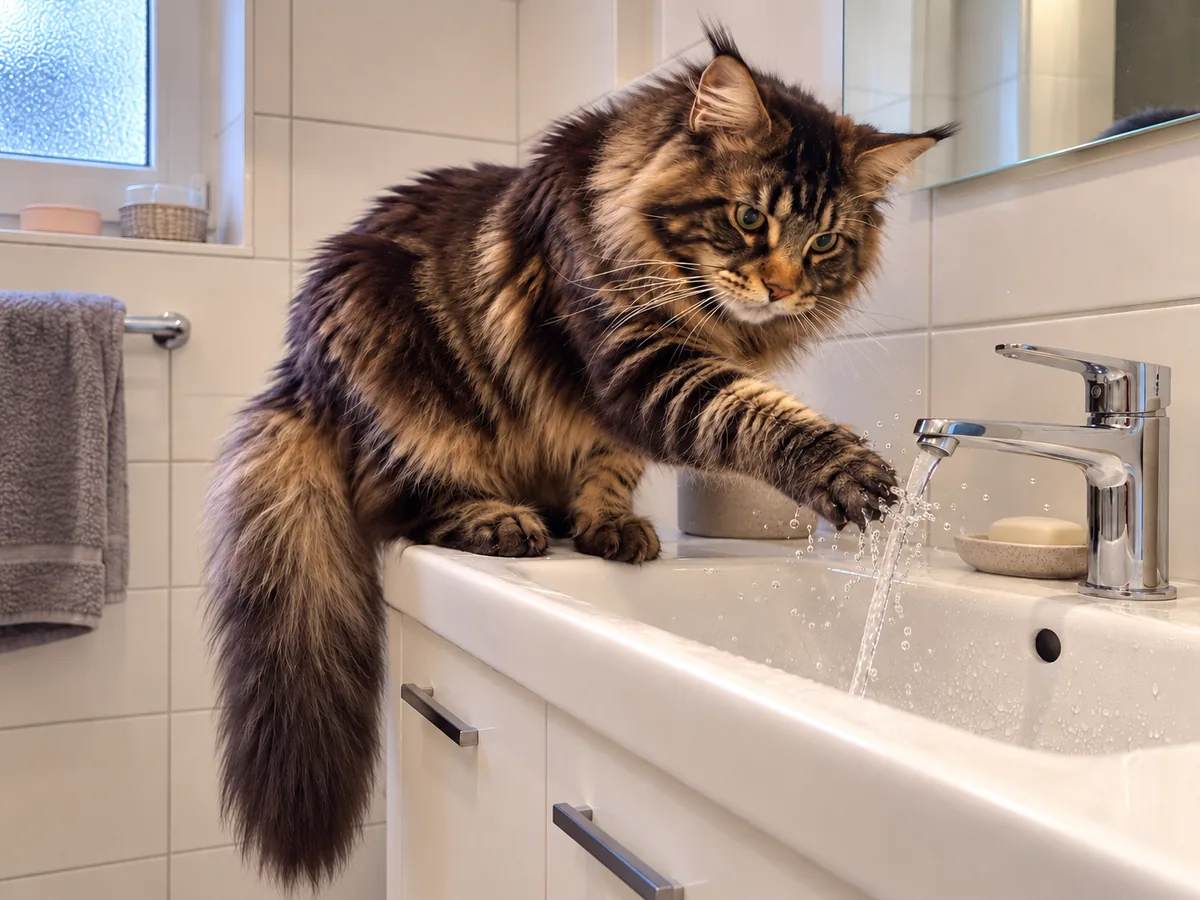
A running tap is another matter. Some cats sit by the bathroom or kitchen tap and wait patiently for someone to turn it on. Then they stick a paw into the stream, dip their head under or try to lap up the water mid-flow.
This goes back to the wildcat too. African wildcats look for fresh, flowing streams to drink from, because running water is generally cleaner and safer than stagnant pools. To a cat, running water says it’s fresh, especially next to water that has sat in the bowl all day. The movement, the sound and the light on it are fun to watch as well.
Some breeds mind getting wet less. Cats Protection says Maine Coons have water-resistant fur, so they usually don’t mind getting wet. Abyssinians will often happily splash about, and some Bengals like playing with toys in water. A water-resistant coat doesn’t necessarily mean a cat will like water, though. It depends on the cat.
Why does my kitten hate water?
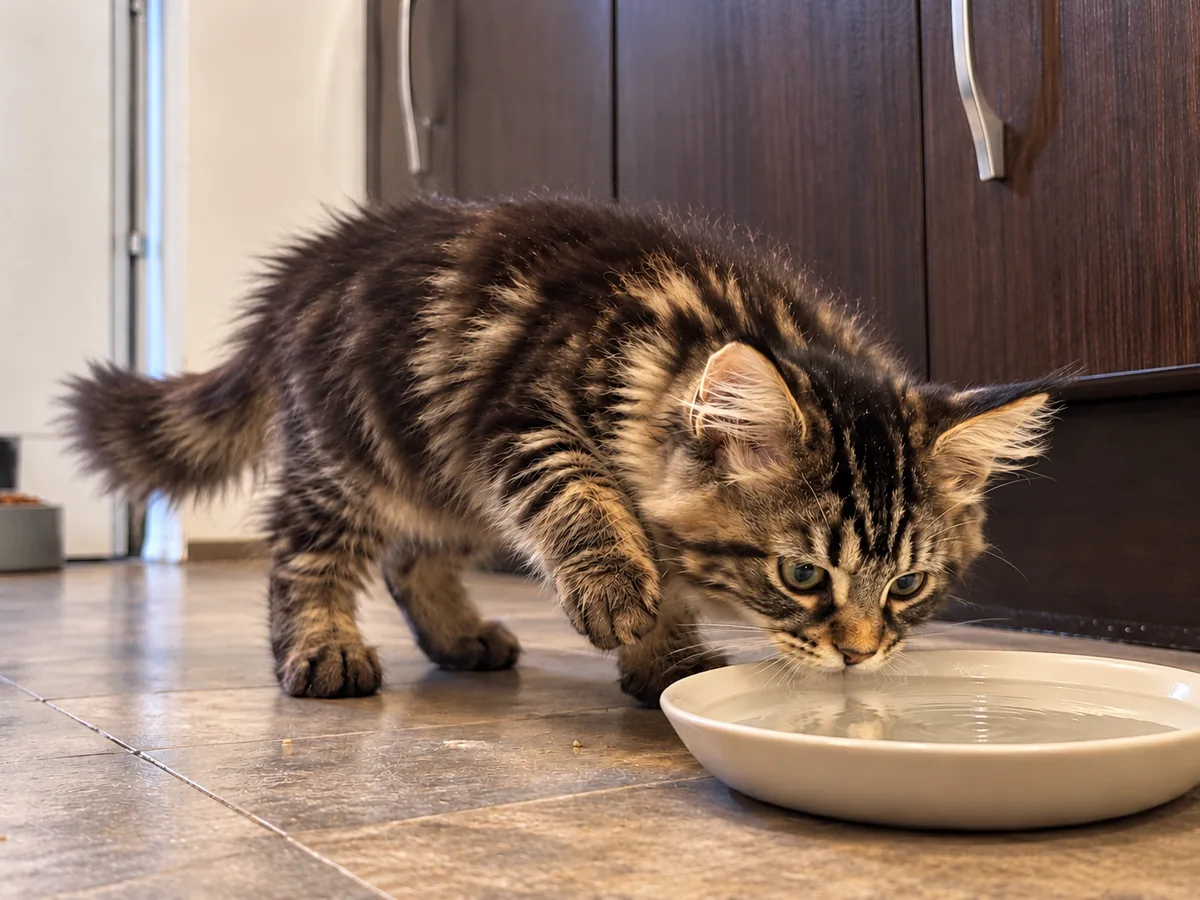
A kitten learns what is safe very early. Cats Protection says the socialisation period runs from two weeks to seven weeks old. Any negative experiences in that time, or no experiences at all, can make a kitten fearful, and that feeling is likely to last into adulthood.
Kittens also feel the cold more than adult cats, and very young kittens under eight weeks old shouldn’t be bathed at all, as there is a risk they could drown. If a young kitten needs cleaning, put a gentle cat shampoo on a damp cloth, wipe the fur quickly, and keep them warm while they dry.
Go slowly with anything new, a damp cloth or a dripping tap included. Let your kitten come to you, keep handling to short sessions, and don’t hold them for long.
How to handle water without scaring your cat
The simplest rule is the kindest: only bathe your cat if your vet has recommended it. Most cats keep themselves clean and usually only need washing for a specific health reason.
For a dirty patch, try a brush first, then a soft, damp cloth. If you still can’t get your cat clean, ask your vet, who may be able to bathe them for you.
If a bath really is needed, use warm water no higher than the top of your cat’s legs, put a towel on the bottom of the sink or tub so they don’t slip, and never put your cat under the water. If water is only one of several things that frighten your cat, a Lapka programme for nervous cats plans small daily steps and adjusts them after each one.
Has your vet asked for a bath? How to bathe a cat that hates water, on Lapka Care, goes through it step by step.
When your cat comes in from the rain
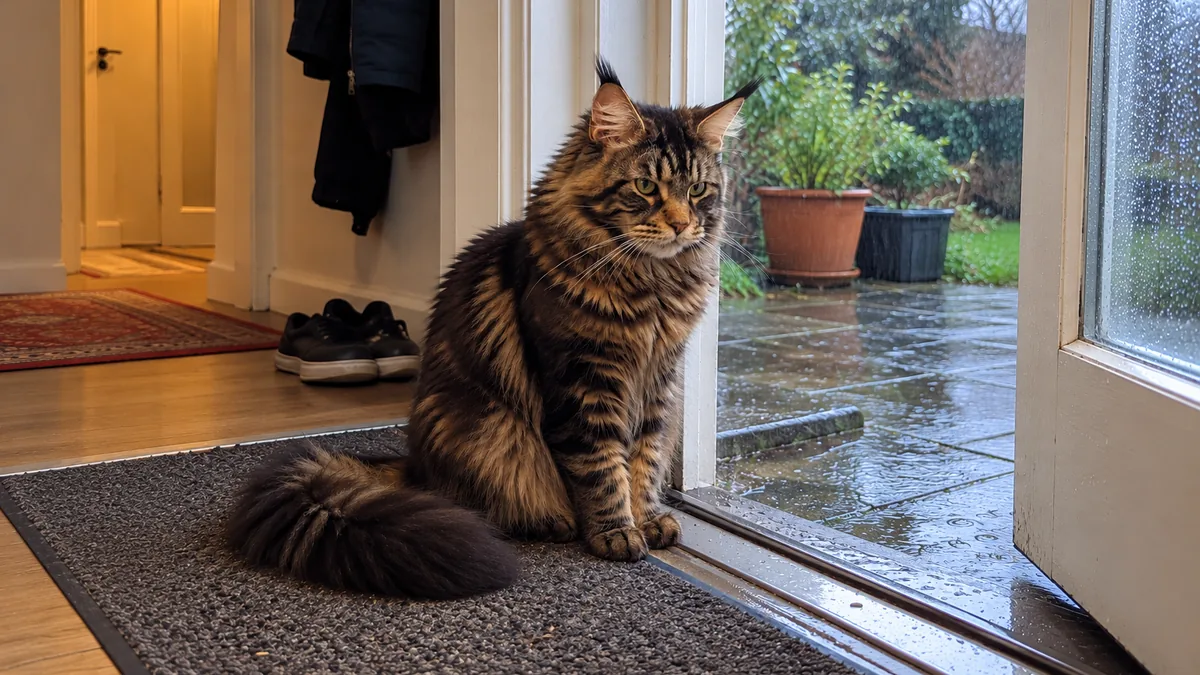
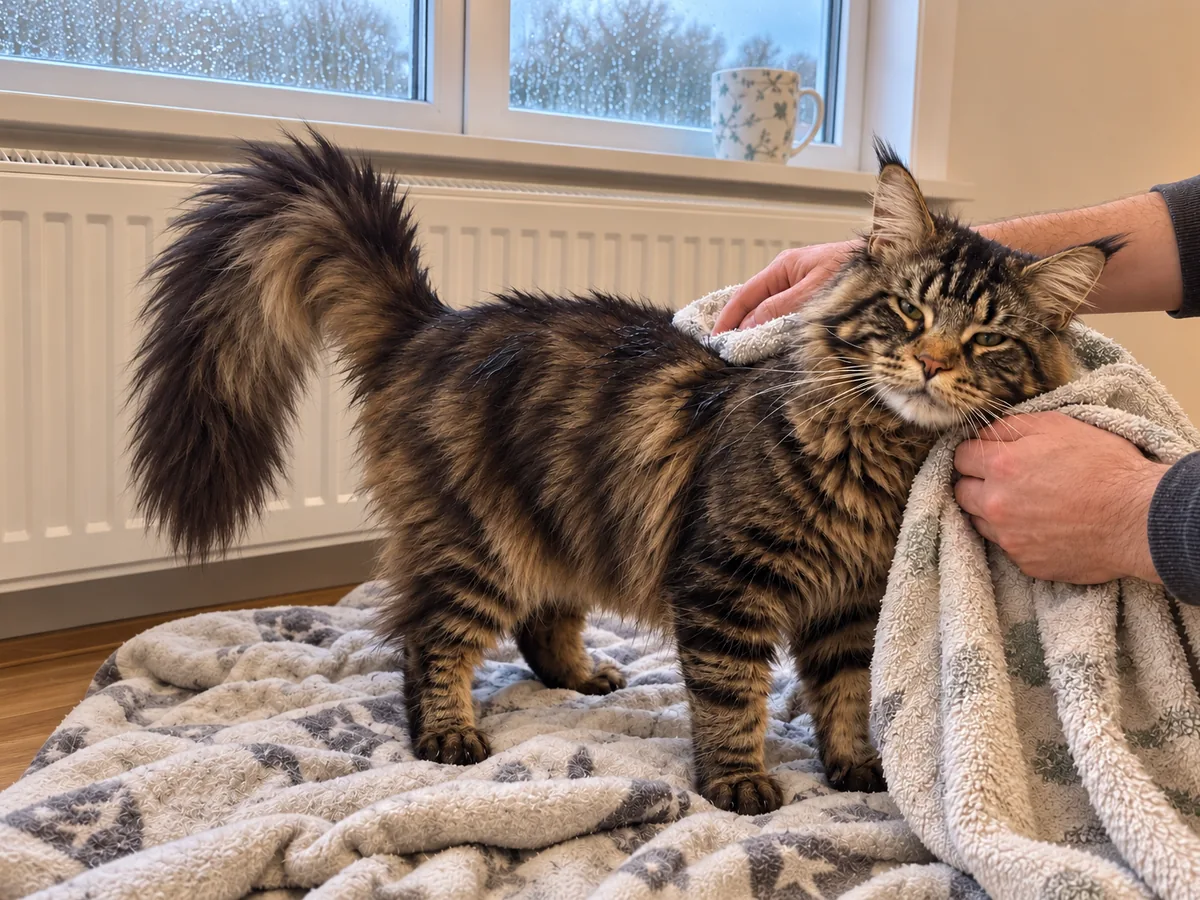
If your cat comes in wet and is happy to be handled, dry them gently with a towel, because damp fur makes them feel colder. If drying seems to stress them, leave them alone. Most cats will groom themselves dry, as long as they have somewhere warm to go. Let your cat get back into the house whenever they want: cats are usually very good at knowing when it’s too cold to stay out.
A cat who stays soaked and cold can develop hypothermia. Cats Protection lists the signs: shivering (a severely cold cat may stop shivering), cold ears, paws and nose, pale gums, weak and lethargic movements, slow breathing and heart rate, confusion and clumsiness, and collapse. These can also be signs of other serious illness. If you see any of them, contact your vet straight away. While you do, dry your cat with a towel, wrap them loosely in a blanket and warm the room gradually. Don’t use a hot water bottle or a heat pad, which can burn them.
What a week of notes on water can look like
Mon, 7:10: sits on the edge of the bathroom sink while I brush my teeth. Puts a paw under the tap the moment it runs.
Wed: comes in from the rain with a wet back. Walks off when I reach for the towel, then grooms for twenty minutes on the blanket by the radiator.
Sat: I run a bath. Sits on the edge, sniffs the water, shakes a wet paw and jumps down.
Notes like these show which kind of water your cat likes and where the line is. Here, running water from the tap is welcome and getting wet is not, so drying happens on the cat’s terms and the bath stays out of it.
Questions people ask
Do all cats hate water?
No. Some cats are quite curious about it: they’ll happily sit on the edge of the bath or put their head or paw under a running tap for a drink. What most cats dislike is being fully submerged, which is why most of them won’t enjoy a bath.
Is it cruel to spray a cat with water?
Cats Protection counts spraying water at a cat as a form of punishment, because the cat finds it aversive. The RSPCA advises never to punish a cat at all: they’re very unlikely to understand, and they can become more nervous or scared. If your cat keeps doing something you don’t want, our guide to discipline without hurting has gentler ways to stop it.
Why does my cat drink from the tap but not the bowl?
Running water seems fresh to a cat, and many cats avoid drinking water placed right next to their food bowl. Try putting the water bowl somewhere away from the food. International Cat Care adds that some cats prefer running water, so a pet drinking fountain can be a more practical source than a constantly dripping tap.
Should I give my cat a bath?
Only if your vet has recommended it. Most cats keep themselves clean, and Cats Protection suggests brushing long-haired cats daily and short-haired cats ideally once a week. Hairless cats such as the Sphynx are different: many need regular baths to keep their skin healthy. Never use dog shampoo on a cat. Some dog flea shampoos contain permethrin, which is toxic to cats.
Do cats like the rain?
Most don’t like getting wet, and plenty will give you a disgusted look at the door when they see it’s pouring. A bit of rain won’t harm your cat. Make sure they can come back inside whenever they want, and if they come in damp and don’t mind being handled, dry them gently with a towel.
Sources and further reading
- Cats Protection — Why do cats hate water?
- Cats Protection — Why do cats love running water?
- Cats Protection — Should I bathe my cat?
- Cats Protection — Do cats feel cold?
- Cats Protection — Kitten socialisation
- Cats Protection — The Behaviour Guide (2025)
- RSPCA — Understanding your cat’s behaviour
- International Cat Care — Why do cats..?
- Cornell Feline Health Center — Cats that lick too much
- PDSA — Turkish Van
- PDSA — 5 ways to keep your dog safe at the beach