Lapka
Where to start
You can’t punish a cat in a way they understand. Cats have no sense of right and wrong, so hitting, yelling or spraying water can make them afraid of you, and they often do the same thing once you’ve left the room. What works is calmer: move your cat away without fuss, make the unwanted spot or habit less rewarding, give them an allowed version, and reward that. A sudden change in behaviour needs a vet check first.
Can you punish a cat in a way they understand?
Not really. Cats Protection’s behaviour guide says current scientific thinking is that cats don’t have a moral sense of right and wrong. They don’t take revenge, they don’t try to annoy you on purpose, and they don’t feel guilt. The RSPCA puts it plainly: cats are very unlikely to understand being shouted at or punished, and they can become more nervous or scared.
From your side, you’re correcting a mistake. From your cat’s side, the same guide says, you’re just being randomly horrible, and they come away more anxious. International Cat Care adds that a punished cat may start to see their owner as unpredictable. Some keep away from that person, and some scratch or bite to defend themselves.
A lot of what we call misbehaving is ordinary cat behaviour in a place we don’t like: scratching, climbing, chasing things that move. That’s the part you can work with.
Why hitting, yelling and a spray bottle backfire
Cats Protection counts anything your cat finds unpleasant, used to stop a behaviour, as punishment. That includes two deterrents that are still common: spraying water at the cat and rubbing their nose in a puddle of urine.
Punishment tends to make the problem bigger. Cornell Feline Health Center says any physical punishment can make a cat more fearful or anxious and make aggression worse. International Cat Care says punishing a cat who soils indoors only makes them fearful and the problem worse. A cat who sprays because they’re anxious may spray more after a telling-off, because now they’re more anxious still.
It rarely works even on its own terms. The PDSA points out that a cat shouted at for being on the worktop will still go up there, just when you’re not around.
So, can you hit a cat? No. You end up with a cat who is afraid of you and the same habit as before. The ASPCA backs training that causes no unnecessary distress or discomfort and relies mainly on lures and rewards: food, praise, petting and play.
What to do in the moment, without scaring your cat
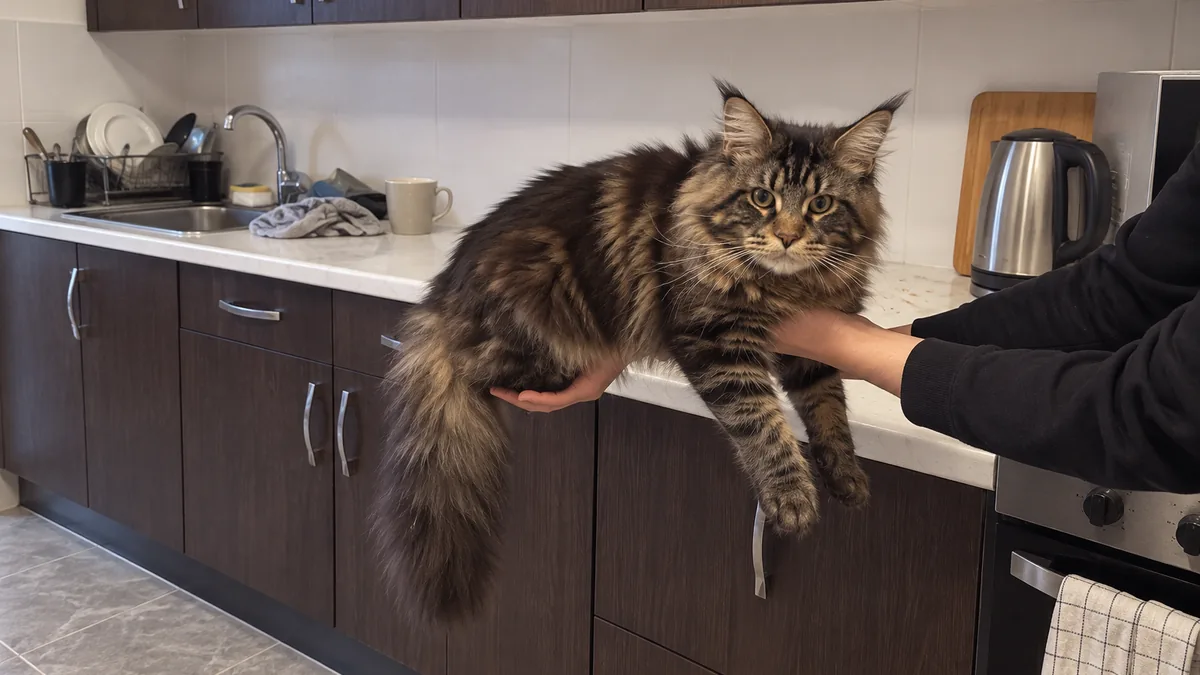
Keep it boring. If your cat is on the worktop and doesn’t mind being handled, the PDSA suggests lifting them down quickly and gently onto a place they’re allowed, then ignoring them. No telling off, and no long cuddle either.
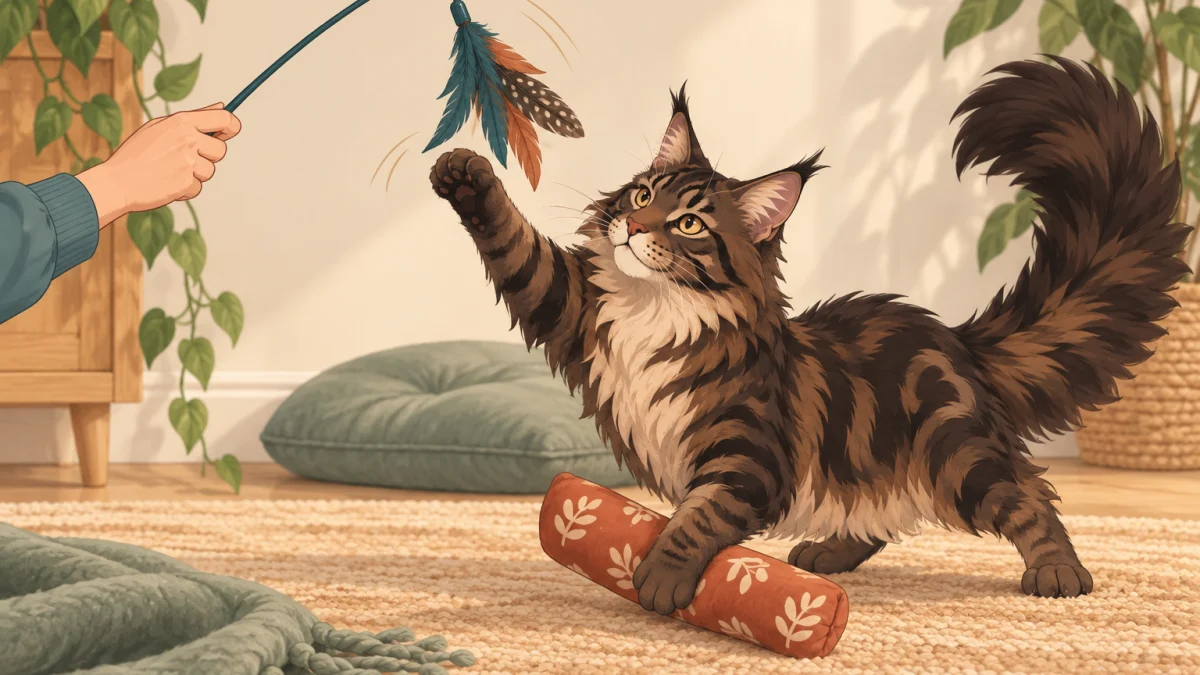
If you can see it coming, get in first. When your cat looks about to jump somewhere they shouldn’t, give them something else to do, like a toy trailed along the floor.
Leave out anything meant to make them jump. The PDSA advises against anything that might scare your cat when they land on a worktop or shelf, because a cat in a panic can hurt themselves. That rules out a sudden clap or a squirt of water.
Be the same every time. International Cat Care says being predictable and keeping daily routines is a great way to keep a cat’s stress down. Everyone at home needs to react the same way, a point Cats Protection makes about play attacks.
How to discipline a cat to not do something: reward the yes
Discipline that works for a cat is mostly teaching them what to do instead. Cats Protection describes it as positive reinforcement: reward a behaviour, and your cat becomes more likely to do it again.
So pick what you’d like to see in place of the problem: sitting on a cat tree while you cook, scratching the post, chasing a toy instead of your feet. Then make it worth their while. The PDSA suggests a healthy treat, some play or a stroke, whichever your cat likes best.
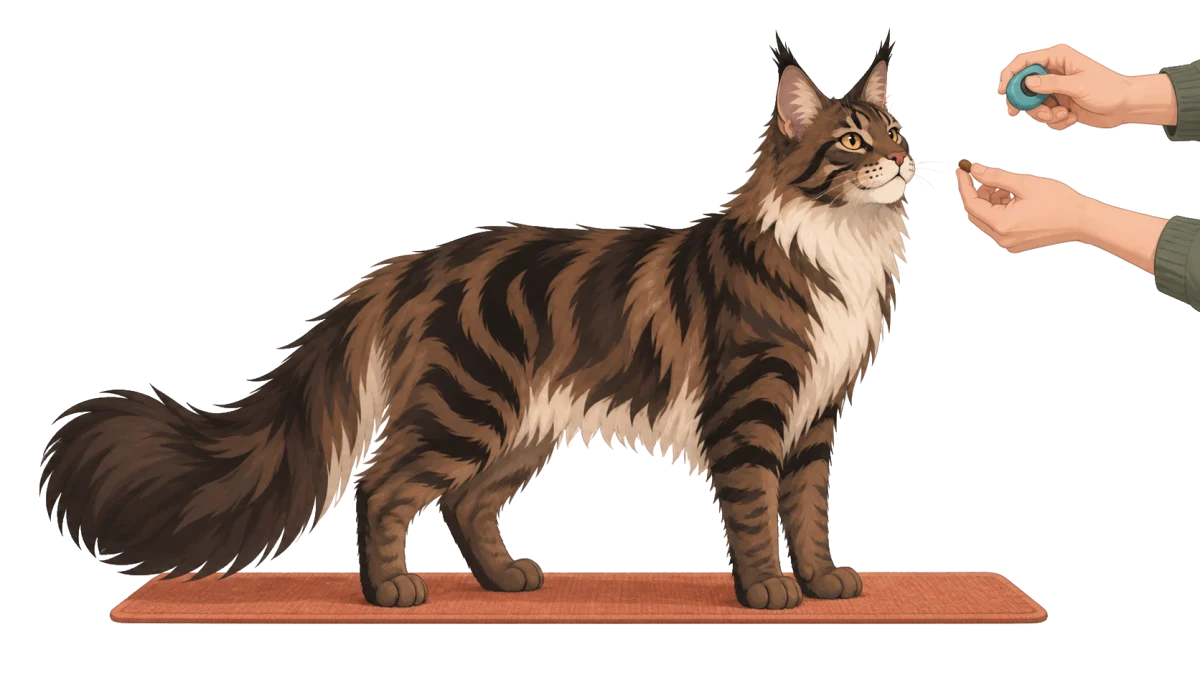
Your cat needs to know what the treat was for. That’s the job of the click in clicker training: Cats Protection calls it a marker that tells the cat the precise moment they did something that will be followed by a reward.
If you’d like help building a habit like this step by step, a Lapka programme plans short daily sessions and adjusts them after each one.
How to discipline a cat for biting
If your cat bites during play or stroking, Cats Protection says they may be overexcited and turning some of their hunting on you. A kitten who learned that hands and feet are toys will keep attacking them as an adult, with much sharper teeth and claws.
When it happens, freeze. Stay as still and calm as you can, because sudden movements and loud noises make a cat more stressed or excited and more likely to bite again. Then step away and give them space. Cornell says walking away from a cat who plays rough can teach them that rough play means no play at all.
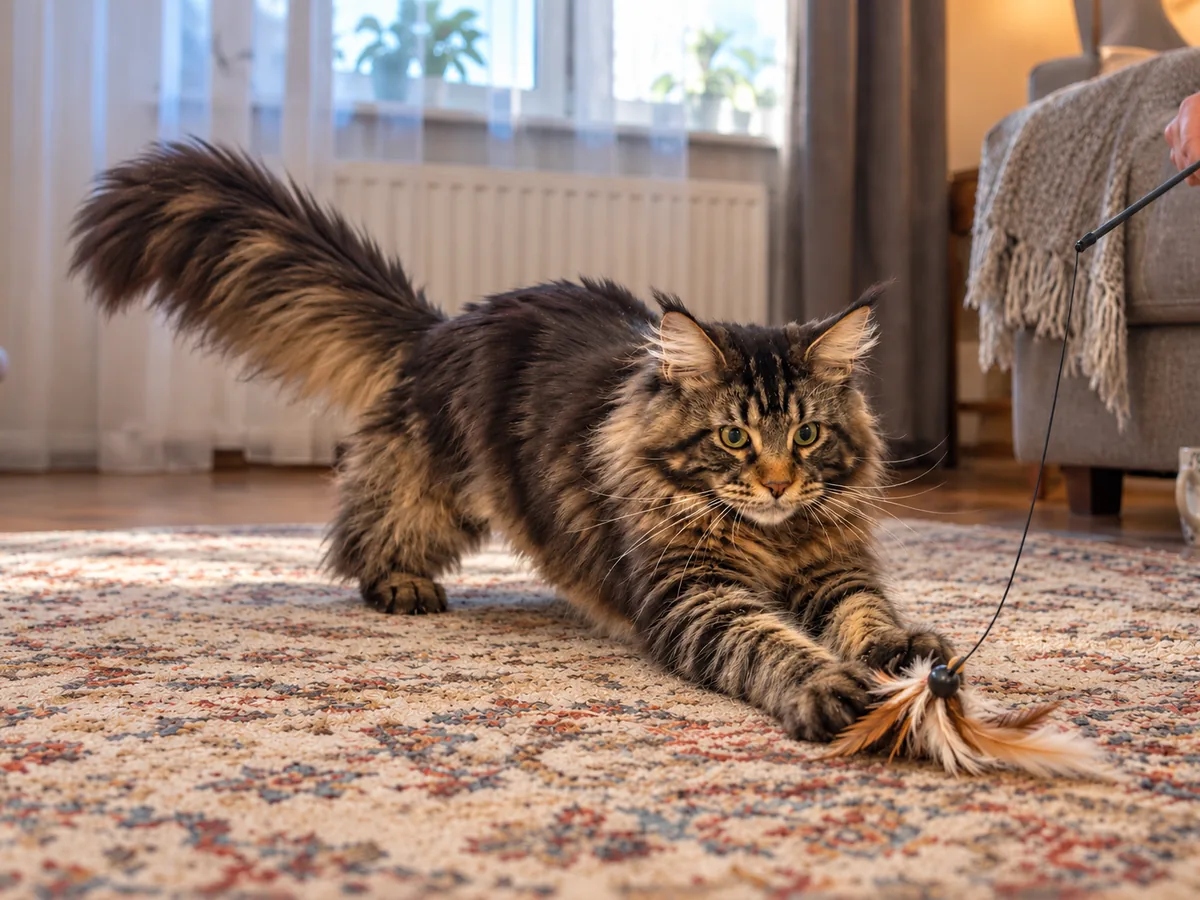
Afterwards, give the hunting somewhere to go. A fishing-rod toy keeps the game well away from your hands, and kicker toys, catnip toys and ping-pong balls work too. Keep play and stroking to a couple of minutes at a time, spread through the day, and step away as soon as your cat starts to get wound up.
Cornell also warns against hitting, or even touching, a cat in that state. It can make them afraid of people, or come across as play and reward the biting. If biting is new for your cat, see your vet, because it can be a sign of pain.
How to discipline a cat for jumping on counters
Cats like being up high, where they feel safer. So first ask what the worktop gives your cat: food, a view of you cooking, or just a high place to walk.
Then take that away. Keep the kitchen surfaces clear of food so they turn boring. Where your cat just walks or naps, block the spot: the PDSA suggests a stack of cookbooks, or double-sided sticky tape for a while, since cats dislike the feel of it under their paws. Whatever you use has to be there all the time. If it only works while you’re watching, your cat learns to go up when you’re not.
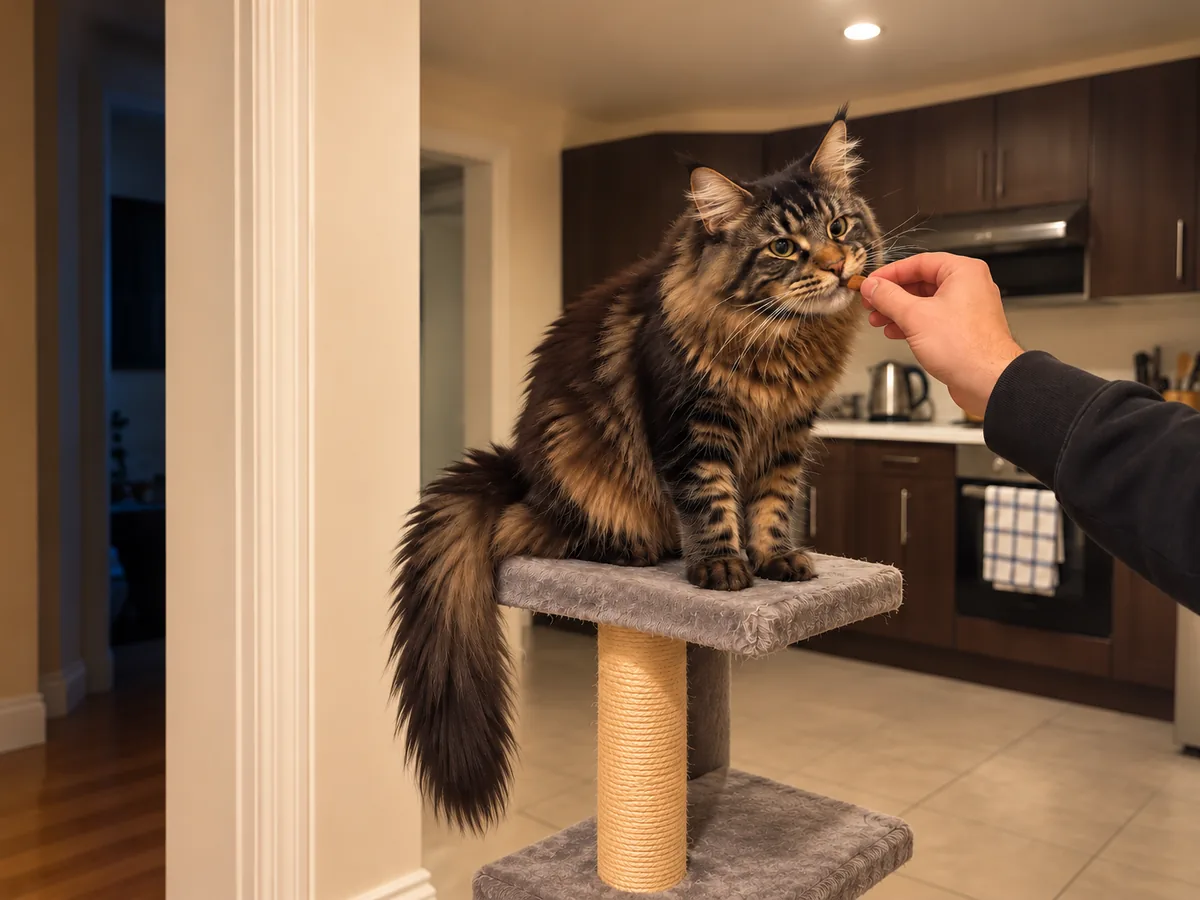
Then give them an allowed high place that does the same job. A cat tree or a wall shelf by the kitchen lets them watch you cook, and a cat bed on a side table works next to a desk. Put a toy up there, and reward them with a treat, a game or a stroke each time they use it.
How to discipline a cat for stealing food
Some cats are drawn to the smell of our food, whether it’s left on the counter or on your plate. Cats Protection’s advice is practical: store anything harmful out of reach, cover or hide leftovers, and don’t feed table scraps (and ask guests not to). If your cat wants to be on the counter while you cook, gently move them away.
For a cat who swipes from your plate, try giving them their meal just before yours, or putting some of their food in a puzzle feeder. The PDSA also suggests checking they’re on the right diet for their age and weight.
How to discipline a cat for scratching furniture
Should you punish a cat for scratching? International Cat Care says no. Cats scratch to keep their claws healthy, to work the muscles in their front legs and spine, and to leave a mark for other cats. Punishing it punishes something natural, which is very confusing for them. If the scratching comes from anxiety, punishment adds to their distress.
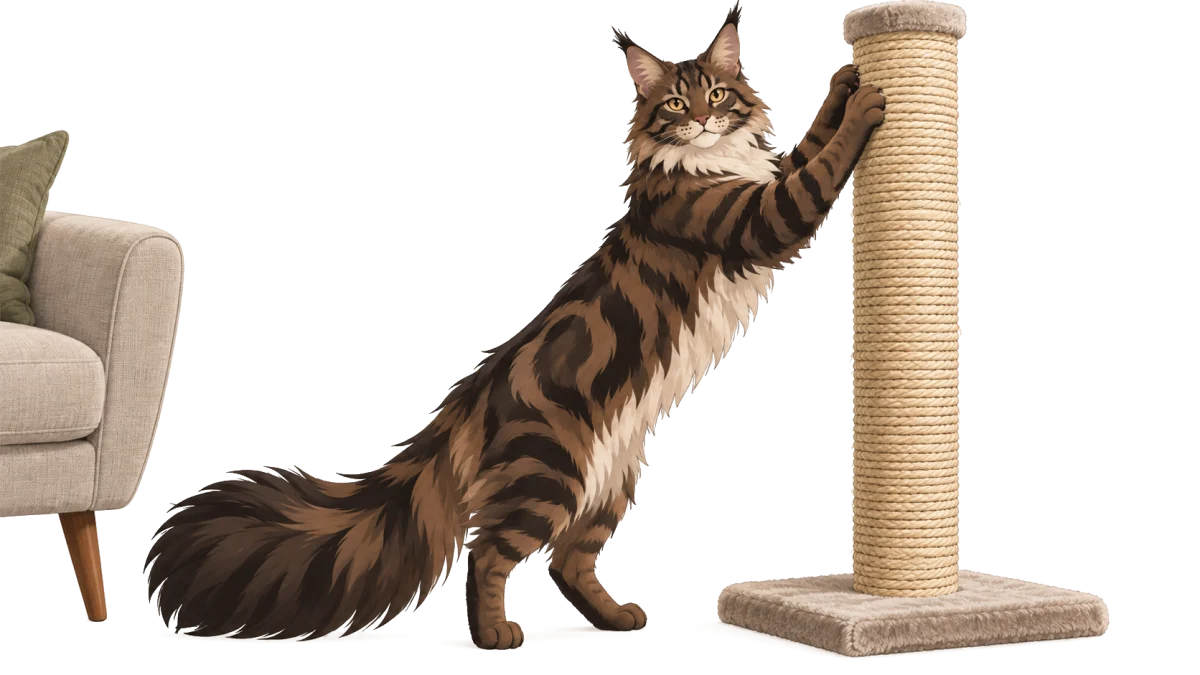
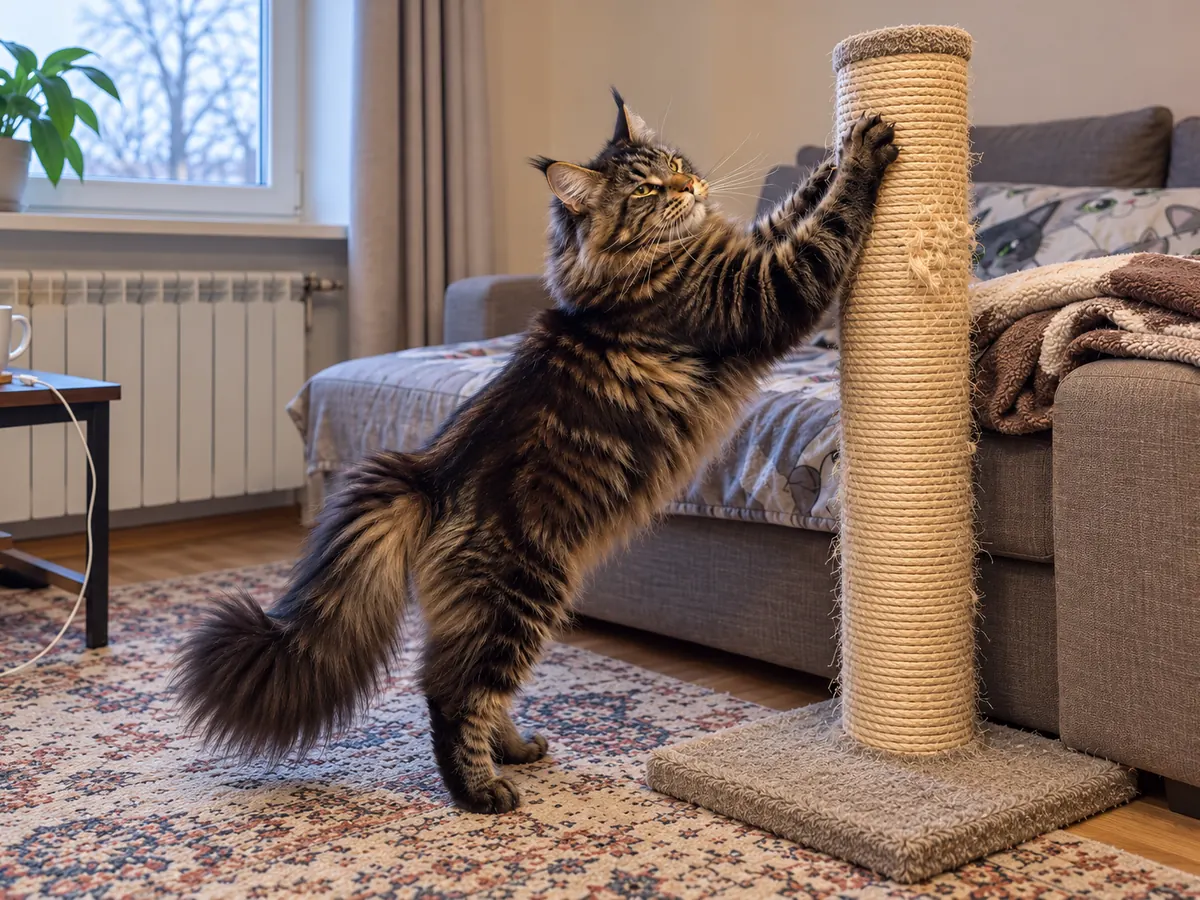
You can’t stop scratching, but you can move it. Put a sturdy post right next to the spot they’ve chosen, tall enough for your cat to scratch at full stretch on their back legs. Cats often scratch after a nap, so near their bed is good too. Give a treat or a bit of gentle praise when they use it, and cover the sofa arm with a thick blanket in the meantime.
How to discipline a cat for peeing on the floor
Don’t. International Cat Care is clear that punishment is not the answer: it only makes your cat fearful and the problem worse. A cat who pees outside the tray isn’t taking revenge or making a point. They’re unwell or stressed.
If it keeps happening, call your vet, who will want to rule out a medical cause. If your cat is trying to pee and can’t, or only passes a little, they need to be seen urgently.
Clean the spot with an enzymatic cleaner made for cat urine, and skip ammonia-based products, which smell similar to urine. Keep your cat away from the area for as long as you can.
When bad behaviour is a reason to see the vet
If your cat suddenly starts doing something out of character, Cats Protection says to see your vet straight away, because it can mean they’re stressed, scared or ill. Medical problems are a very common cause of behaviour problems, even when the link isn’t obvious.
Cats hide pain well. Instead of limping, a cat in pain may just behave a little differently or seem out of sorts. If your vet finds nothing, ask about a qualified cat behaviourist. It’s usually better to get help early, because long-standing problems are harder to sort out.
A week of notes on a worktop jumper
Mon, 18:30: up on the worktop while I cut chicken. Lifted him down to the floor, said nothing.
Tue: wiped the worktop straight after cooking. Moved the cat tree to the kitchen door, treat each time he sat on it.
Thu, 18:30: jumped up once, straight to where the chicken had been. Lifted him onto the cat tree, treat.
Sat: sat on the cat tree through all of dinner. At 22:00 tried the empty worktop, sniffed, got down.
Notes like these show what your cat is after and when. Here it was food at cooking time, which tells you what to clear away and when to have the cat tree and the treats ready.
When it does not go to plan
Is it OK to hit a cat?
No. The PDSA says hitting or shouting can make a cat stressed and afraid of you, and Cornell adds that any physical punishment can make fear and aggression worse. It doesn’t fix the habit either: the cat is likely to do it anyway, just when you’re not there.
Is a spray bottle a good way to discipline a cat?
No. Cats Protection counts spraying water at a cat as punishment, because the cat finds it unpleasant. It carries the same risks as any other punishment. The PDSA also advises against anything that might scare your cat off a worktop, in case they panic and hurt themselves.
Does my cat know when they’ve done something wrong?
As far as science can tell, no. Cats Protection says cats don’t have a moral sense of right and wrong, and don’t feel guilt or try to get back at you. What your cat does notice is what happens straight after they do something, which is why a well-timed reward works.
How do I punish my cat for attacking me?
You don’t. Stay still and quiet, because Cats Protection says movement and yelps make a cat bite or scratch more, then move away and let them calm down. Later, give their hunting a toy on a rod, keep play short, and see your vet if the attacks are new.
How do I discipline a cat for not listening?
There’s nothing to punish here, because your cat doesn’t know they’re doing wrong. Teach the thing you want with a small reward the moment your cat does it, and they become more likely to do it again. Shouting won’t help: the RSPCA says a cat is very unlikely to understand it and can become more nervous or scared.
Sources and further reading
- RSPCA — Understanding your cat’s behaviour
- Cats Protection — Managing cat behaviour
- Cats Protection — The Behaviour Guide (2025)
- Cats Protection — Why does my cat bite me?
- Cats Protection — Cats and human foods
- PDSA — How to stop cats jumping
- International Cat Care — Stress in cats
- International Cat Care — Scratching on furniture and carpets
- International Cat Care — Soiling indoors
- Cornell Feline Health Center — Feline behavior problems: aggression
- ASPCA — Position statement on training aids and methods