Lapka
The short answer
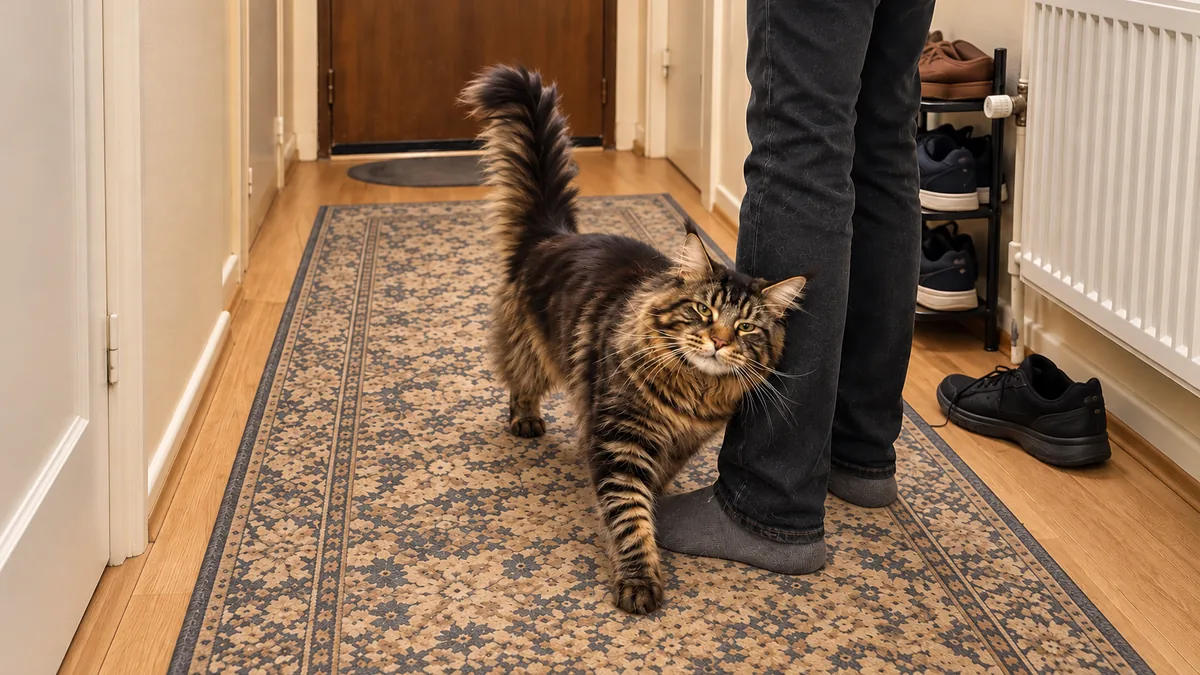
When your cat rubs against your legs or pushes their face into yours, they’re usually saying hello and putting their scent on you. Cats have scent glands on their cheeks, chin, the top of the head and the base of the tail, and that familiar smell marks you as someone safe, part of their group. Sometimes the rub also asks for something: fuss, play, food or the door.
Why do cats rub against your legs?
Mostly, to say hello. International Cat Care says that when your cat rubs round your legs to greet you, they’re doing what they would do with another cat in their social group, where friends greet each other by rubbing faces and bodies. You might notice it when your cat first sees you after some time apart.
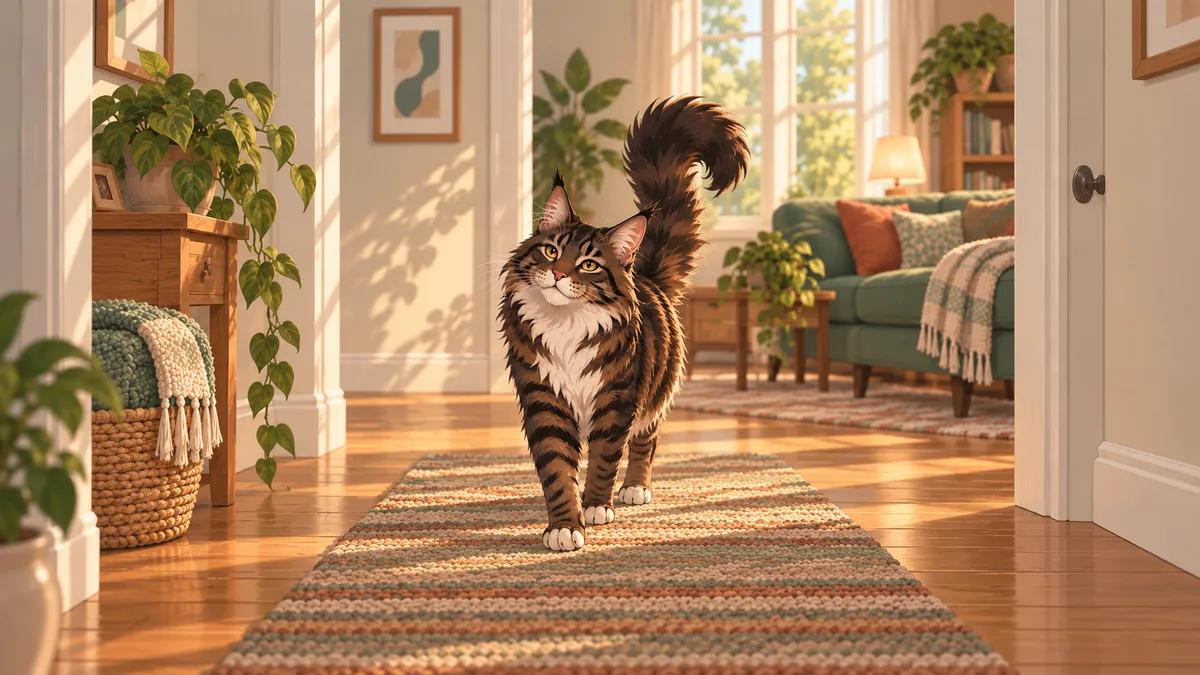
A 2021 study from the veterinary school at Alfort, in France, watched a group of 40 to 50 cats living in a large enclosure and recorded 104 meetings between a cat and a person. Cats held their tail straight up significantly more often when they walked up to a person than when they walked up to another cat. In the vast majority of cases, the cat then rubbed against the person’s legs. The researchers think cats see us as caregivers, and greet us the way kittens greet their mother.
Your cat is leaving their scent on you
Cats have scent glands on their cheeks, chin, the top of the head and the base of the tail. These glands make pheromones, scent messages that other cats can read. When your cat rubs those spots against you, the pheromones end up on you.
Cats Protection says that smelling these familiar pheromones on you helps your cat know you can be trusted, and marks you as part of their territory. The scent doesn’t last, so your cat tops it up by rubbing against you again. Expect another round tomorrow.
It’s also a sign your cat is at ease. International Cat Care says this rubbing, called bunting, seems to happen mainly in the core of a cat’s territory, such as their home, where they feel safe. The Cats Protection behaviour guide adds that cats leave this facial scent on objects, people included, when they feel safe and at ease.
Why does my cat rub his face on me?
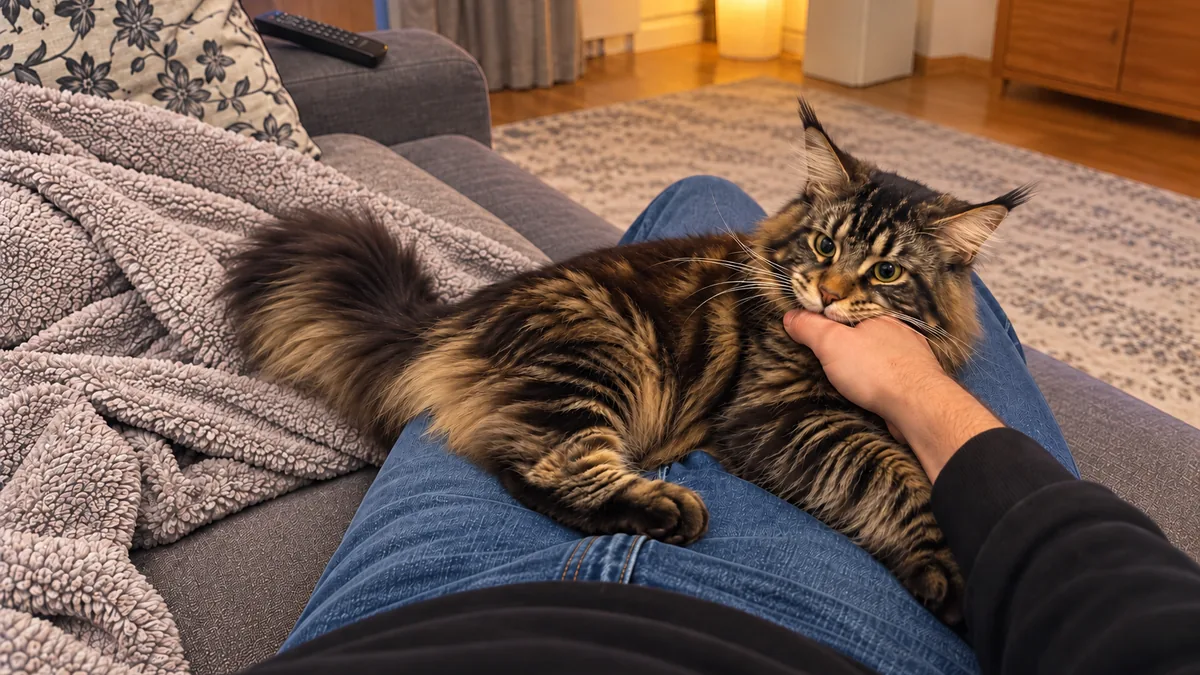
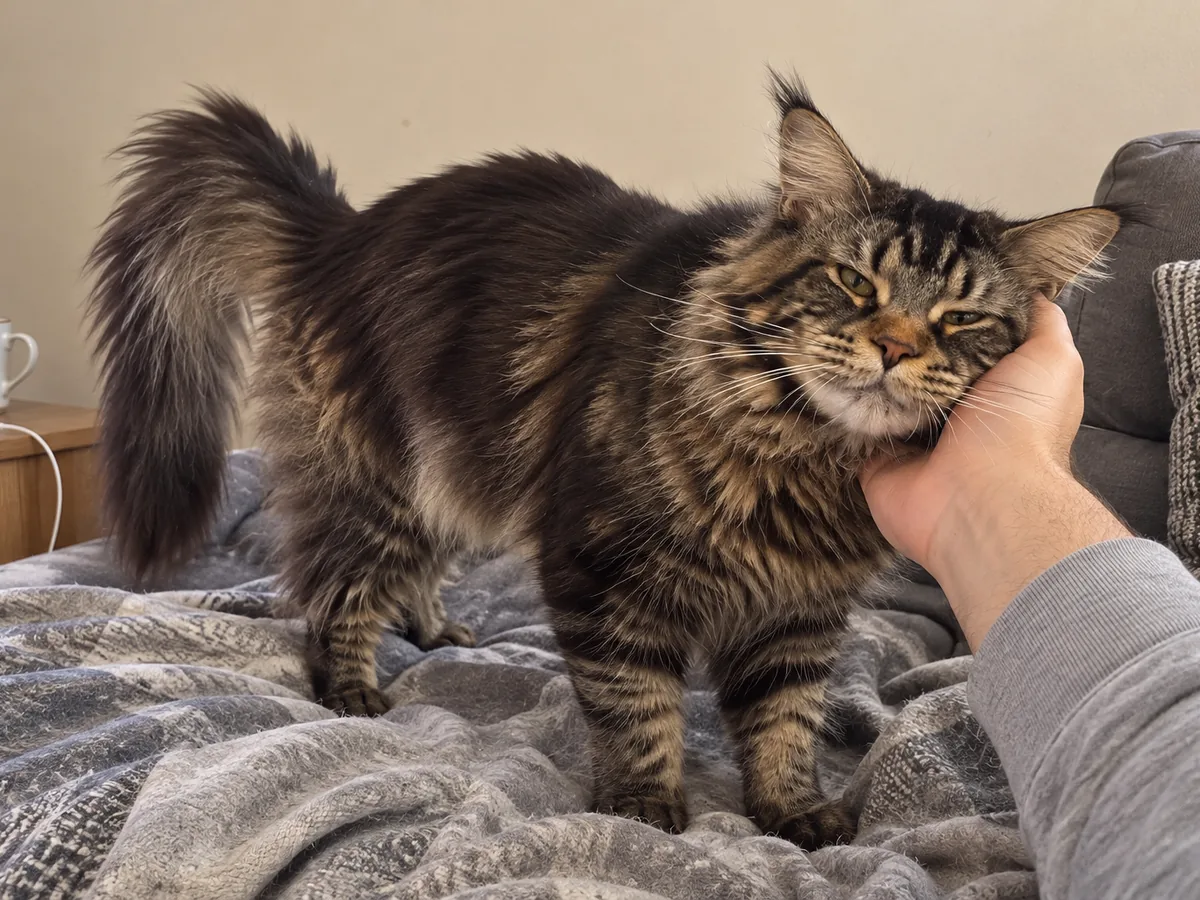
A head-butt to your chin or a cheek dragged along your hand is the same scent marking, done with the glands on the face. Cats Protection says that when a cat is happy, the rubbing may come with purring, or even dribbling if they’re particularly enthusiastic.
International Cat Care’s advice on a head bunt: take it as a compliment. It means your cat feels safe and comfortable with you and sees you as part of their social group.
Some cats drag the corner of their mouth along your knuckles or your chin, so it feels as if they’re rubbing their teeth on you. Cats have scent glands around their lips and chin and at the corners of the mouth, so this is marking too.
Why your cat rubs against you when you get home
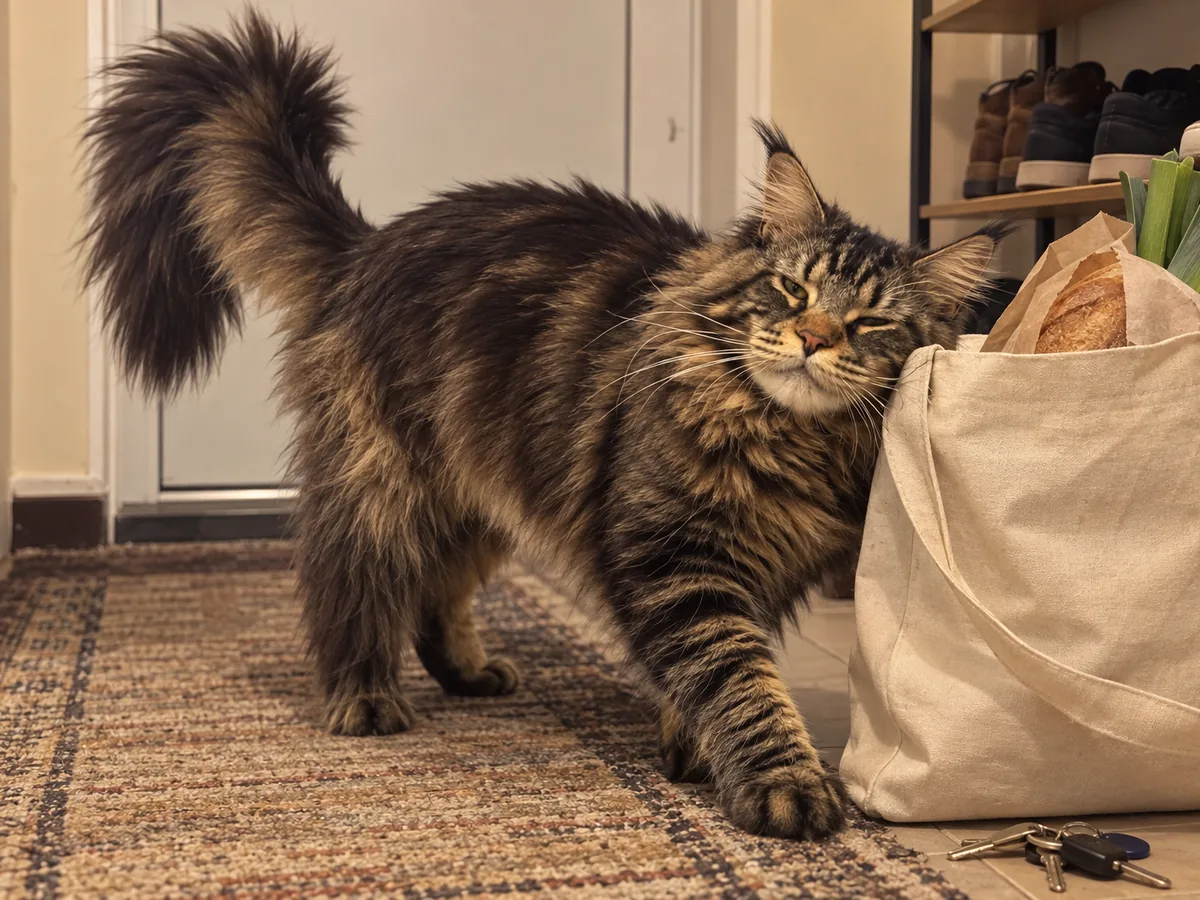
PDSA, the vet charity, explains it like this. When you smell strange, say after a trip to the supermarket, your cat rubs their face glands on you so the pheromones make you smell familiar again. They’re probably pleased to see you, and they’re also welcoming you back into their social group.
It works the other way round too. PDSA says a cat coming home from an expedition outside may do the same to you or the furniture, to make their home smell familiar.
Cats who live together keep a shared group scent by rubbing on each other often. The Cats Protection behaviour guide says a member who goes missing from the group may be rejected at first, until they have the right smell again. A rub at the door is your cat sorting out yours.
When the rub means “I want something”
Rubbing and head-butting are also a good way to get your attention. Cats Protection lists what they may be after: fuss, food, playtime or being let outside. If the rub gets them what they want, they learn that it works and keep doing it.
Food is the one to watch. International Cat Care’s guide for vets says leg rubbing and meowing are signals that start a social interaction, rather than signs that a cat is hungry. A cat can quickly learn to use them to control the food supply, and owners who enjoy the moment often hand out more food. Stick to the daily amount, and if your cat pesters you for more, answer with play or a stroke instead.
Fuss and play are fine to give. Cats Protection says most cats are happy with short spells of play and petting through the day, a couple of minutes at a time. If you’d like some of those minutes to go on a trick, a Lapka programme plans short sessions and adjusts each one to how the last went.
How to answer a rub
Hold your hand out slowly and keep it still, and let your cat come to it. If they sniff it or rub against it, that’s a yes. Cats Protection suggests only petting a cat who comes to you and rubs against your hand when you offer it.
Go for the places most cats like: the cheeks, the chin, the top of the head, and the neck and shoulders. Stroke in the direction of the fur, and don’t pat, which can be too rough. The belly, tail, legs and paws are where cats are least likely to enjoy it.
Then watch. A cat who stays and looks relaxed, or nudges your hand for more, is enjoying it. If they stay but look anxious or stressed, they’re only putting up with it, so stop petting and move away.
When a rub is not an invitation to pet
Some cats finish a greeting by flopping onto their back, stretched out. The Cats Protection behaviour guide says many cats do this as a greeting, and that a tummy rub in reply can sometimes end in a scratch or a bite. Most cats only tolerate it or dislike it.
International Cat Care says the roll can be a sign of trust, when any touch may feel threatening, or a request for a rough-and-tumble game. Either way, someone gets hurt. When a cat shows you their belly, Cats Protection suggests gently stroking the head or cheeks instead.
And sometimes a rub is just a hello. Some cats enjoy a lot of fuss, while others want a minute or two and then get on with their day. If your cat walks away, stop stroking and don’t follow. You can leave your hand out in case they change their mind and come back for more.
Why does my cat rub against me, then bite?
Cats Protection says a cat who rubs against you and then bites may be overexcited. Cats are natural hunters, and if they don’t have proper prey, such as toys to pounce on, they may turn that hunting on you. These bites are usually gentle, but they can still hurt.
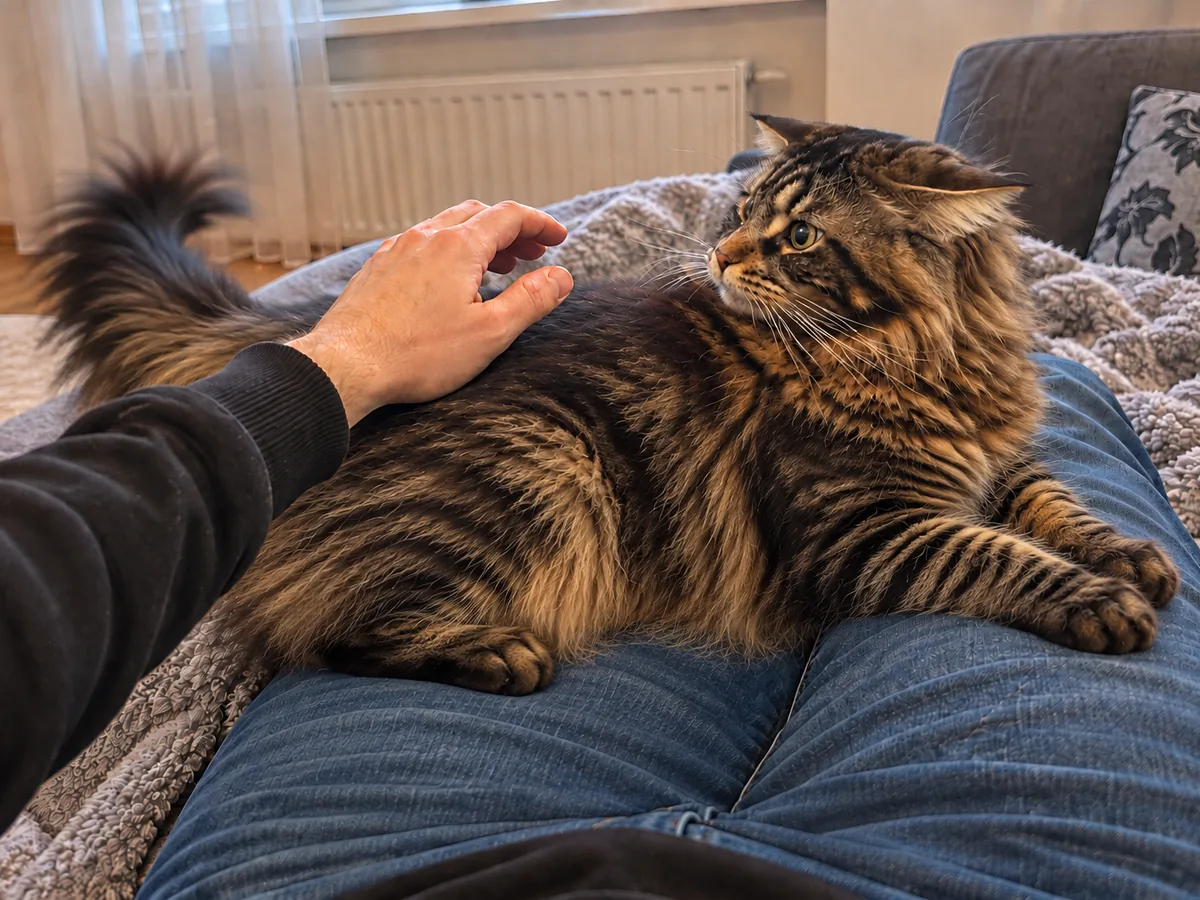
It can also happen part-way through stroking. The ASPCA describes cats who suddenly feel irritated by being petted, nip the hand, then jump up and run off. Behaviourists think stroking can quickly become unpleasant when it’s repeated over and over. Cornell Feline Health Center adds that the cat may be trying to control when the petting ends.
There are usually warning signs first: a quick turn of the head towards your hand, a twitching or flipping tail, ears flattening or swivelling forward and back, restlessness, widening pupils. Stop as soon as you see them. Cornell suggests a cooling-down period with no touching, a treat for brief, light stroking with no sign of aggression, and slowly building up how long you stroke.
Why does my cat rub against everything?
Rubbing against people, objects and other cats is normal cat behaviour, Cats Protection says. The sofa arm, the door frame and the table leg are getting the same scent as you are.
A female cat who isn’t neutered may rub against people and objects more than usual when she comes into heat. Cats Protection says she may also become restless and more vocal, and lift her tail to present her rear end.
When rubbing is a reason to see the vet
Most rubbing is nothing to worry about. Speak to your vet if it’s new for your cat, or if they start rubbing more often or more aggressively. Cats Protection says excessive or aggressive rubbing against you or objects can be a sign of allergies, fleas, an ear infection, feline hypersensitivity disorder or a neurological (brain) disorder. Your vet can check for a medical cause.
What a few days of notes can look like
Mon, 6:10 pm: I get in. Winds round my legs, tail straight up, cheek on my shin. Then sits by the food bowl. Dinner isn’t until 7.
Tue, 6:15 pm: the same greeting. This time I sit on the floor and we play with the fishing-rod toy for three minutes. Rubs my hand afterwards, then naps on the chair.
Thu, on the sofa: head-butts my chin. When I keep stroking along the back, turns to look at my hand and the tail tip starts flicking. I stop, and settles on the cushion next to me.
Notes like these show what the rub is for. Here the hello comes with a hint about dinner, a short game answers it just as well, and a flicking tail on the sofa is the moment to stop.
Questions people ask
Does my cat rubbing against me mean they like me?
Usually, yes. Cats Protection says a cat rubbing against you is most likely being friendly, and it may come with purring. The rub also leaves their scent on you, which is how a cat marks you as someone they can trust.
Why does my cat rub against my shoes?
Shoes go everywhere you go, so they probably smell of outside. PDSA says that when you come home smelling strange, cats rub their face glands on you to make you smell familiar again, and shoes by the door may get the same treatment. It’s harmless, so there’s nothing to stop.
Why does a cat I don’t know rub against my legs?
Friendly stray cats sometimes rub against people in the street to say hello. If you’d like to stroke one, hold out your hand and keep it still. If the cat doesn’t come over within a minute or two, they don’t want to be touched. If they rub your hand, start with the cheeks or chin.
Is my cat hungry when they rub against my legs?
Not necessarily. International Cat Care says leg rubbing and meowing are a cat starting a social interaction, rather than signs of hunger. A cat soon learns that rubbing in the kitchen can bring food, so keep to the daily amount and answer extra requests with play or a stroke.
Why does my cat rub on the floor when I come home?
Often it’s the roll that comes with a greeting. The Cats Protection behaviour guide says lying stretched out on the back is a posture of a very relaxed cat, and many cats do it as a greeting. Keep your hand off the belly and stroke the head or cheeks instead. If an unneutered female rolls and rubs a lot and is also restless and loud, she may be in heat.
Sources and further reading
- Cats Protection — “Why does my cat rub against me?” and other behaviour FAQs
- Cats Protection — How to pet a cat
- Cats Protection — Why does my cat bite me?
- Cats Protection — Behaviour Guide, 2021 edition (PDF)
- International Cat Care — Why do cats..?
- International Cat Care — A guide to creating a Cat Friendly Clinic, part 2 (PDF)
- PDSA — Weird things cats do
- ASPCA — Aggression in cats
- Cornell Feline Health Center — Feline behavior problems: aggression
- Animals — Heads and tails: an analysis of visual signals in cats, Felis catus (2021)