Lapka
The short answer
Often a cat who bites during a stroke has simply had enough. The ASPCA calls it petting-induced aggression: stroking the same spot over and over can go from pleasant to irritating, so your cat nips to make you stop. Some cats get overexcited and treat your hand like prey. The belly and the base of the tail are touchy spots for many. If the biting is new, see your vet, because pain can cause it.
Why does my cat bite me when I pet her?
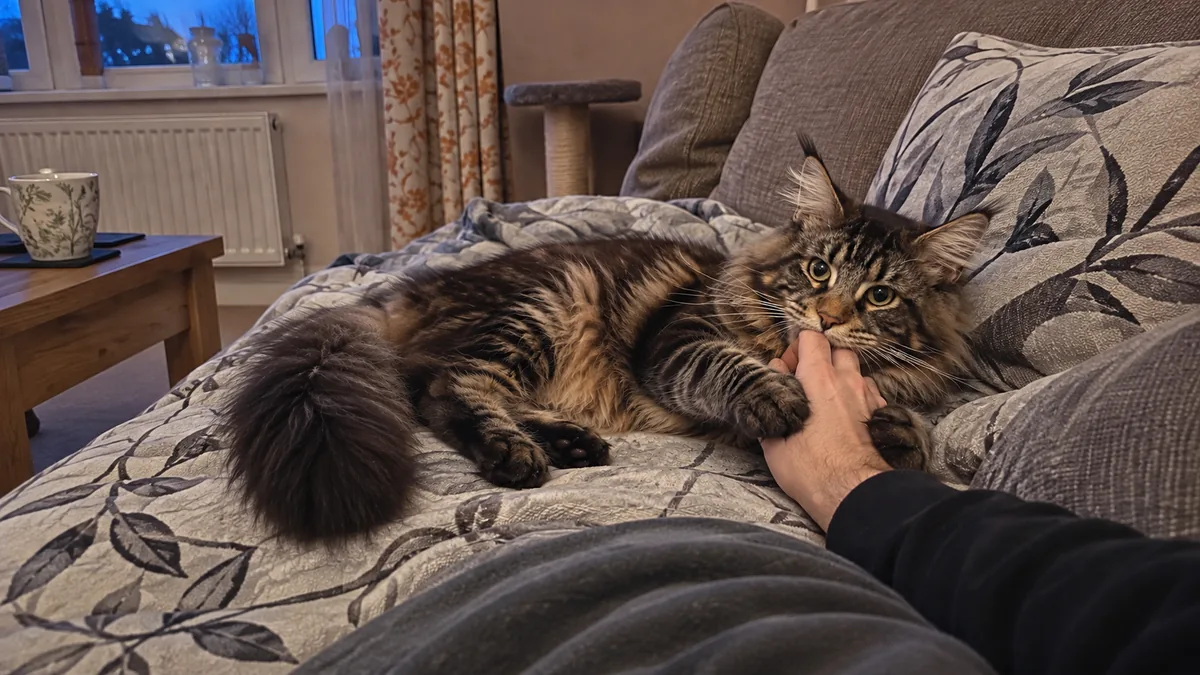
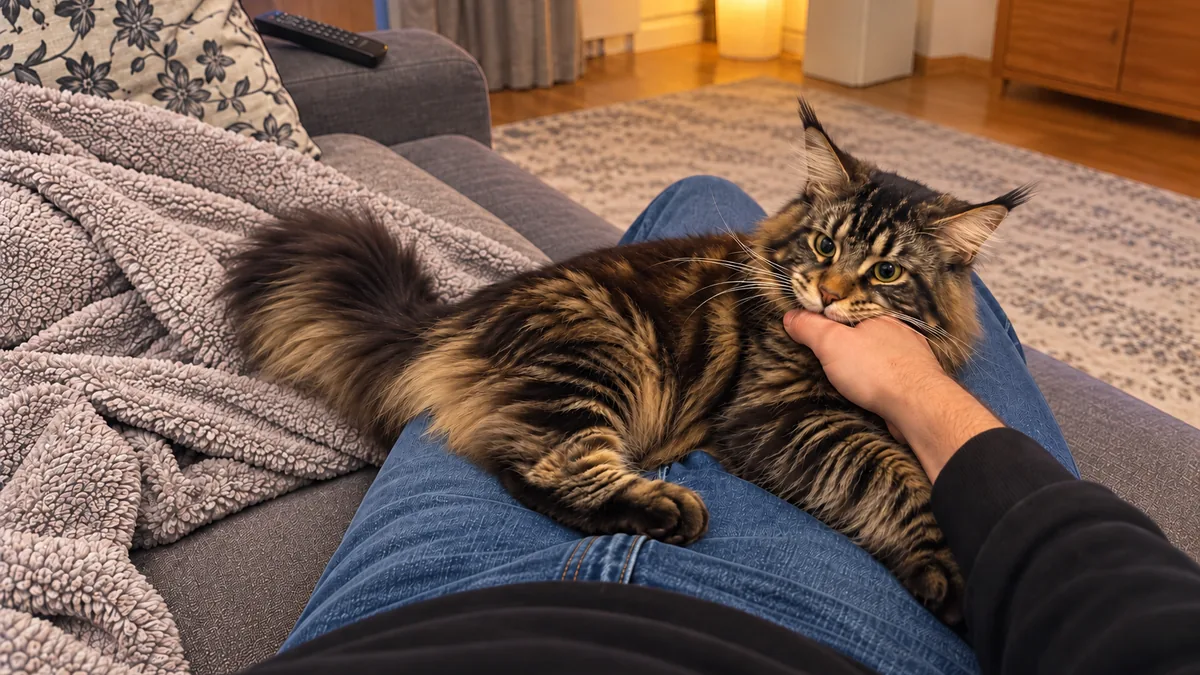
Often because the stroking stopped feeling good. The ASPCA describes petting-induced aggression like this: your cat suddenly feels irritated by being petted, nips or lightly bites the hand doing it, then jumps up and runs off.
Nobody is completely sure why. The ASPCA says repeated contact can cause arousal, excitement, pain and even static electricity in the fur. Picture someone rubbing your back in one spot, over and over: nice at first, then annoying. Cornell Feline Health Center adds another idea. The bite may be your cat’s way of deciding when the stroking ends.
Cats Protection names two more reasons. A cat who is scared or stressed may bite, and so may one who is overexcited and turns their hunting play on your hand.
Why do cats bite when you pet them too much?
It happens in a lot of homes. In a survey of Brazilian cat owners, cited in a 2021 study, almost half reported aggression from their cat, and it was most likely while they were petting or playing with them.
Cats differ a lot in how much touch they want. The ASPCA says some cats enjoy being petted, held, carried and even hugged, some merely tolerate it, and a few don’t like being petted at all. Battersea notes that some cats who love contact still become overstimulated quickly.
Much depends on kittenhood. Cats Protection says a cat handled well between two and seven weeks old learns to be comfortable with stroking, while one who was handled too roughly may find touch scary.
International Cat Care says cats prefer gentle, repeated strokes, and that a hug can be stressful for them. A cat who sits still isn’t always enjoying it, either. The 2021 study cites research in which cats described as only “tolerating” being stroked had higher levels of a stress hormone than cats who liked or disliked it.
Why does my cat bite me when I pet her and she’s purring?
Purring doesn’t always mean “carry on”. Cats Protection says loud purring while you stroke or play is a sign your cat is stimulated, and it may come with kneading, drooling and licking. You can keep going. If they start biting or scratching, they may be overstimulated, so leave them alone for a while to calm down.
Purring can come with stress too. Look at the rest of the face. Ears flat or turned to the side, wide eyes with big pupils, and whiskers pointing forwards or down probably mean a stressed cat, purr or no purr. Some cats also purr when they are in pain.
One small sign is easy to miss. In the guidelines that Battersea and Nottingham Trent University researchers tested in 2021, a cat who goes a bit still and stops purring or rubbing against you may need a break.
Why does my cat bite me when I pet her stomach?
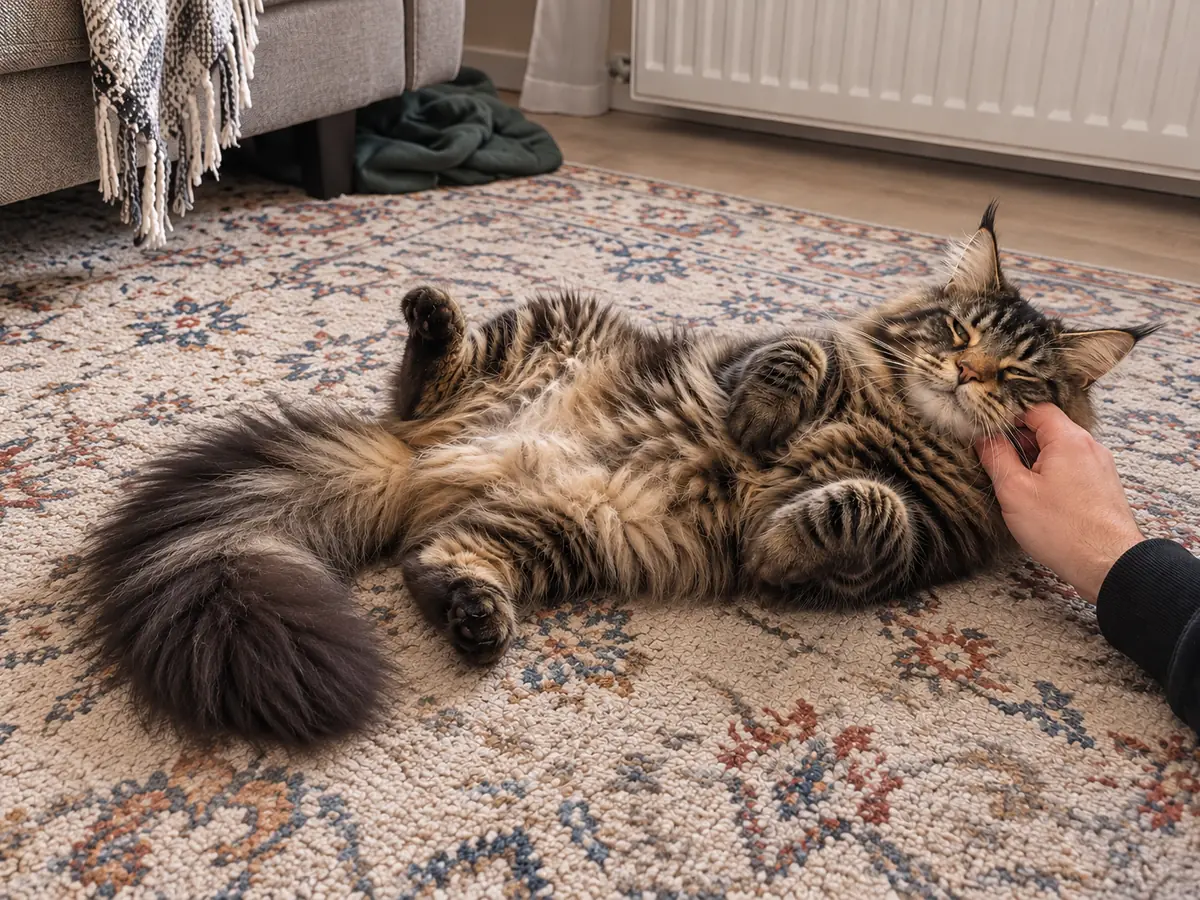
A cat who rolls over and shows you their belly is telling you they feel safe with you. Cats Protection says that for most cats a belly rub in reply would be a betrayal of trust. They may grab your hand and attack it, or run off. International Cat Care calls the roll a friendly greeting, not an invitation for a belly rub.
The belly is one of the places cats guard most. Cats Protection calls it a vulnerable area, and says that showing it to you usually isn’t an invitation to touch it. Battersea puts the stomach and the base of the tail in its red zone, where the majority of cats won’t like being stroked.
When your cat rolls over, stroke their head or cheeks instead. A few cats do enjoy a belly rub, often because they were gently introduced to it as kittens. If yours stays still and looks relaxed while you do it, that’s a good sign.
Why does my cat bite me when I pet her back?
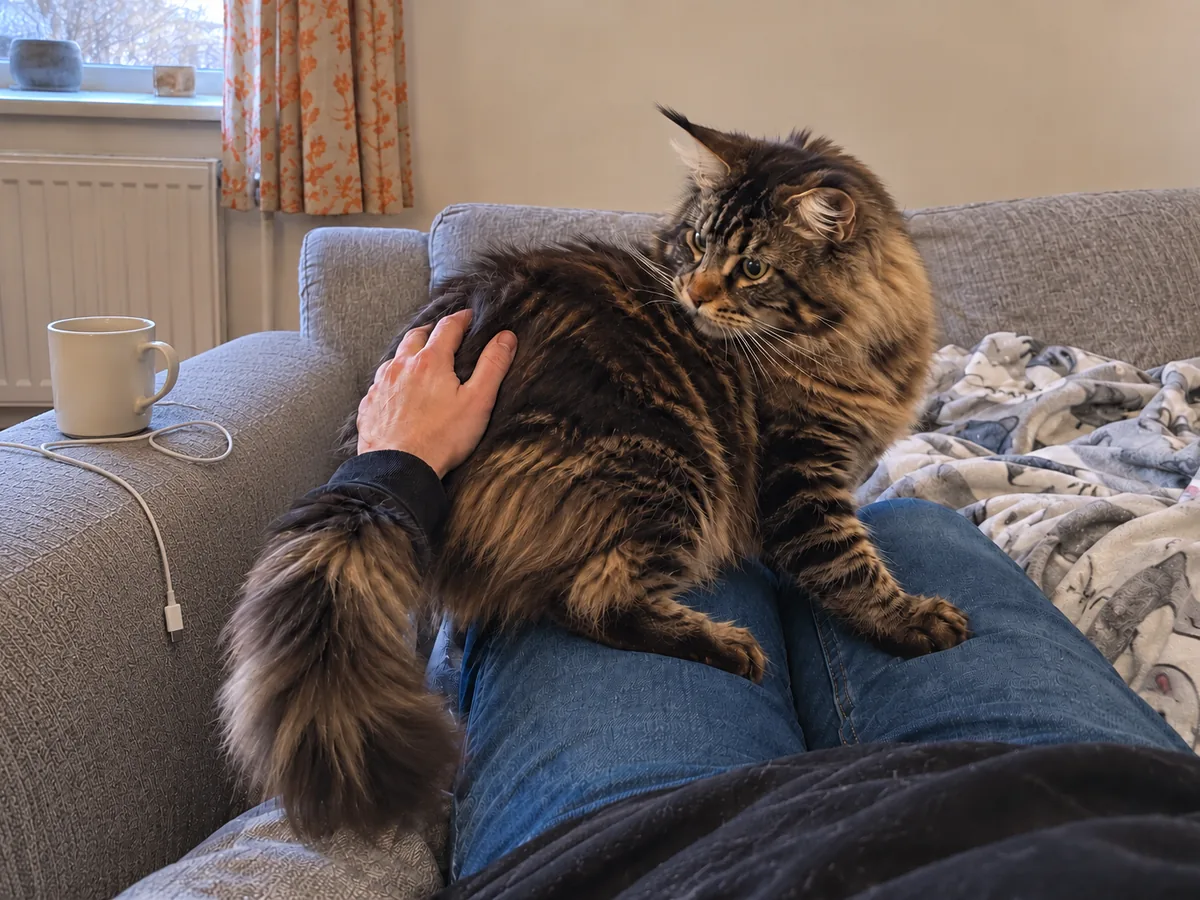
Most cats like a stroke along the upper back, near the neck and shoulders. Lower down is riskier. Cats Protection lists the bottom half of the back, particularly if it’s stiff or painful, and the base of the tail among the places many cats don’t like touched, along with the legs, the paws and stroking against the fur.
Some cats love being stroked at the base of the tail and lift their bottom towards your hand. Many don’t. The 2021 guidelines told people to avoid the base of the tail and the tummy, and to be careful with the back, flanks, legs and tail.
Watch the fur along the back. If it twitches or ripples under your hand, stop. A cat who used to enjoy back strokes and now snaps at them may have sore joints: Cornell says cats with osteoarthritis may resent having their joints touched and may hiss, bite or scratch.
The signs that mean stop stroking
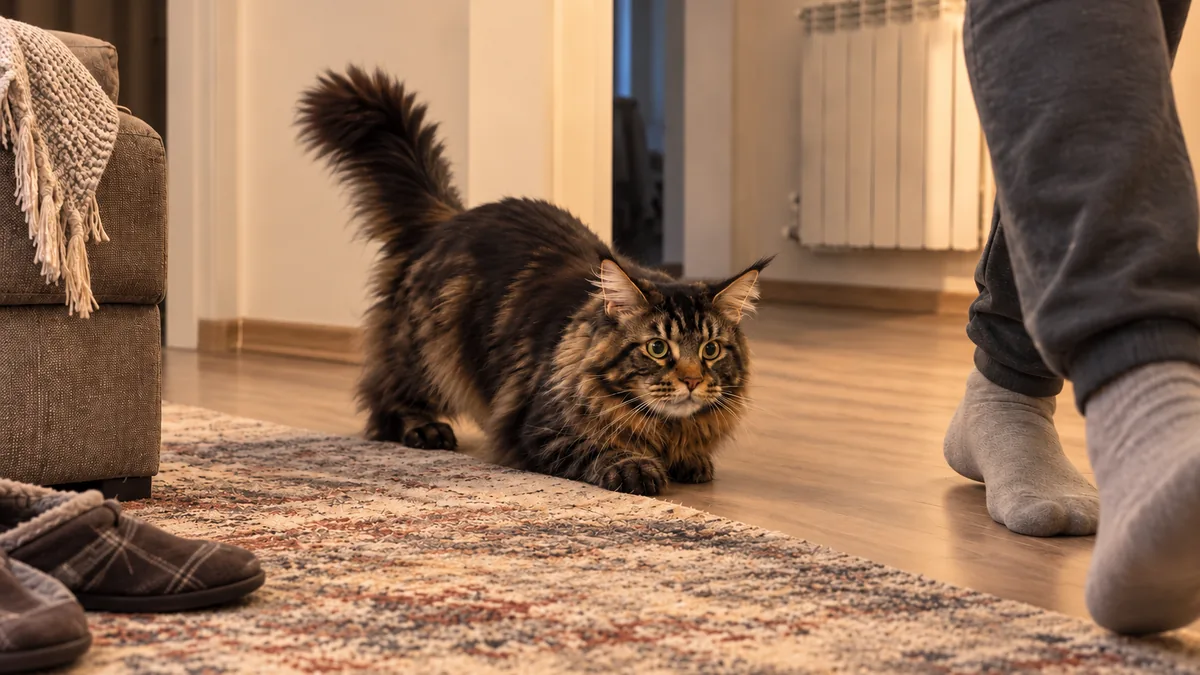
Your cat will usually warn you before they bite. The ASPCA lists the signs: a quick turn of the head towards your hand, a twitching or flipping tail, ears flattening or rotating forward and back, restlessness and widening pupils. Cornell describes the same picture: dilated pupils, a lashing tail and ears moved back on the head.
The 2021 guidelines add quieter ones. Your cat shakes their head, licks their nose, has a quick groom that lasts only a few seconds, or swishes their tail hard, usually while holding it level or low.
When you see any of them, take your hand away. The ASPCA’s advice is simply to stop.
How to pet your cat without getting bitten
Let your cat start it. Hold out your hand, keep it still and wait. If they rub against it, they’d like a fuss. If they don’t come over after a minute or two, Cats Protection says they don’t want to be touched.
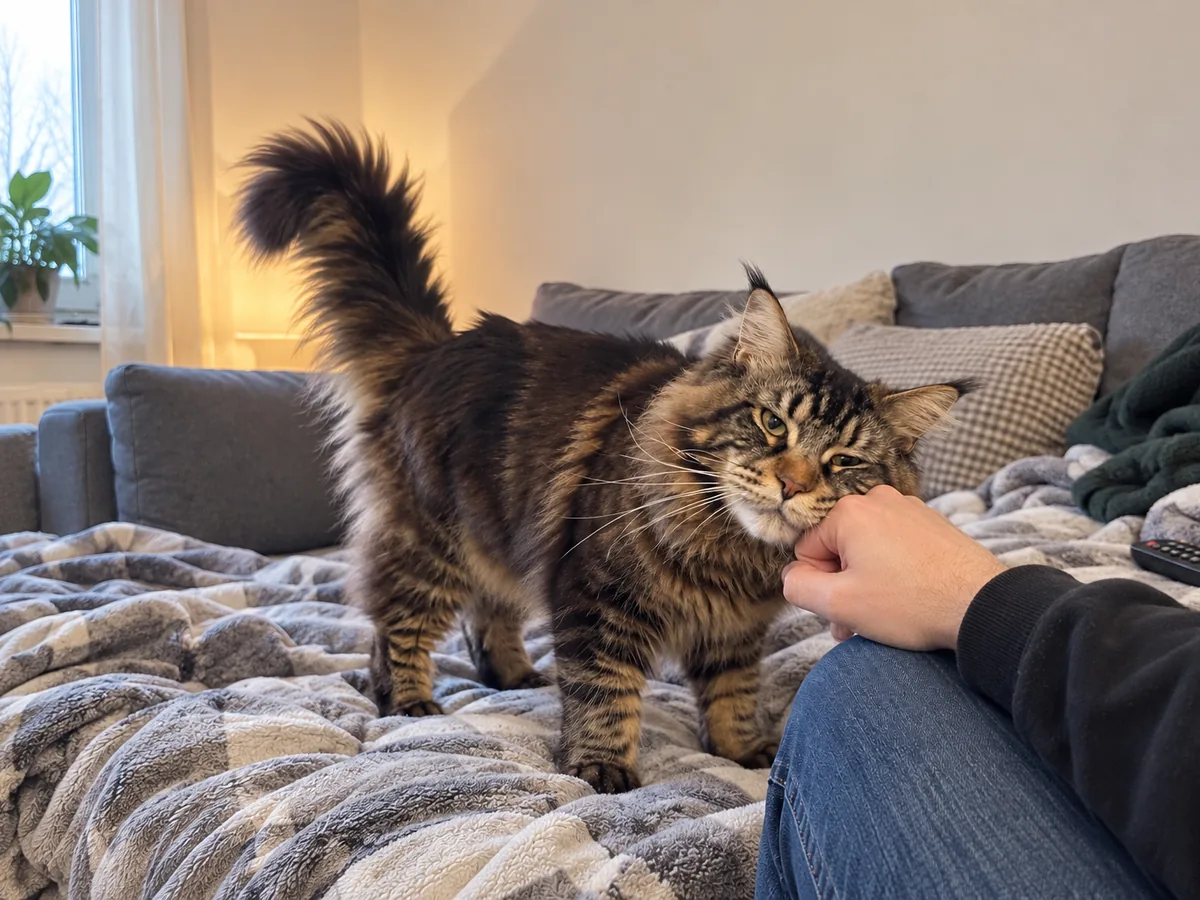
Stroke the cheeks, the chin and the base of the ears, in the direction of the fur. Don’t pat. After 3 to 5 seconds, pause, as International Cat Care suggests, and let your cat decide. If they push against your hand again, carry on. If not, they’ve probably had enough for now.
Keep it short. Cats Protection says most cats are happy with regular short spells of play and petting through the day, a couple of minutes at a time. Leave your cat be while they’re eating, sleeping, playing or hiding.
These rules make a difference. In the 2021 study, 120 people visited 100 cats at Battersea before and after a short lesson in them. During the visits before the lesson, 27% of the cats hissed, growled, swiped or bit at least once. After it, 16% did. The cats also rubbed against people more often.
Can you teach a cat to enjoy longer strokes?
A little. Cornell suggests giving your cat a treat for allowing a brief, light stroke without any sign of aggression. Over time you can make the strokes slowly longer. At the first warning sign, stop and give them a cooling-down period with no touching at all.
Cornell also says to avoid handling your cat didn’t ask for, never to use physical punishment or hold them down, and not to pick them up or fuss them while they eat.
Keep your hopes realistic. Cats Protection says a cat can be trained to be comfortable with handling for things that help them, such as grooming or medicine. Training a cat to enjoy stroking just because you enjoy it isn’t recommended. Play is something you can both enjoy, and a wand toy lets you play without touching them at all. If you’d like a plan for short daily play and training sessions, a Lapka programme sets them out and adjusts them after each one.
What to do when your cat bites you
Stay as still and calm as you can, then slowly move your hand away. Cats Protection says sudden movements and loud noises make a cat more likely to bite again. Give them space to walk off.
Don’t tell them off. Punishment makes a cat stressed and can lead to other problem behaviours, Cats Protection says, and Cornell adds that physical punishment can make aggression worse.
If the bite broke the skin or made it bleed, Cats Protection says to clean it with soap and water for at least five minutes and to seek medical advice straight away.
Why does my cat suddenly bite me when I pet him? See a vet
A cat who always liked a fuss and now bites needs a vet check first. The ASPCA says even a well-socialised, gentle cat can lash out when they’re hurt, or when someone touches a sore part of them. It names arthritis, dental pain and abscesses from fights among the painful problems a vet should look for.
Cats hide pain well. Cats Protection lists signs to watch for: becoming less tolerant of people, hiding more, sleeping more, hesitating to jump down from furniture, stiffness after resting, sitting hunched with squinty eyes, eating or drinking less, a scruffy coat, and crying out when moving or using the litter tray.
International Cat Care says to contact your vet if your cat suddenly starts growling, hissing, swiping or biting when they didn’t before, or if it keeps happening.
What a week of notes can look like
Mon, 21:00: on my lap, purring. I stroked her back for about a minute. The tip of her tail started flicking, then she turned and nipped my wrist. No broken skin.
Wed: cheeks and chin only, with a pause every few seconds. She pushed into my hand twice, then hopped down by herself.
Sat: the same as Wednesday, and a treat after a short stroke. No nip.
Notes like these show where and for how long your cat is happy to be touched. Here the nip came after a long stroke on the back, and the tail warned first.
Questions people ask
Why do cats bite gently?
Often because they’ve had enough, or play got too exciting. The ASPCA says a cat who has had enough of being petted nips or lightly bites, then jumps up and runs off. Cats Protection says biting from overexcitement is usually fairly gentle, but it can still hurt and leave a wound.
Why do cats bite when happy?
A cat who seems happy can still get overstimulated. Cats Protection says a cat who purrs while being stroked or played with is stimulated, and if it goes too far they may suddenly grab you and bite. Several short bursts of fuss through the day, instead of one long one, help keep their excitement in balance.
Why do cats nip when you pet them?
Often it’s the quickest way to make you stop. Cornell suggests petting-induced aggression may be the cat trying to control when the petting ends. Watch the tail, the ears and the pupils, and stop before the nip comes.
Are male cats more likely to bite when petted?
The ASPCA says petting-induced aggression is more common in males than females. Any cat can do it, though, and the same signs usually come first.
Is it safe for children to stroke a cat who bites?
Keep an eye on them together. Cornell says young children often want to pet cats but miss the signs that a bite is coming. Ideally, small children shouldn’t touch a cat with a history of biting when petted.
Does my cat hate being petted?
Maybe they just like less of it. The ASPCA says some cats merely tolerate stroking and a few don’t like it at all. Battersea suggests other ways to spend time together: simply being near each other, playing, and a bit of basic training.
Sources and further reading
- ASPCA — Aggression in Cats
- Cornell Feline Health Center — Feline Behavior Problems: Aggression
- International Cat Care — Handling and interactions
- Cats Protection — “How do you pet a cat?” and other FAQs
- Cats Protection — Why does my cat bite me?
- Cats Protection — Why does my cat purr?
- Cats Protection — Signs of pain
- Cats Protection — Why does my cat suddenly attack me?
- Battersea — How to stroke a cat and interact with them
- Frontiers in Veterinary Science — Providing humans with practical, best practice handling guidelines during human-cat interactions increases cats’ affiliative behaviour and reduces aggression and signs of conflict (Haywood et al., 2021)