Lapka
Lapka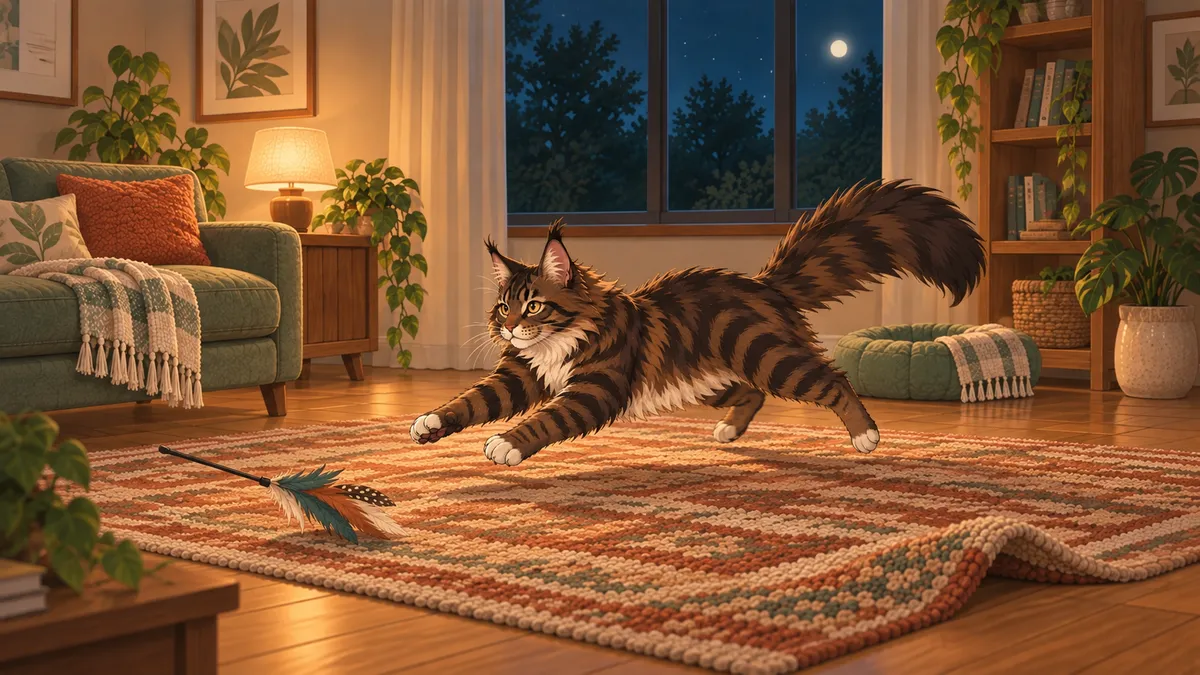
Where to start
Zoomies are sudden bursts of running, often early in the morning or in the evening, when energy a house cat hasn’t used up comes out at once. An occasional burst is normal, especially in young and indoor cats; daily ones suggest your cat needs more hunting-style play that ends in a catch, followed by food. If the bursts are new in an older cat or come with other changes, see a vet first.
What zoomies look like
Zoomies go by plenty of names: the mad half hour, climbing up the walls, or the official-sounding frenetic random activity period, FRAP for short. Your cat suddenly dashes around the house, tail flicking and pupils wide, sometimes switching between chasing and fleeing as if playing both hunter and hunted.
Bursts often seem to come from nowhere. Some cats stare into the top corner of the room before launching across the carpet, and a loud noise or a visit to the litter tray can set one off. In a healthy cat, it is usually just excess energy being used up.
Why cats get the zoomies
Cats are crepuscular: naturally more active around dawn and dusk, kittens and young cats in particular. That is why so many bursts arrive early in the morning or in the evening, just when you hoped for a lie-in or a quiet hour.
Left to their own devices, cats would spend much of the day stalking and chasing prey or avoiding danger. A house cat’s day may not use all that energy up, so it bursts out at once. Zoomies are also more common in younger cats and in indoor cats.
Notice how often it happens
An occasional burst is quite normal. If your cat has the zoomies every day, though, it can be a sign they are under-stimulated and frustrated, which is stressful for them as well as for your curtains. Cats who live entirely indoors need plenty of play and stimulation to avoid boredom.
A frustrated cat may also seem on edge, knock things off shelves or swipe at whoever is nearby. If other cats outside the window set yours off, cover the lower part of the glass.
Check with a vet when something changes
Rule out health first. Book a vet check if the bursts are new or different, particularly in a middle-aged or older cat; if restlessness comes with weight loss, a bigger appetite or more thirst; or if your cat is suddenly wakeful, crying or disorientated at night. Many behaviour changes have treatable medical causes, so don’t put them down to ‘just getting old’.
Contact your vet promptly if bursts come with over-grooming, twitching skin or sudden bouts of intense grooming of the back or tail, or if a dash from the litter tray follows straining, crying out or passing small amounts of urine often. A cat who is trying and failing to pass urine is an emergency and needs to be seen immediately.
Play like prey and let the hunt end in a catch
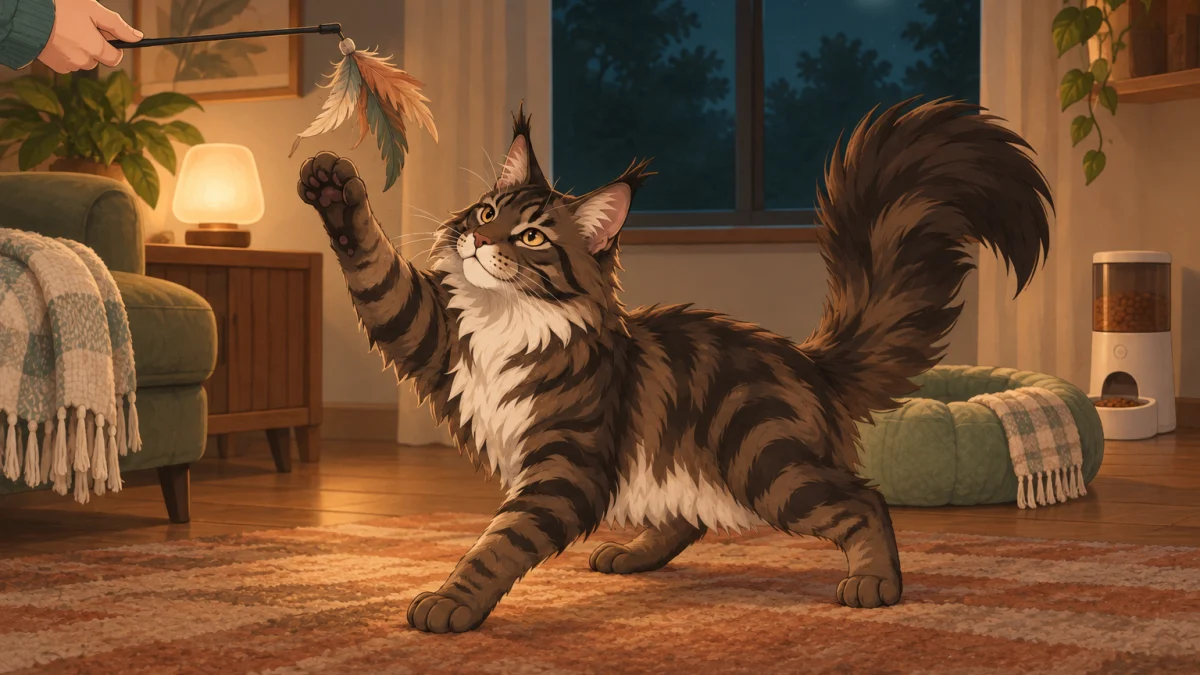
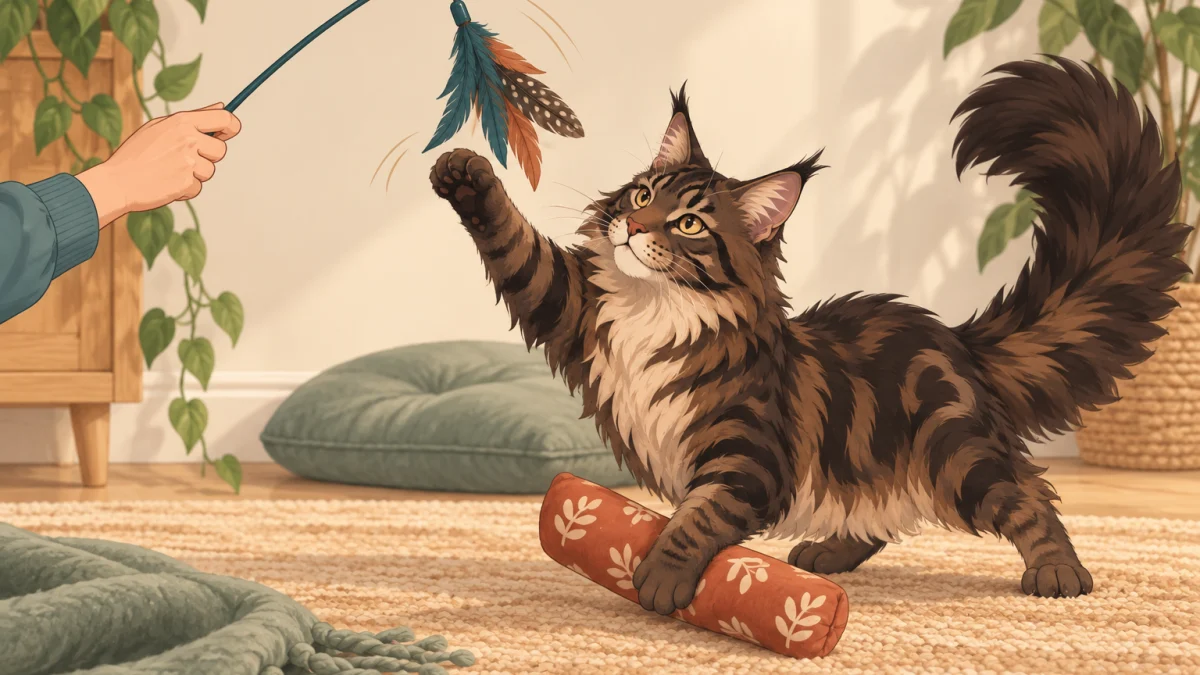
Regular interactive play is a great way to burn off that energy, especially when it runs through the whole hunt: stalk, chase, pounce and catch. Move a wand toy like a bird or mouse, in short, erratic bursts with pauses, and let your cat catch it, because most of the enjoyment comes from the catch. A laser dot can never be caught and may leave your cat frustrated; if you use one, finish with a toy they can really catch.
Keep games short and frequent: cats are sprinters rather than marathon runners, so a minute of frenzied activity is a good result. Aim for at least two sessions a day, at any age, spread out rather than saved for one long evening. Keep hands and feet out of the game, and put string toys away when you’re not there, as cats can get tangled in them.
Follow play with food
End a game gradually rather than whisking the toy away: slow the movement, allow a final catch, then turn your cat’s attention to food. A few treats tossed to chase and eat, or part of the next meal, give the game a natural finish and can help prevent frustration and ambushes afterwards.
Cats prefer three or four smaller meals a day, which keeps their energy more stable. Put part of the daily amount, not extra food, into a puzzle feeder, starting on the easiest setting with some food still in the usual bowl, so the puzzle stays fun rather than frustrating.
Give the evening a predictable shape
Cats are naturally more active at certain times of day, so choose a play time that suits you both and keep it steady: before or after work, or in the evening before bed. If the zoomies usually start around nine at night, play shortly before, then offer food.
If the bursts mostly happen at night and wake you, the same pattern applies; the guide on cats waking you at night covers the bedroom side. Lapka’s Night zoomies programme builds this evening play and food into a routine, one small step at a time.
During a burst, stay calm and clear the way
There is no need to stop an occasional burst, but you can make it safer: move breakable things off your cat’s usual route, keep the stairs clear and secure anything that could topple. Give the energy good places to go, too: a cat tree, shelves and windowsills to climb, and cardboard boxes to hide in.
Don’t chase, shout or reach for a water spray. Never punish a cat for zoomies: punishment can make cats more defensive, add new unwanted behaviour and wear down your relationship. If your cat is heading for something fragile, toss a ball the other way. At night, try not to tell your cat off for waking you; they could be trying to tell you they’re unwell.
Keep a short note of when bursts happen
A few lines a day reveal patterns that are easy to miss: the time, what happened just before (a nap, a meal, the litter tray, a noise, you coming home), how long the burst lasted, when your cat last played and ate, and what you did. Compare a week of notes, then change one thing at a time so you can see what made the difference.
A useful zoomies note
Tue 21:10 · ten minutes after a sofa nap · hall to bedroom and back twice, about two minutes · tail flicking, pupils wide · last play: 08:00, five minutes with the wand · last food: 18:30 · I stepped aside, then moved the plant off the hall shelf.
If a week of notes shows most bursts around 21:00, try a wand game and part of dinner at 20:45, keeping everything else the same so you can compare.
When it does not go to plan
Are cat zoomies normal?
Yes. An occasional burst is quite normal, especially in younger and indoor cats. If it happens every day, your cat may be under-stimulated, so start with more short play sessions, puzzle feeders and places to climb. A sudden change, especially in an older cat, is a reason to see a vet.
Why does my cat run around after using the litter tray?
A visit to the litter tray is one of the things that can set off a burst, like a loud noise or something quite inconsequential; in an otherwise well cat, it is just excess energy being used up. See a vet if it is new, or comes with straining, crying out, frequent small amounts of urine or weeing outside the tray. Trying and failing to pass urine is an emergency.
Why does my cat get the zoomies at night?
Cats are naturally more active around dawn and dusk, kittens and young cats especially. Plenty of play during the day and a predictable evening game followed by food can help. If night-time restlessness is new, particularly in an older cat, talk to a vet first.
Will my cat grow out of the zoomies?
Zoomies are more common in younger cats, but adults can still have the odd burst, and there is no fixed age at which they stop. Rather than waiting, give your cat the play and stimulation they need now. If an older cat suddenly starts having bursts, talk to a vet.
Sources and further reading
- Cats Protection — Why do cats get the zoomies?
- International Cat Care — Why do cats..?
- Cats Protection — Cats at night
- International Cat Care — Playing with your cat
- Battersea — Playing with your cat
- Battersea — How do I tell if my cat is frustrated?
- International Cat Care — Puzzle feeders for your cat
- AAFP — Training Techniques for Addressing Undesirable Behaviors
- ASPCA — Older Cats with Behavior Problems
- Cornell Feline Health Center — Hyperthyroidism in Cats
- International Cat Care — Over-grooming in cats
- International Cat Care — Feline Lower Urinary Tract Disease