Lapka
The short answer
Cats who used to get along can start fighting when one comes home from the vet smelling strange, when one takes out a fright from the window on the other, or when something at home has changed. Pain or illness can be behind it too. Quiet wrestling with little breaks is usually play; hissing, growling and fast swiping on the hind legs is likely a fight. Interrupt it with a noise, see your vet, then reintroduce them slowly.
Are my cats playing or fighting?
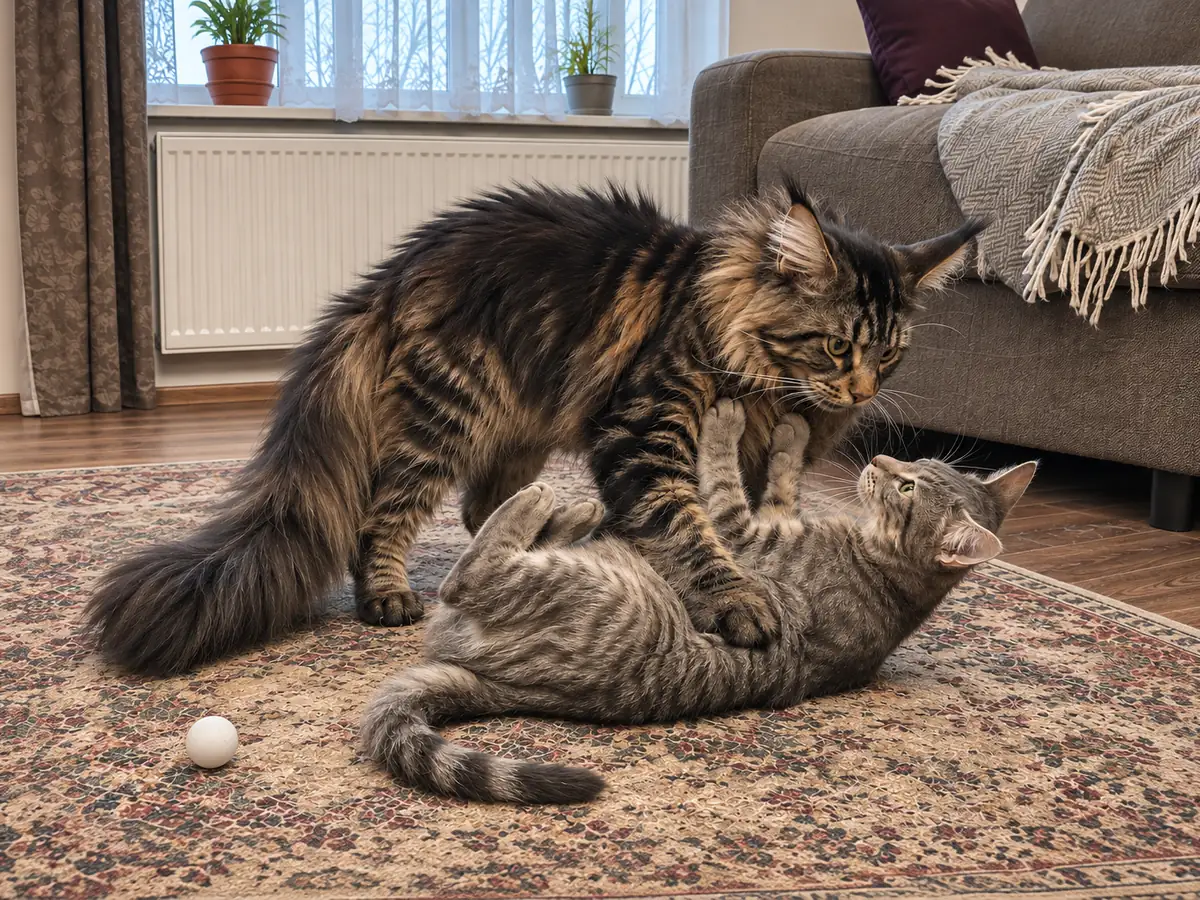
Cats who like each other often play fight, and it can look rough. Cats Protection says bonded cats in particular love to play fight, and that they like to “hunt” each other, which means a lot of running around the home. The difference is in the details.
Play is usually quiet, with little breaks while they wriggle into a new position or get ready to chase again. Bites are gentle and claws mostly stay in, or at least do no damage. They swap roles: one chases for a while, then gets chased. The ASPCA adds that playing cats usually keep their ears forward and lean in, not back. Afterwards both go back to normal, with no tension left over.
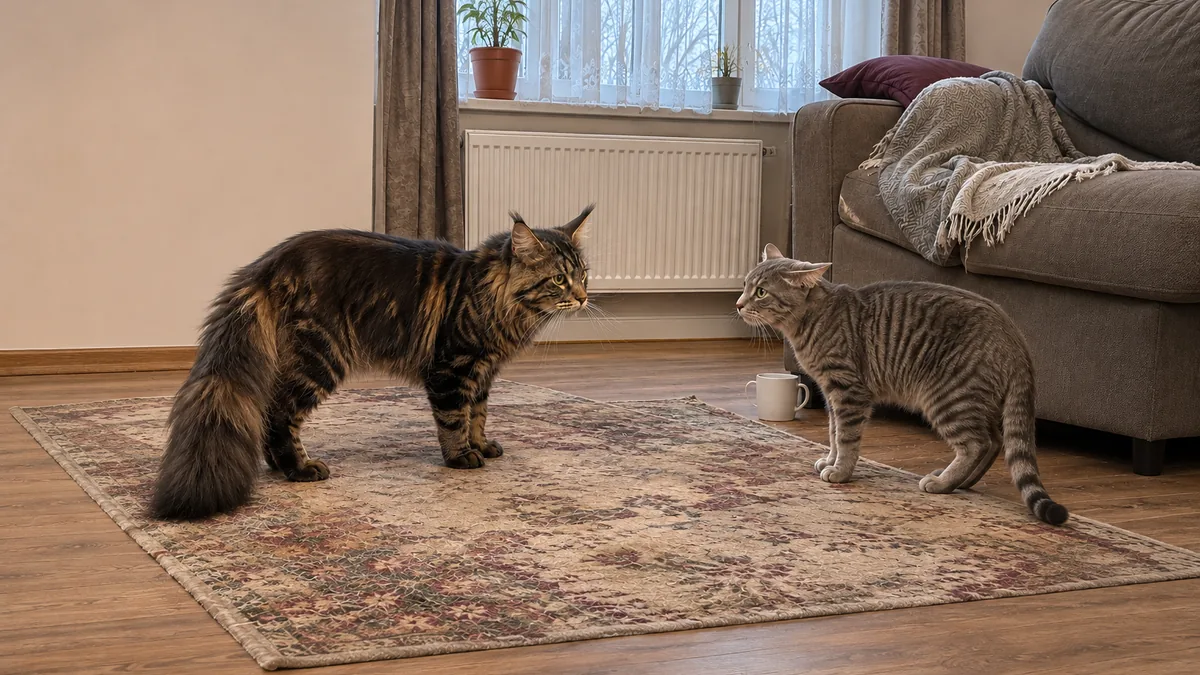
A fight looks different. Two cats up on their hind legs, swiping fast at each other with their front paws, are likely fighting. So are flattened ears, a tense body, a swishing tail, and growling, hissing or screeching.
What a study of 210 cats found about play fights
In a 2023 study in Scientific Reports, researchers watched videos of 105 pairs of cats, 210 cats in all, filmed by their owners or posted on YouTube. Experts labelled 56.2% of the cats as playing, 28.6% as fighting and 15.2% as somewhere in between.
Long bouts of wrestling where both cats took turns went with play. Noise and chasing went with fighting. The authors put it plainly: young cats who are wrestling and not making a sound are most likely playing. In a real fight, cats tend to avoid close contact.
Pauses matter too. When there are long, still breaks as well as noise and chasing, the authors write, the bout might not be play.
The in-between cases are worth knowing about if you’re worried. The authors write that a mixed bout might turn into a proper fight, but it doesn’t necessarily mean the cats’ relationship has broken down. It may be a short-term disagreement.
Why is my cat attacking my other cat all of a sudden?
Cats Protection says cats avoid conflict wherever they can, and fighting is always a last resort. So when two cats who used to get along start fighting, look for what changed. There can be lots of reasons, and the charity names three.
One of them has been away. Cats in the same group share a smell that helps them recognise each other. A cat who comes home smelling strange may be treated like a stranger.
One of them got a fright. A cat who sees a strange cat through the window, or is scared by fireworks or a loud noise, may hiss at or attack the other cat. Cornell Feline Health Center calls this redirected aggression: the cat is worked up by something they can’t reach and turns on a person or another cat instead.
Something at home changed, such as new furniture or visitors coming to stay.
Age plays a part as well. The ASPCA says trouble that starts when a cat is one to three years old may come with social maturity, and Cats Protection notes that siblings can drift apart at around 18 months, even if they were close before. Cornell adds that males in particular may start fighting other males between two and four years of age, and that neutering or spaying every cat involved is the first step.
And sometimes one of them doesn’t feel well. That has its own section below.
My cats are fighting after the vet
One cat comes home from the vet and the other hisses as if they’d never met. Cornell says cats may even attack a cat they had accepted who was away from home, for example for a hospital stay. The ASPCA notes that something unpleasant, like the smell of the vet clinic, can become linked with the other cat.
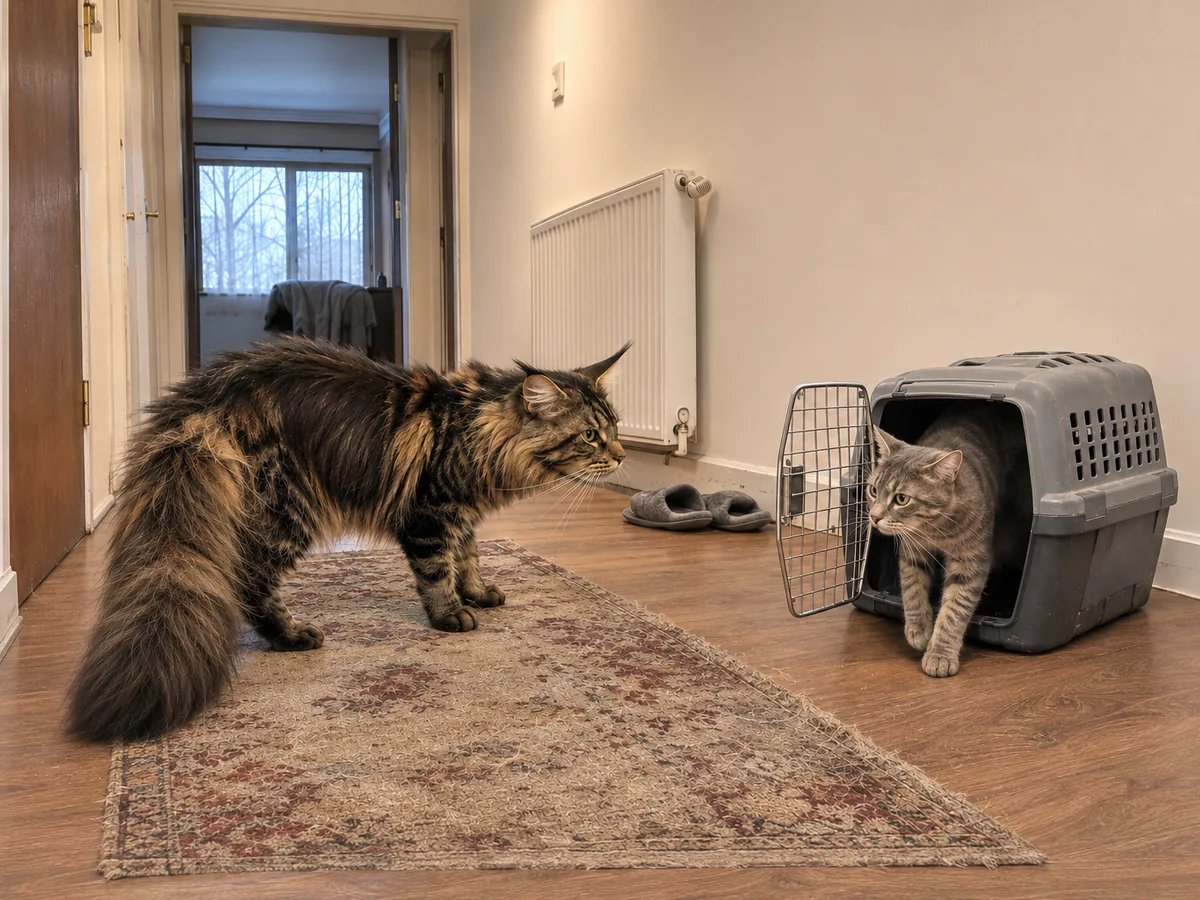
Don’t push them back together. Cornell’s advice for a returning cat: give them their own room with a litter tray, water and food. After a few days, swap them over: the other cat goes into that room with the door closed for about 30 minutes, then each goes back to their own space. Repeat that daily for several days.
Next, let them see each other from opposite ends of one room, each in a carrier or on a harness and lead, and feed them there so the other cat comes with something good. If they won’t eat, move them further apart. Bring them a little closer each time. Cornell says the whole process can take weeks to months, depending on the cats.
You can add the scent swap Cats Protection suggests for introducing cats: gently wipe each cat’s cheeks and forehead with a cloth and swap the cloths between their rooms.
My cats are fighting at night
Cats are naturally more active at dawn and dusk, kittens and young cats especially, Cats Protection says. Two cats with energy to burn at those hours may play hard, and the authors of the 2023 study note that a mixed bout might turn into a real fight.
Cats kept indoors can become restless. Plenty of play during the day uses up some of that energy, and a fishing-rod toy does the job.
If the trouble starts after one cat has been staring out of the window at a cat outside, take the trigger away. Cornell suggests pulling down the blind, or keeping stray cats away from the window.
Could one of them be ill or in pain?
It’s worth checking. The ASPCA says any sudden change in a cat’s behaviour could be a sign of a medical problem, and Cornell says the first step with an aggressive cat is to make sure there’s no medical reason. Hyperthyroidism, osteoarthritis, dental disease and problems of the central nervous system are among the illnesses Cornell names. A cat in pain may lash out at other pets to avoid being touched or bumped.
It can work the other way round too. A review in the Journal of Feline Medicine and Surgery notes that illness can change how a cat looks or behaves towards the others, and that either the ill cat or the others may react aggressively. So the cat being picked on may be the one who needs the vet.
See your vet straight away if either cat stops eating. After a fight, check both cats for wounds. Battersea warns that bite wounds are often hard to spot and can heal over quickly, trapping bacteria inside. If a cat hides, or seems listless, withdrawn or lame after a fight, call your vet.
How to break up a cat fight safely
Keep your hands out of it. Cornell warns that you can be seriously injured if you put a hand between fighting cats. Make a loud noise instead, or distract them with a toy. Cats Protection says that gets their attention and pauses the fight; the ASPCA suggests a loud clap of your hands.
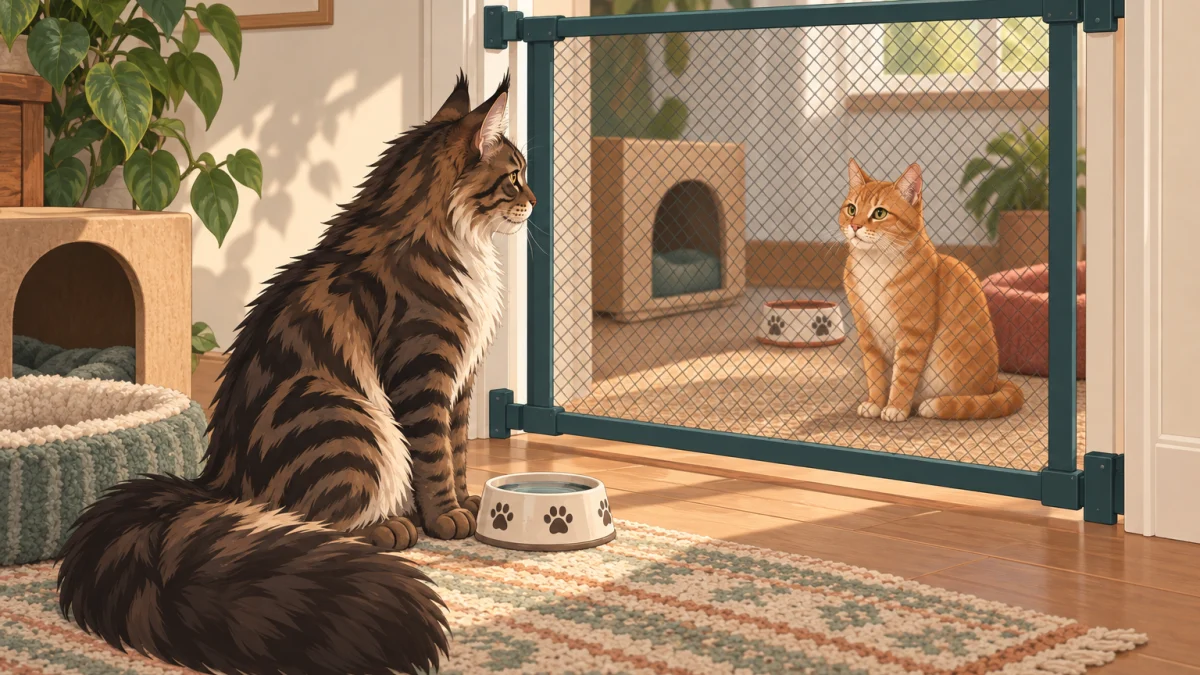
To keep them apart, put something between them. Cornell suggests a baby gate or a panel of cardboard, light wood or plastic.
Then leave both of them alone. Battersea says cats can have a lot of energy left straight after a fight and are best left to calm down. Don’t try to soothe the angry one: the ASPCA warns that if you come close, a cat who’s still worked up may turn on you. Give them time before you stroke them or pick them up.
Don’t let them fight it out. The ASPCA says cats don’t settle things by fighting, and the fighting usually gets worse. Don’t punish either of them, either. Cornell says any physical punishment can make a cat more fearful or anxious and the aggression worse.
How to stop cats fighting each other at home
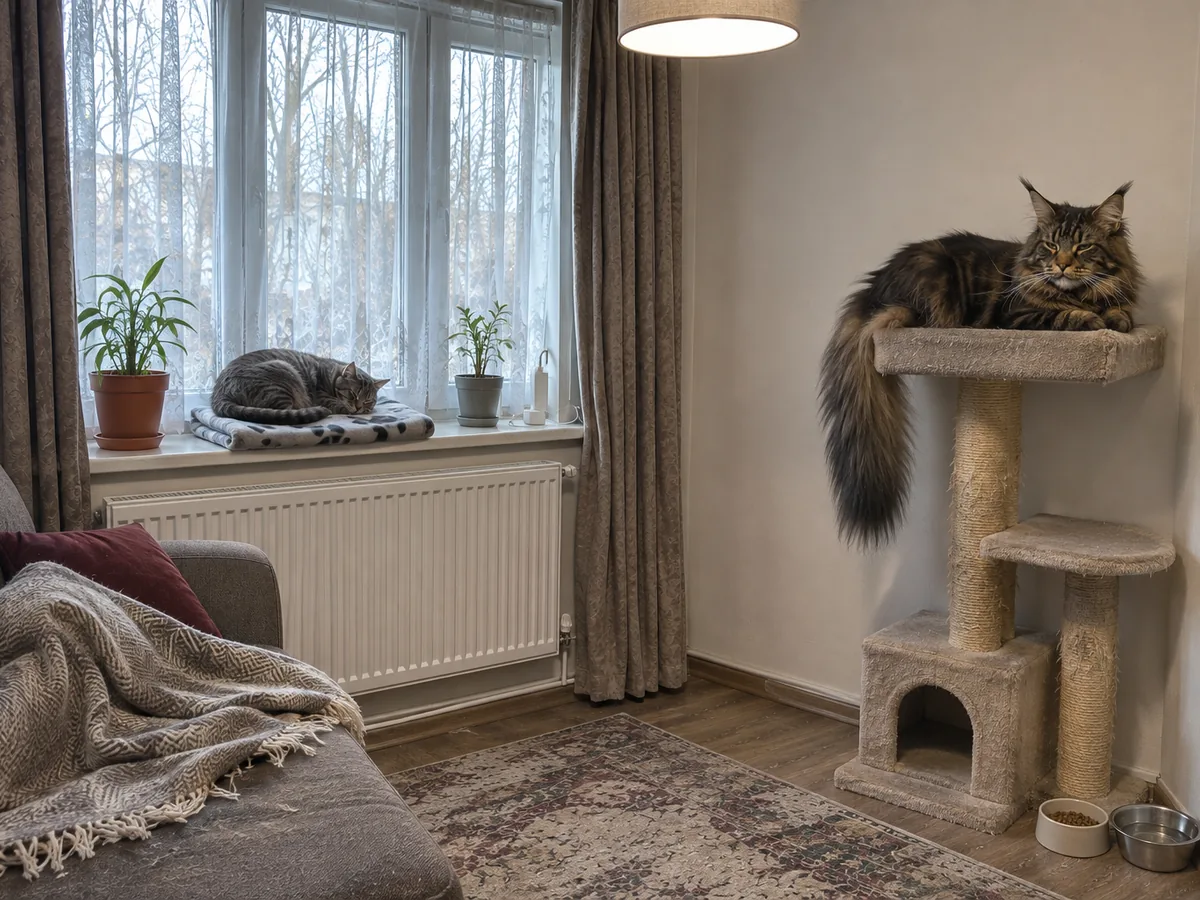
Start by making sure nobody has to compete. Cats Protection suggests each cat has their own food and water bowl, bed, litter tray and place to sleep or hide, plus a spare. Keep them out of busy spots and not too close to the other cat.
Give them ways to keep their distance. A cat who feels threatened likes somewhere to hide or climb up high, so boxes and cat trees help. Narrow places such as hallways need some height too, so one cat can get out of the other’s way. With indoor cats this matters even more, because they have fewer places to go. The ASPCA says more hiding spots and perches let cats space themselves out as they prefer.
Play with each of your cats. Cats Protection says it lets them behave naturally and lowers stress, and a fishing-rod toy gets them moving. If you’d like those minutes to teach each cat a trick as well, a Lapka programme plans the sessions and adjusts them after each one.
Reward the calm moments. When you see them being friendly, praise them or toss them a treat, the ASPCA says. It also suggests a pheromone diffuser while you work on the problem.
How to reintroduce cats who used to get along
If the fights are mild, or the cats used to get along, the ASPCA suggests starting again slowly. Keep them in separate rooms for several days or weeks, each with their own bed, bowls and litter tray. They can hear and smell each other without having to meet.
Feed them on opposite sides of a closed door. Each day, swap their rooms so they pick up each other’s smell. After several days, if both seem relaxed, open the door an inch. If they stay calm, open it a bit more, then a bit more again.
Any growling, spitting, hissing or swatting means you separate them and go slower. For fights that are bad, or cats who have never got on, the ASPCA suggests a longer separation and short daily sessions, starting far apart, with food or play to keep them busy. Leave them alone together only once they can eat and play calmly within a couple of feet of each other, and only for short spells at first.
When to call in a behaviourist
If your cats keep fighting despite all this, Cats Protection says to separate them and contact a qualified cat behaviourist as soon as possible. Talk to your vet as well. Cornell says medication may help some cats, but only alongside changes to their behaviour and home, and only if your vet prescribes it.
Some pairs never settle. The ASPCA says some cats simply can’t live together peacefully, and that it may be kinder to keep them apart in the house for good, or to find one of them another home, than to make them live with years of stress.
What a week of notes after the vet can look like
Tue, 18:30: Misty home from the vet. Bruno sniffs her, growls and swipes. Misty goes into the spare room with her bed, bowl, water and tray.
Thu: Bruno in the spare room for half an hour, Misty in the rest of the flat. He sniffs her bed and lies on it.
Sun: dinner at opposite ends of the living room, Misty in her carrier. Both eat. Bruno’s tail still swishes.
Mon: the same, a metre closer. No growling.
Notes like these show what set the fighting off and whether each step went calmly, so you can see when to move on and when to go back. If one cat starts eating less or hiding, the same notes help your vet.
Questions people ask
My cats are fighting, what do I do?
Pause it with a loud noise or a toy, keep your hands out, and let both cats calm down apart. Then look for what changed: a vet visit, a cat at the window, new furniture, one cat who seems unwell. Check with your vet, give each cat their own things, and if the fights carry on, separate them and reintroduce them slowly.
Why is my cat attacking my other cat out of nowhere?
The trigger may be something you didn’t see. Cornell lists loud noises, an outdoor cat seen through the window and an earlier squabble between the cats as common triggers for redirected aggression. Pain is another possible reason, so tell your vet about the attacks.
Should I let my cats fight it out?
No. The ASPCA says cats don’t resolve their problems by fighting, and the fighting usually gets worse. Interrupt it with a noise, keep them apart for a while, and work on what started it.
Do cats hiss and growl when they play?
Play is usually quiet. Growling, hissing and screeching are among the signs of a fight Cats Protection lists, and in the 2023 study, noise went with fighting rather than play. Young cats who wrestle in silence are most likely playing.
Can my cats be friends again after fighting?
There’s a set way to try. The ASPCA’s slow reintroduction is meant for cats who used to get along, and the authors of the 2023 study write that a tense bout doesn’t necessarily mean the relationship has broken down. Some pairs never settle, and then keeping them apart, or rehoming one, may be the kinder choice.
My cats don’t fight. Does that mean they get along?
Not always. Cats Protection says many cats who live together are stressed without ever fighting, and constant tension can lead to cystitis, overgrooming or toileting in the house. Cats who are close groom each other, rub against each other and sleep touching.
Sources and further reading
- Cats Protection — Cats and fighting
- Cats Protection — Cats at night
- Battersea — How do I stop my cat fighting?
- Cornell Feline Health Center — Feline behavior problems: aggression
- ASPCA — Aggression between cats in your household
- Scientific Reports — An ethological analysis of close-contact inter-cat interactions determining if cats are playing, fighting, or something in between (2023)
- Journal of Feline Medicine and Surgery — Common feline problem behaviors: aggression in multi-cat households (2019)