Lapka
Where to start
Start with your vet, because constipation, diarrhoea, a sore tummy or stiff joints can all make a cat poo outside the tray. If your cat is healthy, look at the tray. Some cats won’t poo where they’ve peed or where old poo is still sitting, so scoop twice a day and add a second tray somewhere else. Poo right next to the tray means your cat wants to use it, but something is putting them off. Never punish.
Why is my cat pooping outside the litter box all of a sudden?
Start with your vet. Cats Protection, a UK cat charity, says it’s always best to see the vet first after a sudden change like this, and to take a poo sample with you. The practice can give you a pot for it. Cornell Feline Health Center explains that digestive problems can make pooing painful, make your cat need to go more often or more urgently, and leave them with less control.
Diarrhoea can catch a cat out before they reach the tray. Illnesses that come with age and make moving harder can also stop a cat getting to the tray in time. It happens more than you might think: in PDSA’s 2024 report, based on what UK owners told them, 9% of cats toilet in the house away from the litter tray and 7% close to the tray but not in it.
Cat pooping outside the litter box but peeing inside
You’re not the only one with this. The ASPCA says some cats use their box only for peeing or only for pooing. International Cat Care explains that cats like to pee in one place and poo in another, and some won’t use a tray that already has anything in it. Cats Protection puts it simply: some cats won’t poo and pee in the same tray.
The litter can be the reason too. A cat who really dislikes their litter may use the tray only for some things. Cats Protection gives this exact example: still peeing in the tray, but pooing somewhere else.
International Cat Care also notes that some cats prefer deeper litter to poo in. It recommends at least 3 cm, so try a little more than that in one of the trays.
Could it be constipation or a sore tummy?
A cat who has been hurting in the tray can start avoiding it. If pooing was painful, from constipation or diarrhoea, your cat may link the tray with the pain, International Cat Care says. The ASPCA adds that the link can stay even after your cat is well again.
It works the other way round as well. If something about the tray puts your cat off, they may hold their poo in, and that can lead to constipation. PDSA names a dirty tray, a litter they don’t like, a noisy spot and too few trays for the cats in the house.
A healthy adult cat poos once or twice a day. PDSA’s signs of constipation are meowing while pooing, straining for longer than usual without passing much, going in and out of the tray several times in a row, and small, hard bits of poo.
When to call the vet straight away
Cats Protection says to call your vet if your adult cat hasn’t pooed in more than 48 hours, or your kitten in more than 24. Call too if your cat keeps visiting the tray without pooing or peeing, meows or strains while pooing, or if the poo is hard or dry or has mucus, blood or worms in it. Diarrhoea that lasts more than 24 hours in an adult, any diarrhoea in a kitten, and diarrhoea that looks black or has blood in it all need the vet.
Straining can also mean your cat can’t pee, and that is an emergency, especially in male cats. It can be hard to tell which it is. PDSA says the tail is often held up when a cat is trying to poo and down when they’re trying to wee. If you’re not sure, call the vet now.
Cat pooping next to the litter box
Poo right beside the tray is a clue. Cats Protection says it means your cat wants to use the tray, but something is putting them off.
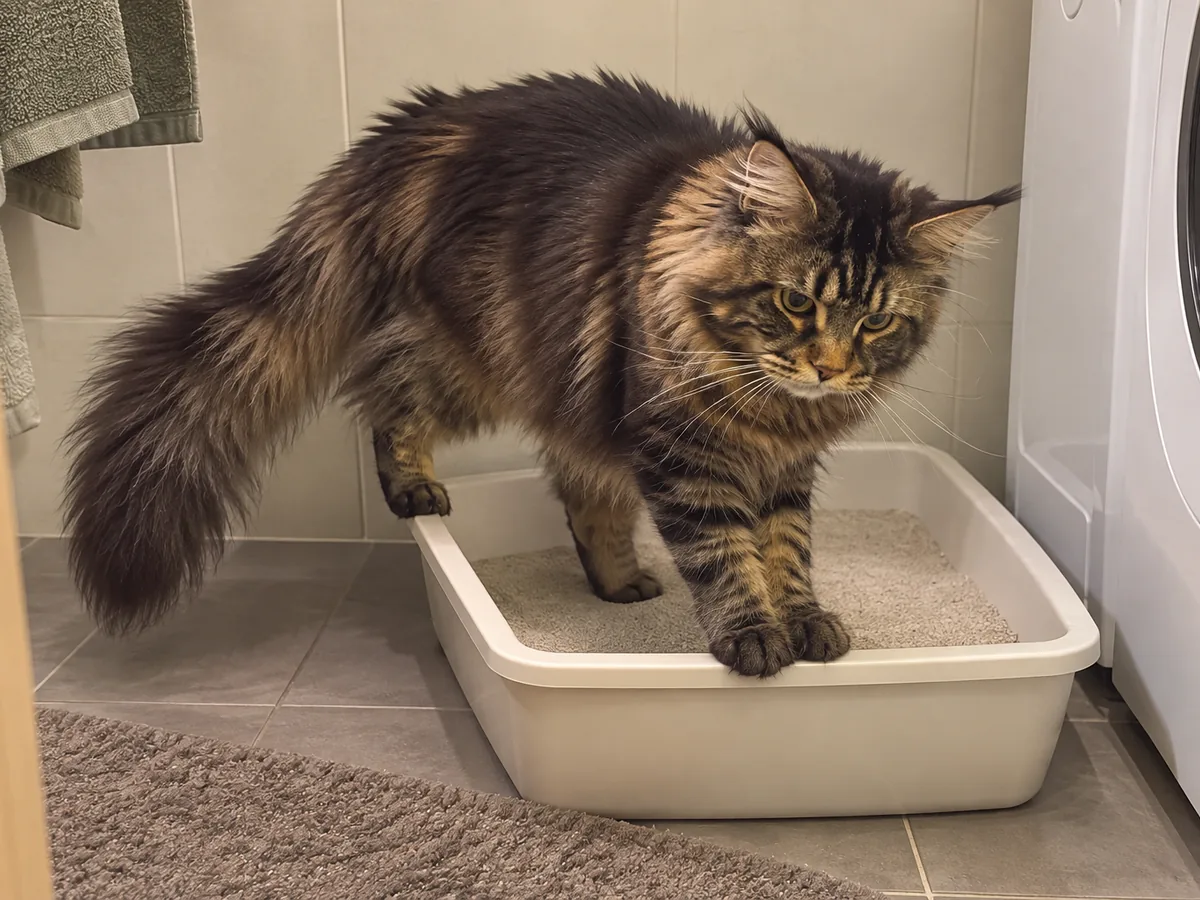
Watch what your cat does in and around it. Cats Protection’s signs that a cat dislikes the litter: hesitating before stepping in, not digging or covering, spending less time in the tray, shaking their paws a lot afterwards, or perching on the edge so as few paws as possible touch the litter. Cornell adds crying in the box and not burying, and says to check first that the box is clean.
A cat who runs into the tray and straight back out, sometimes before finishing, may be afraid of it. The ASPCA says this, and pooing nearby but not inside, means your cat is worried about using the box. Something may have frightened them there: being cornered by a dog, another cat or a person, or a loud noise.
Scoop twice a day and add a second tray
Cats Protection’s advice is to remove poo and pee twice a day, because some cats won’t use the tray at all until it has been cleaned out. At least once a week, throw out all the litter and wash the tray in hot, soapy water.
The usual rule is one tray per cat plus one, so even a single cat gets two. Put them in different places. Side by side, they count as one tray to your cat.
PDSA’s numbers show both habits matter. In homes with more than one cat, cats were more likely to toilet away from the tray when the trays weren’t spot cleaned daily (19%, against 9% when they were) and when the trays were placed together (18%, against 11%).
Check the litter and the tray itself
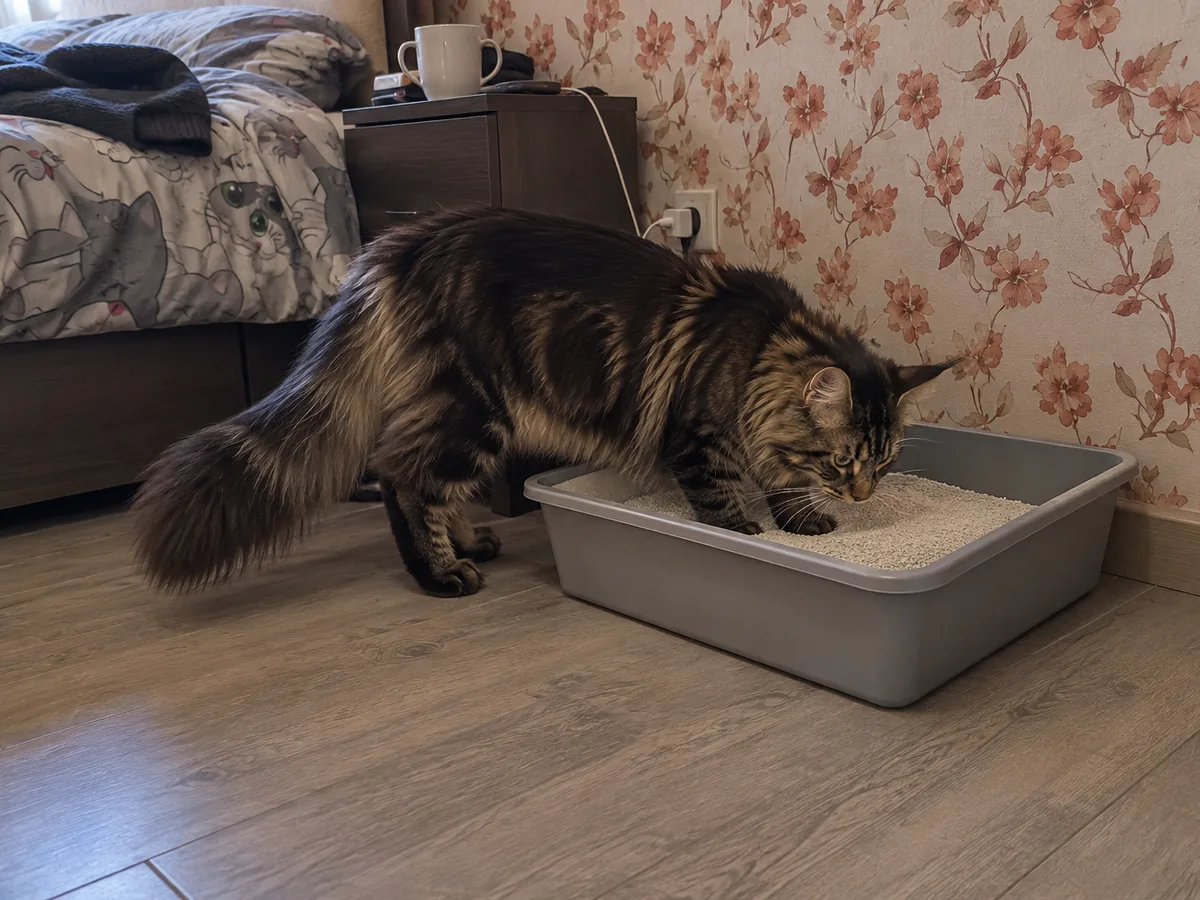
Many cats like a fine, sand-like litter. Skip the scented kinds: cats have very sensitive noses, and a strong smell can put them off the tray altogether. In PDSA’s figures for homes with more than one cat, 21% of cats with scented litter toileted in the wrong place, against 11% without.
Aim for about 3 cm of litter. The tray should be big enough to turn around in, about 1.5 times as long as your cat, and an older cat needs low sides. Take out any liner, because liners can catch in claws. If the tray has a hood, remove the flap.
If you change the litter, do it slowly. Mix a little of the new one into the old and raise the share over at least a week. Or put the new litter in one tray and keep the usual one in the others, and let your cat show you which they prefer.
Where the tray stands, and what might have spooked your cat
Cats feel vulnerable when they toilet, so they look for somewhere quiet and private. Keep the tray away from the washing machine, doorways, corridors and cat flaps, and away from food, water and beds. In PDSA’s report, 20% of trays were by a doorway to the outside, which can make a cat feel unsafe using them.
If the trouble started all at once, think about what happened near the tray. Cats Protection suggests moving it somewhere else and seeing if that helps. Changes we hardly notice can unsettle a cat too. The ASPCA names moving house, a new animal or person at home, and even a change in your daily routine.
PDSA lists peeing or pooing outside the litter tray among the signs of a frightened cat. A cat who usually goes outdoors may stop if a neighbour’s cat or bad weather has put them off, so keep at least two trays indoors, in different places.
Clean the spot and give it a new job
Once a cat has pooed somewhere, their nose will lead them back to use it again, International Cat Care says. Clean it as soon as you can with an enzymatic cleaner made for cat urine and faeces, or with a warm 10% solution of biological washing powder. Rinse, let it dry, and keep your cat away from the spot for as long as you can. Skip ammonia and vinegar, which smell like urine to a cat.
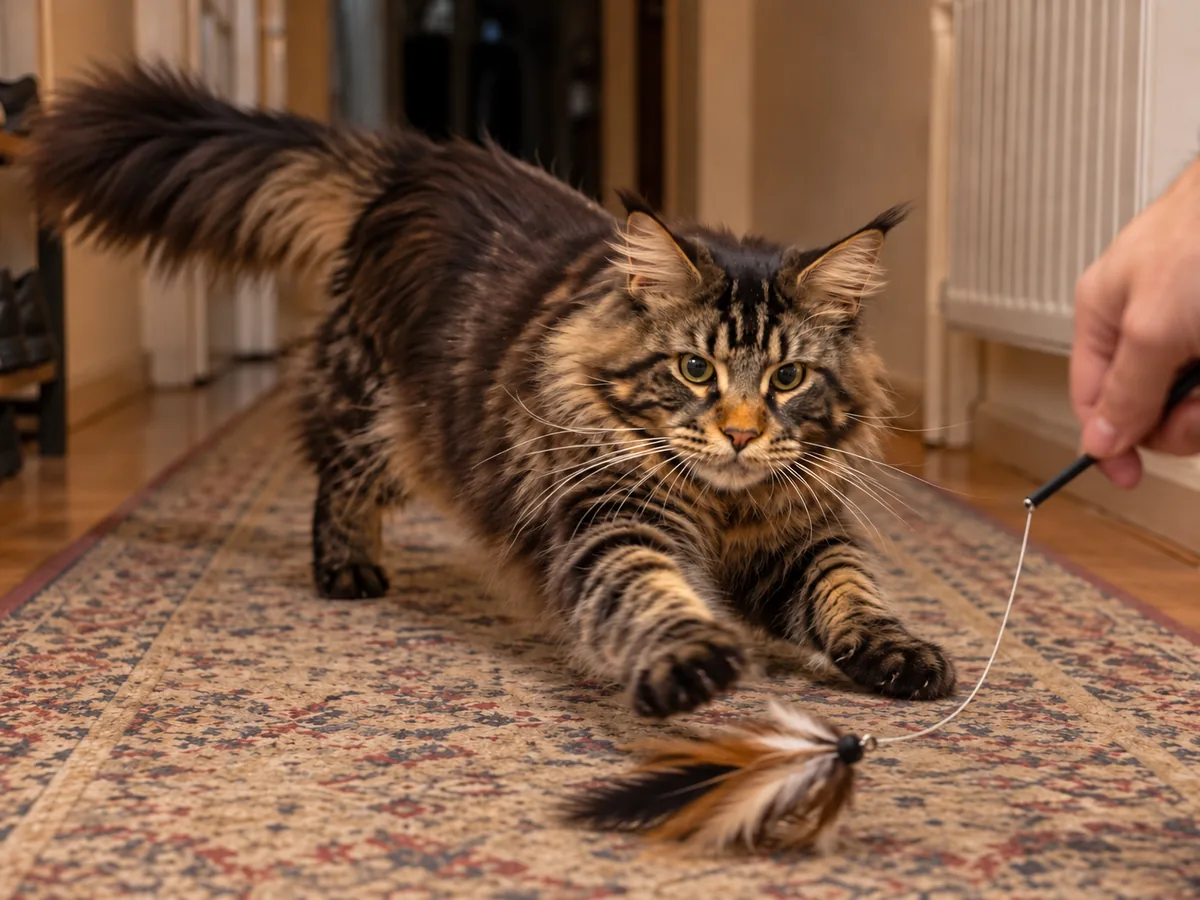
Then change what the spot means. Cats prefer to eat and toilet in separate places, so put a food bowl or a few treats there, or play with your cat on that spot and leave a toy behind. If your cat keeps going in one place, you can also put a tray right there. Once they use it reliably, move it a few inches a day back to where you want it. If they stop using it, put it back where they last used it reliably.
Never punish, and change one thing at a time
Don’t scold your cat, rub their nose in it or carry them to the tray. Cats Protection says punishment makes the problem worse, and International Cat Care says it only makes a cat fearful. Your cat isn’t getting back at you. Cornell points out that cats don’t find poo unpleasant, so they’d hardly use it as a weapon.
Putting your cat in the tray to show them it’s safe will likely backfire, the ASPCA says. Teaching the tray with treats, as you would a dog, usually isn’t a good idea either: many cats don’t like attention while they toilet.
Try not to change several things at once, so you can see what worked. Start soon: the longer it goes on, the more likely it is to become a habit, Cornell says. Lapka’s litter tray programme works through the setup the same way, one change at a time. If nothing helps and your vet finds no cause, ask about a qualified cat behaviourist.
Old cat pooping outside the litter box
When an older cat suddenly starts going outside the tray, take them to the vet first. Cats Protection says there are lots of medical causes that might mean your cat can’t make it in time. If your cat seems to have forgotten how to use the tray, or goes straight back in after using it, it could be a sign of dementia.
Make the tray easy to reach: low sides, a couple of extra trays around the home, and a night light nearby so it’s easy to find in the dark. Soft litter helps sore joints, International Cat Care says. Older cats may be more prone to constipation, so call the vet if yours hasn’t pooed in more than 48 hours.
A week of tray notes
Mon: pee in the tray, poo on the bath mat right next to it. One tray, in the bathroom beside the washing machine. Switched to a new pellet litter last week.
Wed: old sandy litter back in the bathroom tray. Second tray with the same litter in the bedroom corner. Poo in the new tray that evening.
Sat: everything in the trays since Wednesday, mostly the bedroom one. Poo firm, once a day. Eating and playing as usual.
Notes like these show which change came before which result. If your cat starts straining or crying in the tray, don’t wait for the next note: call the vet.
When it does not go to plan
Why is my cat pooping outside the litter box after moving?
A move is one of the changes the ASPCA names as unsettling for cats. Give your cat a tray in a quiet, private corner of the new home, away from food, doorways and the washing machine, and a second one in another room. If it carries on, or your cat seems unwell, see your vet.
Is my cat pooping on the floor out of spite?
No. International Cat Care says a cat who soils indoors isn’t seeking revenge or making a point. Something has gone wrong in their world, and they’re feeling unwell or stressed. Cornell adds that cats probably don’t have the kind of thinking a tit-for-tat would need.
How often should a cat poo?
Healthy adult cats poo once or twice a day, Cats Protection says. Young kittens go more often, between one and six times a day. Call your vet if an adult hasn’t pooed in more than 48 hours, or a kitten in more than 24.
Should I put my cat in the litter box after an accident?
No. The ASPCA says not to scold your cat or carry them to the box, and that placing a cat in the box to show them it’s safe will likely backfire. Clean the spot well instead, and make the tray more appealing: cleaner, quieter, with litter your cat likes.
Why is only one of my cats pooping outside the litter box?
Sometimes one cat controls access to the trays and keeps the others away, the ASPCA says. In PDSA’s report, cats living with other cats were more likely to toilet away from the tray (11%) than cats living alone (7%). Spread the trays around the home, and add one where the anxious cat spends most of their time.
Sources and further reading
- Cats Protection — Toileting
- Cats Protection — How to choose the best cat litter for your cat
- Cats Protection — How often should cats poo and pee?
- International Cat Care — Soiling indoors
- International Cat Care — Constipation in cats
- PDSA — Constipation in cats
- PDSA — How to help a nervous cat
- PDSA — PAW Report 2024: Cats
- ASPCA — Litter Box Problems
- Cornell Feline Health Center — Feline Behavior Problems: House Soiling