Lapka
Lapka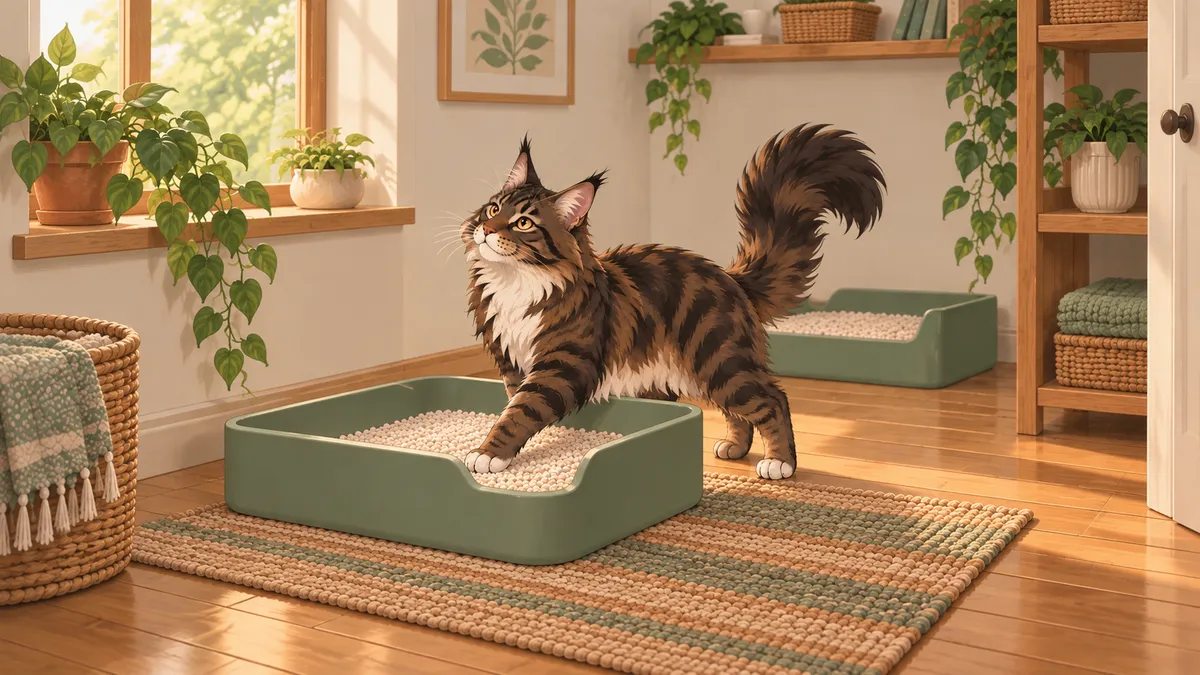
Where to start
Ask your vet to check your cat first, because pain and illness can change toileting habits. If your cat, especially a male, is straining and passing little or no urine, that is an emergency: contact a vet immediately. Then check for enough clean trays in quiet places with fine, unscented litter, and look for stress or changes at home.
Start with a vet check
Any change in toileting is a reason to see your vet first. Urinary problems, diarrhoea, painful joints, diabetes or an overactive thyroid can all lead to accidents, because a cat may be uncomfortable or unable to reach the tray in time. Your vet may ask for a urine or stool sample.
Watch the tray as well as the floor. Frequent trips, crying while passing urine, blood in the urine or a lot of licking around the genitals need prompt veterinary attention. A cat who strains but passes little or no urine may have a blockage, which can quickly become life-threatening: contact a vet immediately, even out of hours. Male cats are at greater risk.
Peeing or spraying? Look at the surface
Toileting and marking have different causes. To pee, a cat squats over a horizontal surface such as a carpet, a duvet, the bath or a sink. To spray, a cat backs up to a vertical surface, raises a quivering tail and squirts a small amount of urine onto a wall, a door, a radiator or a chair.
Spraying is a scent message to other cats, and indoors it is a sign that your cat doesn’t feel secure. Common triggers include a new cat, cats outside, tension between cats at home, building work and new furniture. Spraying deserves a vet check as well, because a medical problem can sit behind it.
Enough trays, in quiet places
The usual guidance is one litter tray per cat plus one, so even a single cat should have two, placed apart rather than side by side. With several cats, one may guard the trays; if one of your cats seems tense, add a tray where that cat spends most of the day.
A cat who might be disturbed can feel too vulnerable to use the tray. Choose calm corners away from food, water, beds, washing machines, doorways, corridors and cat flaps, where your cat only has to watch one or two directions, and make sure no closed door or chasing dog blocks the way.
A tray big enough to turn around in
Aim for a tray about one and a half times your cat’s length, from the nose to the base of the tail, so they can turn and settle. Large cats can find a small hooded tray hard to use, and kittens, older cats and cats with stiff joints need low sides.
Lids divide opinion: some cats like the shelter, others want an open tray with a view and a quick way out, especially in homes with other cats. Lids also hold smells in, so remove any flap. Skip liners, which can catch on claws; self-cleaning trays can startle some cats with sudden movements or noises.
Fine, unscented litter, kept clean
Most cats prefer a fine, sand-like, unscented litter, and many like it to clump. About 3 cm suits many cats. Scented litter, deodorisers and strong-smelling cleaners can put a cat off, and hardwood pellets can be uncomfortable for sore joints. To switch litter, mix the new one in gradually over about a week, or offer it in a second tray and let your cat choose.
Remove clumps and poo at least twice a day; some cats won’t use a tray that already has something in it. Once a week, empty the tray, wash it with hot water and a mild detergent and rinse well. Avoid disinfectants that turn cloudy in water: they usually contain phenols, which are toxic to cats.
Clean accidents until the smell is gone
Clean soiled spots as soon as you can with an enzymatic cleaner made for pet urine, or a warm 10% solution of biological washing powder. Rinse with cold water, let the area dry and keep your cat away from it for as long as you can. Avoid ammonia-based products and vinegar: to a cat they smell like urine and can draw them back.
A spot can also become a habit. A cat who couldn’t reach the tray in time, perhaps during a urinary problem, may come to prefer the new place. If accidents keep happening in one or two places, put a tray there for now, or make the spot a feeding or play area, since cats don’t like to toilet near their food.
Look at stress, change and other cats
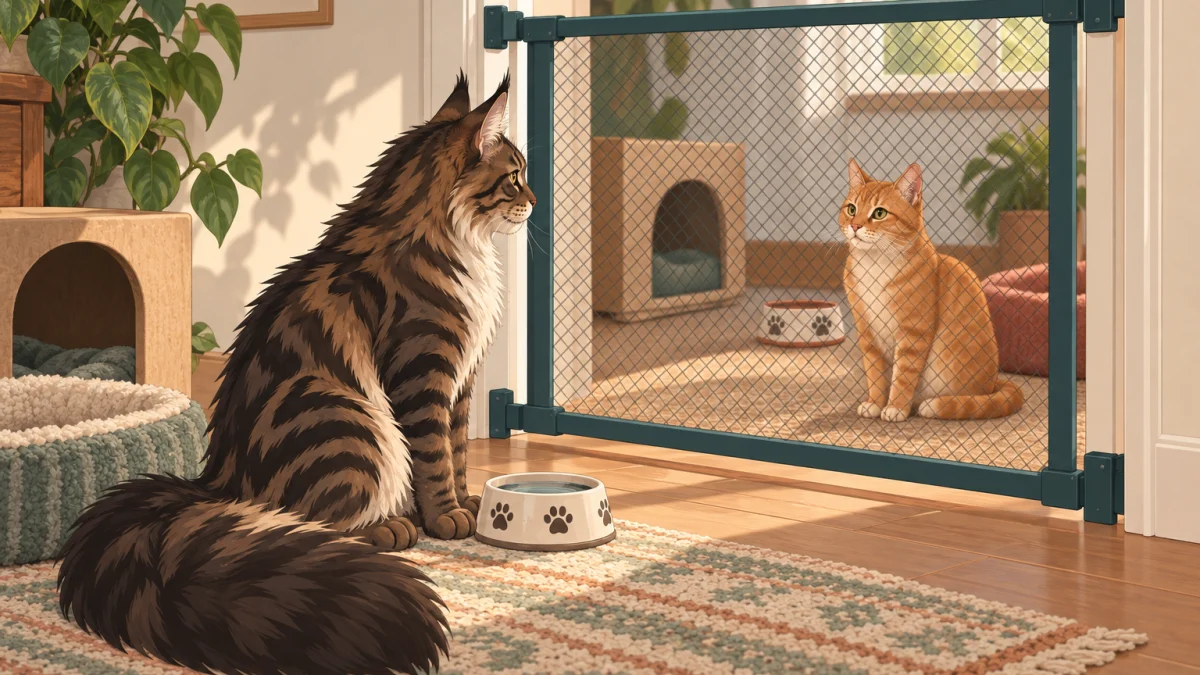
Cats can be unsettled by things we hardly notice: a move, a new pet or person, building work, new furniture, even a change in your working hours. If your cat watches strange cats through glass, cover the lower part with opaque film or card, or close the blinds.
Keep life predictable while you work on this: food in the same place, a steady routine and no chasing by other pets. If your cat usually toilets outdoors and now goes indoors, something outside may have frightened them: most often another cat, but also a dog, a loud noise or bad weather. A safe indoor tray gives them another option.
No punishment, one change at a time
Never punish, scold or rub your cat’s nose in it, and don’t carry them to the tray after an accident. Punishment makes a cat fearful, and that anxiety can make the problem worse.
Change one thing at a time and note what happens: where and when the accident was, urine or poo, the surface, anything new that day and how many normal clumps were in the tray. Lapka’s programme for litter tray habits works through the setup the same way, one change at a time. If accidents continue, ask your vet about a qualified behaviourist.
A useful tray note
Day 4 · Change: second tray moved from the hallway to a quiet corner of the spare room. In the trays: three normal wet clumps and one poo, all in the new tray. Outside: a small wet streak on the patio door at 07:30, after a neighbour’s cat walked past. Next: cover the lower glass.
A note like this shows which change each result followed and gives your vet real detail. If the clumps stop or become tiny while your cat keeps straining, don’t wait for the next note: contact a vet immediately.
When it does not go to plan
Why does my cat pee right next to the litter box?
Cats Protection describes this as a sign that your cat wants to use the tray but something is putting them off. Check its cleanliness and size, the depth and scent of the litter, any liner or lid, and what is nearby.
My cat pees in the tray but poos outside it. Why?
Many cats like to pee in one place and poo in another, and some won’t use a tray that already has something in it. Try a second tray in a different spot and scoop at least twice a day. Tell your vet too: pain from diarrhoea or constipation can make a cat link the tray with discomfort.
My cat still uses the tray. Could it be spraying?
Yes. Cats who mark still use their trays for ordinary toileting. Small amounts of urine on walls, doors or furniture, sprayed from a standing position, point to marking. Ask your vet to rule out a medical cause, then look for what is making your cat feel insecure.
Do neutered cats spray?
Some do. Spraying is more common in cats who aren’t neutered, but Cornell’s Feline Health Center notes that about 10% of neutered males and 5% of neutered females spray too. Treat it as a sign of stress or insecurity, and start with a vet check.
How do I litter train a kitten or a new cat?
Most kittens learn quickly and often just need to be shown where the tray is. Choose a large tray with low sides, about 3 cm of fine, unscented litter and a quiet spot away from food. A kitten’s bladder and bowel control is still developing, so keep a clean tray within easy reach, and never punish accidents.
Sources and further reading
- Cats Protection — Toileting
- International Cat Care — Soiling indoors
- International Cat Care — Urine spraying in cats
- International Cat Care — Choosing a litter tray for your cat
- ASPCA — Litter Box Problems
- ASPCA — Urine Marking in Cats
- Cornell Feline Health Center — Feline Behavior Problems: House Soiling
- Cornell Feline Health Center — Feline Lower Urinary Tract Disease
- Cats Protection — Bringing a new kitten home