Lapka
The short answer
A cat who is suddenly clingy has often noticed a change: you were away, the routine moved, the nights got colder, breakfast is due, or they are getting older or feeling unwell. Cats Protection says that if your cat becomes a lot clingier than usual, speak to your vet, who can rule out a medical cause. After that, regular play, meals at set times and attention when your cat is calm all help.
Why is my cat so clingy all of a sudden?
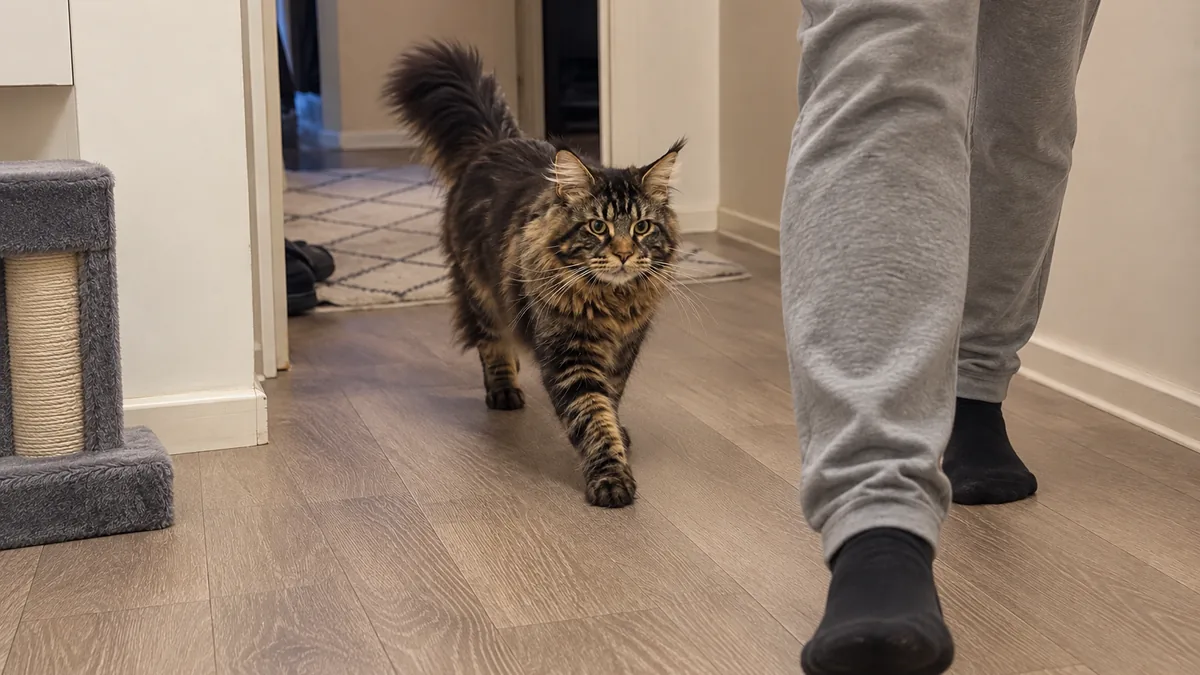
The word that matters is “suddenly”. Some cats are simply clingier than others: they follow their people around the house and wind around their legs. A change is different. Cats Protection, a UK cat charity, says that if your cat becomes a lot clingier than usual, you should speak to your vet, who can make sure there isn’t a medical cause behind it.
Clinginess can also be how a cat shows stress. International Cat Care lists “becoming more dependent on owners” among the signs of long-term stress, and says another cat may withdraw instead, depending on their personality. Other signs on the same list are playing less, over-grooming and jumping at the slightest noise.
The usual reasons are below: time apart, a change in routine, cold nights, hunger, a female coming into season, age and feeling unwell. Read them with your own cat’s last few weeks in mind.
Clingy cat signs, and clinging that isn’t affection
A clingy cat follows you from room to room, winds around your legs, climbs onto your lap as soon as you sit down and asks for attention out loud. The ASPCA says cats enjoy social contact with people, and some are quite vocal when they ask for it.
Not all clinging is relaxed. In a 2019 Oregon State University study, 38 adult cats spent two minutes in a new room with their owner, two minutes alone, then two minutes with their owner again. 65.8% were securely attached, and the researchers say most cats use their owner as a source of security. The other 34.2% were insecure. Some of them kept away from their owner. Others clung on, jumping into their lap and not moving, with signs of stress such as a twitching tail and lip licking.
So a cat who sits on you stiffly, tail flicking, licking their lips, is clingy without being at ease. That may be what “my cat is clingy but not affectionate” describes, and it’s a reason to look for what is worrying them.
When the clinginess comes with other changes
Cats are good at hiding pain. Cats Protection says they are much more likely to show slight changes in behaviour than a limp, so look at the clinginess together with everything else your cat is doing.
Book a vet visit if it comes with any of these signs from Cats Protection’s list: hiding more than usual, sleeping more or slowing down, hesitating to jump down from furniture, crouching hunched up with squinty eyes, eating or drinking less, pacing or restlessness, or crying out when moving or using the litter tray.
Clingy after a change in routine
Cats are creatures of habit. Cats Protection says that when a routine suddenly changes, for example when an owner who was at home a lot starts going out for long stretches, a cat can feel a frustration that looks like separation anxiety. It’s likely to be more common in cats who have never been left alone for long in their current home.
It can be about one person. The behaviour can start when a particular member of the household leaves, even if others are still at home. Signs to watch for include restlessness, a lot of meowing, refusing food and hiding more than usual. A camera left recording while you’re out shows what really happens.
Start with the vet, because these signs can have a medical cause. Then build up time apart slowly: Cats Protection suggests leaving for five minutes at a time and adding more gradually.
Why is my cat so clingy after I come back from vacation?
A cat who meets you at the door and won’t leave your side after a trip may be catching up on contact. In a 2017 study from the Swedish University of Agricultural Sciences, 14 cats who lived as the only cat at home were left alone for 30 minutes on one occasion and for 4 hours on another. When their owner came back after 4 hours, the cats purred more, stretched more and started more contact. The researchers call it a rebound of contact-seeking.
In the same study, the cats seemed to cope well with being left alone. The difference showed when their owner walked back in.
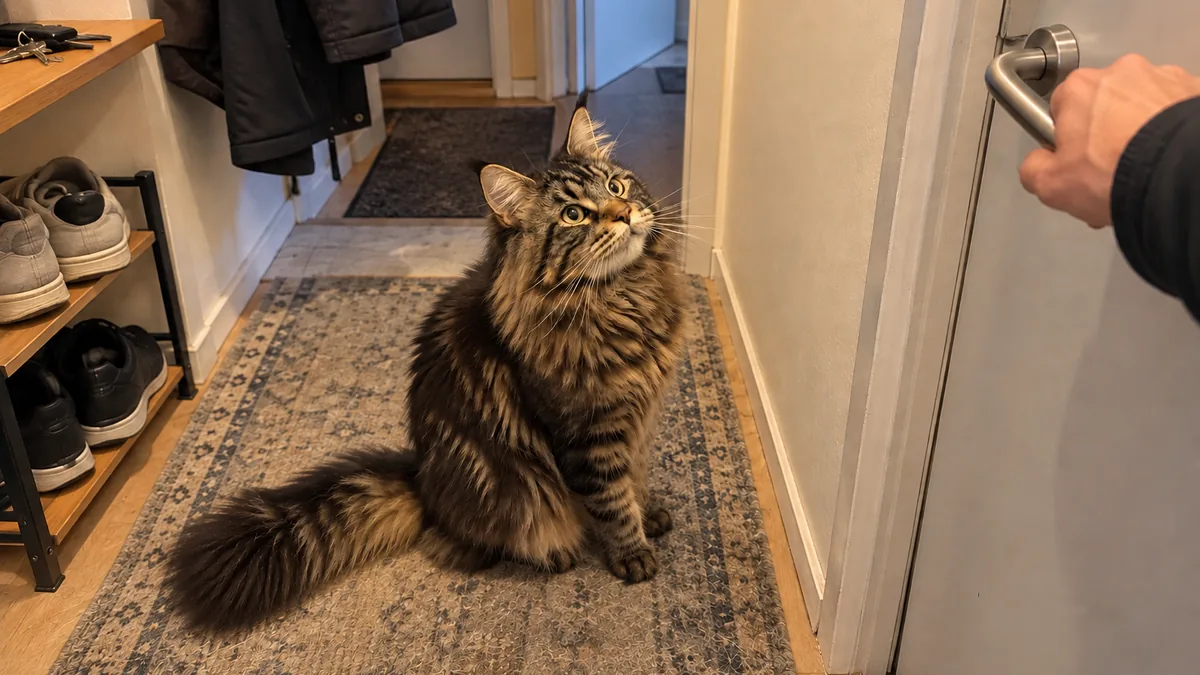
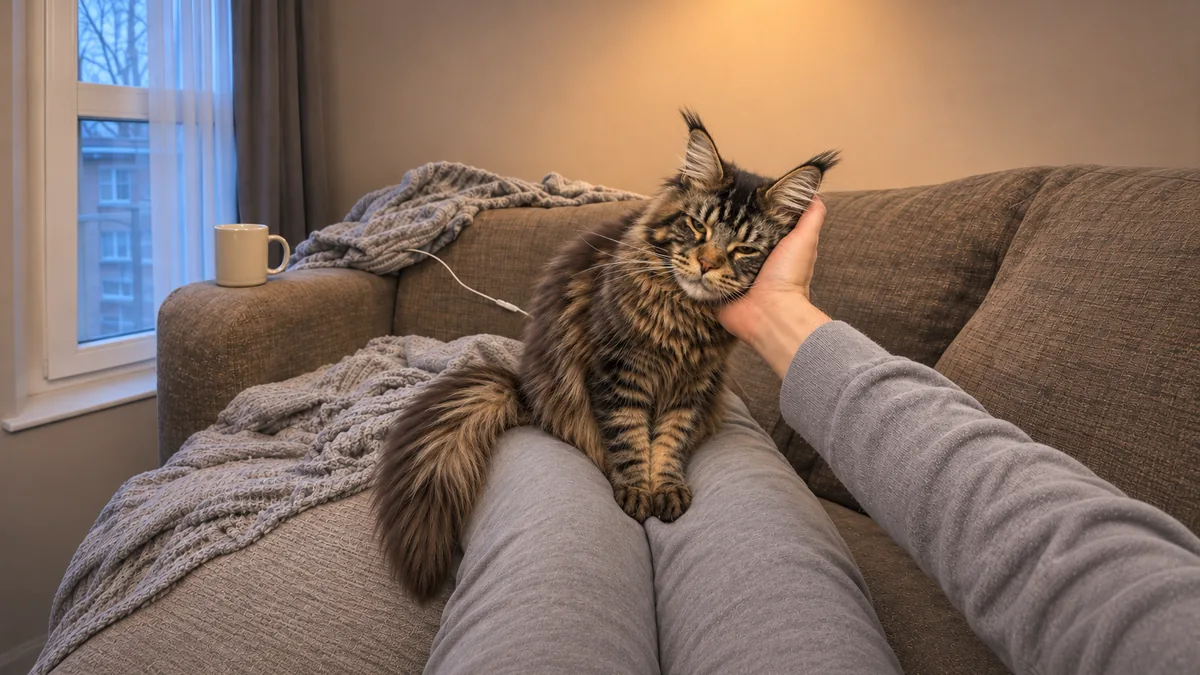
So give them the fuss they’re asking for. Cats Protection suggests a stroke, a head rub or a chin tickle when you’ve just got home after a while away.
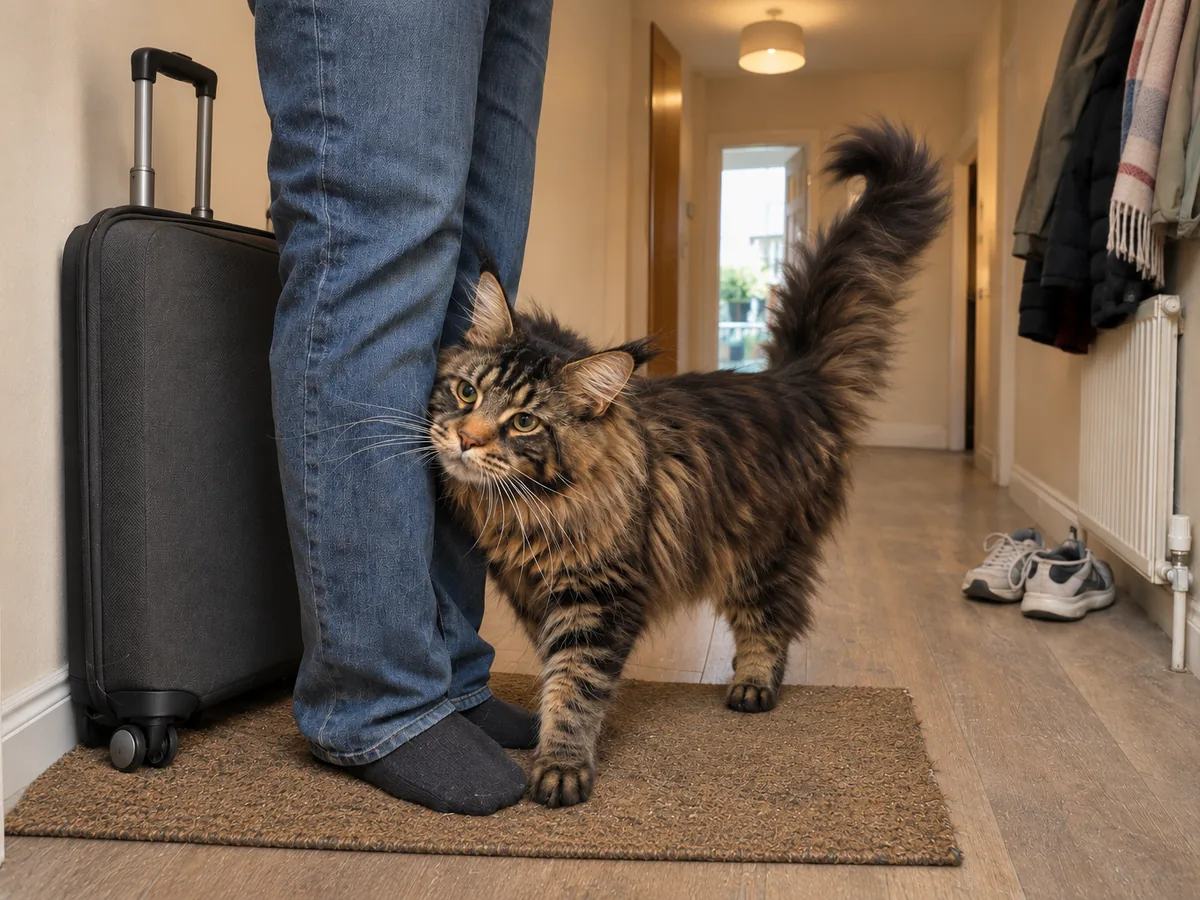
Why is my cat so clingy at night?
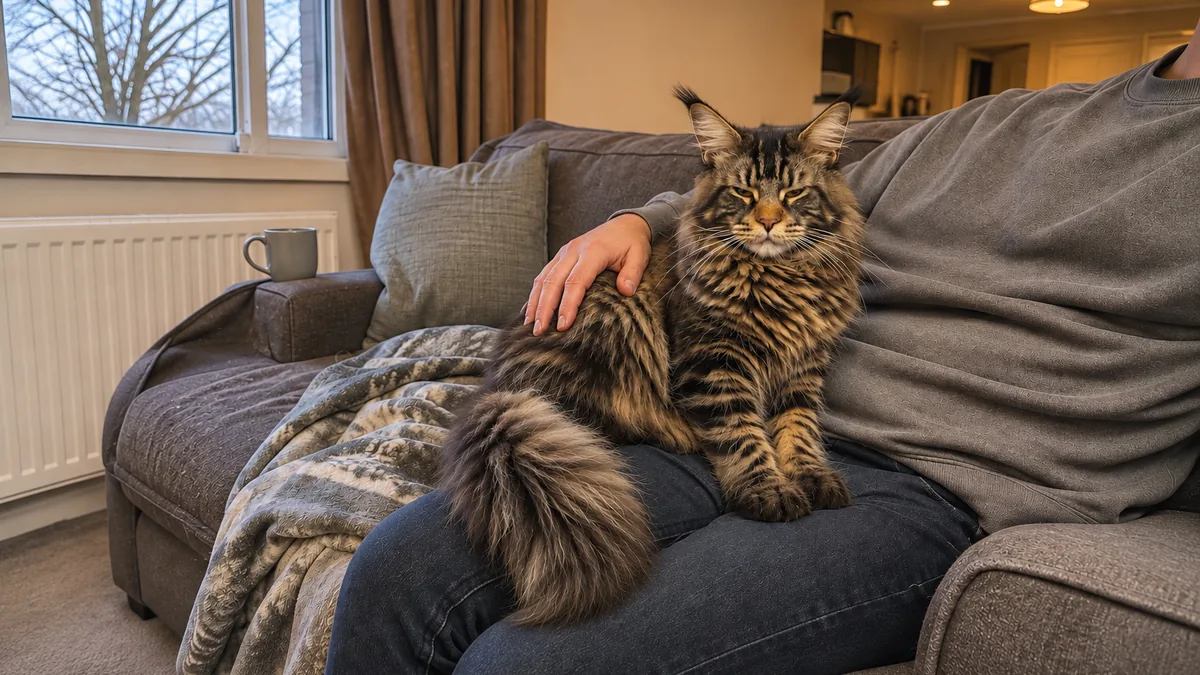
Warmth is part of it. The RSPCA says that in cold weather cats still look for cosy places to rest, and you might find them beside radiators or snuggled up to you. Cats may also sleep more in winter.
Timing is the other part. Cats are naturally more active at dawn and dusk, so your cat may be at their liveliest in the evening and before sunrise. Cats Protection suggests plenty of play during the day to use up some of that energy.
A cat who cries a lot at night, can’t settle or seems lost needs a vet. Cats Protection says some medical conditions make cats wake in the night, cry a lot or feel restless and disorientated. It also asks owners not to tell a cat off for waking them, because the cat could be trying to say they’re unwell.
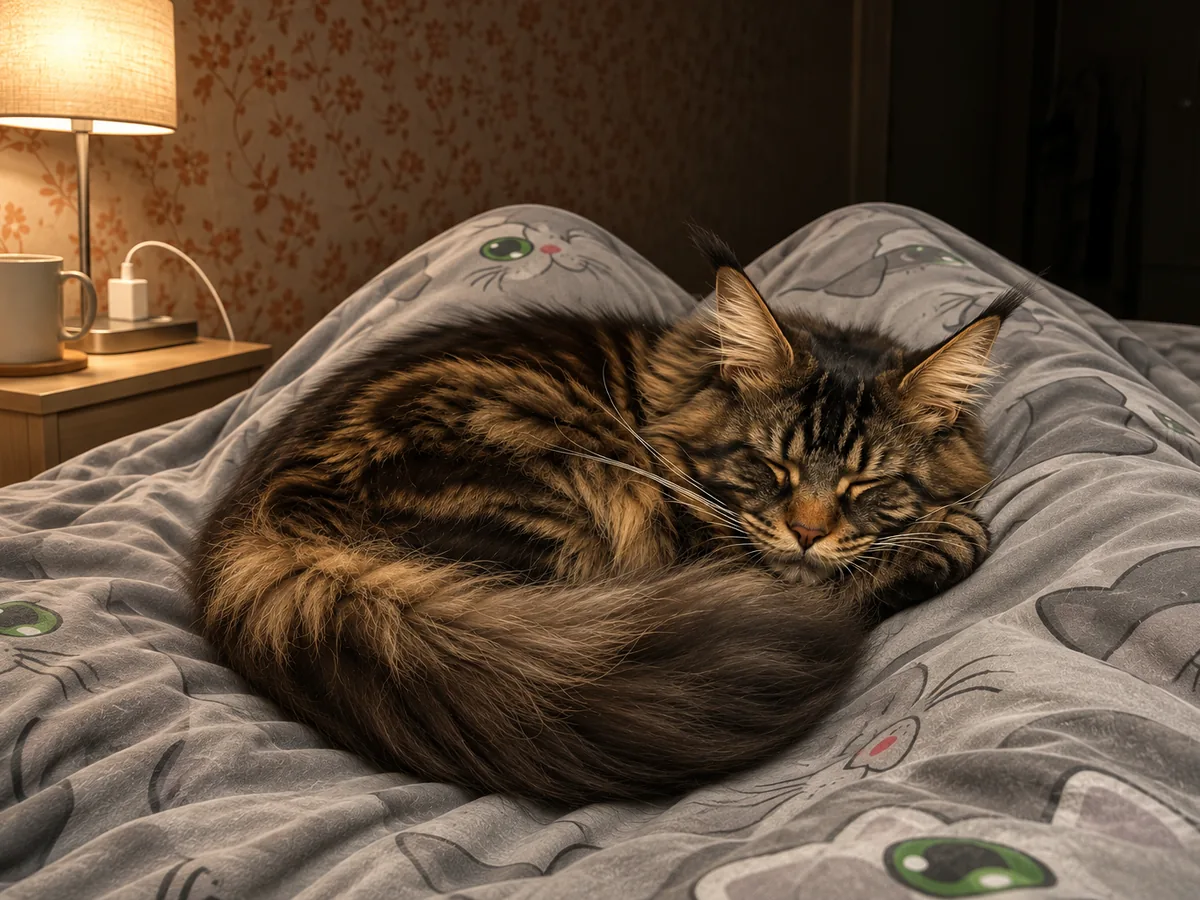
Why is my cat so clingy in the morning?
Often, it’s breakfast. Cats Protection says a cat who follows you may be hungry, and that’s most likely just before their usual mealtime or at dawn. Many cats wake at the first sight of sunrise and then wake you too, by meowing or pawing at your face.
Cats Protection suggests smaller, more regular meals through the day, or an automatic feeder set to open in the early morning. Then breakfast no longer depends on you getting up.
If food only arrives after your cat has pestered you, pestering is what they learn. The ASPCA’s advice for a cat who meows for food is to stop feeding them when they cry, and to feed at set times so they learn that asking at other times gets them nothing.
My female cat is suddenly very affectionate
If she isn’t spayed, she may be coming into season. PDSA, a UK vet charity, says a cat on heat is likely to become very affectionate and “flirty”, to call loudly, and to roll around, arch her back and move her tail to one side.
The first season usually comes at around 4 to 12 months old, and Cats Protection says female cats can get pregnant from around four months. Talk to your vet about spaying. PDSA adds that it’s very rare for a season to cause pain, so if the loud meowing seems to be about something else, contact your vet.
Why older cats get clingier
International Cat Care says you may find an older cat becomes more dependent on you, because older cats tend to become more insecure. It counts cats as senior from 11 to 14 years and super senior from 15. Older cats may also play less, groom less and be more vocal. Cats Protection adds that it’s more common for older cats to follow their owners around.
Some changes need a vet. International Cat Care lists disorientation or distress, and behaviour that is out of character, such as hiding, aggression or a lot of yowling. Cornell Feline Health Center describes cognitive dysfunction in cats of 10 or older: disorientation, changes in when they sleep and wake, and loud crying for no clear reason, often in the middle of the night. A vet rules out other causes first, such as an overactive thyroid or kidney disease.
How to answer a clingy cat without making it worse
Give attention when your cat is calm. The ASPCA suggests teaching a cat who meows for attention that you’ll respond only when they’re quiet: when the meowing starts, walk away, and come back once it stops. Don’t shout either. Even angry attention is attention. First make sure nothing is wrong, such as an empty water bowl or no way into the litter tray: the ASPCA says to check a cat’s needs are met before deciding they are just being demanding.
Keep the day predictable. International Cat Care says predictable behaviour and daily routines are a great way to reduce stress, so feed, play and settle down at roughly the same times.
Use up the energy. A fishing-rod toy works well, and a game just before you go out helps. Put the toy away out of reach afterwards. Toys left out, cardboard boxes and a puzzle feeder at mealtimes give your cat something to do while you’re busy. If you’d like to turn part of that playtime into a trick, a Lapka programme plans short sessions and adjusts them after each one.
Leave without a big goodbye. Cats Protection says showering a cat with hugs and kisses before you go can make them more stressed, so keep goodbyes short and quiet.
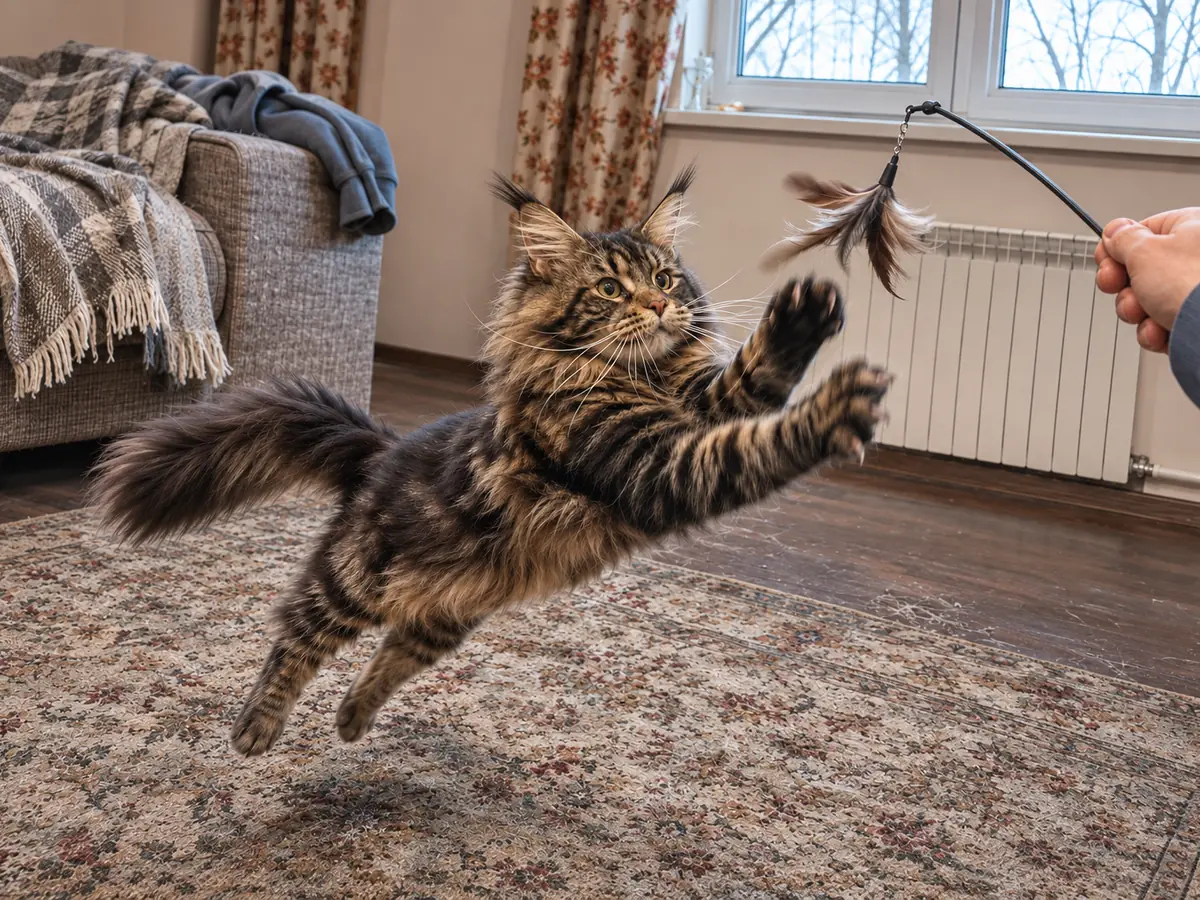
What a few days of notes can look like
Sun: back from five days away. Meets me at the door, follows me into every room, sleeps against my legs.
Mon, 5:50: pawing at my face before the alarm. Breakfast at 7 as usual. Ten minutes with the fishing-rod toy in the evening.
Wed: still climbs onto my lap in the evening, but naps on the chair again. Eating, grooming and litter tray all as usual.
Notes like these show when the clinginess started and what it lines up with: here, a trip and an early breakfast. If it doesn’t ease, or something else changes, the same notes help your vet see what’s different.
Questions people ask
Why is my cat so clingy lately?
Look back over the last few weeks: a trip, a new work pattern, colder nights, a later breakfast, or a cat now in their senior years. If nothing has changed, or the clinginess comes with changes in eating, sleeping or the litter tray, see your vet.
My cat is clingy but not affectionate. What does that mean?
A cat can cling without being relaxed. In the Oregon State study, some insecurely attached cats jumped into their owner’s lap and didn’t move, and showed stress signs such as a twitching tail and lip licking. If that sounds like your cat, start with a vet check, then look at what has changed at home.
Is a clingy cat a sign of illness?
It can be. Cats Protection says to speak to your vet if your cat becomes a lot clingier than usual, and that cats hide pain and tend to show it through small changes in behaviour. The cause may be something ordinary, such as hunger or time apart, but only a check rules out the rest.
Should I ignore my clingy cat?
Not completely. Give your cat play and fuss every day, at regular times. What the ASPCA suggests ignoring is demanding meowing, once you know their needs are met: walk away when it starts, and give attention once your cat is quiet. Cats left alone for long periods each day may be more likely to meow for attention, so look at how long they spend on their own too.
Do cats get clingier in winter?
They can. The RSPCA says cats look for cosy places to rest in cold weather, beside radiators, on blankets or snuggled up to you, and that they may sleep more in winter. A cat who wants your lap more on cold evenings may simply be after the warmth.
Sources and further reading
- Cats Protection — Why does my cat follow me around?
- Cats Protection — Does my cat have separation anxiety?
- Cats Protection — Signs of pain in cats
- Cats Protection — Cats at night
- Cats Protection — Neutering your cat
- International Cat Care — Stress in cats
- International Cat Care — Special considerations for senior cats
- PDSA — Cats in heat / coming into season
- RSPCA — Caring for cats in winter
- ASPCA — Meowing and yowling
- Cornell Feline Health Center — Cognitive dysfunction
- Oregon State University — Cats, like children and dogs, develop attachments to their caregivers, study shows (2019)
- Swedish University of Agricultural Sciences — Cats and owners interact more with each other after a longer duration of separation (PLOS ONE, 2017)