Lapka
Where to start
Some cats do struggle when they’re left alone, though separation anxiety is more common in dogs. Signs of separation anxiety in cats include lots of meowing, restlessness, hiding, refusing food, scratching the furniture and peeing outside the litter tray while you’re out. See your vet first, as these can have a medical cause. Then keep a steady routine, play before you leave, keep the goodbye short, leave toys and high places, and build up time alone from a few minutes.
Do cats get separation anxiety from their owners?
Some do, though it’s more common in dogs. Dogs are a social species and have to learn that being left at home is fine. Cats are more solitary and usually don’t mind some time on their own. They are also creatures of habit, so a sudden change can upset them: an owner who was home all day starts going out for long stretches. Cats Protection calls this separation-related frustration, similar to separation anxiety. It’s more likely in a cat who has never been left alone for long in their current home.
Ohio State University’s Indoor Pet Initiative says the cats who become anxious are some of those living as the only cat indoors and left alone for long periods. They tend to be unusually sensitive to their surroundings and may be very attached to their owners. Cats Protection adds that the trouble can be tied to one particular person leaving, even when someone else is still at home.
Signs of separation anxiety in cats
The signs show up when you leave or while you’re out. Cats Protection lists restlessness and not being able to settle, lots of meowing, being more startled than usual by noises, refusing food, hiding more than usual, toileting outside the litter tray and a lot of scratching at the furniture. In extreme cases there’s vomiting or diarrhoea. Any change like this can have a medical cause, so Cats Protection says to take your cat to the vet first.
Ohio State adds a few more: not eating or drinking while you’re away, grooming too much, destroying things, and a very excited greeting when you come home.
Most of this happens behind a closed door, so set up a camera to record your cat while you’re out. Then you can see what happens, and when.
Cat separation anxiety and peeing
Peeing in the wrong places came up often in a Brazilian survey published in 2020. Owners answered questions about 223 cats, and 30 of them (13.45%) showed at least one sign of a separation-related problem. Among those 30, destructive behaviour was reported most often (66.67%), then too much meowing (63.33%) and urinating in the wrong places (60.00%).
The places owners named included their bedroom floor and bed, their clothes, carpets, sofas, under the living-room furniture and the kitchen sink.
Peeing outside the tray can have a medical cause too, so see your vet before you treat it as anxiety.
Why your cat gets anxious when you leave
A sudden change in routine can set it off, such as going back to the office after months of working from home. Cats find sudden changes stressful, which is why they do better with meals, play and rest at regular times. A cat who hasn’t had much experience of being alone finds it harder still.
The Brazilian survey also linked these problems with having no access to toys and with no other animal living in the house. International Cat Care lists being confined indoors, being bored and having few places to hide among the things that can be very stressful for some cats.
How to help a cat with separation anxiety, step by step
Start with your vet, to rule out a medical cause. If your cat is healthy, work through these steps.
Keep a steady routine. Meals, playtime and rest at about the same times each day help your cat feel more relaxed. International Cat Care says being predictable and keeping daily routines is a great way to cut down stress.
Then show your cat that you leave and come back. Start with the shortest absence you can: step outside the front door for a few minutes and come back in. Build up from there, in small steps your cat is comfortable with. Fifteen minutes may not seem long to you, but for a cat who is frustrated at being left alone, it can be a long time.
If a change is coming, such as a return to the office, start preparing early. Cats Protection suggests leaving for five minutes at a time and building up gradually.
Play before you leave, and keep the goodbye short
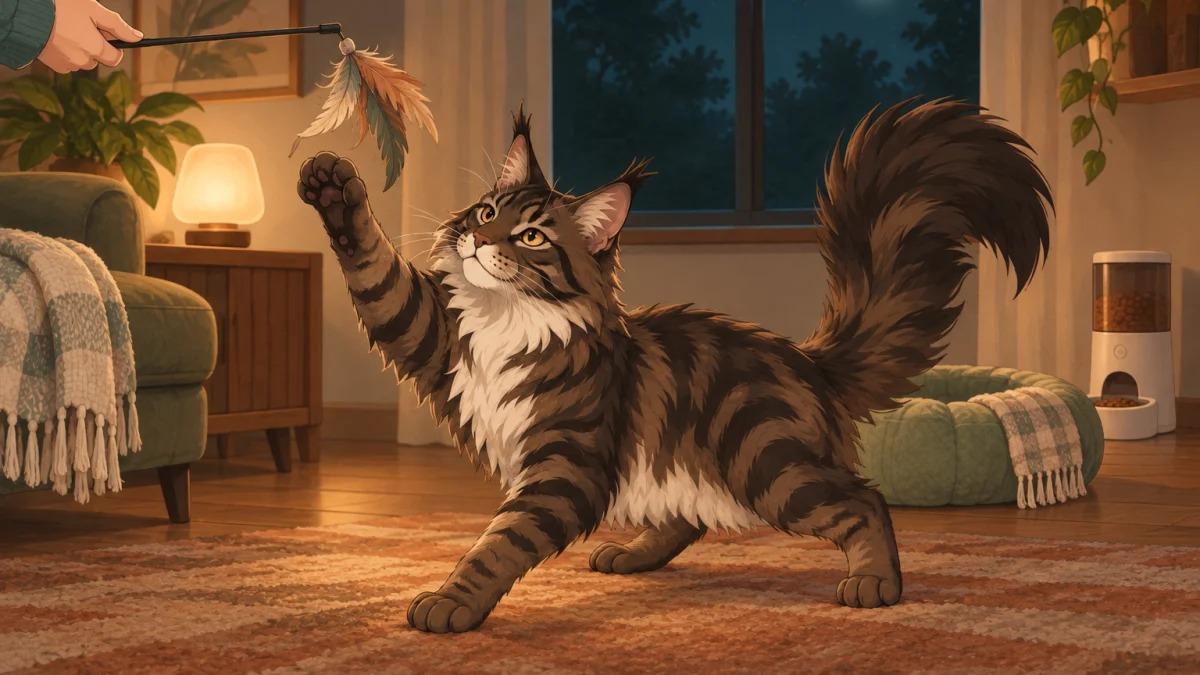
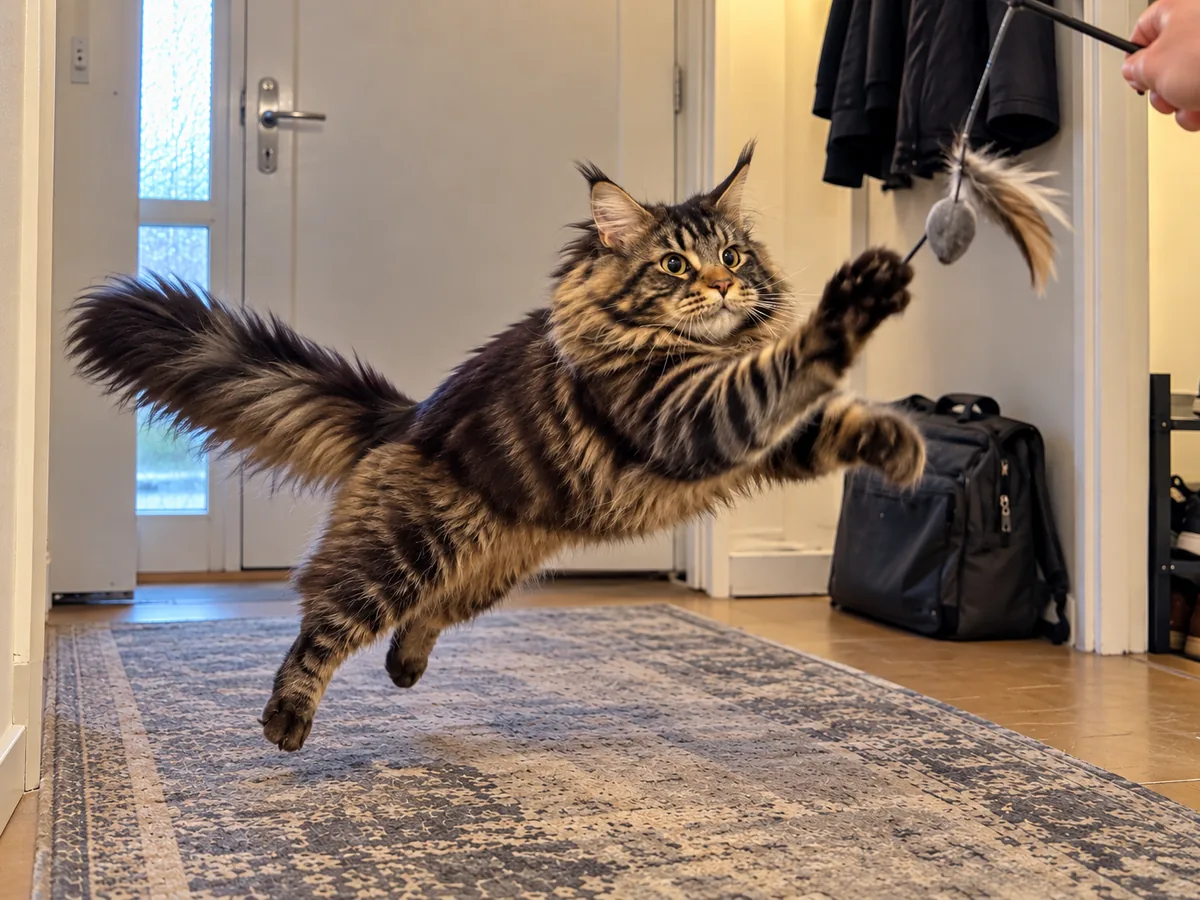
A game just before you go helps your cat burn off some energy. A fishing-rod toy works well, because cats love chasing it. Put it away out of reach afterwards. Ohio State suggests at least 10 minutes of play with your cat every day. If you’d like to use that time to teach a trick, a Lapka programme plans short sessions and adjusts them after each one.
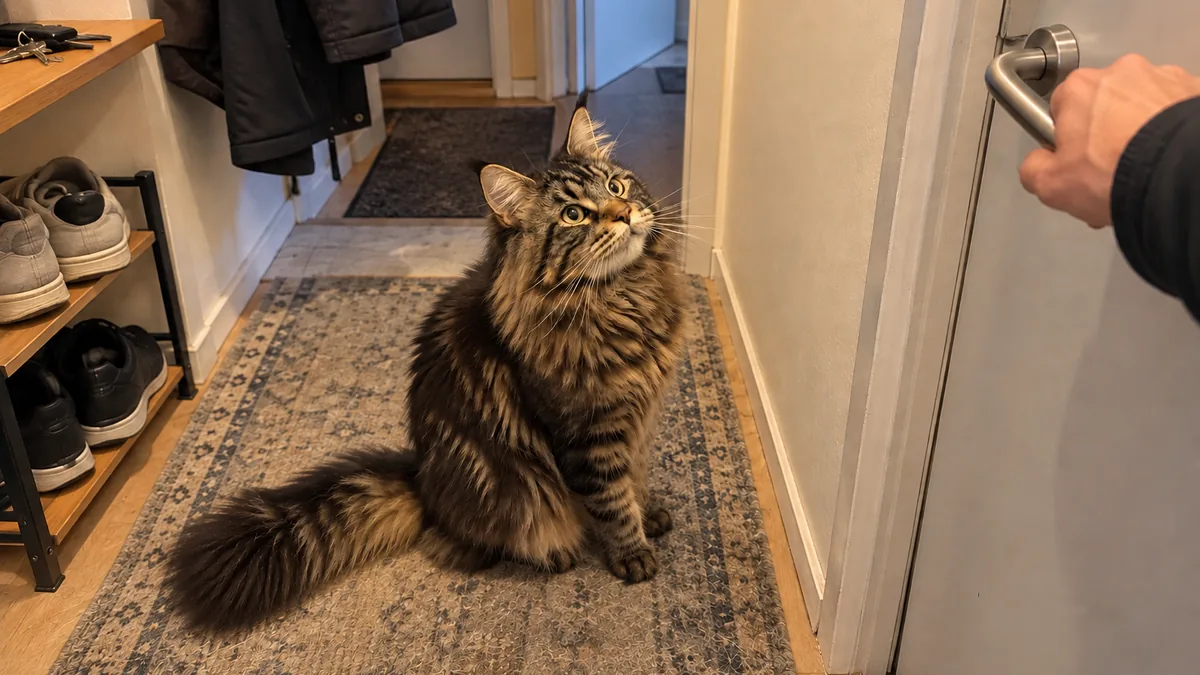
Then leave quietly. Hugs and kisses at the door may make you feel better, but Cats Protection says they can make your cat feel more stressed. Pick up your keys, say nothing special and go.
Things your cat can do while you’re out
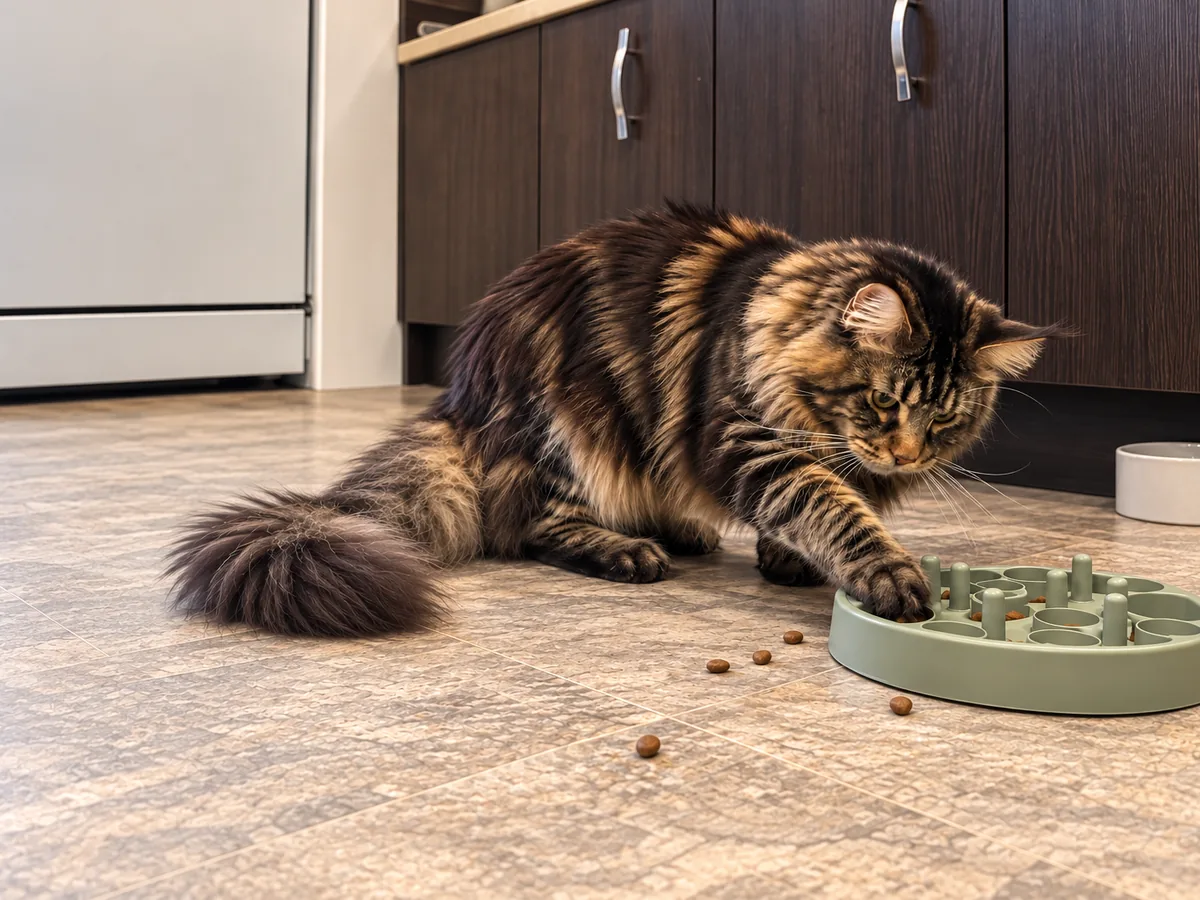
Leave your cat things to do that don’t need you: toys they can play with alone, such as ping-pong balls and catnip mice, cardboard boxes to explore or hide in, and a puzzle feeder for part of their food. Leave out nothing with string they could get tangled in. You can also hide some food around the house for them to find.
Give them somewhere high and somewhere to hide. A cat tree, a clear windowsill or a shelf lets them look around, and a window gives them something to watch. Hiding and getting up high help cats feel safe and calm.
The radio or TV on low may help some cats relax. Ohio State even suggests calling home and leaving a message for your cat. Cats Protection also mentions a pheromone diffuser. And leave enough food and plenty of fresh water for the whole time you’re away.
Cat separation anxiety at night
A cat who cries at night or wakes you at dawn isn’t always anxious. Cats are more active at dawn and dusk, and Cats Protection says waking you early in the morning is normal cat behaviour.
Some medical conditions make cats wake in the night, cry a lot or seem restless and disorientated. So don’t tell your cat off: they could be trying to tell you they’re unwell. Book a vet check first.
If hunger is behind it, give smaller, more regular meals during the day, or use an automatic feeder that opens during the night or early in the morning. Play a lot during the day too, so your cat uses up spare energy. Leave a clean litter tray and fresh water for the night, well apart from each other.
If you’re still not sleeping, ask your vet to refer you to a qualified cat behaviourist, who can find out why your cat wakes at night.
How long can you leave a cat alone?
Most cats are fine on their own for the day or overnight. Cats Protection puts the maximum at around 12 hours, and says that’s fine now and then but not as a regular thing. Young kittens, elderly cats and cats with medical issues need checking on more often.
If you’ll be away for more than 12 hours (or less, if your cat has special needs), or out for long periods several days running, get a cat sitter, a friend, a relative or a neighbour to look after your cat at home, or book a cattery.
Young kittens should be left for a few hours at most. Get a kitten used to it gradually: five to 10 minutes alone a few times a day, then longer over a few days and weeks. Check on them at least every few hours until they’re fully grown.
Never punish your cat for what happened while you were out
Coming home to a puddle or a shredded cushion is hard, but don’t shout. The RSPCA says cats are very unlikely to understand punishment and can become more nervous or scared. International Cat Care adds that a punished cat may see their owner as unpredictable and avoid them, or even scratch or bite to defend themselves.
Clean up quietly, and write down what happened and when. Those notes help your vet.
When to see a vet or a behaviourist
Take your cat to the vet when you notice a change in their behaviour, because there could be a medical cause. International Cat Care lists signs of long-term stress that are easy to miss: hiding, playing less, jumping at the slightest noise, soiling indoors, and becoming more dependent on their owner or more withdrawn.
If your cat is healthy and still struggles after you’ve added toys, high places and daily play, go back to your vet for advice. They can refer you to a qualified cat behaviourist.
What a camera showed in one week
Mon, 8:10: I leave for work. Cries at the door for about ten minutes, then lies on the windowsill.
Wed: ten minutes with the fishing-rod toy before I go, puzzle feeder down, no goodbye. Two minutes at the door, then busy with the feeder.
Sat: I’m home all day. Eating, grooming and litter tray all as usual.
Notes like these show when the trouble starts and what changes it. Here the crying was shorter on the day with play and a quiet exit. Take the notes and the clips to your vet.
When it does not go to plan
How do you know if a cat has separation anxiety?
Look at when it happens. Signs such as crying, hiding, refusing food or peeing outside the tray show up when you leave or while you’re out. A camera recording while you’re away shows you what’s going on. Each of these signs can have a medical cause too, so see your vet before you decide it’s anxiety.
Do cats get separation anxiety like dogs?
Not usually in the same way. Dogs are a social species and have to learn to be left alone, and separation anxiety is more common in them. Cats tend to cope better, but they can get bored and frustrated when left for long periods, and a sudden change in routine can bring on separation-related frustration.
Does my cat miss me when I’m gone?
In a Swedish study of 14 cats, each one was left alone at home once for 30 minutes and once for 4 hours. The cats seemed to cope well both times, but after 4 hours they purred more and stretched more when their owner came back. The researchers read this as the cats seeking more contact after a longer absence.
Should I get a second cat to keep my cat company?
Think carefully first. The Brazilian survey linked separation-related problems with no other animal living in the house, but International Cat Care says a large share of a cat’s stress comes from other cats. Cats are territorial and not naturally sociable like dogs, so a newcomer can be seen as a threat. Toys, high places and daily play are an easier place to start.
Can I leave my cat alone for a weekend?
Not on their own. Cats Protection puts the maximum at around 12 hours. For a weekend away, get a cat sitter, a friend or a neighbour to look after your cat at home, or book a cattery.
How do I calm a cat with separation anxiety at home?
Keep the day predictable, play before you go, leave quietly, and give your cat toys, a puzzle feeder, high places and somewhere to hide. Build up the time alone from a few minutes. If nothing changes, see your vet, who can refer you to a qualified cat behaviourist.
Sources and further reading
- Cats Protection — Does my cat have separation anxiety?
- Cats Protection — How long can you leave a cat alone?
- Cats Protection — Cats at night
- International Cat Care — Stress in cats
- RSPCA — Understanding your cat’s behaviour
- The Ohio State University, Indoor Pet Initiative — Separation anxiety
- PLOS ONE — Identification of separation-related problems in domestic cats: a questionnaire survey (2020)
- PLOS ONE — Cats and owners interact more with each other after a longer duration of separation (2017)