Lapka
The short answer
Most cats who are scared of their owner are cautious by nature, met too few people as kittens, or have learned to link you with something unpleasant, such as being shouted at or a hand on the tummy. A sudden change can mean pain, so a vet check comes first. Trust comes back on the cat’s terms: sit low and quiet, let them come to you, use treats and a rod toy, and never punish.
Why is my cat scared of me?
Usually it isn’t about anything you did today. Cats Protection, the UK cat charity, gives three common reasons for a timid cat. Genetics, because some cats are naturally more cautious than others. Too little contact with people, particularly in the first eight weeks of life. And bad experiences: a cat who has been harmed or scared in the past may be more wary of people.
International Cat Care, a cat welfare charity, explains why fear so often looks like running away. Cats assess danger quickly, and their response to perceived danger is usually to escape rather than stay and fight. A cat who wasn’t shown the full range of normal home life early on may flee from even the most harmless things. Some cats stay anxious even when they were socialised young.
Why is my cat scared of me all of a sudden?
There’s usually a reason, even if it’s a subtle one, says Cats Protection. The common ones on its list are pain, a fright, a change at home, and something or someone your cat has learned to avoid. Think carefully about what could have scared them recently.
A fright can be something you never saw: a neighbour’s cat chasing them off, drilling, fireworks. It can also be you. Cats Protection’s example is losing your temper and shouting at your cat for scratching the carpet. Change counts too: a new baby, a new cat or other pet, moving home, redecorating. Make any change as gradual as you can.
If your cat has started avoiding one particular person, they may now link that person with something negative. Cornell Feline Health Center lists, among the triggers of fearful aggression, an experience a cat associates with unpleasant events, such as a trip to the vet. So look at what happened in the days just before the change.
Could it be pain? When to see a vet
It could, and it’s the first thing to rule out. Cats Protection says a cat in pain may simply hide away and avoid any human contact. It’s a habit kept from their ancestor, the African wildcat, which hid when sick or injured to be less vulnerable to predators. If your cat shows a sudden change in behaviour, Cats Protection says it’s always a good idea to have them checked by the vet.
International Cat Care says any behaviour change, particularly a dramatic one, shouldn’t be ignored. Arrange a thorough examination, because the behaviour may be a sign of illness or pain. If no physical cause is found, your vet will refer you to a qualified clinical animal behaviourist.
Battersea describes what fear that goes on for a while can look like. A cat may avoid certain parts of the home at particular times of day, or use the litter tray and food bowl only overnight or when people are out. They may overgroom or stop grooming as much, hide and sleep more, and eat, play and explore less. Tell your vet about any of these too.
Why is my cat scared of me and runs away?
Running is a cat’s first choice. Battersea says a cat faced with something frightening will most likely remove themselves from the situation: they turn and run, or move very cautiously while keeping an eye on the threat. Either way they head for the nearest safe spot, usually a hiding place or somewhere up high.
A frightened cat usually turns to fighting only when running isn’t possible, for example when they feel trapped. The RSPCA says a cat who is scared with no place to escape and hide may become aggressive. So don’t follow your cat or corner them. Cats Protection warns that following a cat can make them feel threatened, especially if you end up accidentally cornering them.
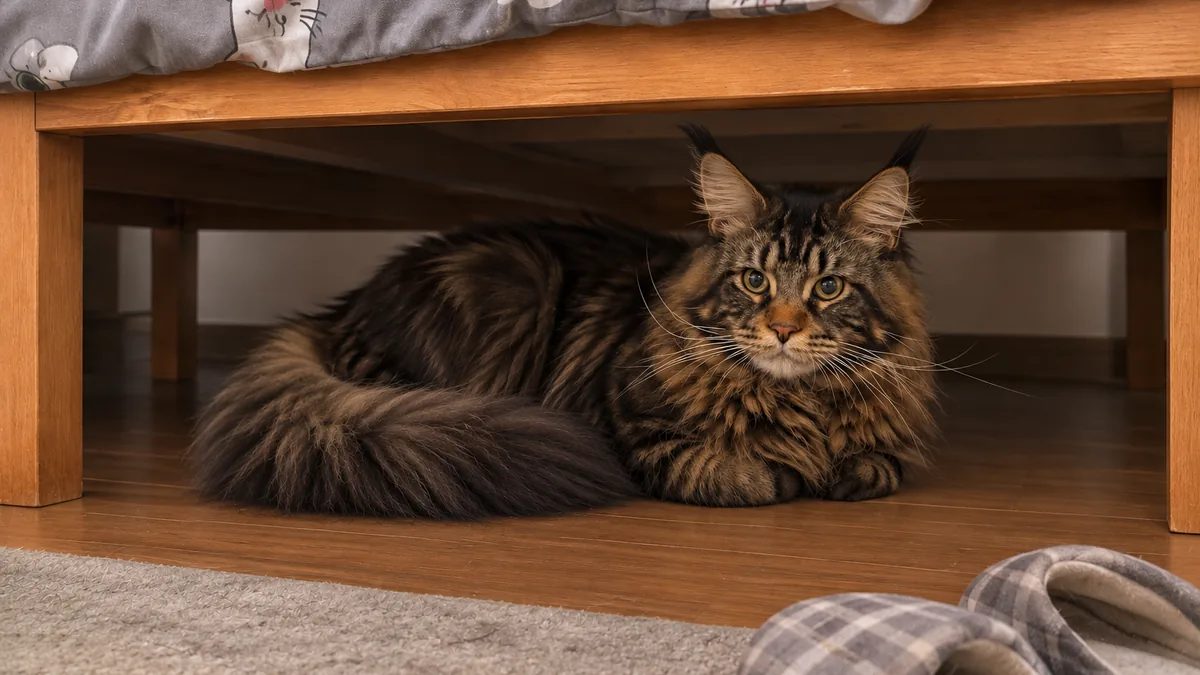
Give your cat escape routes instead: a cardboard box, the space under a bed, a free shelf. Cats Protection says cats de-stress more quickly if they can hide, preferably somewhere high and dark, and that if your cat disappears under a bed when a stranger comes in, it’s best to leave them to it.
Why is my cat scared of me when I stand up?
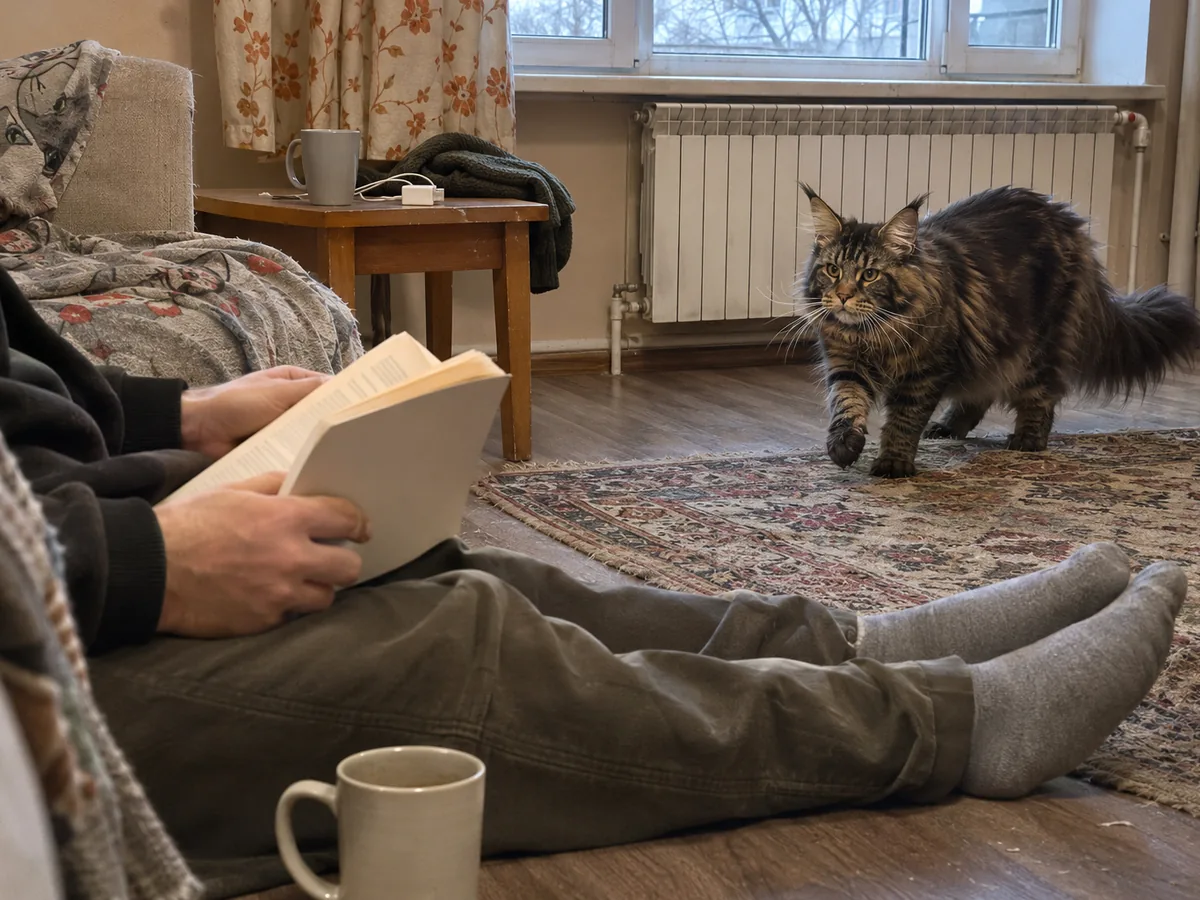
Seen from the floor, a standing person is huge. Cats Protection says a human towering over them is going to be quite frightening for a cat, and suggests sitting on the floor or a chair nearby so you look less scary. Its tips also say to get down to your cat’s level, or at least not to lean over them.
How you move matters as much as how tall you are. Loud noises and sudden movements may spook a nervous cat, so get up slowly and quietly, and don’t sneak up on a cat who hasn’t seen you. Cats Protection also suggests announcing yourself before you walk into a room, because waking a cat from a nap unexpectedly could frighten them.
If it’s your feet your cat keeps an eye on, that may be nothing personal. International Cat Care says a nervous cat may seem scared of feet simply because that’s the part of your body closest to them.
Why is my cat scared of me but not other people?
Usually something has happened between the two of you that hasn’t happened with anyone else. Cats Protection says a cat who suddenly avoids one person may link that person with something negative. Its example is someone who keeps touching the cat’s tummy when the cat doesn’t want it. The fix it suggests is just as plain: stop.
Think about the moments you react. Cats Protection says never to raise your voice to a cat, whether they’re clawing your carpet or pouncing on your toes, because you’ll simply scare them and lose any trust you’ve built. It also says forcing your affection on a cat only makes them stressed, and a cat who stays put isn’t necessarily enjoying the fuss.
So do what a calm visitor does, which is very little. International Cat Care suggests letting a nervous cat move around the home without being the focus of attention, and Cats Protection says to wait for your cat to approach you first.
Signs your cat is scared of you
Fear shows in the face first. Battersea describes an anxious cat with very wide, rounded eyes and very dilated pupils, and ears flattened down to the sides or, in extreme cases, pressed back so far you can’t see them. Some cats briefly lick their nose, sometimes several times.
The body goes low and tight. A hiding or frozen cat is likely to be tense, hunched or crouched, pressed low to the ground with all four feet planted underneath, ready to escape, or to swipe with a paw if things escalate. Cornell adds whiskers flattened or pressed down onto the face, and a tail closely wrapped or tucked under the body. Cats Protection’s list includes running away, retreating to hiding places, and cringing and cowering.
When you see these, stop and give your cat room. The ASPCA’s rule of thumb for a cat in these postures: don’t touch them, don’t try to reassure them, and don’t punish them.
How to bond with a new cat or a shy cat
A new cat who hides at first is normal. International Cat Care says a new cat or kitten may be quiet and wary for the first few days or weeks while they get used to their new home. Some stay very fearful even after a gentle welcome, and run and hide as soon as someone comes in or there’s a sudden noise.
Cats Protection’s five ways to help a shy cat settle into a new home: give them places to hide, and a cardboard box is ideal; feed them and spend time with them at the same times each day; learn their body language; be calm and gentle around them, and teach young children to be the same; and take your time to earn their trust.
International Cat Care also advises against tiptoeing. Moving quietly and speaking in hushed voices creates an air of tension that may make a cat more anxious. Acting normally and being relaxed works better.
How to bond with a cat that is scared of you, step by step
Start by being boring. International Cat Care suggests giving a nervous cat a feeling of invisibility: no direct eye contact, no talking to them and no touching unless your cat starts it. Cats Protection suggests sitting quietly near your cat and reading a book or having a nap, ideally while they eat, or giving a small treat so they link you with something good.
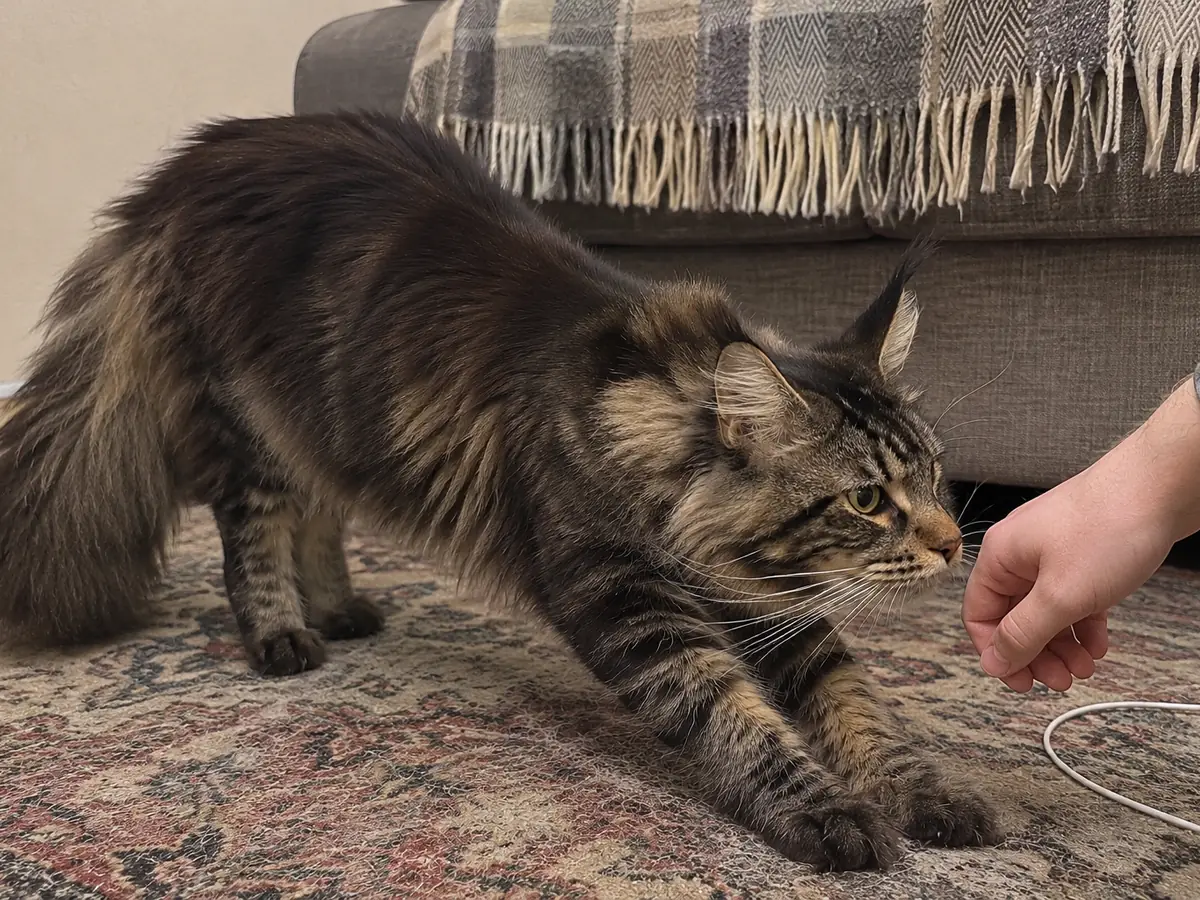
Then go one step at a time, the way Cats Protection’s volunteers work with frightened cats in its care. First, sit nearby and ignore the cat. If they seem comfortable, make eye contact and blink slowly. Next, talk to them quietly. If they’re still calm, hold out a hand and see if they come forward to sniff it. Only once they come forward regularly, try a gentle head rub or chin stroke. If the cat isn’t ready for a step, go back to the beginning.
For the slow blink, Cats Protection says to narrow your eyes until they’re half open, then turn your face away slowly. When you hold out a hand, keep it a few inches to the side of your cat. If their weight is shifted onto their front or back legs, they may still be unsure. A face rubbed against your hand is a good sign.
Treats help at every step. International Cat Care suggests small amounts of meat, fish or other tasty treats, and once your cat eats treats scattered near you, offering them on the palm of your outstretched hand. Cats Protection suggests rewarding each approach with a treat, straight away at first and then with a little longer between approach and treat, working up over a few weeks to stroking your cat once or twice before the treat.
Play from a distance
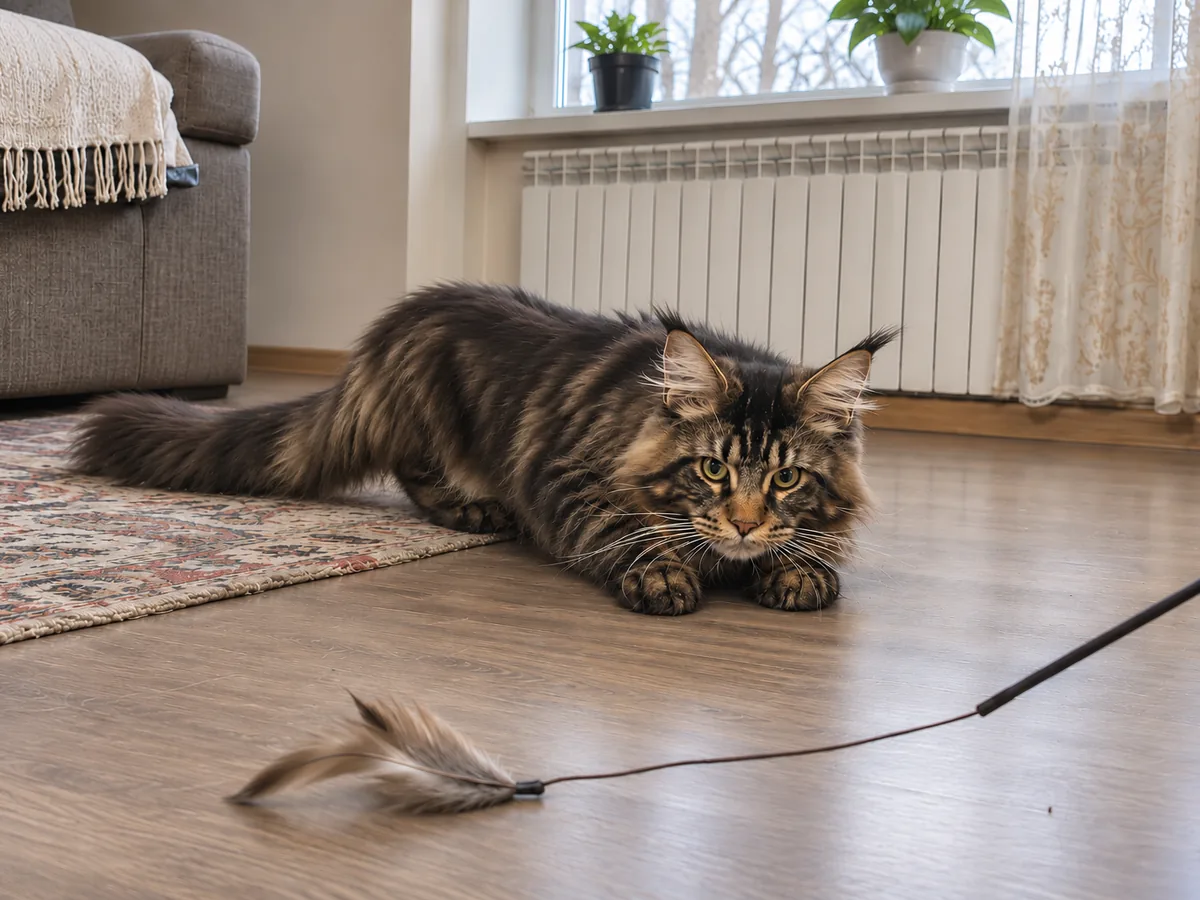
Play lets you be near a scared cat without touching them. International Cat Care says a toy on a string and a long rod lets a cat enjoy the game fully without you being too close. Cats Protection suggests moving a fishing rod toy slowly across the floor a metre or two away to see if your cat stalks it, or slowly rolling a ping pong ball towards them.
Keep your hands out of it. Cats Protection says never to use your bare hands to play, because cats easily confuse hands with prey. Skip the laser too: teasing a cat with toys like lasers can lead to a lack of trust, it says.
If you’d like a plan for these short daily games and steps, a Lapka programme gives you one short lesson a day and adjusts it after each one.
What not to do with a scared cat
Don’t shout and don’t punish. The RSPCA says a cat is very unlikely to understand and can become more nervous or scared. Cornell says any type of physical punishment can increase a cat’s fear or anxiety.
Don’t pull your cat out of a hiding place, and don’t make a fuss of them when they walk into a room. International Cat Care says both make you appear more threatening, and that contact should be started by your cat, so they feel in control. Losing your temper or forcing contact too quickly will reinforce your cat’s old fears, it adds.
Don’t reach for the tummy. A cat who rolls over is showing trust, Cats Protection says, and stroking the tummy then would be the ultimate betrayal. Stroke the head or chin instead.
Two weeks of notes with a cat who ran from me
Day 1: sat on the floor with a book for 15 minutes. She watched from under the desk and didn’t come out.
Day 4: she came out to eat treats I’d scattered a metre away. I didn’t look at her.
Day 9: a slow blink back. She sniffed my hand, held low and to the side, then walked off. I let her go.
Day 14: she took a treat from my palm.
Notes like these show which step your cat is on, and which step came too fast when they hide again.
Questions people ask
How long does it take for a scared cat to trust you?
There’s no set answer; Cats Protection says it’s different for each cat. A confident cat may become your friend in minutes, while a nervous one may take several weeks or months. One of its volunteers spent about a week just sitting and reading near a frightened cat, and it was almost three weeks before he showed a lot more interest in her visits.
Will my cat ever stop being scared of me?
Some cats never fully do. Cats Protection says some cats may never feel comfortable around you, and a cat who had little or no contact with people as a kitten will stay fearful of people for good. Even so, a cat who never enjoys being stroked may still play games with you.
Is my cat scared of feet because they were mistreated?
You can’t tell. International Cat Care says it’s impossible to say whether a particular cat was ill-treated as a kitten, and more likely that they are nervous because of their genetics, too little early socialisation with people, or both. Feet may worry them simply because they’re the part of you closest to them.
Should I comfort my cat when they’re scared?
Not while they’re frightened. The ASPCA says not to touch, try to reassure or punish a cat in a fearful, defensive posture, and Cornell says a lack of attention is the better way to handle fearful aggression. Step back, keep their hiding place free, and let them come out when they’re ready.
Does slow blinking help a scared cat?
It’s a good start. Cats Protection says the most important thing is not to stare, because a cat can see that as a threat. Blink slowly instead and turn your head slightly to the side. If you’re lucky, your cat will do the same back; Cats Protection says the slow blink is thought to be a sign of trust to cats.
Sources and further reading
- International Cat Care — Anxious cats
- Cats Protection — Shy cats
- Cats Protection — Why has my cat suddenly become shy?
- Cats Protection — How to make friends with a nervous cat
- Cats Protection — Helping a nervous cat overcome their fears
- Cats Protection — 10 tips to get a cat to like you
- Cats Protection — Cat body language
- Battersea — Cat anxiety
- RSPCA — Cat behaviour
- Cornell Feline Health Center — Feline behavior problems: aggression
- ASPCA — Aggression in cats