Lapka
Where to start
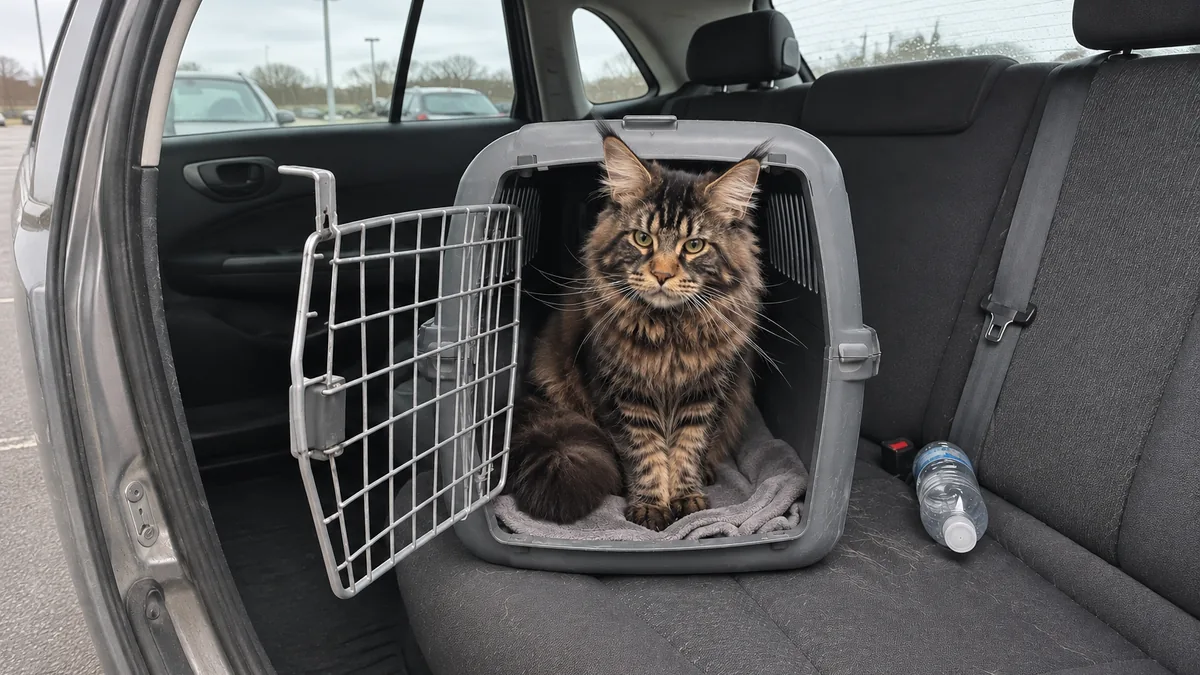
Travel with your cat inside a sturdy carrier, never loose, held firm on the back seat or on the floor behind a front seat. Get your cat used to the carrier at home and to the parked car before the real trip. On the day, limit food for a few hours, cover the carrier and drive smoothly. On a long drive, Cats Protection suggests a break every two to four hours.
Why car trips are hard for cats
Cats Protection says most cats find travelling stressful. At home everything smells and sounds familiar; in a car the smells, the noise and the movement are all new. For some cats the sight of the carrier coming out is enough, because it means a trip is coming.
Often the carrier makes a bad first impression. PDSA points out that many kittens first meet one on the way to their new home, taken from everything they know, and the carrier stays linked with that. So keep car trips to the ones you need, like the vet or a move, and use the time before them to practise.
Choose a carrier that fits
Pick a sturdy plastic carrier. Battersea says plastic is safer than fabric or cardboard, more comfortable than wire mesh and much easier to clean. It should be tall enough for your cat to sit and stand up, and long enough to lie down comfortably. A big cat such as a Maine Coon may need an extra-large one.
Doors at the front and in the roof, and a top half that lifts off, make the carrier easier to train with and easier at the vet. Solid sides with ventilation slits give your cat somewhere to hide, and you can post treats through the slits. Cats Protection doesn’t recommend backpack carriers: most are too small for a cat to stand up, lie down or turn around comfortably, and the up-and-down motion of walking makes them feel unstable.
One cat per carrier, always. Battersea warns that even cats who get on well could hurt each other when they’re shut in a small space under stress.
How to get your cat used to the carrier
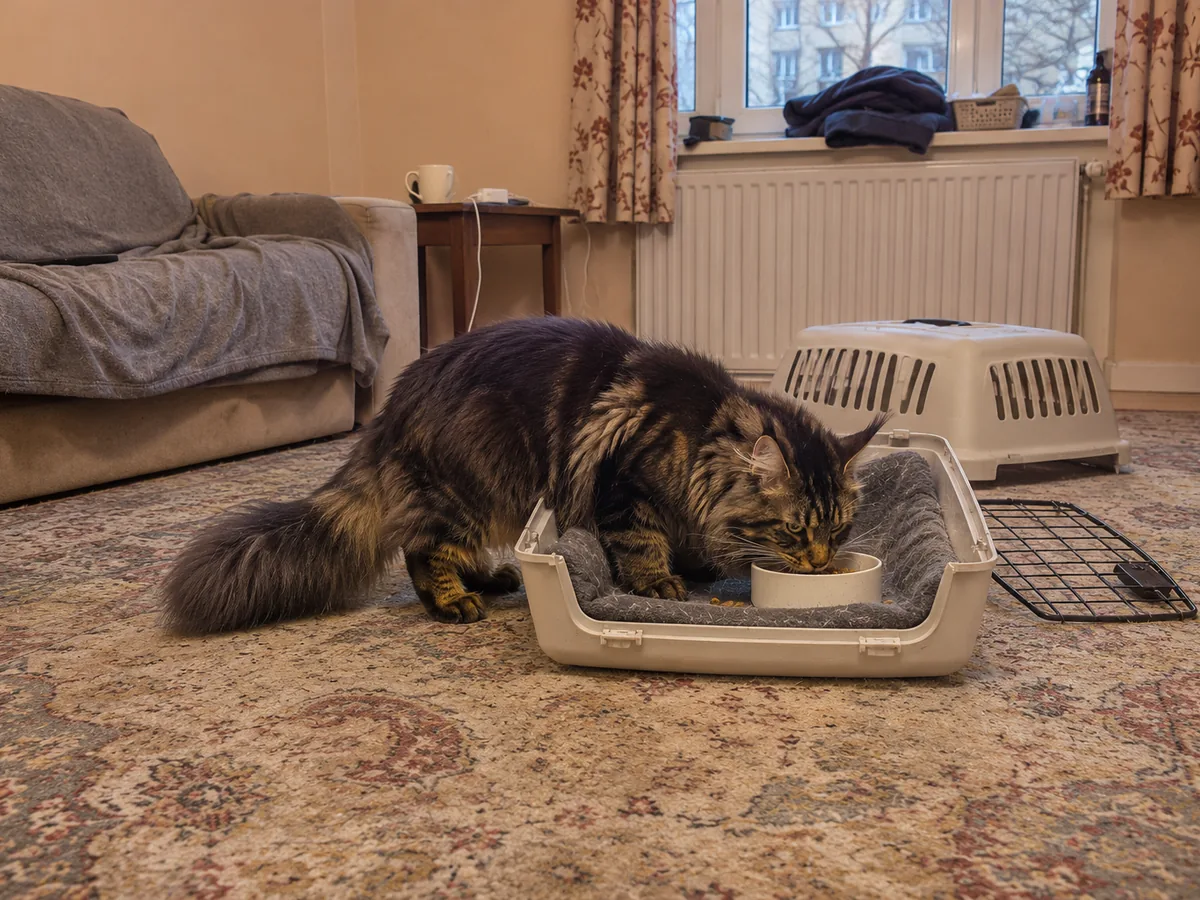
Start at least a few days before the trip, never on the morning of it. Leave the carrier open in a room where you spend time, with soft bedding inside. If your cat keeps away from it, take the top half off, if yours comes apart.
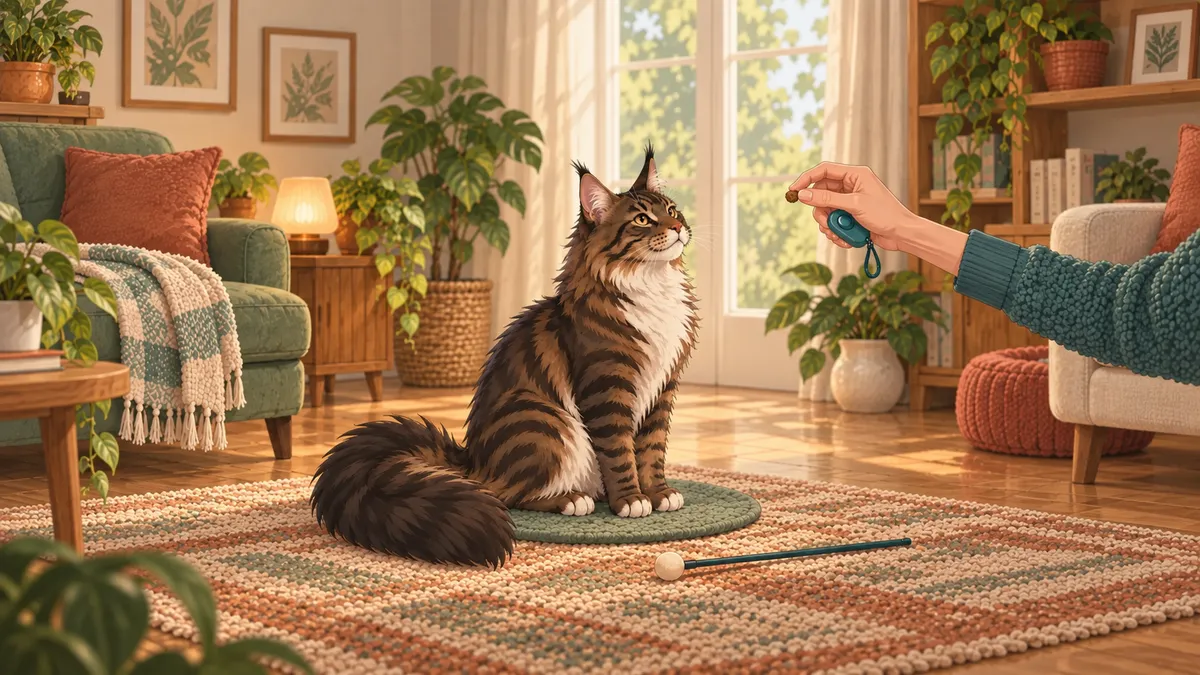
Then bring in food. PDSA’s way: scatter treats and put the food bowl near the carrier, at a distance where your cat still eats happily. Over a few days, move the food closer and closer, then inside. When your cat walks in on their own with no food there, toss them a small treat.
Next comes the door. Battersea suggests closing it for a few seconds with your cat inside, then opening it and giving a treat, and building up from there. Once the door can stay shut, Cats Protection suggests lifting the carrier, so being carried stops being a surprise. Move on only when your cat seems completely comfortable, go back a step when they don’t, and never push them in.
Between trips, leave the carrier out where your cat can reach it. Battersea says some cats start sleeping in it. Lapka has a programme built on this, with the carrier as the place dinner happens: one short step a day, adjusted after each session.
Get your cat used to the car before the trip
Then take the practice to the car. PDSA suggests starting with the parked car and sitting in it with your cat, then short trips, then longer ones, and ending each with something good, such as a treat. Its carrier guide says the food steps work with the carrier inside the car too.
Make the first drive short and the next one a little longer. That’s how Cats Protection says to introduce a cat who hasn’t been in a car before. Starting young helps: PDSA says pets used to the car from a young age are much more likely to be relaxed in it.
How to travel with a cat in a car: on the day
Close the cat flap, windows and doors before you bring out the carrier, so a nervous cat can’t slip away. Unless your vet has told you otherwise, Cats Protection suggests limiting food for a few hours beforehand, to avoid vomiting and accidents on the way. Line the carrier with a washable towel and add a blanket that smells of home.
Your cat stays in the carrier for the whole drive. A loose cat can distract you and cause an accident, and in the UK the Highway Code tells drivers to make sure animals are suitably restrained.
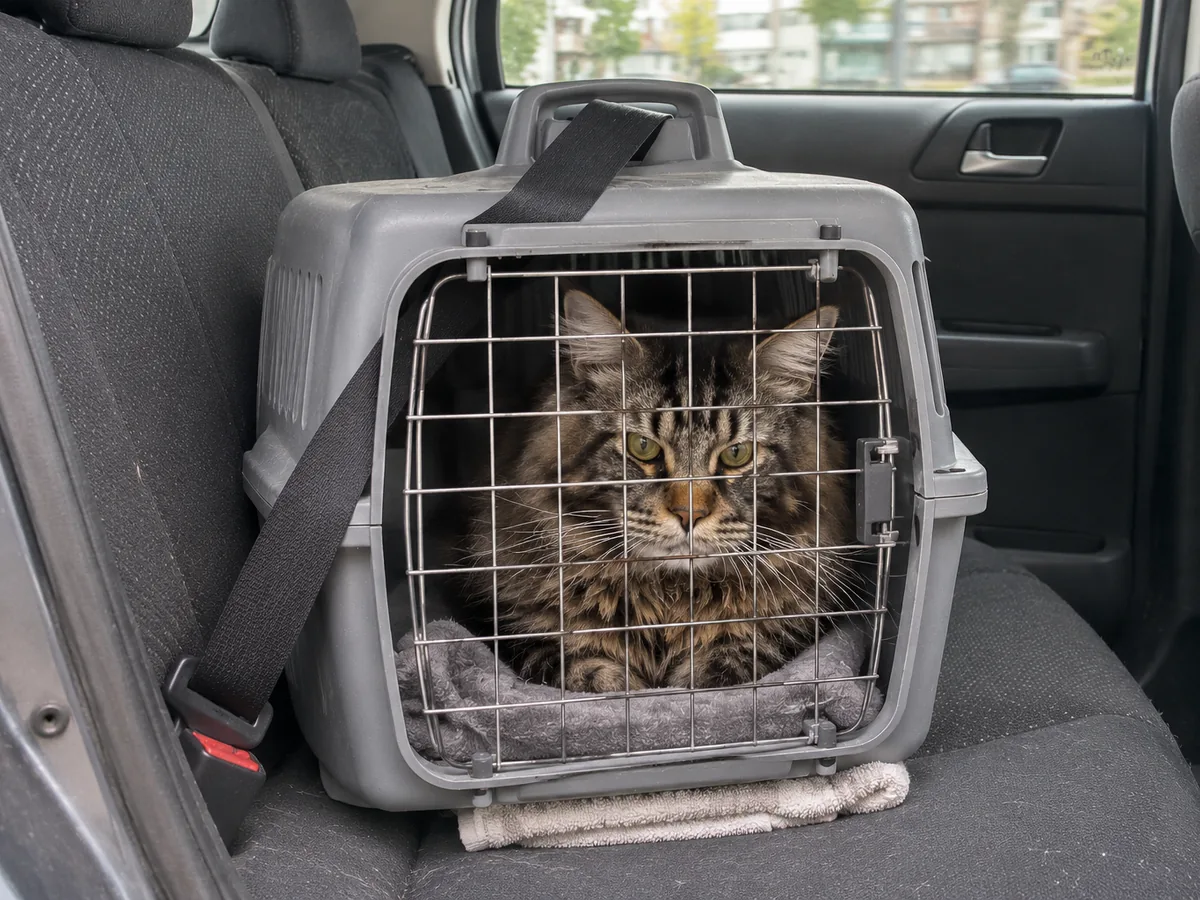
Where the carrier goes depends on whom you ask. Cats Protection puts it upright on the back seat, fastened with the seat belt. Battersea threads the belt through the carrier’s handle and puts a rolled-up towel underneath if the seat slopes. The Feline Veterinary Medical Association in the US advises the floor behind the driver’s or passenger seat instead, and a seat belt only on a carrier that is crash-test certified, because a belt may crush one that isn’t.
Take out strong air fresheners and keep the car about as warm as your home, with the heating or air conditioning not blowing straight at your cat. For a nervous cat, Cats Protection says a pheromone spray can be used inside the carrier around 15 minutes before you set off.
Cat crying in the car: how to calm them
Your cat may be loud and meow a lot. Cats Protection says excessive meowing is a sign of stress, and that your cat should settle down eventually. Talk to them gently now and then, and give a treat when the journey is over.
Cover the carrier with a light blanket or sheet. Battersea says many cats find the trip less stressful when they feel hidden, and a cover cuts out what’s going on past the windows. Make sure air still gets in.
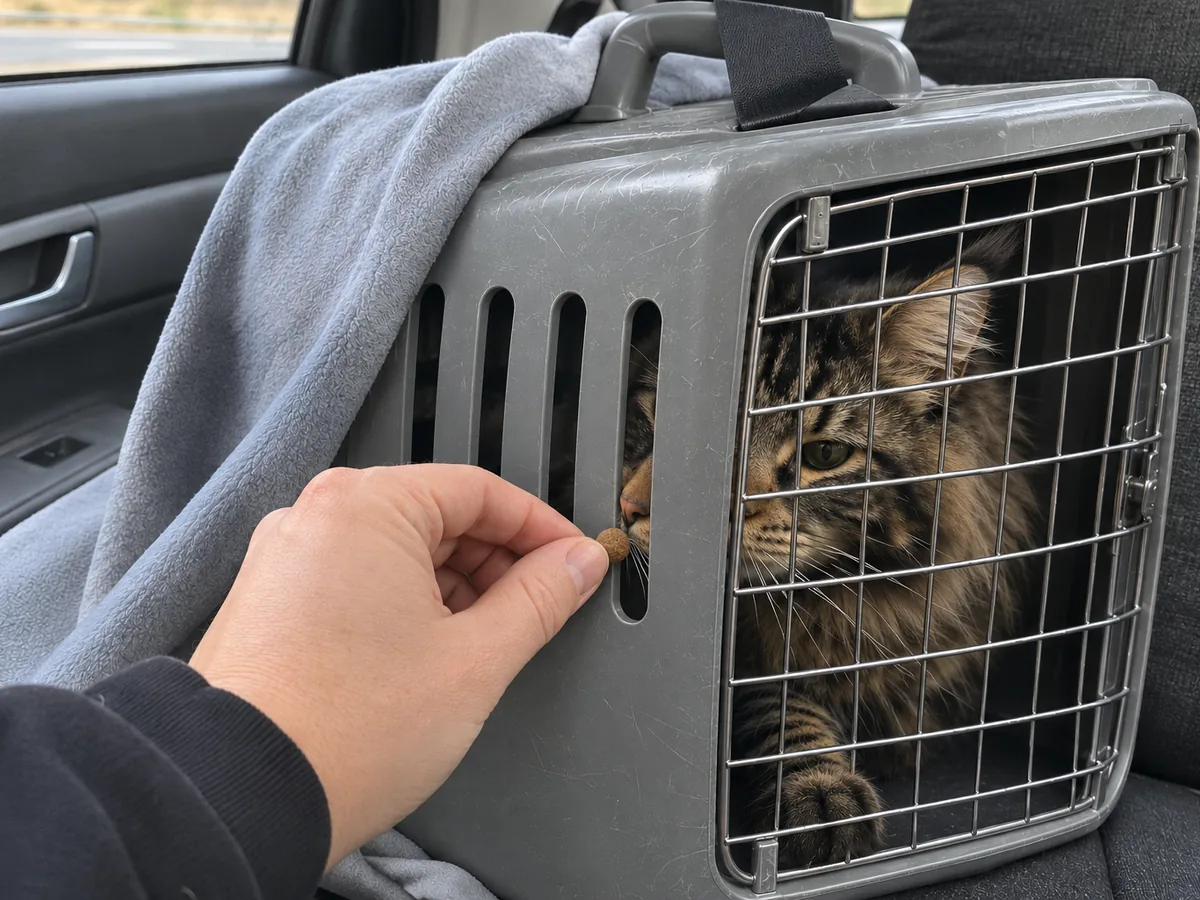
Drive smoothly: no sharp turns, quick starts or sudden braking. Skip loud music, though Battersea says quiet classical music may help cover the traffic noise. If your cat isn’t prone to car sickness and loves food, a passenger can post a treat through the side slits every so often.
Crying that suddenly gets much louder, with signs of wanting out, can mean your cat needs the litter tray. More on that below.
How to travel with a cat in a car long distance
Before a long drive, book a routine vet check to make sure your cat is healthy for travel, and plan the route and the stops in advance. Cats Protection suggests a break every two to four hours and, if possible, no more than four hours on the road a day, with a room to let your cat out in for the night.
Pack the carrier with soft bedding, food and bottled water, bowls, a litter tray with familiar litter and waste bags, puppy pads to line the carrier, pet-safe cleaning wipes and a few toys.
Never leave your cat alone in the car, especially in warm weather. PDSA says that when it’s 22°C outside, the inside of a car can reach 47°C within an hour. The back seat can heat up very quickly, especially for a cat in a carrier, so keep the air moving, and in summer drive in the early morning or late evening, when it’s coolest.
The litter box on a long car trip
A healthy cat pees two to four times a day and poos about once a day, on average, Cats Protection says. A car is stressful, so your cat might hold it in. Sometimes they can’t, and need the tray right away.
Don’t keep letting your cat in and out of the carrier. At a break, with the car doors and windows shut, put the tray right next to the carrier and let them use it there. A puppy pad under the blanket deals with an accident on the way.
Panting, drooling or vomiting: when to call the vet
Car sickness is common in cats, and Cats Protection says its most common cause is the stress of travel. The signs it lists are fast breathing or panting, a lot of lip licking and drooling, more meowing, vomiting, diarrhoea, and lethargy. If you see them, let your vet know. They can examine your cat to rule out a health problem, or suggest ways to manage the travel nerves.
In a warm car, stop. PDSA says that if your pet starts breathing heavily or looks warm, you should stop for a while and let them cool and calm down. If your cat is car sick even on an empty stomach, ask your vet whether medication could help.
Battersea says to talk to your vet if car journeys leave your cat very distressed or unwell: vomiting, peeing or pooing in the carrier. Training takes some work and patience, Cats Protection says, but over time your cat should become more comfortable on trips.
What three weeks of notes can look like
Week 1: carrier open in the living room, top half off. Day 4, eats breakfast just inside it. Day 6, naps in it.
Week 2: door shut for 5 seconds, then 30, a treat each time. Sat in the parked car for ten minutes, ate treats in the carrier.
Week 3: drive round the block. Cried for two minutes, then quiet under the blanket. Next day, 15 minutes. Friday, the vet: quiet after the first junction.
Notes like these show which step your cat is on and where to go back to. If the crying or drooling gets worse instead of better, your vet can see when it started.
When it does not go to plan
Can I let my cat out of the carrier in the car?
No. Cats Protection says to keep your cat in the carrier at all times while you drive, because a loose cat can distract you and cause an accident. PDSA adds that in a crash a loose pet could seriously hurt you and your passengers. At a break, keep the car shut and put the litter tray next to the carrier.
Should I feed my cat before a car journey?
Not right before. Cats Protection suggests limiting food for at least a few hours before a long journey, unless your vet has told you otherwise, to avoid vomiting. PDSA says a pet who gets car sick needs plenty of time to digest a meal, or can eat after the journey instead.
Why does my cat cry in the carrier?
Usually stress. Cats Protection lists loud, excessive meowing as a sign of it, and says your cat should settle down eventually. A cover over the carrier and a calm voice help on the way, and practice at home makes the next trip easier. Crying that suddenly gets louder, with signs of wanting out, can mean a toilet stop.
Is it normal for a cat to pant in the car?
It’s a sign to take seriously. Cats Protection lists fast breathing or panting among the signs of car sickness, and says to let your vet know. If the car is warm, stop, open the windows and let your cat cool and calm down, as PDSA advises.
Can two cats travel in one carrier?
No. Cats Protection says every cat should have a carrier to themselves, however loving they are with each other. Battersea warns that being shut together in a small space under stress could lead to injuries.
How do I get a cat into a carrier when they won’t go in?
For a cat who won’t go near the carrier, Cats Protection describes a towel wrap: come from behind, drop a blanket over your cat in one quick movement, head included, scoop them up and put them straight in, then cover the carrier. Battersea says lowering a wrapped cat through the roof door is probably the easiest. Cats Protection calls the wrap a short-term or emergency method, not one to rely on; training is what makes the next trip easier.
Sources and further reading
- Cats Protection — Travelling with your cat
- Cats Protection — How to choose and use a cat carrier
- Battersea — Travelling with cats
- PDSA — Safe car travel for pets
- PDSA — Teaching your cat to love their carrier (PDF)
- Feline Veterinary Medical Association — 2025 Transportation of Cats in Motor Vehicles Position Statement