Lapka
The short answer
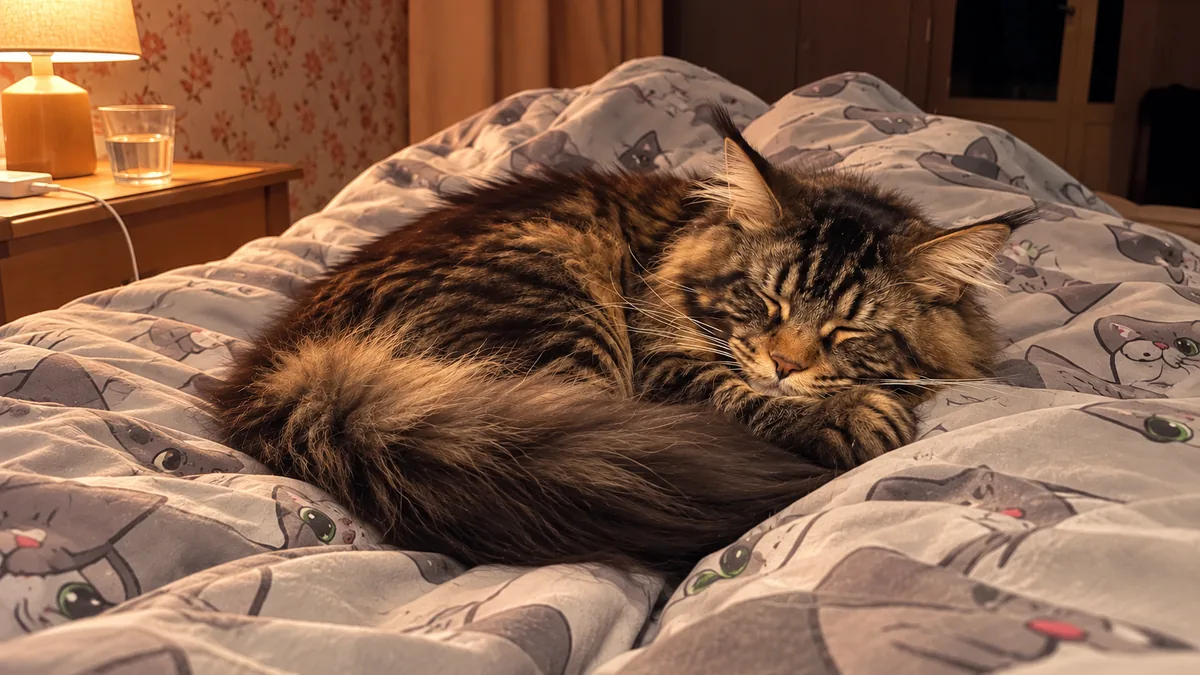
Mostly for warmth and closeness. Cats Protection says your body is like a big hot water bottle for your cat, and a cat who is happy to cuddle up to you trusts you and sees you as a friend. Your bed also makes a great cat bed: comfortable, warm and raised off the ground. If your cat starts sleeping a lot more than usual, or hiding away more, it may be best to check with your vet.
Why does my cat sleep on me at night?
Cats Protection, a UK cat charity, gives three reasons, and the first is warmth. Sharing your body heat is one of the top reasons a cat sleeps on you. To them your body is like a big hot water bottle. It’s the same reason they stretch out in patches of sunlight or lie close to a radiator.
The second is the bond. Cats are usually quite independent, so a cat who is happy to cuddle up to you is showing that they trust you and see you as a friend. Cats who are bonded to each other often sleep touching or wrapped round each other, and the same goes for a cat and their person.
The third is the bed itself. A human bed is comfortable, warm and raised off the ground, with a good view of the room and a hiding place underneath. You may simply have taken up all the room in your cat’s favourite sleeping spot, and the only place left is on top of you.
Cats rest on and off through the day and night, for about 12 to 18 hours in all, and some naps last just 10 minutes. So a cat on your chest at midnight may be on the windowsill by two, and back again by morning.
Does my cat sleeping on me mean they love me?
It usually means they feel safe with you. In a 2019 Oregon State University study, each cat spent two minutes in a new room with their owner, two minutes alone, then two minutes with their owner again. Of 38 adult cats, 65.8% were securely attached. For human babies, it’s 65%. Kristyn Vitale, the study’s lead author, said most cats use their owner as a source of security.
Clinging isn’t always the sign, though. In the same test, insecure cats showed stress, such as a twitching tail and lip licking, and either kept away from their owner or jumped onto their lap and stayed there without moving. A cat who settles on you at bedtime with loose muscles, legs tucked under, is a different picture.
And don’t read too much into a cat who sleeps at the foot of the bed, or in the next room. Cats Protection says sleeping near you may come down to warmth, comfort or social bonding, but it isn’t a reliable measure of happiness. Some cats feel more comfortable sleeping alone.
Why does my cat sleep on my chest?
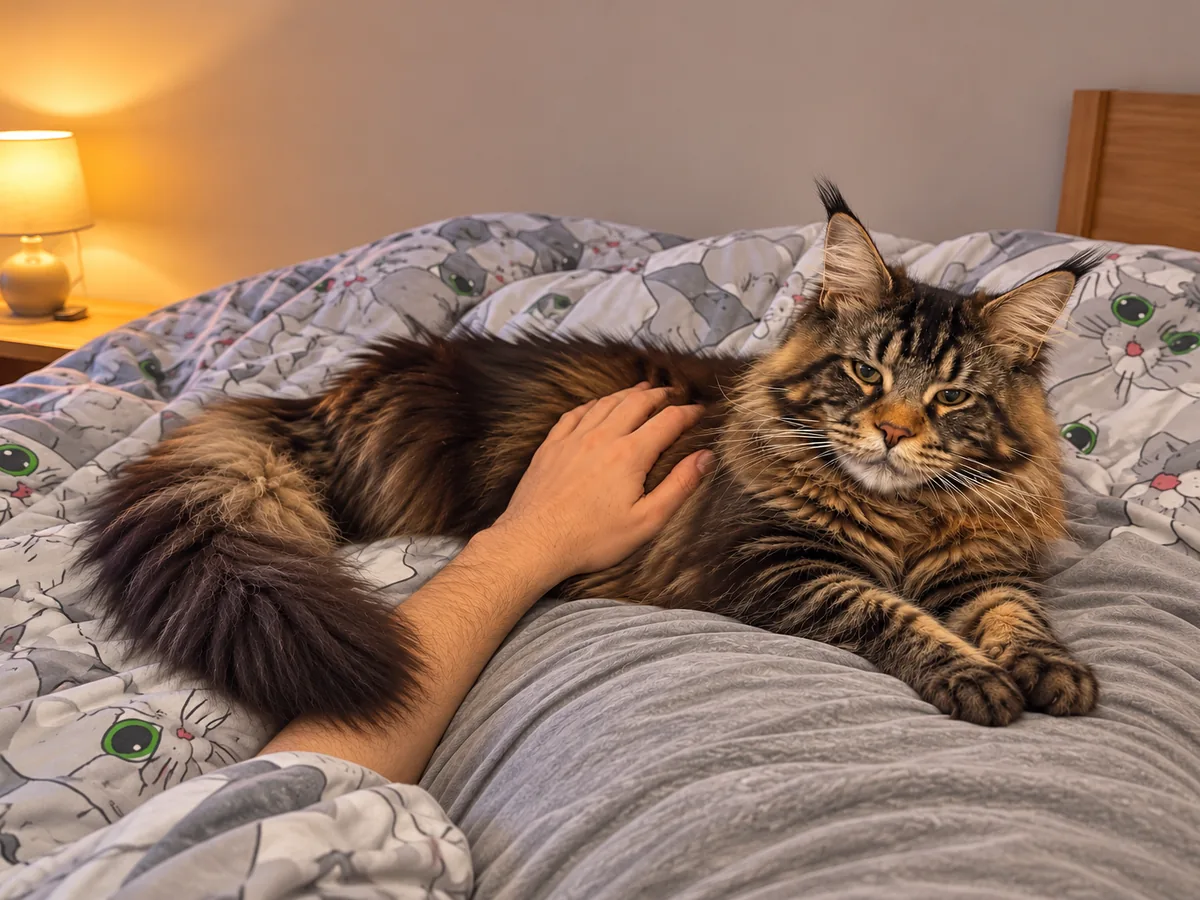
Your chest is a warm, comfortable place for a nap, and Cats Protection points out it’s also a prime spot for strokes and fuss. Your hands are right there.
Some cats knead before they settle: they push each front paw in turn into a soft surface, often the blanket or you. It’s something cats learn as kittens, and some carry it into adulthood. Cats Protection says it could be that kneading releases chemical signals in the brain that bring on happy, relaxed feelings. If the claws come through, lay a folded blanket over your chest before they get comfortable.
Why does my cat sleep on my head or my pillow?
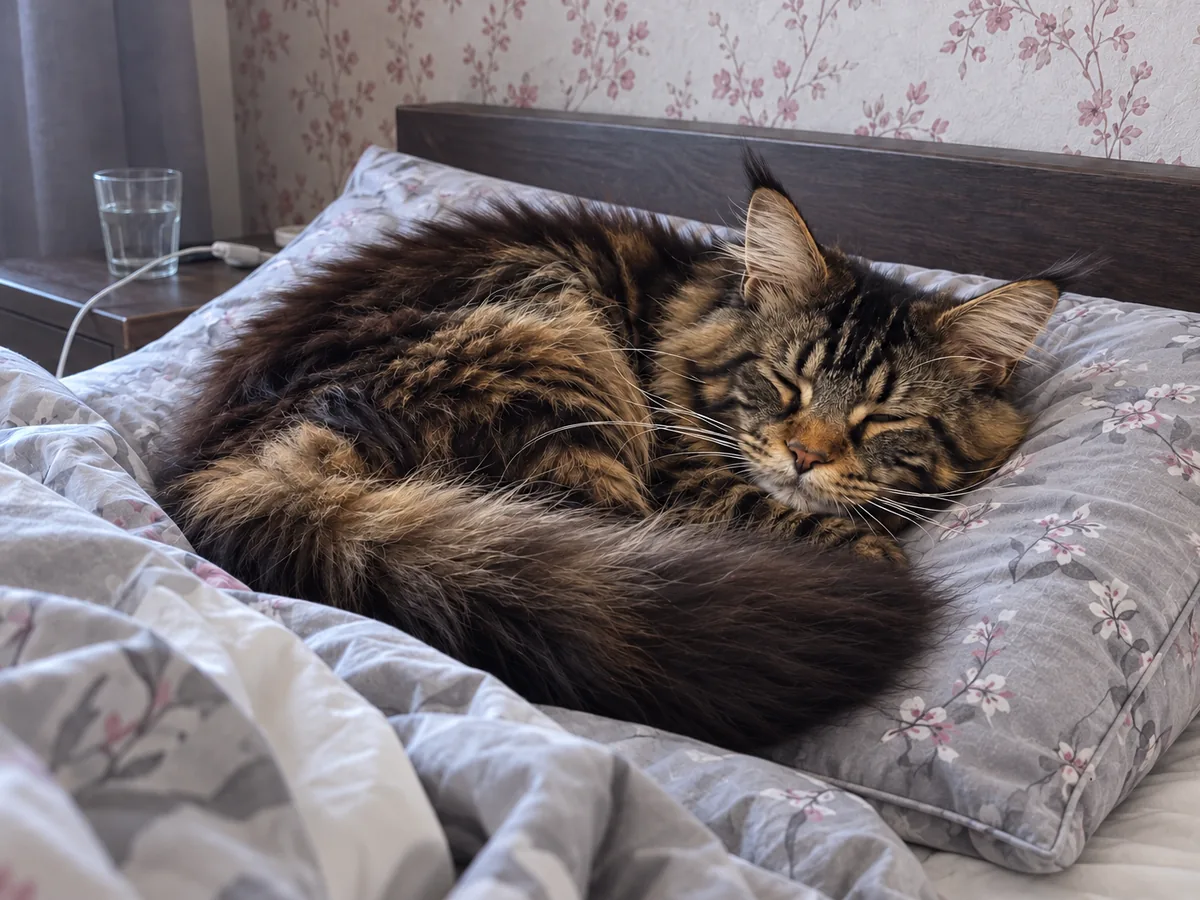
When you’re asleep, your head is probably the part of you that moves least, so it’s a good place for a cat who doesn’t want to be disturbed. Your face may also be the only bare skin above the duvet, and some cats want to be close to it for the feel or the warmth. A cat who doesn’t like stepping on the covers may find your head the easiest place to reach.
The pillow is the softest part of the bed. If you’re still in bed or have only just got up, it’s also warm and smells of you, which is why some cats move into the dent your head left behind.
Why does my cat sleep on my legs or feet?
On the sofa, your lap is the best seat in the house: it comes with strokes, chin rubs and head scratches. In bed, there’s no hidden meaning in the feet. Cats Protection says where a cat settles on you is likely to depend on what feels comfortable and secure to them.
That can change from one night to the next. Cats often change position with the temperature and their surroundings, so the cat on your feet in October may be up on your chest by January.
Why does my cat sleep on me facing away?
It’s tempting to read a lot into it, but Cats Protection says there isn’t a fixed meaning behind every sleeping pose. Cats have their own preferences, and they change position with the temperature, their surroundings and what feels comfortable at that moment.
So look at the whole cat instead of which way they face. A cat resting with all four paws on the ground may be ready to move and not quite settled. One with their legs tucked underneath is likely more relaxed. If the eyes are closed but the ears keep turning towards sounds, your cat may be “feigning sleep”, which can happen when a cat doesn’t feel completely secure.
Why does my cat sleep on me all of a sudden?
Check the weather first. The RSPCA says cats don’t typically like the cold, and when it comes they look for cosy places to rest: blankets, the sun, the radiator, or you. Cats may also sleep more in winter, to save energy or because the days are shorter, though some get more active to keep warm.
Age changes it too. Older cats sleep for longer and are less active, and Cornell’s Feline Health Center notes that cats like to seek out warm places to rest. Many cats prefer to sleep somewhere high, such as their owner’s bed. If yours is finding the jump harder, International Cat Care suggests ramps or steps so they can still reach their favourite spot.
When a change in how your cat sleeps needs a vet
Watch for the change that comes with others. Cats Protection says a sudden or persistent change in your cat’s sleeping position or habits can sometimes mean something is wrong, particularly alongside other changes in health or behaviour. PDSA says the same of a sudden change in sleeping pattern or a lot more napping.
Cats are good at hiding pain and are more likely to show small changes in behaviour than a limp. The signs Cats Protection lists include sleeping more than usual, hiding more, hesitating to jump down from furniture, being stiff after resting, crouching hunched up with squinty eyes, eating or drinking less, and disturbed sleep. If you see any of them, book a vet check. In an older cat, Cornell says any change in behaviour or health, sudden or gradual, is worth a vet visit without delay.
If your cat is breathing with their mouth open, or struggling to breathe, that needs a vet straight away.
Is it safe to let my cat sleep on my bed?
Cats Protection says it’s safe for your cat to sleep on the bed with you. If you’re allergic to cats, you may find it more comfortable to keep them out of the bedroom. Keep cats out of babies’ and young children’s bedrooms, for the children’s safety.
Whether you sleep as well is another question. Christy Hoffman, an animal behaviourist at Canisius University in New York, collected answers from nearly 1,000 women across the United States. Cats who slept in their owners’ beds were reported to be just as disruptive to sleep as human partners. Dogs did better: the women rated them less disruptive than either human partners or cats. The study came out in the journal Anthrozoös in 2018.
How to share the bed and still get some sleep
Cats are naturally more active at dawn and dusk, and many are still easily woken by the first light of sunrise. That’s the paw on your face at five in the morning. Even dozing on you, they stay half on duty: PDSA says the smallest sounds are often enough to wake them.
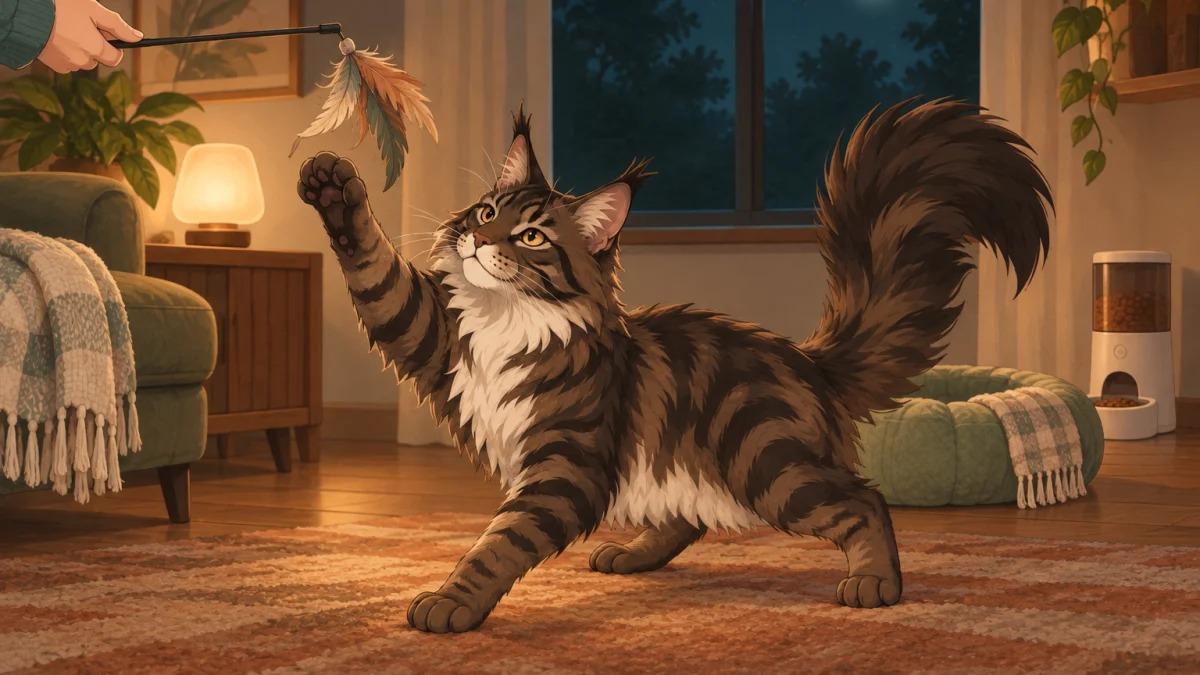
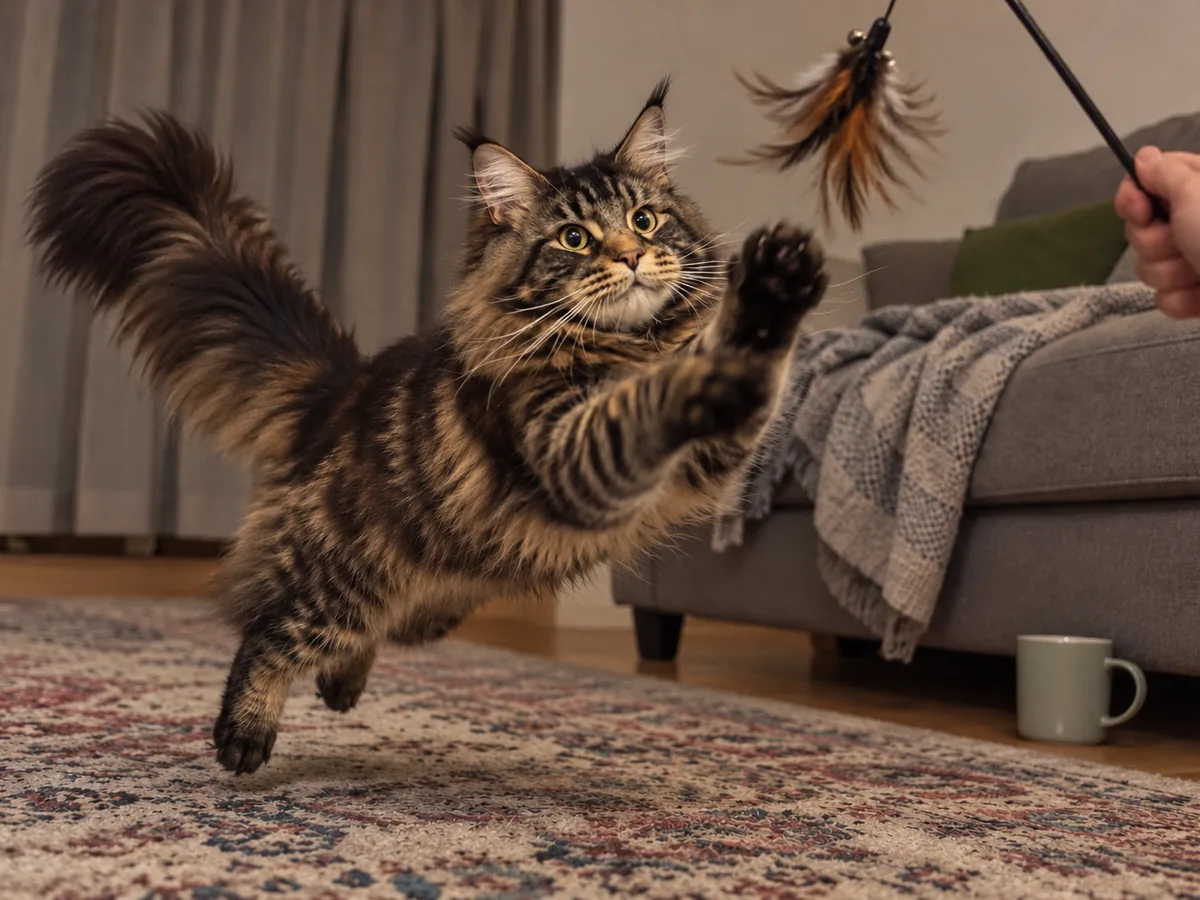
Play with your cat before bed. PDSA says a good, energetic play session in the evening helps, especially for cats who pester you with early wake-up calls. Cats Protection adds plenty of play during the day, and says a fishing-rod toy should do the trick. If hunger is what wakes them, try smaller, more regular meals through the day, or an automatic feeder that opens in the early morning.
Don’t tell your cat off for waking you. Cats Protection points out they could be trying to tell you they’re unwell, and the RSPCA says cats are very unlikely to understand punishment and can become more nervous or scared. If you’re really struggling for sleep, your vet can refer you to a qualified cat behaviourist. To build the evening routine step by step, a Lapka programme plans the play sessions and adjusts them after each one.
How to get your cat to sleep in their own bed
The easiest way is to close the bedroom door, but a persistent cat may meow or scratch at it until you let them in. So give them somewhere they’d rather be. Cats Protection says the perfect cat bed is comfortable, warm, private and off the ground, with a good view of the room.
Put a blanket or an old pillowcase they’ve slept on into the new bed, so it smells familiar. Offer several spots, because cats like to change where they sleep. This may come from their African wildcat ancestors, as a way to keep the risk of parasites low.
If you need to get up while your cat is asleep on you, move slowly and let them wake before you lift them. Cats Protection says cats shouldn’t be disturbed when sleeping, and some may be sleepy and disorientated and react defensively.
What a week of notes can look like
Mon, 23:10: on my chest as soon as the light goes off. Kneads for a minute, then sleeps. On the pillow by 2.
Wed: the heating came on today. Spent the whole evening on the duvet over my legs, which is new.
Sat: still on my legs every night. Eating, grooming and jumping onto the bed as usual. Paw on my face at 5:20 again; trying ten minutes with the fishing rod before bed.
Notes like these show what changed alongside the sleeping. Here it’s the cold and nothing else. If one day the jump onto the bed gets slower, the same notes help your vet see what’s different.
Questions people ask
Does my cat love me if they sleep on me?
Most likely they feel safe and comfortable with you. Cats are usually quite independent, so a cat who chooses to cuddle up is showing trust. A cat who sleeps elsewhere isn’t telling you the opposite: some cats simply feel more comfortable sleeping alone.
Why does my cat sleep on me every night?
Your bed is warm, soft and raised, and you’re the warmest thing in it. Cats often switch where they sleep, so a cat who picks you night after night has found a spot they really like. On cold nights, the RSPCA notes, snuggling up to you is one of the ways cats keep cosy.
Why does my cat twitch while sleeping on me?
Even asleep, cats keep an ear on the room, so an ear or the tail may twitch as they listen out. Twitching paws or a twitching mouth in deep sleep probably means they’re dreaming. PDSA says light sleep often lasts 15 to 30 minutes before deep sleep, which typically lasts 5 to 7 minutes.
Why did my cat stop sleeping on me?
Often it’s the season. Stretching out may help a cat lose heat on a warm day, and in summer some cats prefer to sleep outdoors in the sun. Cats also like to rotate their sleeping spots. If the change comes with hiding, eating less or a reluctance to jump, see your vet.
Is my cat sleeping on me a sign they’re ill?
Not on its own. Cats Protection says the position your cat takes usually tells you less than their overall behaviour and any change in their normal sleeping habits. What matters is a sudden change together with others, such as sleeping a lot more than usual, hiding away, eating less or stiffness after resting. Then book a vet check, and if your cat is breathing with their mouth open, go straight away.
Sources and further reading
- Cats Protection — Why does my cat sleep on me?
- Cats Protection — Cats and sleep
- Cats Protection — What do cat sleeping positions mean?
- Cats Protection — Cats at night
- Cats Protection — Signs of pain
- Cats Protection — Why do cats knead?
- PDSA — Why do cats sleep so much?
- RSPCA — Cold weather care for cats
- RSPCA — Understanding your cat’s behaviour
- International Cat Care — Special considerations for senior cats
- Cornell Feline Health Center — Loving care for older cats
- Oregon State University — Cats, like children and dogs, develop attachments to their caregivers, study shows (2019)
- Canisius University — “Best friends” make the best bed partners (2018)