Lapka
Where to start
To stop your cat jumping on counters and tables, give them a better high place nearby, such as a cat tree or a shelf, and reward them for using it. Keep the counter clear of food, and block it with something that stays there all the time, such as double-sided tape. Teach your cat to go to a mat while you cook or eat. Don’t shout or punish: your cat will likely still go up, just when you’re out.
Why cats jump on counters and tables
Cats like to be up high. Cats Protection, the UK cat charity, says it’s how they stay safe and scope out their surroundings, so if your kitchen counters are the only high surfaces around, your cat is going to climb them. PDSA, the UK vet charity, says being up high can make cats feel safer.
Then there’s what’s up there. PDSA suggests first asking why your cat keeps jumping onto that particular surface. Is there food? Lots of small things to bat about? Or is it simply a comfy spot where your cat can watch you?
Your cat isn’t being naughty. Cats Protection points out that cats don’t understand what is naughty and what isn’t. Jumping up is a normal cat behaviour that people happen not to like.
Give your cat a better place up high
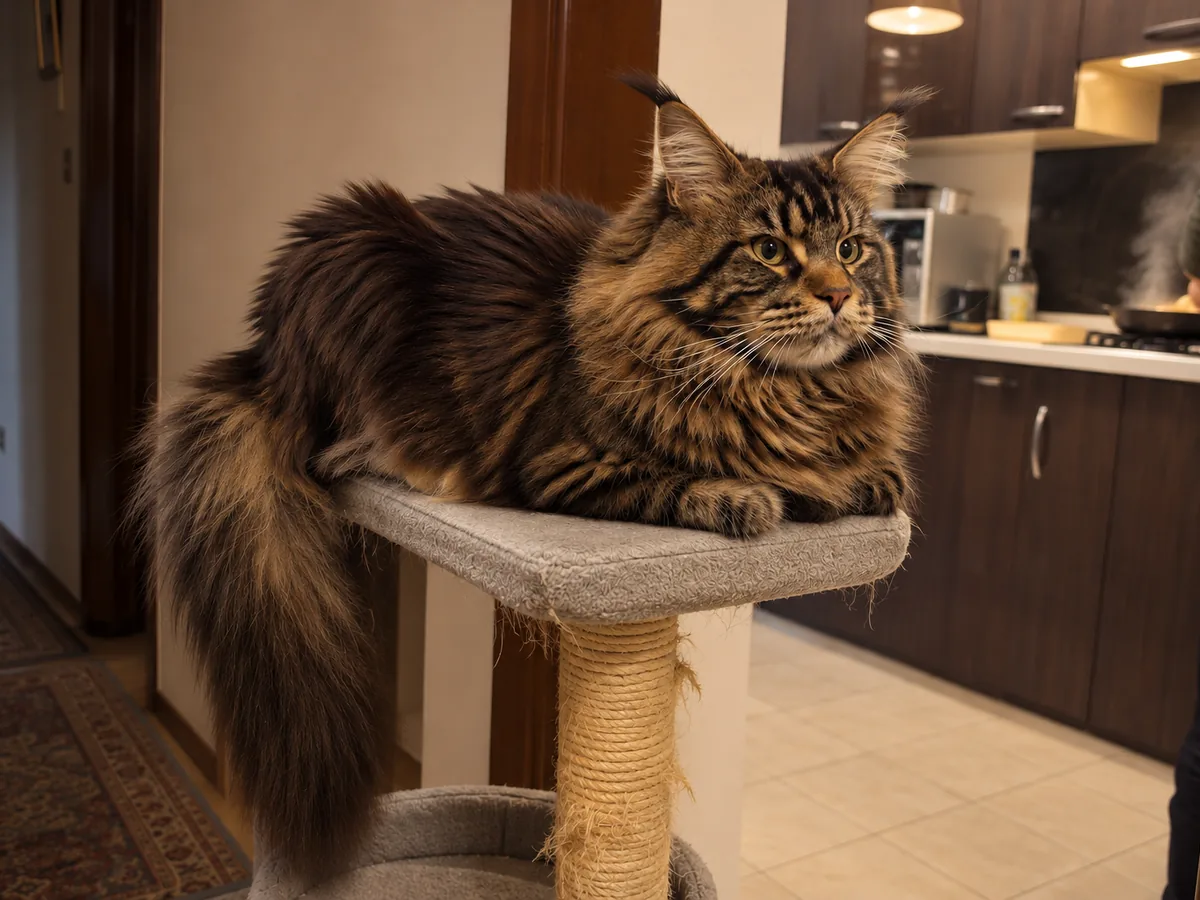
Start here, before any deterrent. Cats Protection suggests offering an alternative, such as empty shelves or a cat tree. PDSA says that if you take one place away, your cat needs somewhere they’re allowed to climb that does the same job.
Put it where things happen. Your cat may be on the counter to be near you and watch what you’re doing, so a cat tree at the edge of the kitchen, or a cat bed on a side table by the dining table, gives them the view without the food. The Peninsula Humane Society & SPCA in California suggests six-foot-tall cat trees with several perches, a “cat highway” of shelves at different heights along a wall, or a hammock fixed to a window with a view.
Make the new spot worth it. PDSA suggests putting toys there and rewarding your cat whenever they use it, with a healthy treat, playtime or a stroke, whichever they like best.
How to keep cats off kitchen counters: make them boring
Take away the prize. PDSA says to keep kitchen work surfaces clear of food and anything else that may tempt your cat, so the counter becomes boring. Put the bread away and clear the plates as soon as a meal is over.
Block the places your cat walks over or naps on. PDSA’s example is the top of the fridge: stack your cookbooks there until the habit is broken. On a flat surface it suggests double-sided sticky tape for a while, because cats don’t like the sticky feeling under their paws. The Peninsula Humane Society suggests lining a placemat with the tape and laying it on the surface, or a deterrent mat of plastic or silicone with small bumps on top.
Whatever you use has to be there all the time. PDSA warns that if it depends on you being there to use it, your cat will learn they can still go up when you’re not around.
Cat jumps on counter when cooking
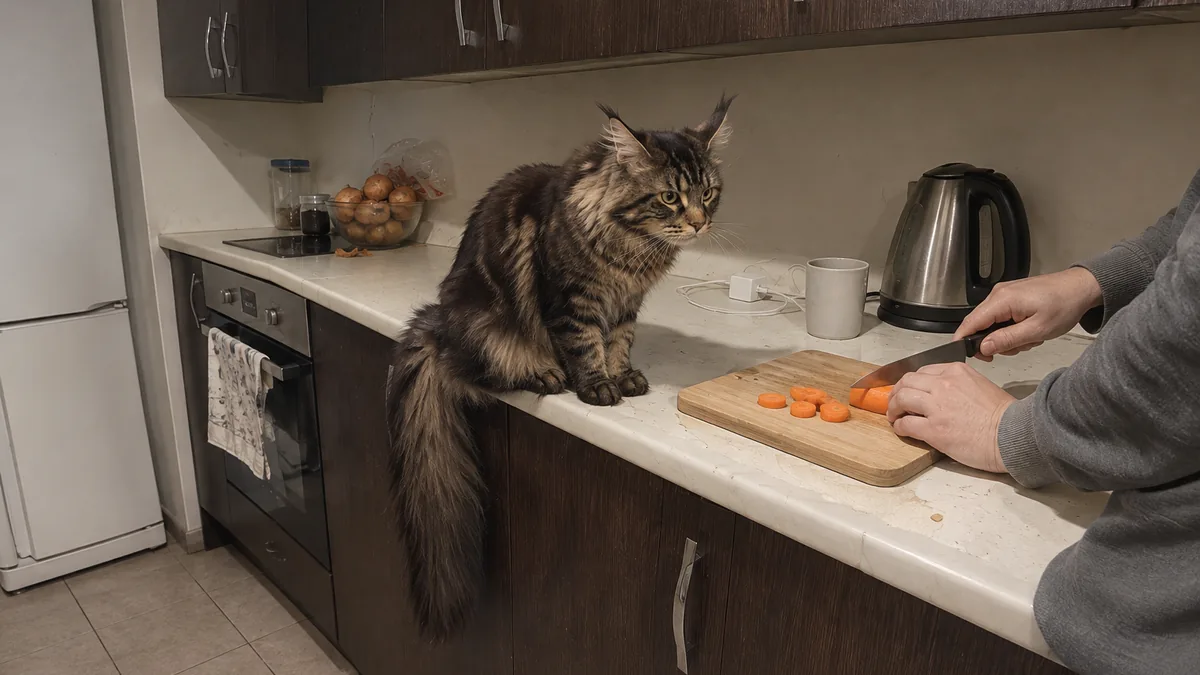
Cooking is the hardest time: food out, smells everywhere, and you standing right there. Humane Society Silicon Valley’s training guide says to use gates or visual barriers so your cat can’t practise an unwanted habit at all. While you cook, that can be a gate that keeps them away from the counter.
Its longer answer is to give your cat something else to do. Among the skills it suggests teaching are settling on a mat and “stationing outside of the kitchen”: your cat waits in their own spot by the doorway, watches, and gets treats for it while you cook.
Teach your cat to go to a mat
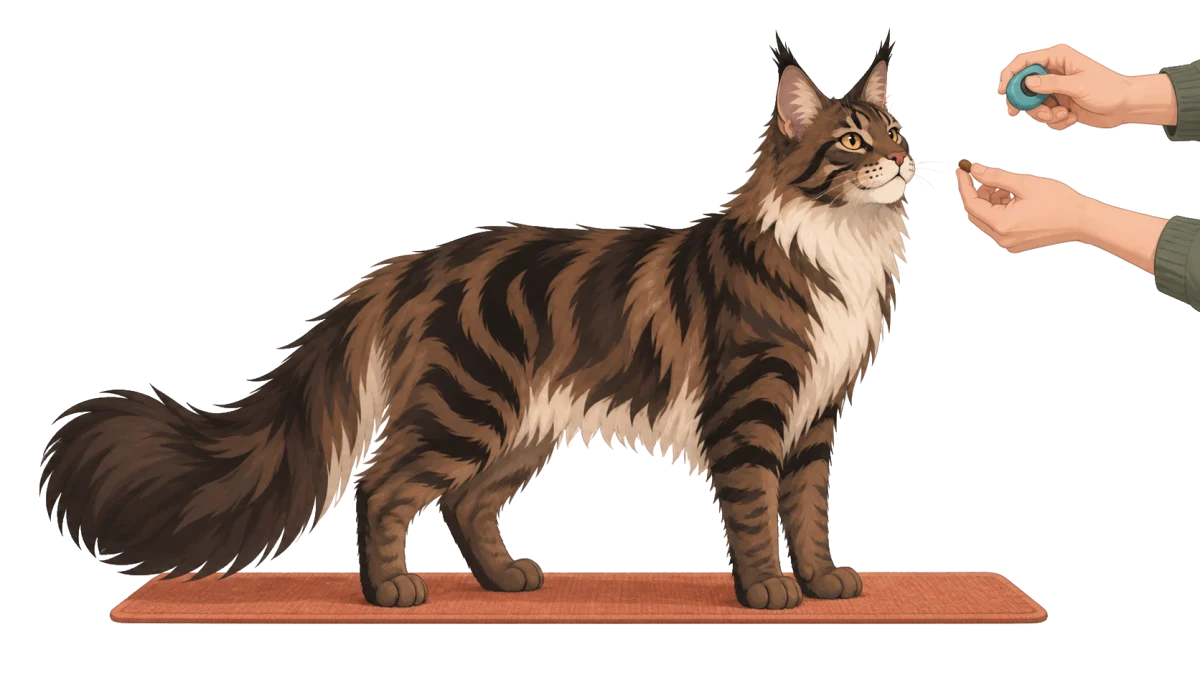
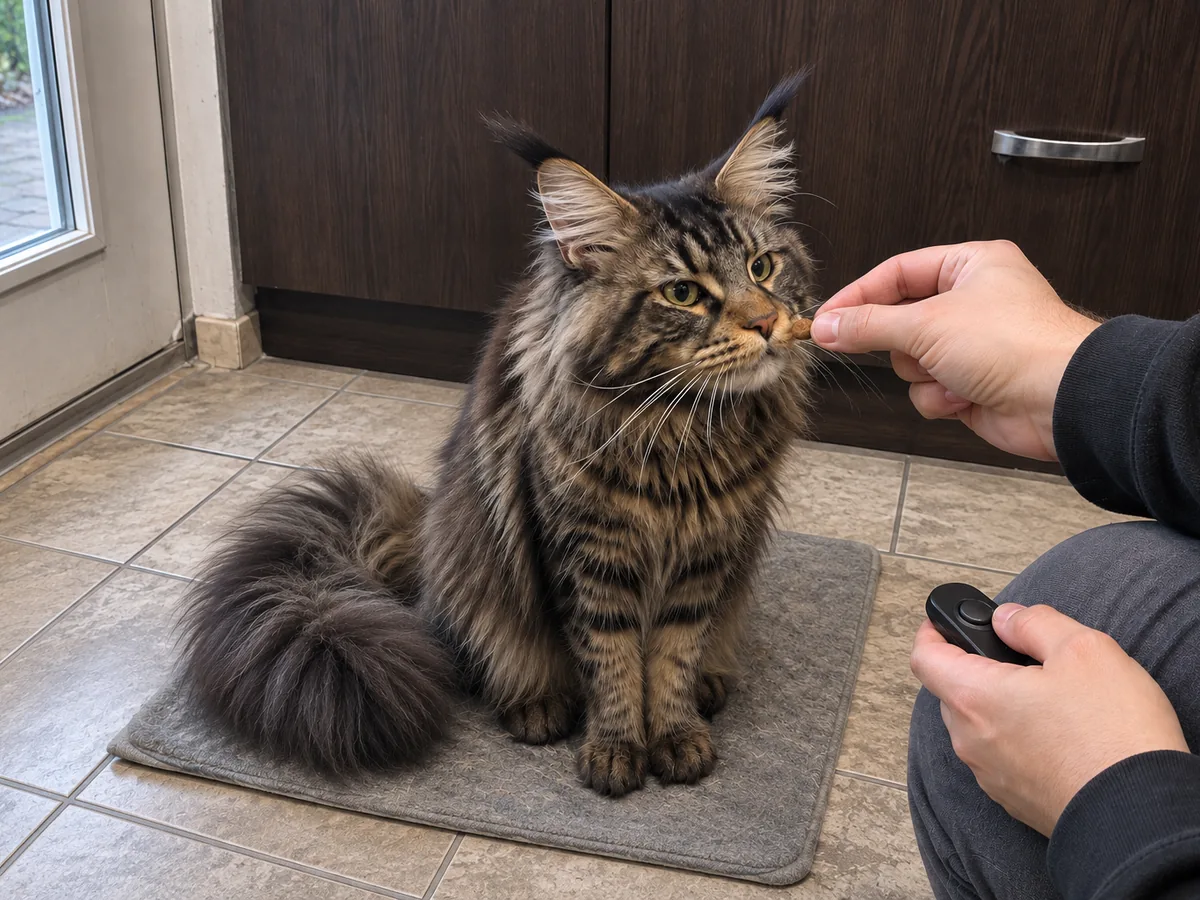
Station training teaches a cat to go to one spot, such as a mat, a bed or a perch, and stay there calmly until you release them. Humane Society Silicon Valley says it helps prevent counter surfing, because it teaches your cat what to do instead.
If your cat doesn’t know the clicker yet, start by clicking and straight away giving a small treat, 10–15 times. Then put the mat on the floor, and click and treat whenever your cat looks at it, walks up to it or steps onto it. Next, reward only when all four paws are on the mat. Once your cat goes there every time, wait a second or two before the click and slowly build up longer stays. Add a word such as “mat” just before they step on, then move a little further away and add small distractions.
Keep each session to 1–3 minutes, and practise in a calm moment before you use it while cooking. Finish with a release word such as “all done”. If your cat steps off, don’t scold. Start again and reward them when they go back. If you’d like a plan for it, a Lapka programme breaks the mat into short daily steps and adjusts them after each session.
How to stop cat from jumping on table while eating
At mealtimes your cat is often after the food or after you, so offer the second one somewhere else. A bed or a perch near the table lets them stay close and watch, the way PDSA suggests a cat bed on a side table next to your desk.
Then practise the meal itself. Humane Society Silicon Valley gives the example of a cat who jumps on the counter at feeding time. Teach a sit with the clicker. Walk to the counter, wait for the sit, then click and treat. Take out the bowl, and if your cat is still sitting, click and treat again. If they jump up, put them gently back on the floor and wait for the sit. At your own table the idea is the same: ask for the mat before you sit down, and reward your cat for staying on it during the meal.
Be consistent. Once your cat knows the mat, ask for it at every meal and reward it every time, and make sure jumping onto the table never earns a single bite.
Cat jumps on counter for attention
If your cat jumps up mostly when you’re busy, the jump may be paying off in attention. Humane Society Silicon Valley suggests ignoring an unwanted behaviour when it happens and calmly directing your cat towards something better.
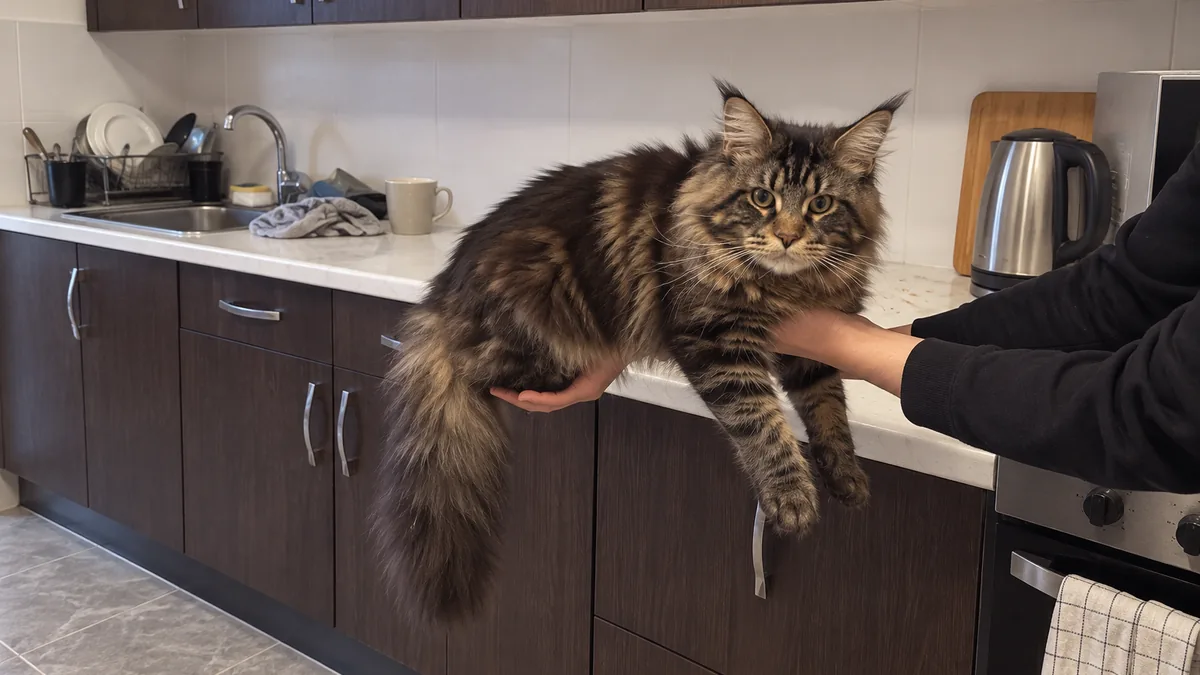
PDSA says that if your cat doesn’t mind being handled, you can pick them up and put them on their own place. Don’t make a fuss: move them quickly and gently, then ignore them afterwards. Save the chat, the stroke and the treat for when they’re on the cat tree or the mat.
How to stop cats from jumping on counters at night
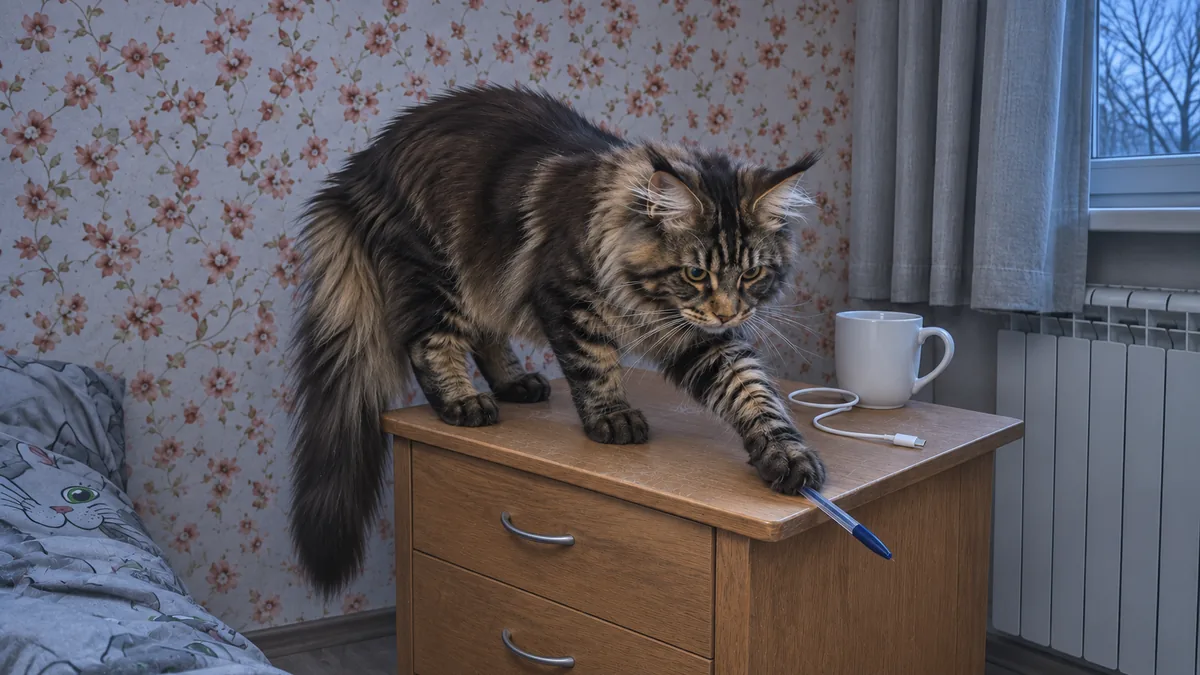
At night nobody is there to see it. Cats Protection says cats are naturally most active at dawn and dusk, and that a cat who didn’t get enough stimulation during the day may have excess energy to burn off while you’re asleep.
So play in the day and again before bed. PDSA says the more your cat plays with you, the less likely they are to get bored and go exploring where you don’t want them, and suggests swapping toys round regularly, every week as a rule of thumb. International Cat Care says cats who live only indoors need plenty of stimulation and play so they don’t get bored, and that wand toys, a long rod with a small toy on a string, appeal to most cats.
If your cat is up early because they’re hungry, Cats Protection suggests smaller, more regular meals during the day, or an automatic feeder that opens during the night or early morning. Night is also when a deterrent that stays put matters most, because nobody is there to lift your cat down.
Why punishment makes counter jumping worse
Shouting, clapping or a squirt of water may get your cat down, but it doesn’t teach them where to go instead. Humane Society Silicon Valley counts startling noises such as clapping, and spraying with water, as punishment. It says many cats go back to the behaviour once the correction ends, and learn to avoid, or even fear, the person who gave it.
PDSA says that punishing your cat for being where they shouldn’t can make them stressed and afraid of you, and they will still likely go there, just when you’re not around. It also advises against anything that might scare your cat on a worktop, especially if it could make them panic and injure themselves. The RSPCA says never to shout at or punish your cat: they’re very unlikely to understand, and can become more nervous or scared.
What a week of notes can look like
Mon: up on the counter twice while dinner was on, both times when the chicken was out. Moved the cat tree to the kitchen door.
Wed: placemat with tape on the counter. One sniff, straight back down. Mat by the doorway, four short sessions.
Sat: on the mat for most of the dinner prep, three treats. Up on the table once at breakfast, lifted down without a word.
Notes like these show when your cat goes up and what’s waiting there. Here it was food on the counter and the busy hour before dinner, so that’s where the changes went.
When it does not go to plan
Does tin foil keep cats off counters?
None of the charity advice we read mentions foil. What PDSA and the Peninsula Humane Society describe is a surface that feels unpleasant under the paws, such as double-sided sticky tape or a deterrent mat with small bumps, left there all the time. PDSA advises against anything that might scare your cat on a worktop, because a panicking cat can hurt themselves. Whatever you lay down, give your cat a better high place at the same time.
Why does my cat jump on the counter and eat food?
Usually because there’s food up there. PDSA’s first question is whether the surface has food on it, and its first fix is keeping work surfaces clear of it. It also suggests checking that your cat gets the right diet for their age and weight.
How long does it take to stop a cat jumping on counters?
It depends on the cat. The Peninsula Humane Society says some cats need a deterrent mat only once or twice before the counter stops being attractive, and others take longer. PDSA says it can be done with a lot of patience and positive encouragement. Short mat sessions of 1–3 minutes add up.
Is a spray bottle a good way to keep my cat off the table?
No. Humane Society Silicon Valley counts spraying with water as punishment, which can easily damage your cat’s trust and doesn’t teach them what to do instead. The RSPCA says never to shout at or punish your cat. Reward the cat tree or the mat instead.
My cat has suddenly started jumping on everything. Should I worry?
If the change is sudden, Cats Protection says to get your cat checked by your vet, because there could be a medical issue behind it. If your vet says your cat is healthy, the cause is something else, and the steps above are the place to start.
Sources and further reading
- PDSA — How to stop cats jumping
- Cats Protection — Why is my cat being ‘naughty’?
- Cats Protection — Cats at night
- RSPCA — Understanding your cat’s behaviour
- International Cat Care — Playing with your cat
- Humane Society Silicon Valley — Standard cat training guide (PDF)
- Peninsula Humane Society & SPCA — My cat is jumping up on counters and tables