Lapka
The short answer
Cats knock things off tables for a few reasons. Something that moves fast is potentially something to chase and catch. Cats often investigate unfamiliar objects with their paws. A bored cat may find their own entertainment. And if the crash brings you running, your cat learns that quickly. There’s no spite in it. Your cat is just being a cat.
Why do cats knock things off tables on purpose?
It does look deliberate: a long stare, one paw, a slow push, and the cup goes over the edge while your cat watches it fall. PetMD, in a piece by cat behaviour consultant Marilyn Krieger reviewed by vet Teresa Manucy, gives three reasons cats knock things over: instinct, boredom, and a habit they’ve learned. Cats Protection, the UK cat charity, adds a fourth, plain curiosity.
Spite isn’t on the list. Cats Protection points out that calling a cat naughty assumes they know the rules and are choosing to break them, which is a very human way of thinking. Cats don’t know what is naughty and what isn’t. They are just being a cat.
Why do cats push things off tables? The hunting instinct
Cats are predators. PetMD says they are hardwired to be drawn to things that dart past their line of sight, and something fast-moving is potentially something to chase, catch and eat. Pushing or batting things off counters and desks plays to that instinct.
The paw is the tool for the job. International Cat Care describes a hunting cat striking prey with one or both front paws. When adult cats play with the toys we give them, it says, what we are watching is hunting behaviour aimed at objects that aren’t alive.
Cats investigate with their paws
A lot of the time it’s curiosity. Cats Protection says cats are naturally curious and often like to investigate unfamiliar objects with their paws, so things get knocked over from time to time. The keys you’ve just put down, a new mug on the shelf: a paw gets there first.
Do cats knock things over for attention?
Often the crash works. PetMD says owners can reinforce it without meaning to, by talking to their cat or picking them up as soon as the paw goes up. Cats are quick learners, and it doesn’t take them long to connect pushing a glass towards the edge of the table with their favourite people coming over.
It takes very little attention. PetMD counts even a glance at your cat while they bat things off the table. Putting the thing straight back counts too, because it gives them another chance to knock it off.
Why do cats knock things over for no reason?
When there seems to be no reason, think about boredom. PetMD calls it a major trigger. A cat with little going on around them may find their own entertainment, and sending things off surfaces may be the most exciting thing they do all day.
Battersea lists knocking things over or off tables and shelves among the signs of a frustrated cat, along with scratching furniture and biting objects. The causes it names include not enough stimulation, for example in a cat kept indoors or one whose garden is bare, and no chance to hunt, chase, stalk and pounce. International Cat Care says cats who live only indoors need plenty of stimulation and play so they don’t get bored.
Why do cats knock things over at night?
Mostly because a cat’s night ends early. Cats Protection says cats are naturally most active at dawn and dusk, and many are easily woken at the first sight of a sunrise. So the bedside table gets cleared at exactly the hour you’d rather be asleep.
Cats Protection also says a cat who didn’t get enough stimulation during the day may have energy left to burn off while you sleep. The early hours are also easy to reward by accident. PDSA, the UK vet charity, warns that getting up to feed your cat or giving them a 6am chin scratch means they’ll expect it every day. And Battersea gives the example of a cat who expects to be fed at a set time or given attention first thing in the morning, doesn’t get it, and becomes frustrated.
How to stop your cat knocking things off the table
Start by watching. PetMD suggests looking for patterns. When and where does it happen? Is it when you’re around, when nobody is paying your cat any attention, or when they’re hungry?
Then take away the easy targets. Cats Protection suggests not leaving breakable things on the edge of surfaces your cat can reach, and PetMD says to keep fragile things in cupboards, cabinets and places your cat can’t get to.
When something does go over, keep your reaction small. Pick it up later, and don’t put it straight back on the edge. Never punish your cat for it. Cats Protection says they won’t understand what they’ve done wrong, and punishing them will likely only make the problem worse.
Give your cat something better to bat
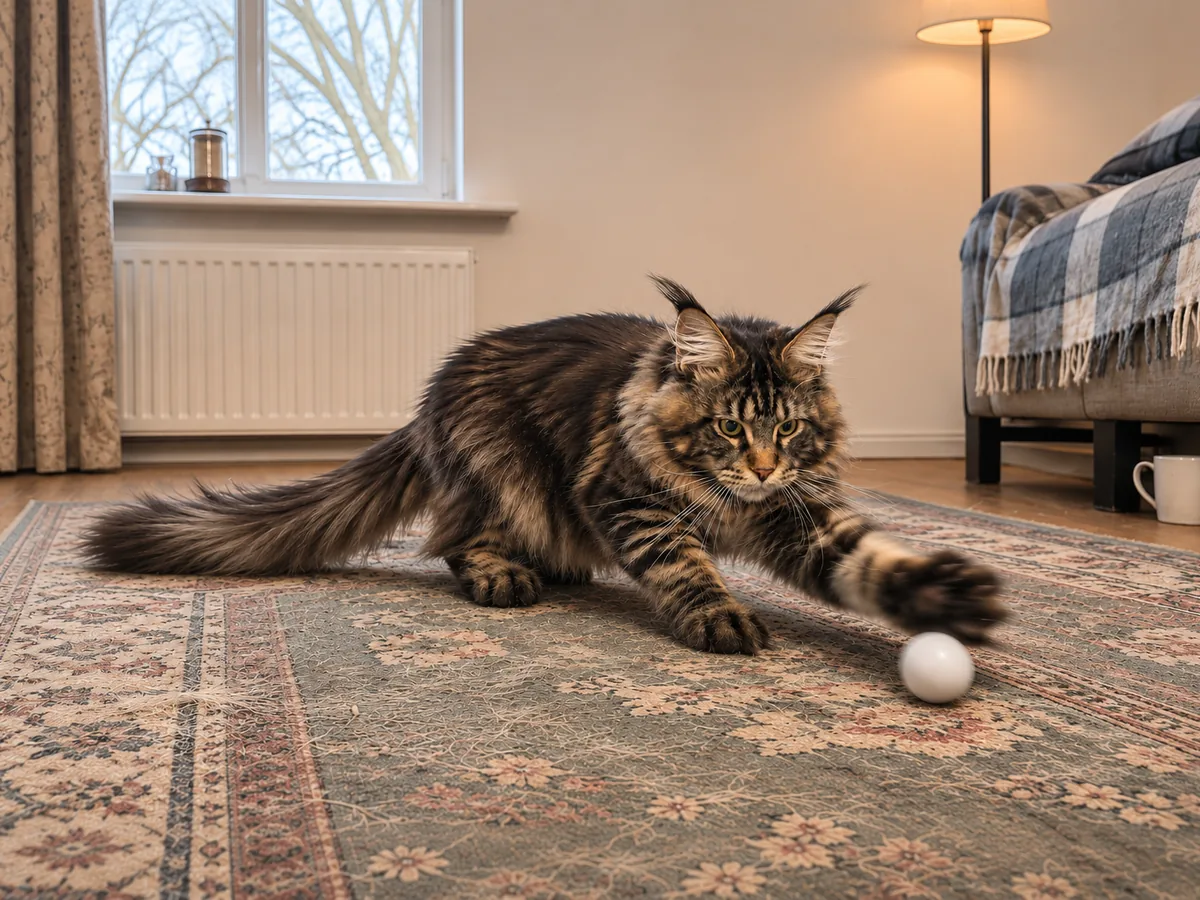
The urge to swipe at small things won’t go away, so give it somewhere to go. International Cat Care suggests ping-pong balls: light enough not to cause damage around the house, and the right size for a small paw to bat. Among the things that draw a cat to a toy, it lists movement that is random, quick and stop-start.
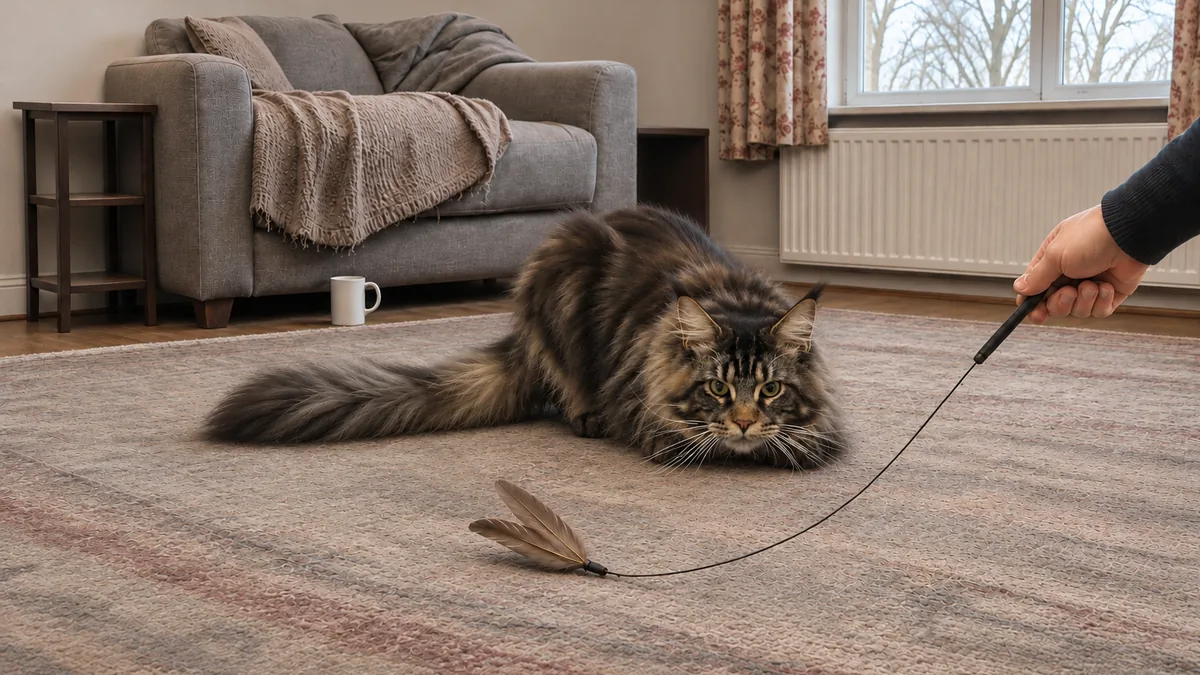
Play with your cat too. Battersea recommends a long rod toy with a toy on the end of a string, so the moving end stays far from your hands, and toys that match the size, shape and texture of prey. Put string toys away safely between games. Short, frequent sessions are closest to how cats hunt, says International Cat Care, and one minute of frenzied activity is a good result.
Cats Protection suggests plenty of play during the day to use up spare energy. PDSA says fun activities in the day and evening may calm the 5am zoomies around your bedroom. If you’d like some of that playtime to build towards a trick, a Lapka programme plans short daily sessions and adjusts them after each one.
Puzzle feeders and high places of their own
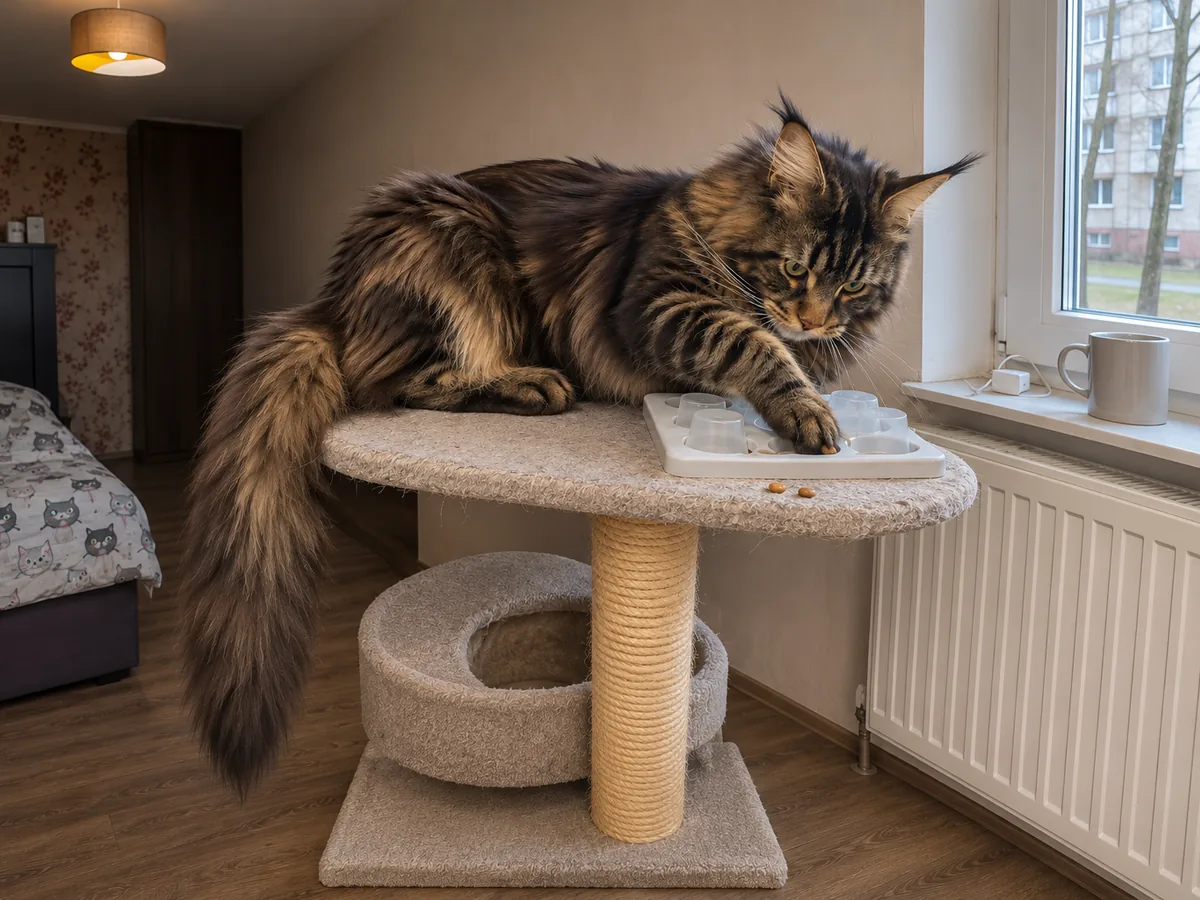
Make food something to work for. Battersea says puzzle feeders make mealtimes more interesting and more of a challenge, which is good mental exercise. PetMD suggests throwing toys and treats for your cat to chase, and hiding treats and food on cat trees and in puzzle toys.
Cats Protection says cats love being up high, and if the kitchen counters are the only high surfaces around, they will climb them. Give your cat places of their own, such as empty shelves or a cat tree. PetMD adds that tall cat towers and high shelves get cats climbing and exercising.
Timing helps. PetMD suggests redirecting your cat before they jump onto the desk or counter, and giving them something more interesting to do.
When a change in behaviour means a vet
Knocking something over now and then is ordinary cat behaviour. A sudden change is different. Cats Protection says that if you notice any sudden change in your cat’s behaviour, get them checked by your vet, because a medical problem could be behind it.
Nights are the same. Cats Protection says some medical conditions cause cats to wake up in the night, cry excessively or seem restless and disorientated. If your cat has started crying a lot at night, seems restless or seems confused, see your vet before you work on the habit.
What a week of notes can look like
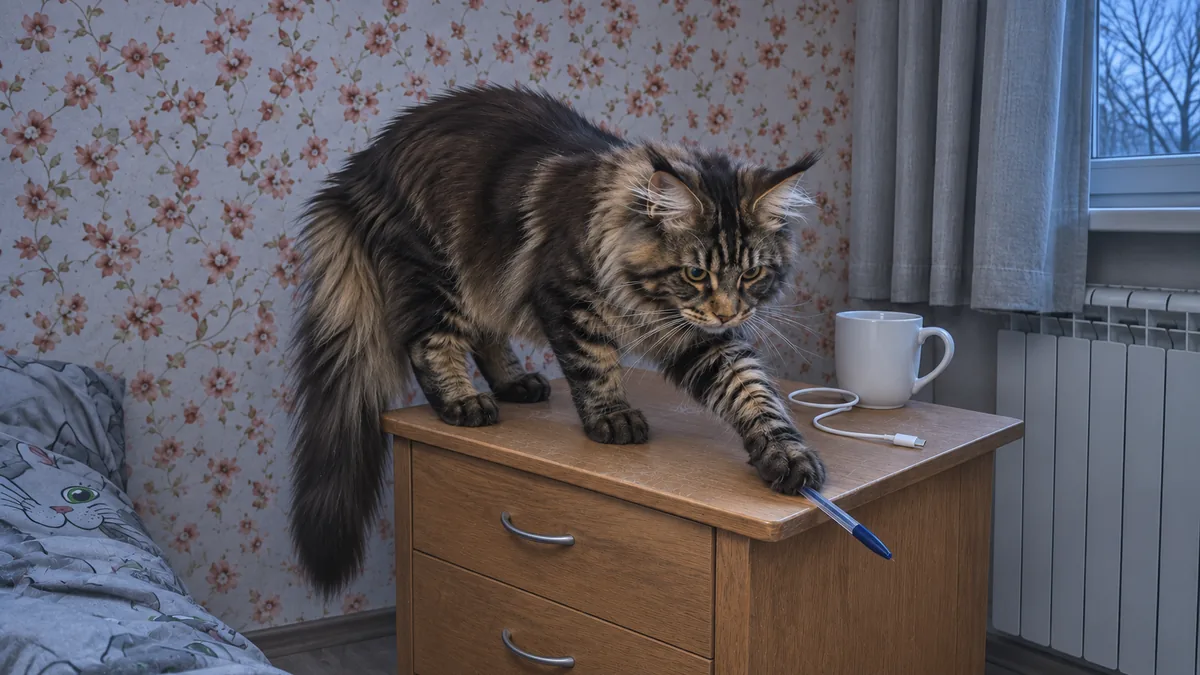
Mon, 5:10: knocks a pen off the bedside table. I say her name and put the pen back. She knocks it off again.
Tue: pens and the glass go in the drawer at night. Ten minutes with the fishing-rod toy at 10 p.m., then dinner from a puzzle feeder. Quiet until 6.
Fri, 5:30: pats the empty bedside table, then goes to her cat tree by the window.
Notes like these show when the knocking happens and what it gets your cat. Here it lined up with the early hours and with me answering, and it eased off once there was nothing to push and something else to do.
Questions people ask
Why does my cat knock things off my nightstand?
Because it’s next to you at the time your cat is most active. Cats Protection says cats are naturally most active at dawn and dusk, and a crash by your head is very likely to wake you. If waking up ends in food or a chin scratch, PDSA warns your cat will expect it every day. Clear the bedside table at night and play before bed.
Why does my cat knock things off the counter?
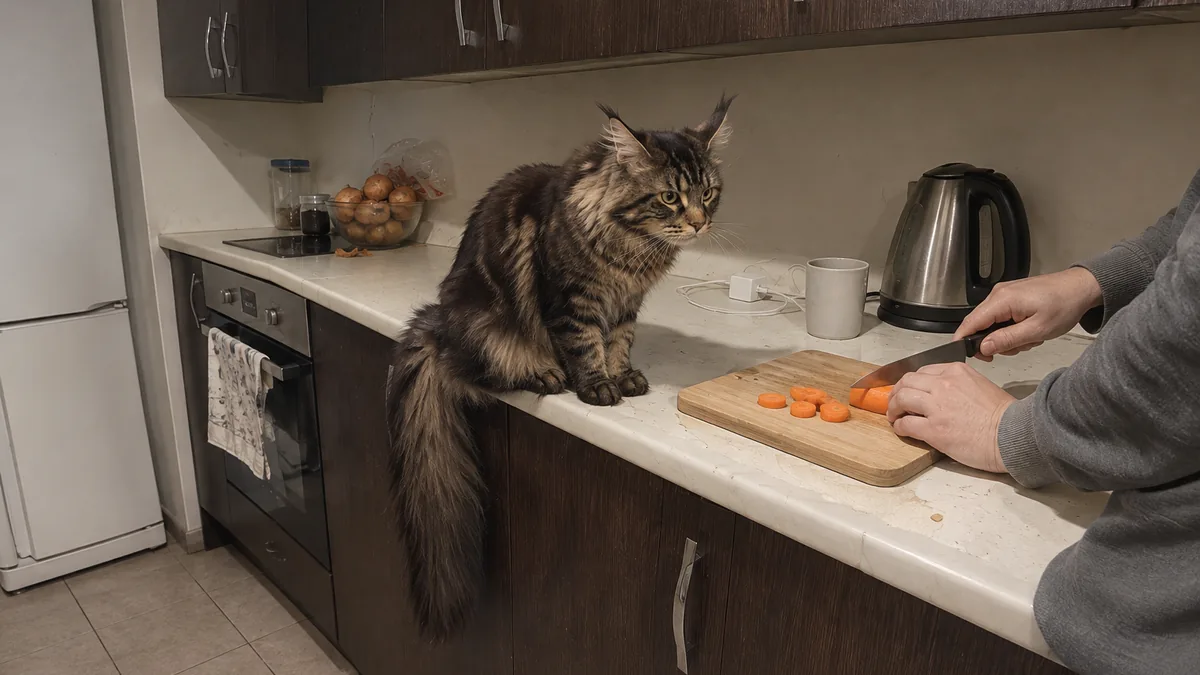
Cats Protection says cats love being up high, and if the kitchen counters are the only high surfaces around, they will climb them. Once they’re up there, anything unfamiliar often gets investigated with a paw. Give your cat empty shelves or a cat tree, and put breakables away.
Why do cats knock things off shelves?
For the same reasons as tables. Battersea lists knocking things off tables and shelves as a sign of frustration, which can come from too little stimulation or no chance to hunt, chase, stalk and pounce. What it suggests is puzzle feeders, play, and plenty of high places to climb up to.
Should I tell my cat off for knocking things over?
No. Cats Protection says your cat won’t understand what they’ve done wrong, and punishing them will likely only make the problem worse. Even talking to your cat as they go to bat can keep the habit going, PetMD says. Put away what they knock over and give them something better to do.
Why does my cat knock things off my desk?
PetMD mentions counters and desks by name, and says pushing or batting things off them plays to the hunting instinct. A desk also has you sitting at it. If a nudged pen gets a word or a glance from you, your cat learns that it works. Play before you sit down to work, and keep a toy nearby to redirect them before they jump up.
Sources and further reading
- PetMD — Why Do Cats Knock Things Over? (Marilyn Krieger, CCBC; reviewed by Teresa Manucy, DVM)
- Cats Protection — Why is my cat being ‘naughty’?
- Battersea — How do I tell if my cat is frustrated?
- Cats Protection — Cats at night
- PDSA — Weird things cats do
- International Cat Care — Understanding the hunting behaviour of cats
- International Cat Care — Playing with your cat