Lapka
Where to start
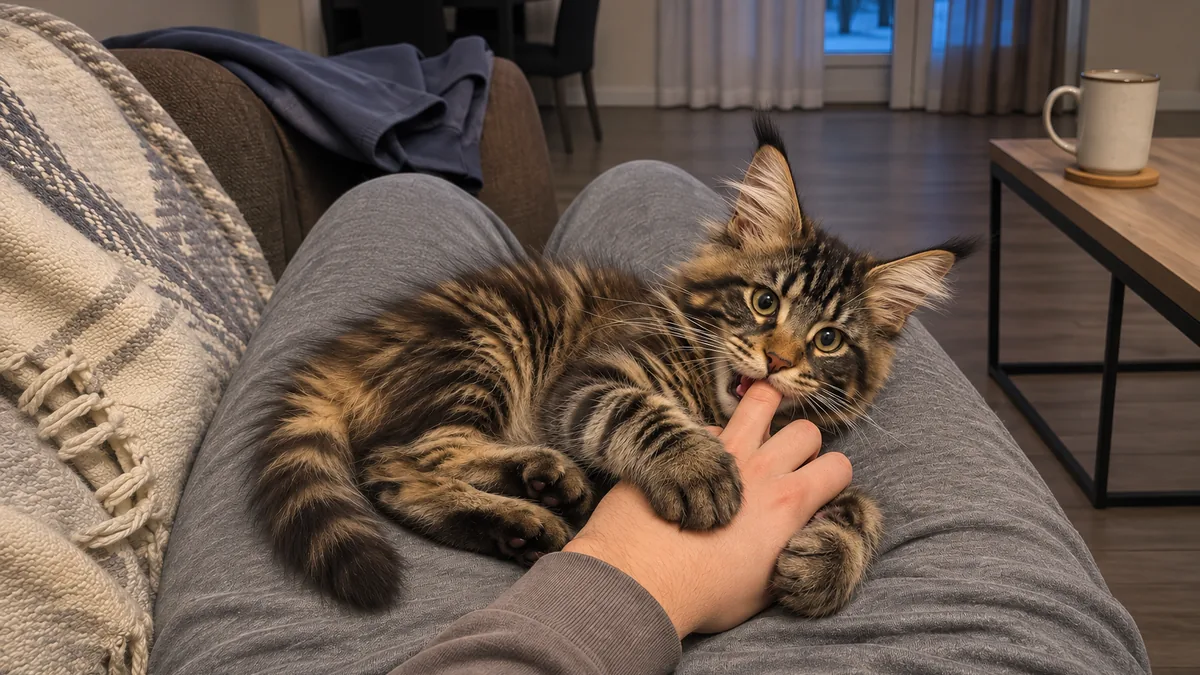
Kittens bite hands because play is how they practise hunting, and a hand that joins the game becomes the prey. To stop it, keep hands and feet out of every game and give the hunt a wand toy or a kicker toy instead. When your kitten grabs you, keep still, then redirect them to a toy. Play every day in short bursts, never punish, and make sure everyone at home follows the same rule.
Why kittens bite hands and feet
Play is how kittens practise hunting. Cats Protection, the UK cat charity, says kittens naturally want to chase, pounce, hunt and rough-and-tumble, and International Cat Care describes play as the whole hunting sequence: search, stalk, chase, pounce, catch and manipulate. Your hands are the nearest thing that moves.
The ASPCA says rough play is common and natural in kittens and young cats under two years old, and that play aggression is the most common kind of aggressive behaviour cats direct at their owners. So a kitten biting while playing is usually a normal kitten whose game has landed on the wrong target.
Some of it we teach them. Cats Protection says this kind of biting can come from kittens being encouraged to play with fingers and toes, and that a cat who learns to see hands and feet as toys will keep attacking them when older, with much sharper teeth and claws. Kittens also chew more while their teeth are changing, which has its own section below.
Step 1: take your hands and feet out of the game
Start here. International Cat Care says never to use your hands or feet to play with a kitten: it seems cute at first, but the kitten grows up linking fingers and toes with playtime. Battersea says the same even while a kitten’s teeth and claws are fairly harmless, because once a cat is used to playing that way it can be a hard habit to break.
That means no wiggling fingers under a blanket, no wrestling with a bare hand and no toes as a toy. Cats Protection says everyone in the household should know what is and isn’t allowed, because mixed messages can confuse your kitten. Agree the rule with the whole family, children too.
Step 2: give the bite a toy instead
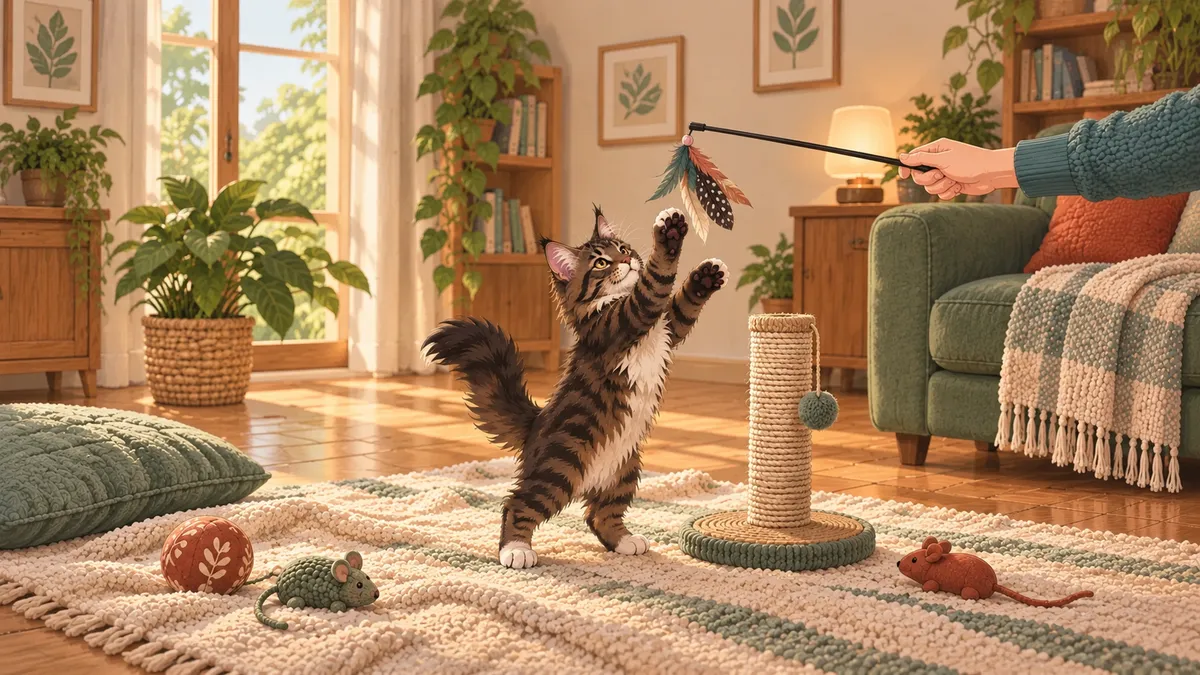
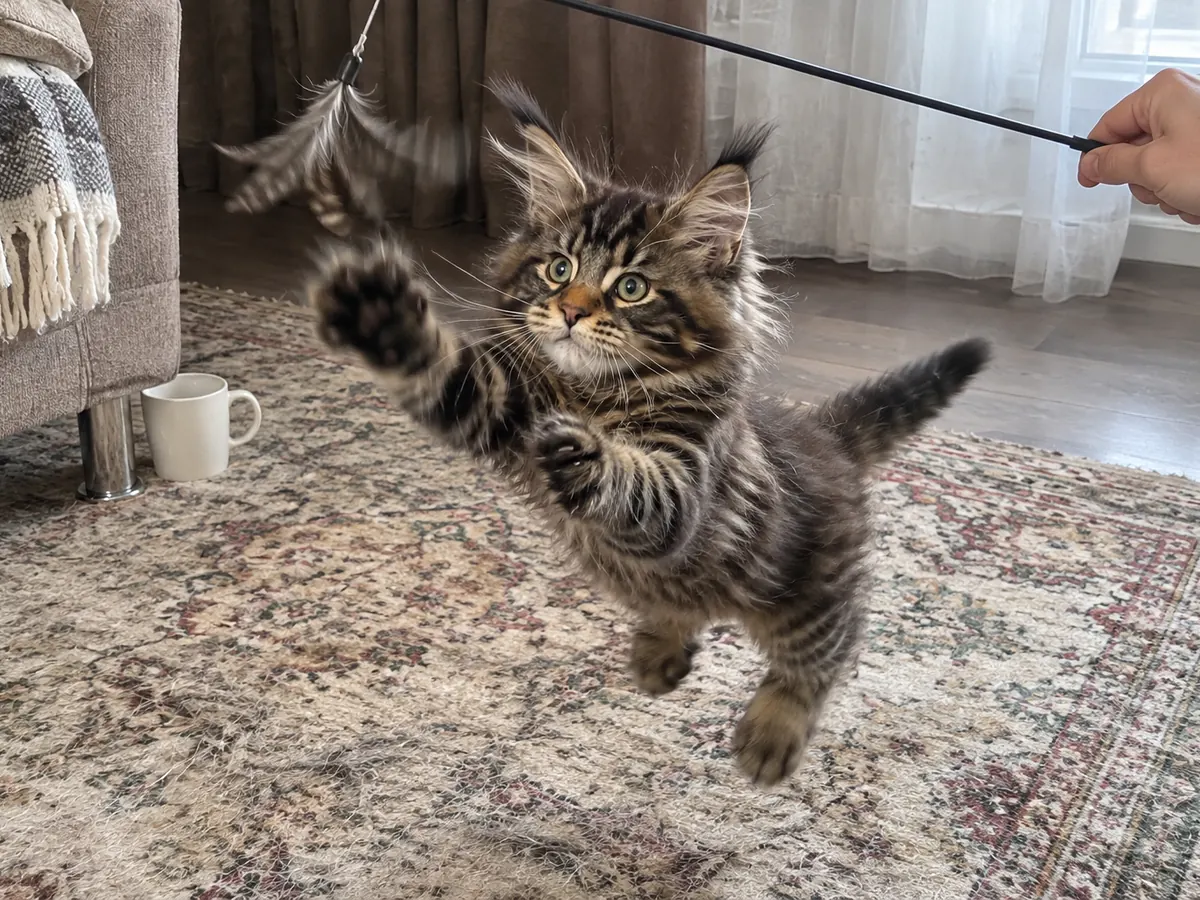
A wand toy, also called a fishing rod toy, puts the prey at the end of a string and your hand at the far end of the stick. Cats Protection says fishing rod toys encourage natural hunting behaviour while keeping claws and teeth away from you, and Battersea suggests an extra-long one so your cat doesn’t mistake you for the prey.
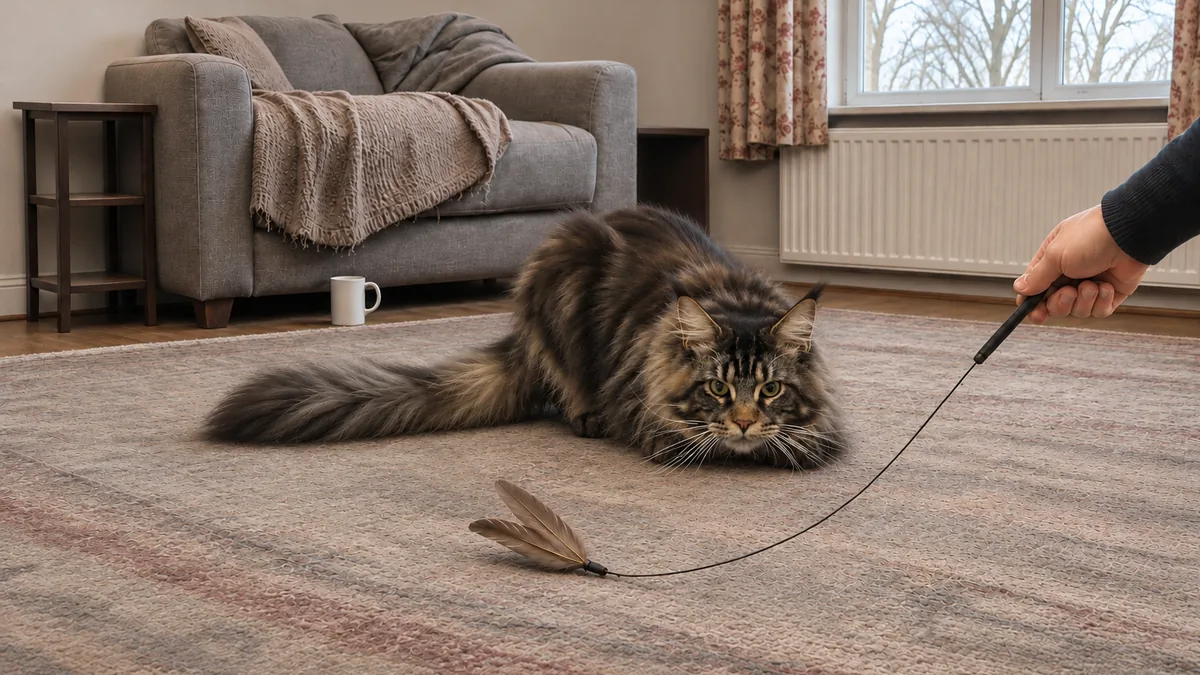
Move it the way a bird or a mouse would: short, sometimes erratic bursts with still moments in between, as Battersea puts it. Let your kitten catch and ‘kill’ it now and then. Cats Protection says that stops them getting frustrated.
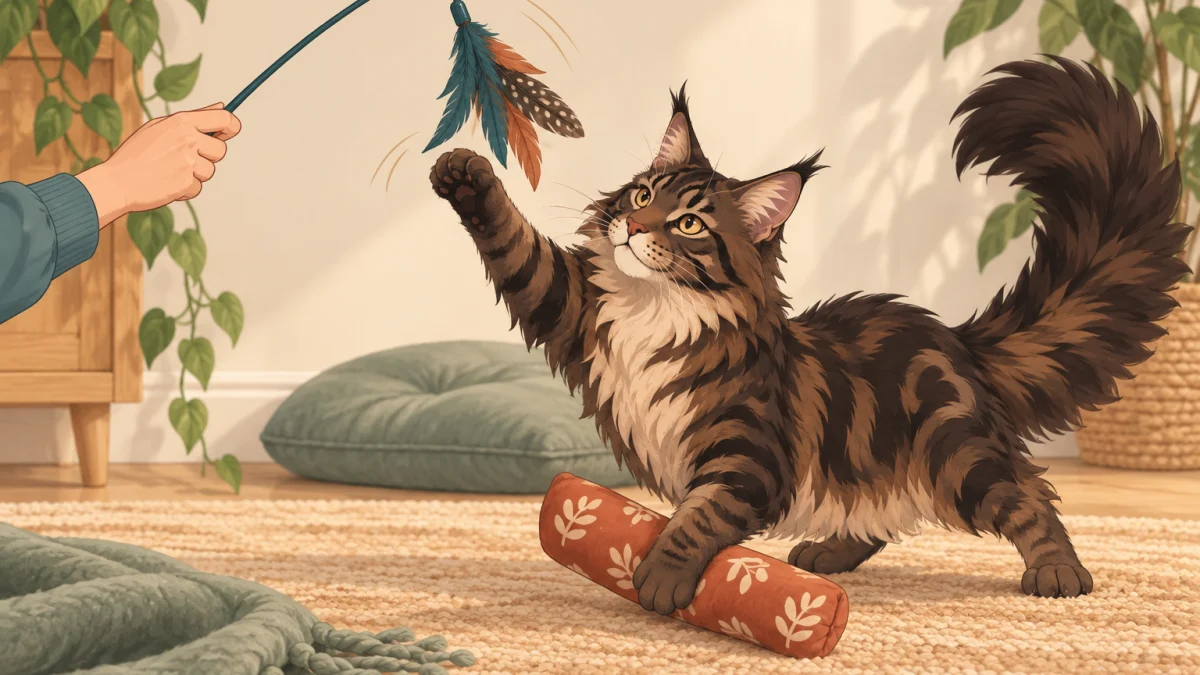
For the kitten who hugs your arm and kicks it with their back legs, give them something big to hug. Cats Protection calls hugging your arm and biting a classic hunting move, and suggests a kicker toy to take the kicking. International Cat Care says some kittens enjoy larger soft toys they can rake and kick with their back legs. It also warns against pipe cleaner toys, toys made of ribbon or string, and balls of wool, which can mean emergency vet care and surgery if eaten.
How to get your kitten to stop biting you in the moment
Keep still. Cats Protection says that if your kitten pounces on you, keeping still leaves nothing exciting to chase, and then you redirect them to a suitable toy. A hand yanked away is just more to chase. Sudden movements and loud noises also make another bite more likely, the same charity says.
Once your kitten lets go, toss the toy or drag it away from you. If the game has got too wild, end it. Cornell Feline Health Center says walking away and ignoring a cat in play aggression may teach them that rough play means no play at all.
Don’t push your kitten off or keep handling them. Battersea says a cat who is excited by play is more likely to bite or scratch when touched, and Cornell warns that touching a cat at these moments may be taken as play, which can reward the biting.
How to get my kitten to stop biting so hard
Kittens usually learn soft bites from each other. Cornell says cats learn they are biting or scratching too hard when their littermates stop playing or fight back, and that cats raised alone may not learn it. The ASPCA adds that kittens orphaned or weaned early might never have learned to tone their play down.
Cats Protection says a kitten raised with their mother should stay with her until at least eight weeks old. If yours came home younger, or as the only kitten, you can do what a littermate would: the moment teeth land on skin, the game stops, and it starts again only with a toy.
Hard bites can also mean the game ran too long. International Cat Care says kittens tire easily and play may only last a few minutes. End it gradually and turn your kitten’s attention to something else, such as food, which it says helps prevent ambushes on people.
Step 3: play every day, little and often
A kitten with nowhere to put the hunt will put it on you. Cats Protection says to play with your kitten every day, and that frequent short sessions are better than fewer long ones. Younger cats will happily play 10 times a day or more, and games of one to two minutes are fine.
International Cat Care calls cats sprinters rather than marathon runners: one minute of frenzied play is a good result. Put the wand toy out of reach afterwards, and rotate the other toys so they stay new.
From about twelve weeks, mealtimes can help too. International Cat Care says kittens can be puzzle-fed from as early as twelve weeks, starting with something very simple, such as an open egg box with kibble inside.
How to stop a kitten from biting and scratching when you stroke them
Some kittens grab and bite in the middle of a cuddle. Cats Protection says most cats are happy with regular but short spells of play and petting, a couple of minutes at a time, and to step away when they start to get overexcited. The RSPCA says to handle a kitten gently and briefly, watch their body language, and give them space when they show they’ve had enough.
Watch for the warning. Cornell says that before turning on the hand that strokes them, a cat will often show dilated pupils, a lashing tail and ears moved backward on the head. Cats Protection lists a swishing tail, ruffled-up fur and hissing as signs a kitten may be unhappy. Stop at the first one and let your kitten walk away.
Never punish: reward the gentle moments instead
Tapping a nose or shouting only makes things worse. Cats Protection says never to punish your kitten, because punishment can make them anxious or fearful. Cornell says any physical punishment can increase a cat’s fear or anxiety and make aggression worse.
What works is calm redirection and a reward for what you do want. Cats Protection says to gently redirect unwanted behaviour and reward the behaviour you want with praise or a small treat. The RSPCA says the same: reward what you want with treats, play or fuss, and calmly redirect the rest. So when your kitten sits beside your hand without grabbing it, that’s the moment for a treat.
The RSPCA suggests trying some kitten training from around 12 weeks, such as coming when called, in short sessions. If you’d like help with that, a Lapka programme plans a few minutes of practice each day and adjusts it after each one.
Teething: why your kitten bites everything
Teething makes kittens chew more. Cats Protection says the baby teeth come through at 2 to 6 weeks and start to fall out at 3 to 6 months, and teething stops at about seven months, when all 30 adult teeth are in. Chewing can soothe sore gums, it says, though it’s also a normal way for kittens to explore.
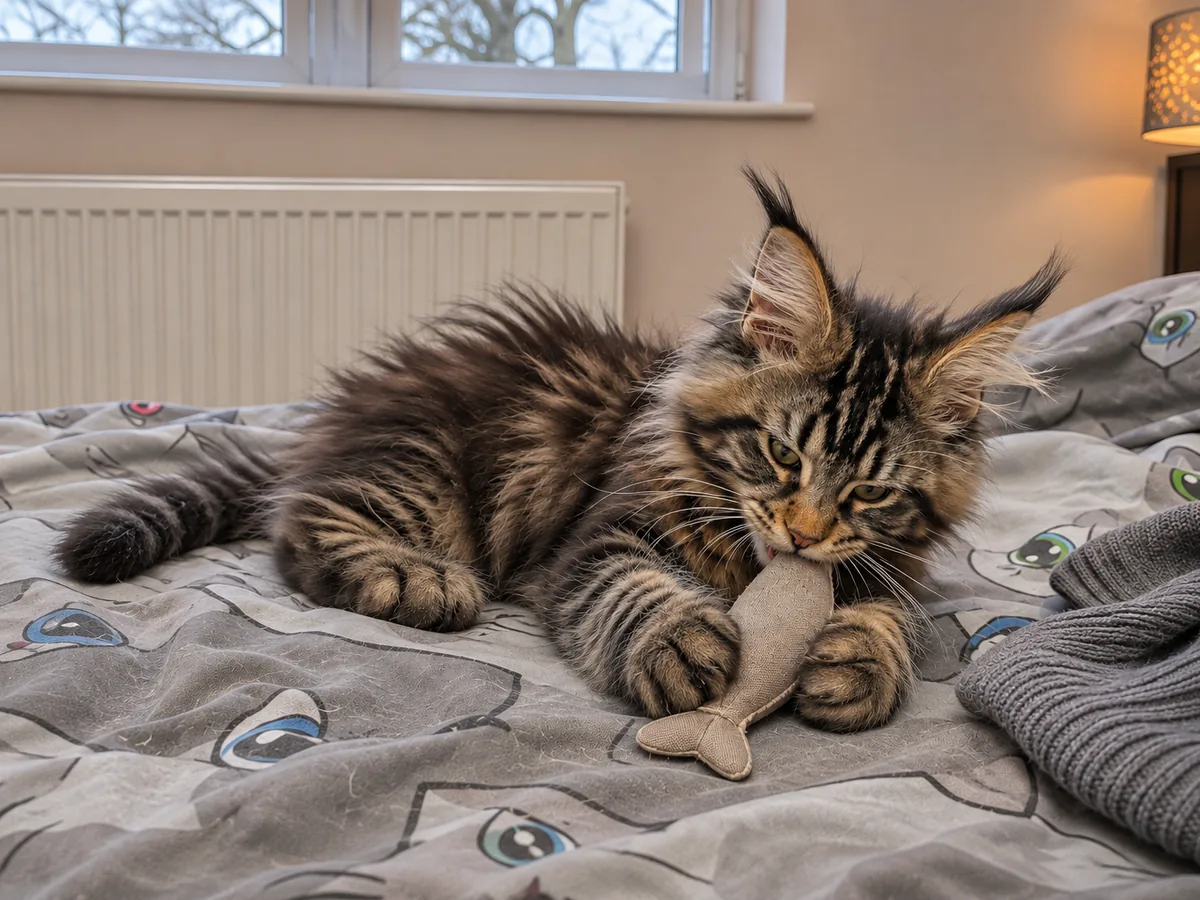
Give the chewing a safe target. Cats Protection suggests soft fabric toys and chew toys made for teething kittens from soft rubber, latex or foam, and says to avoid hard toys of solid plastic or wood, which could hurt their teeth and gums. Don’t pull a toy out of your kitten’s mouth, which can damage baby teeth, and don’t let them chew on your hands and feet.
How to stop a kitten from biting wires
Teething kittens may chew anything in sight, Cats Protection says, so the answer is mostly to keep wires out of reach. Its checklist for kitten-proofing a home says to tidy away or cover loose cables and wires, and the RSPCA lists wires among the hazards to remove before a kitten arrives.
Leave something better to chew in rooms with cables, and check on your kitten through the day. Cats Protection says not to leave kittens unsupervised with toys they could shred, swallow or get tangled in, and to replace any toy with parts coming away.
How to stop a kitten from biting an older cat
A kitten who pounces on your older cat is usually still playing. Cats Protection says an older cat may not appreciate a kitten constantly wanting to play when all they want to do is nap, and its advice is to play with your kitten to tire them out, so they’re more likely to leave the older cat alone. Battersea notes that a lively kitten may overwhelm an elderly cat.
Give your older cat places the kitten can’t reach. Cats Protection says those make a good escape when the kitten gets a bit much, and suggests feeding the two apart. If play between them gets too rough but isn’t a real fight, International Cat Care suggests distracting them with a wand toy or a kick toy. If a real fight breaks out, Battersea says not to use your hands to separate them, and to block their view with a barrier such as a large piece of cardboard.
If the kitten is new, Cats Protection says to introduce them very slowly, starting by swapping items that carry each cat’s scent.

When to see a vet, and what to do about a bite
Teething should only cause mild discomfort, Cats Protection says. Call your vet if you see drooling, pawing at the mouth, dropping food regularly, struggling to eat, growling at food, grinding teeth or bleeding gums, which it says can mean your kitten is in more pain than normal. If you’re worried about your kitten’s behaviour, it says to contact your vet and a qualified cat behaviourist as soon as possible, before the problem gets worse.
Look after a bite that breaks the skin. Cats Protection says to clean the wound with soap and warm water, gently pat it dry and cover it with a clean dressing, and to seek medical help if it becomes infected or doesn’t heal.
A week of notes on a kitten who bites hands
Mon, 21:00: grabs my hand on the sofa and kicks with the back legs. I pull away and get bitten twice more.
Tue, 20:45: three minutes with the wand toy, then supper. No grabs all evening.
Thu: one pounce on my hand. I keep still, the kitten lets go, and I toss the kicker toy. The kicker gets bitten instead.
Notes like these show when the bites come and what happened just before. Here they cluster in the evenings after a day with little play.
When it does not go to plan
Why does my kitten bite me so much?
Usually because play is practice hunting and your hands have become part of the game. Cats Protection says biting that is new or growing can also be a sign of boredom, and the ASPCA points to long hours alone with no chance to play. Teething kittens chew more too. Short daily games with a wand toy help burn off that kitten energy.
At what age do kittens stop biting?
There’s no set age. Cats Protection says teething ends at about seven months, and its signs usually settle on their own then. But the ASPCA says rough play is common up to two years, and Cats Protection warns that a cat who learns hands and feet are toys keeps attacking them as an adult. So swap hands for toys now rather than waiting.
Is it OK to tap my kitten on the nose when they bite?
No. Cats Protection says never to punish a kitten, because it can make them anxious or fearful, and Cornell warns that touching a cat during play aggression may be taken as play and reward the biting. Keep still, then give your kitten a toy.
How do I stop my kitten biting my feet?
The same way as hands: feet never join the game. When your kitten pounces on your ankle, keep still so there’s nothing to chase, then drag a wand toy away from you. Battersea says to avoid playing with your feet even while a kitten’s teeth and claws are fairly harmless, because the habit is hard to break.
Should I let my kitten bite me gently?
Better not. Cats Protection says this kind of biting is usually fairly gentle but can still be painful and leave a wound. Chewing on hands may be painless while your kitten is small, it says, but if it’s encouraged they will keep doing it as an adult, and it gets a lot more painful once they have adult claws.
Sources and further reading
- Cats Protection — Bringing a new kitten home
- Cats Protection — Why does my cat bite me?
- Cats Protection — Cats and play
- Cats Protection — Kitten teething advice
- Cats Protection — Introducing cats to other cats or kittens
- International Cat Care — Playing with your cat
- Cornell Feline Health Center — Feline behavior problems: aggression
- ASPCA — Aggression in cats
- Battersea — Playing with your cat
- Battersea — How to introduce cats
- RSPCA — How to look after a kitten