Lapka
Where to start
To play with a cat that doesn’t like to play, make the toy move like prey. Use a wand toy, move it in short, jerky bursts with pauses, and let your cat catch it now and then. Play for a minute or two, a few times a day. Dawn and dusk are good times. If your cat suddenly stops playing or seems unwell, see your vet.
Why your cat doesn’t want to play
Some cats are simply much more playful than others. International Cat Care describes a cat with low motivation to play: they don’t start games by themselves, they’re interested only at certain times of day, they’re fussy about toys, they tire quickly and they take a lot of persuading.
That cat can still enjoy a game. Battersea, a UK dogs and cats charity, says your cat may just have specific requirements, or need a bit more encouragement than they used to. So the toy, the moves and the time of day are the things to change.
Older cats may naturally slow down, and some start to lose interest. With two cats or more, one may be keener than the other, or there may be tension between them. International Cat Care suggests making time to play with each cat on their own, away from the others.
My cat doesn’t want to play anymore
A cat who used to play and has stopped is a different case. Less play can be a sign of pain, and cats are good at hiding it. International Cat Care says painful cats spend less time grooming, exploring, jumping, climbing, hunting, playing or scratching, or stop altogether. Battersea lists decreased interest in playing as a sign of pain.
Cats Protection lists reduced interest in play among the signs of arthritis, and says around 90% of cats aged over 12 have some degree of arthritis detectable on x-rays. It often goes unnoticed, because owners think their cat is just slowing down with age.
Look at the rest of your cat’s day too. Do they hesitate before climbing up or down, walk stiffly, hide in unusual places, avoid being touched, eat less, groom less, or go to the toilet outside the litter tray?
If you think your cat is in pain, or you’re not sure, contact your vet and arrange a health assessment as soon as possible. PDSA, a UK vet charity, says to contact your vet if your cat has been lethargic for more than 24 hours: low in energy, quieter than usual, less interested in food and play. Book an urgent appointment if they seem severely lethargic.
A short video helps, because cats may not show many signs at the clinic. Film your cat walking, playing, going up and down the stairs and jumping on and off surfaces.
How to play with a cat properly
To a cat, a game is a hunt. International Cat Care lists its parts: search, stalk, chase, pounce, catch and manipulate. A good game lets your cat do all of them with a toy.
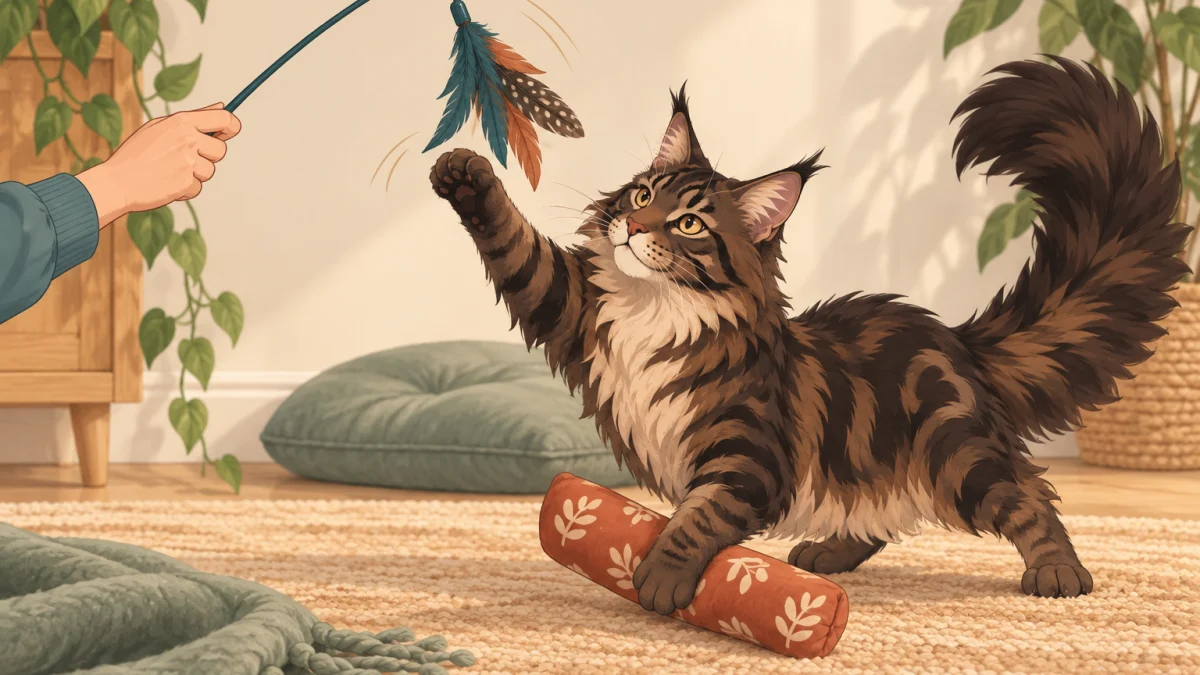
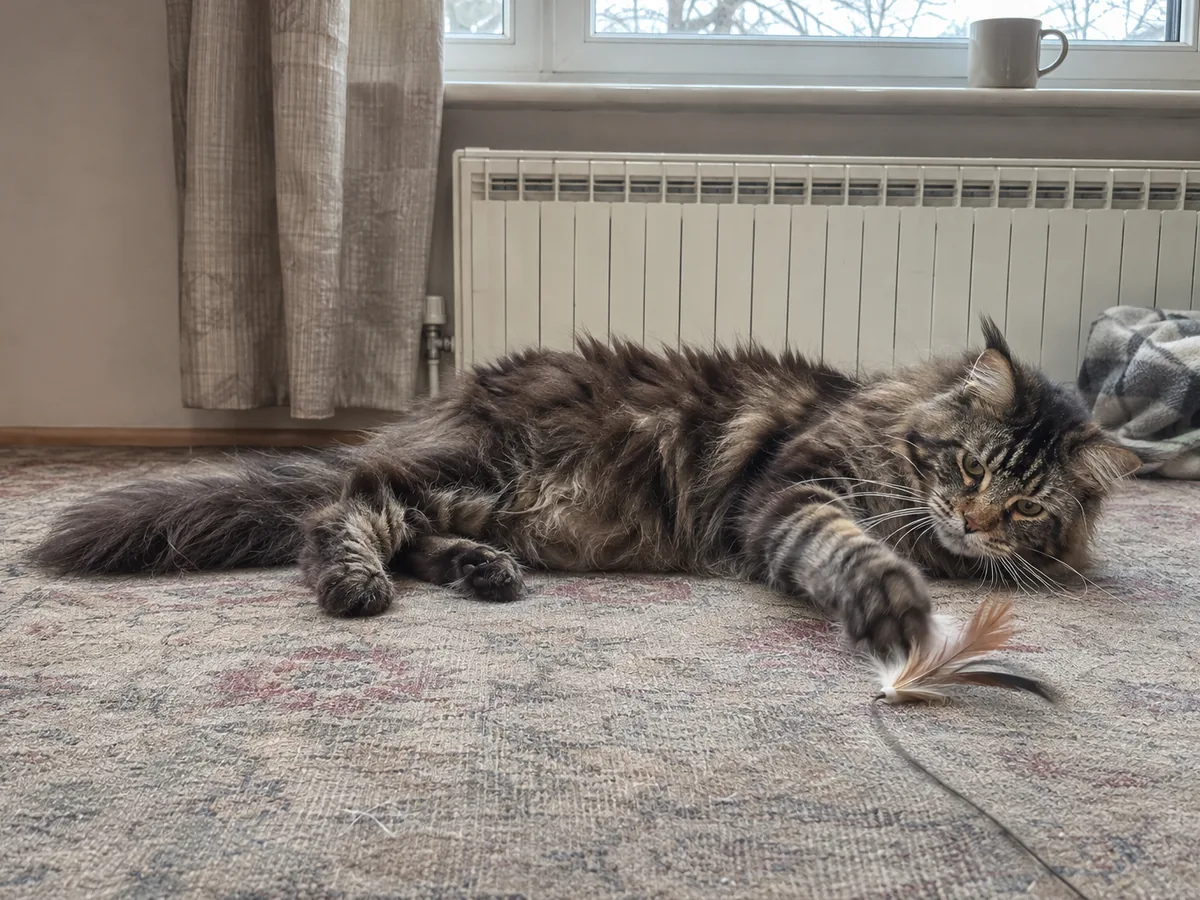
Start with a wand toy, also called a fishing rod toy: a stick with a string and a small toy on the end. It lets you play from a safe distance. Battersea suggests mouse-sized toys made of soft materials, or a bundle of feathers, because the best toys look and feel like real prey.
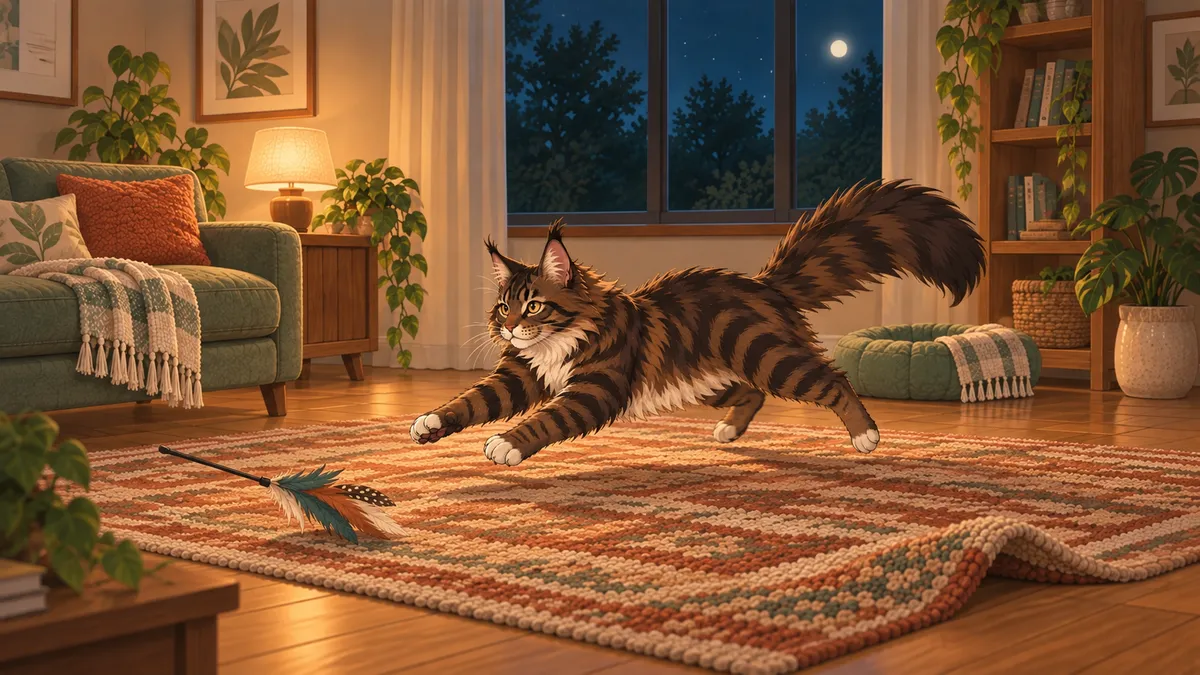
Move it the way a mouse or a bird would: a short, jerky burst, then a moment of stillness. Battersea says this movement is the most likely to get your cat interested. Watch which moves get the biggest reaction and do more of those.
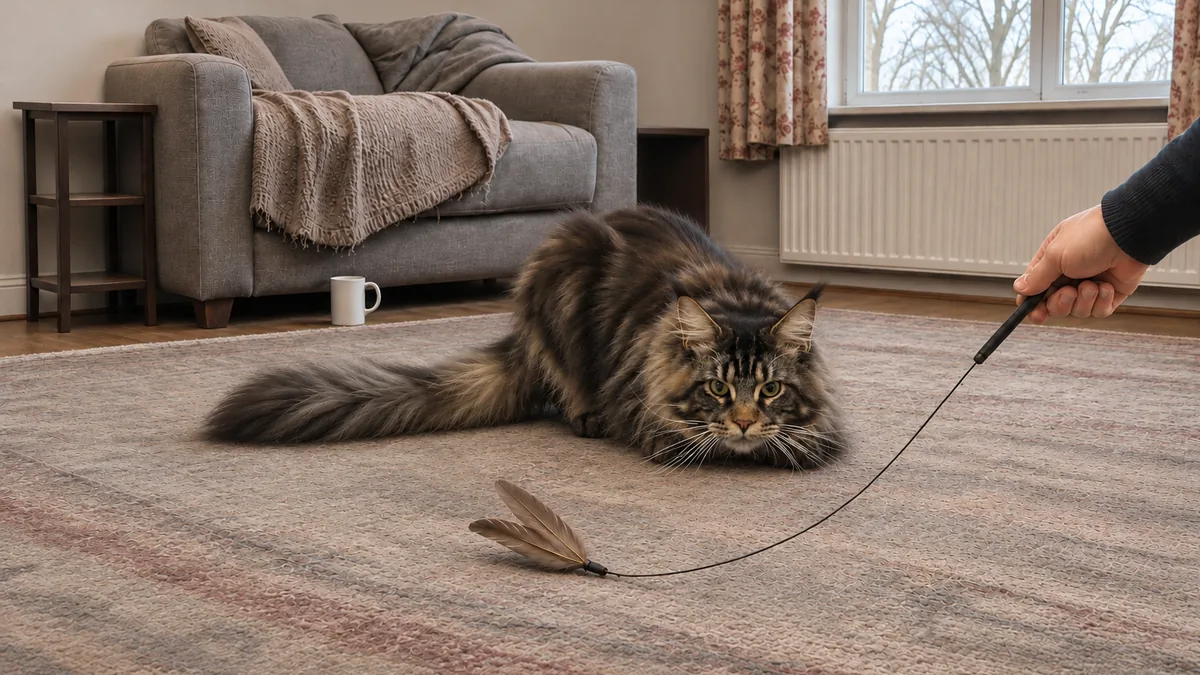
You’ll know it’s working when your cat’s eyes lock on the toy and they crouch with their head low.
How to get your cat to play
If the wand toy gets a yawn, experiment. These ideas come from Battersea’s advice for cats who seem uninterested but aren’t unwell or stressed.
Try a different kind of prey. Some cats prefer certain types, so swap the feather for something like a mouse or an insect. A thin wire with a small bit of cardboard on one end moves a lot like one.
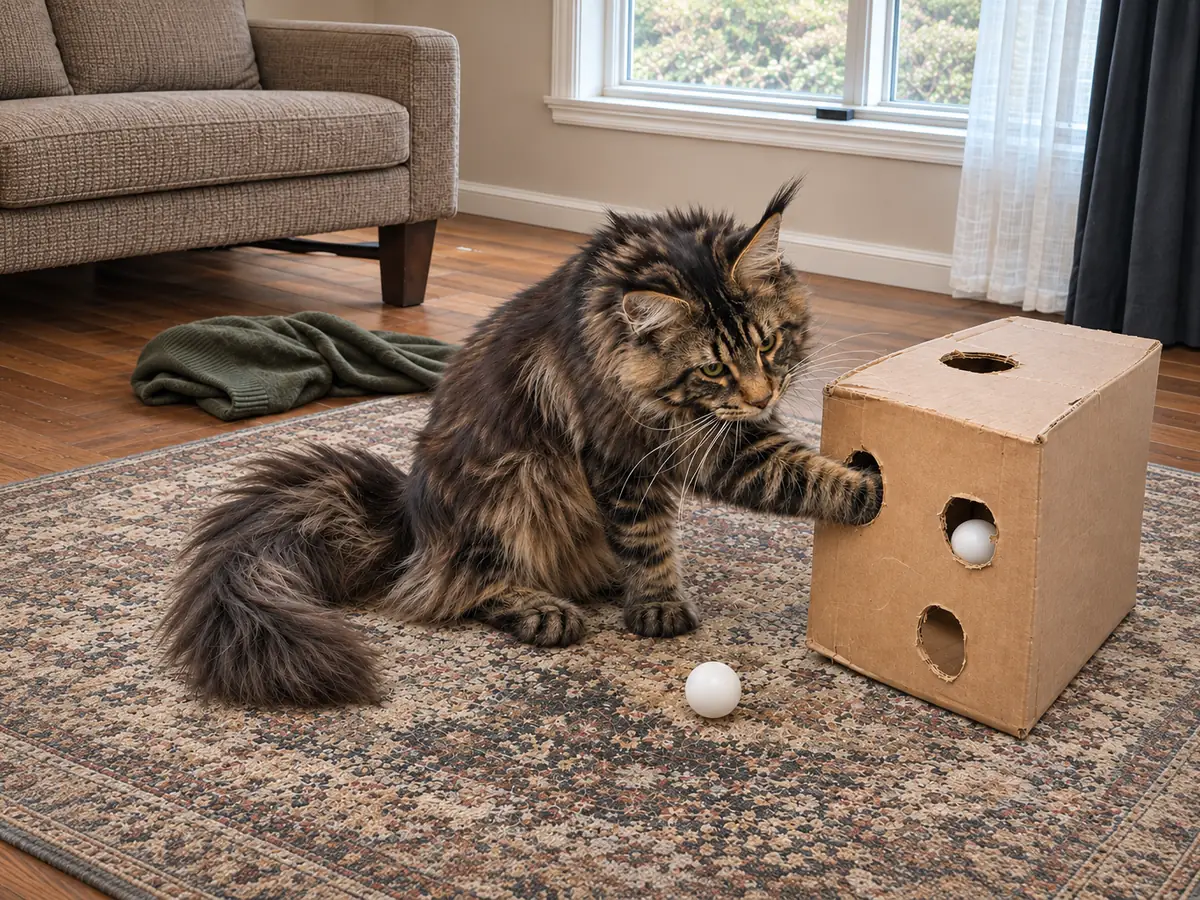
Hide the toy. Move the wand toy about under a rug, or put ping pong balls inside a box with holes in it, so your cat has to paw at them and scoop them out.
Throw the occasional treat for your cat to chase and eat. Try toys with catnip or valerian too. Catnip excites many cats but not all, and it affects some more than others, so don’t touch your cat while they play with it.
Keep some toys for games only and store them away afterwards, so they stay new and exciting. If your cat can safely go into a garden, try playing there: Battersea says your cat is more likely to be in a playful mood outside.
Never force it. PDSA says to stop if your cat loses enthusiasm.
The best time to play with your cat
Cats are usually most active at the start and the end of the day, so try dawn and dusk. A cat with low motivation may play only at certain times, so try the same toy at a different hour before you give up on it.
Try just before a meal as well. International Cat Care says that in studies, the hungrier the cat was, the more intense and prolonged the play.
How long and how often to play with your cat
Less than you’d think. International Cat Care says cats are sprinters, and one minute of frenzied activity is a good result. Cats Protection says very short games of one to two minutes are fine. Older cats will love playing three or four times a day, and younger cats will be happy to play 10 times a day or more.
PDSA aims higher for a cat who’s a bit sedate, stays indoors or carries extra body fat: two 15 to 20 minute sessions a day as a place to start, with time to rest in between. For a cat who doesn’t like to play, the one-minute game is the easier first step.
If your cat would still rather not chase anything, you can use those minutes to teach a trick. A Lapka programme plans the sessions and adjusts them after each one.
Let your cat catch the toy
Let them catch it now and then. Battersea says cats can be left feeling frustrated if they’re never able to catch or “kill” their “prey”.
That’s why Battersea and PDSA don’t recommend laser pointers: there’s nothing to catch. If you do use one, International Cat Care says to switch to a wand toy to finish the game.
A real attack is over quickly, because the cat either catches the prey or loses it. So some cats get very excited by a new toy and soon lose interest. Battersea suggests having several toys and changing between them during a game.
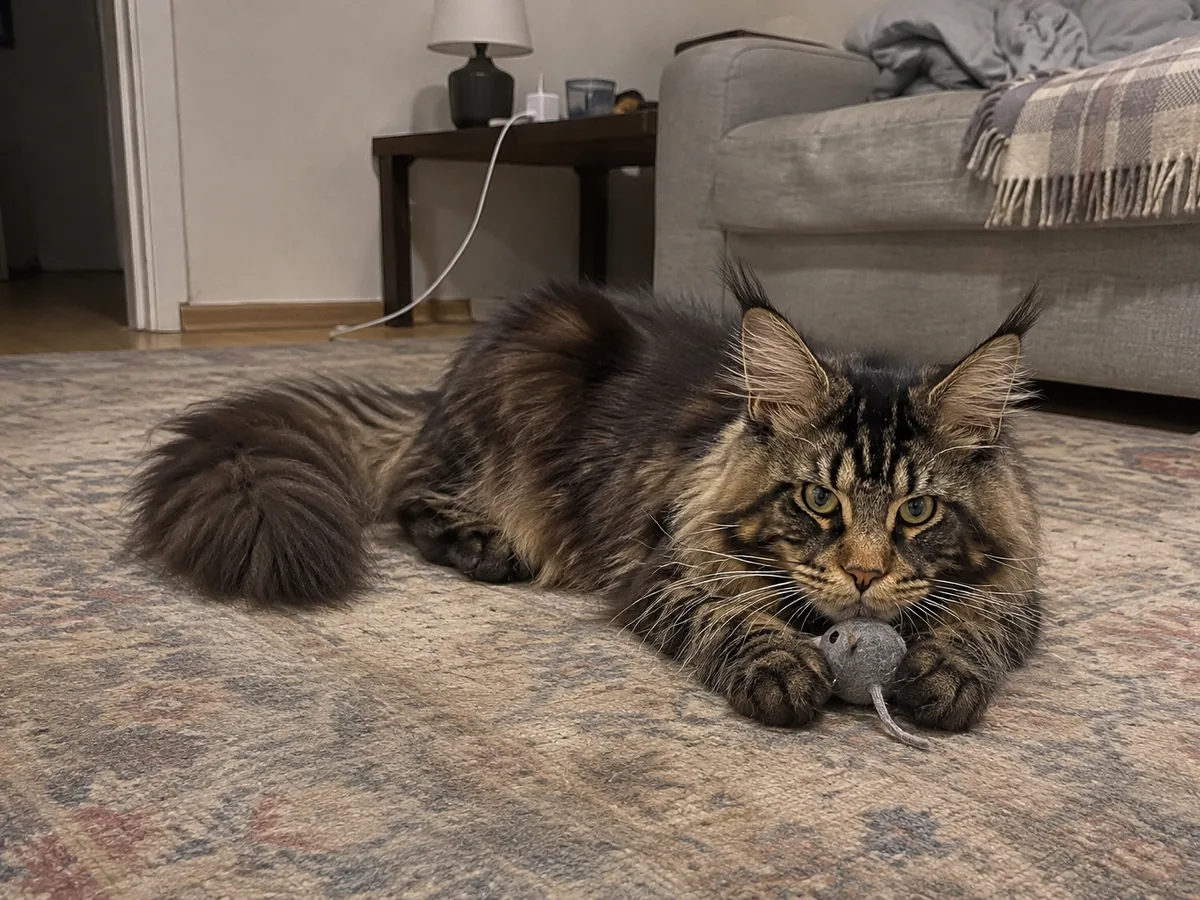
Finish with a catch if you can. In a University of Exeter study, owners gave their cats a toy mouse after each “hunt”, to mimic a real kill. Many cats also enjoy a larger kicker toy, big enough to hold in the front legs and kick with the back legs.
How to play with a cat without getting bitten
Keep your hands and feet out of the game, even with a kitten whose teeth and claws are relatively harmless. Battersea says that once a cat is used to playing this way, it can be a hard habit to break, and bigger, sharper teeth and claws can easily lead to an injury.
Use toys that keep your body at a distance, such as a fishing rod toy or a thrown ball. An extra-long rod helps. While your cat is excited, try not to touch or handle them, because that’s when they may be more likely to bite or scratch.
Grabbing ankles and biting can also mean your cat is bored. Cats Protection says that when there’s a lack of play or “prey” opportunities, a cat might turn their hunting on people. If an adult cat suddenly starts doing this, call your vet first, then see a qualified behaviourist.
With a kitten, end the game gradually and turn their attention to something else, such as food. International Cat Care says this helps prevent frustration and ambushes on people.
How to play with a cat so they get tired
Plan on several short games. Cats are active in short bursts, and International Cat Care says short, frequent play sessions most closely resemble a cat’s natural predatory pattern.
Indoor-only cats need this most, since they won’t be burning as much energy outdoors. Mealtimes can help. Feed biscuits through a puzzle feeder, or a plastic drinks bottle with biscuit-sized holes cut into it. Your cat learns that batting the bottle releases a biscuit, and they’ll take their time eating.
Daily play also changes what cats who go outside bring home. In a 12-week University of Exeter trial of 355 cats, five to ten minutes of daily play with an owner resulted in a 25% reduction in the prey cats brought home.
How to play with a shy or nervous cat
Play can suit a cat who doesn’t want much touching. Battersea says it’s a good way to bond with cats who don’t like to be touched or stroked too much.
Start from a distance. Give your cat somewhere to hide, preferably high and dark, such as a shelf or behind the sofa, and let them come to you. As they get braver, Cats Protection suggests small toys you can gently throw, such as scrunched-up paper or a ping pong ball. Fishing rod toys let your cat join in without feeling threatened by close contact.
How to play with an older cat
Senior cats enjoy playing too. They may have less energy and be less mobile, so International Cat Care says to keep things gentle and fit the game to their mobility. Even if your cat lies down to play, they still benefit physically and mentally.
Trail the toy along the floor, within easy reach. For a cat with arthritis, Cats Protection says regular, gentle play can also help keep them healthy.
What a week of small games can look like
Mon, 7:10, before breakfast: feather on the wand. Looks at it, yawns, walks off.
Wed, 19:00, before dinner: moved the wand under the rug. One paw goes in after it. About a minute, then a rest on the chair.
Sat, 7:15: toy mouse on the wand, short jerks, long pauses. Crouches, pounces twice, catches it and carries it off. Eating, litter tray and jumping up to the windowsill all as usual.
Notes like these show what gets a reaction: which toy, which move, what time of day. If your cat ever slows down or stops playing, the same notes help your vet see what’s changed.
When it does not go to plan
Is it normal for a cat not to want to play?
It can be. Some cats are much more playful than others, and older cats may naturally slow down. But what looks like age can be arthritis, so a change needs a vet: a cat who used to play and has stopped, or who seems unwell.
How long should I play with my cat each day?
Cats Protection says very short games of one to two minutes are fine, three or four times a day for an older cat and 10 times or more for a younger one. PDSA suggests two 15 to 20 minute sessions a day for a less active cat, with rests. Stop when your cat loses enthusiasm.
Do I need to buy toys?
No. Battersea suggests making toys from the insides of toilet rolls, empty cardboard and egg boxes, empty plastic bottles or yoghurt pots. Cats Protection says a ball of tin foil works too, as long as your cat can’t swallow it.
Which toys aren’t safe for cats?
Never leave your cat alone with string, thread, twine or wool. PDSA says that if swallowed, they can cause a serious gut blockage. Battersea says cats can get tangled in string and fishing rod toys, so put the wand toy out of reach after every game. Cats Protection says to check toys regularly for signs of wear.
Are laser pointers bad for cats?
Battersea and PDSA don’t recommend them, because there’s nothing for your cat to catch and they can become frustrated. If you do use one, finish with a wand toy, or throw a small mouse-like toy or some treats for your cat to catch.
Do indoor cats need more play?
Yes. Cats Protection says indoor cats need more entertainment than outdoor cats, and that play sessions are especially important for indoor-only cats. A few short games a day and a puzzle feeder at dinner are a good start.
Sources and further reading
- Battersea — Playing with your cat
- International Cat Care — Playing with your cat
- Cats Protection — Cats and play
- PDSA — Exercising your cat
- International Cat Care — Understanding the hunting behaviour of cats
- International Cat Care — How to spot signs of pain in cats
- Battersea — How do I tell if my cat is in pain?
- International Cat Care — Arthritis in cats
- Cats Protection — Arthritis in cats
- PDSA — Low energy (lethargy) in cats
- Cats Protection — Shy cats
- University of Exeter — Play and meaty food reduce hunting by cats (2021)