Lapka
Where to start
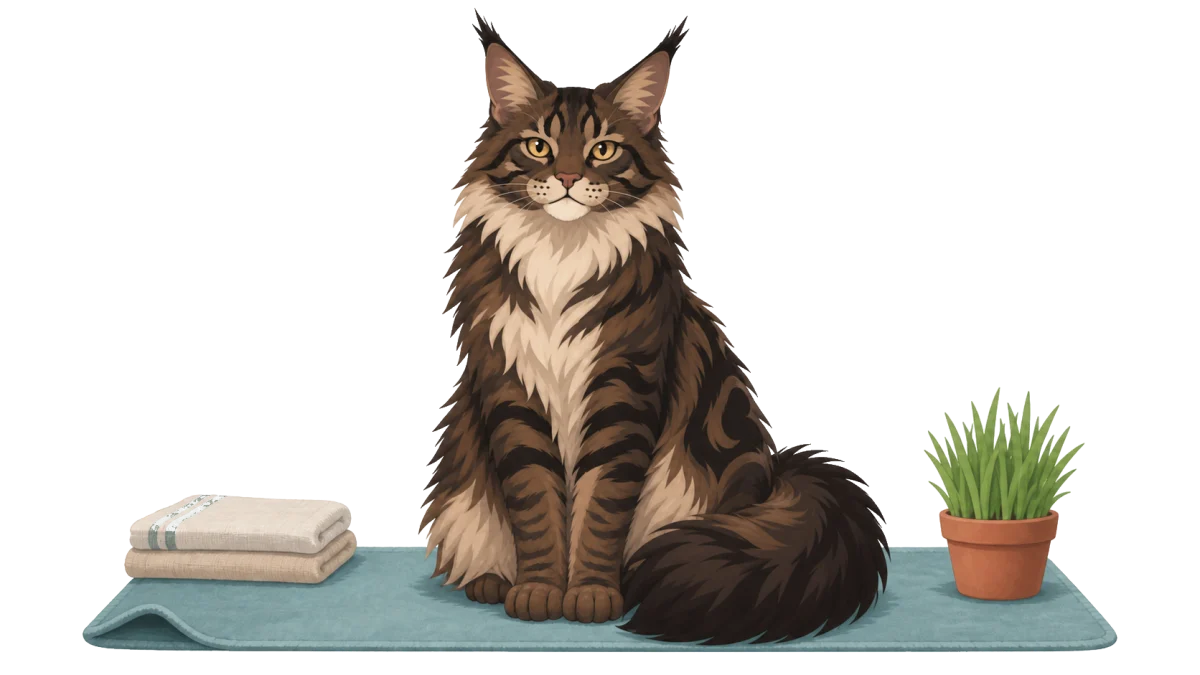
Yes, you can teach a cat tricks. The easiest to start with is touching a target with their nose. After that, try coming to their name, sit and a paw. Use small treats your cat loves, a quiet room and sessions of three minutes at most, three times a day. Mark the right moment with a click or a word like “yes”, reward straight away, and never force or punish. Some cats learn in days, others take months.
Can you teach a cat tricks?
Yes. It’s often thought that cats can’t be trained to respond to commands the way dogs can, but Cats Protection, a UK cat charity, publishes step-by-step guides for sit, roll over and coming to their name. Battersea, the London rescue centre, says you might be surprised how many new tricks your cat can learn.
A study of 100 shelter cats put it to the test. Each cat had 15 five-minute clicker sessions over two weeks. By the end, 79% had learned to touch a target, 60% to spin, 31% to give a high five and 27% to sit. The cats were 6 months to 12 years old, and age and sex made no difference. Bolder cats made bigger gains, and cats keener on food did better at the high five and the target.
How to teach a cat tricks with treats
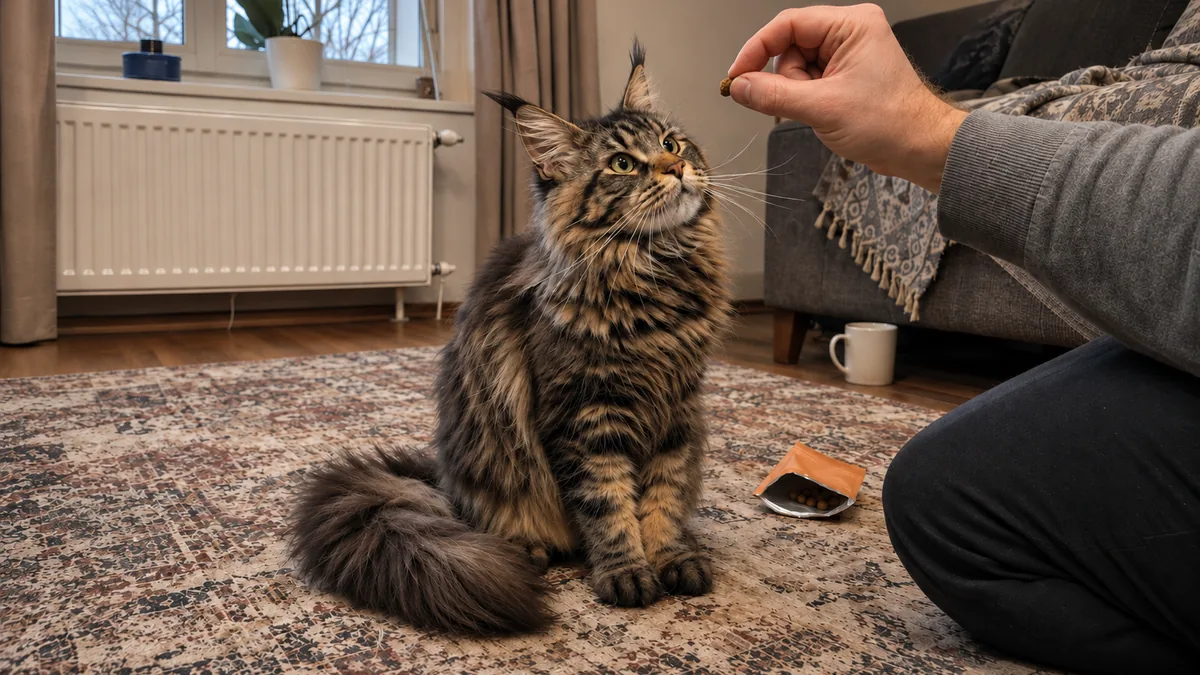
Food is usually the best way to motivate a cat, Battersea says. Pick a treat your cat loves that is quick to eat and doesn’t need much chewing, and set aside a small portion. When it runs out, the session is over. Give a little less food that day to make up for it.
Choose a quiet room with no distractions and a time when your cat is relaxed but awake. Some cats prefer you to sit or kneel, so you’re not leaning over them. Keep the treats in your pocket, not in an obvious packet, so your cat watches you and not the bag.
Reward as soon as your cat does the thing. Battersea suggests a word like “good”, said in an upbeat but calm way, and the treat straight after. Keep each session to three minutes at most, aim for three a day, and teach one trick at a time. Before you start, Cats Protection suggests a vet check to make sure your cat is fit and healthy.
How to teach cat tricks with a clicker
A clicker makes a more consistent sound than your voice, one your cat is unlikely to hear anywhere else. First, teach your cat what it means. Click, give a treat at once, and make no other noises. Repeat until your cat looks for the treat as soon as they hear the click.
From then on, click exactly as the behaviour happens. If you click at the wrong moment, still give the treat: the clicker only works if a click always means a treat.
If the sound makes your cat jump, click inside your pocket or behind a cushion. If it still scares them, use a distinct word instead. Every trick below works with either.
1. Touch a target: the easiest trick to start with
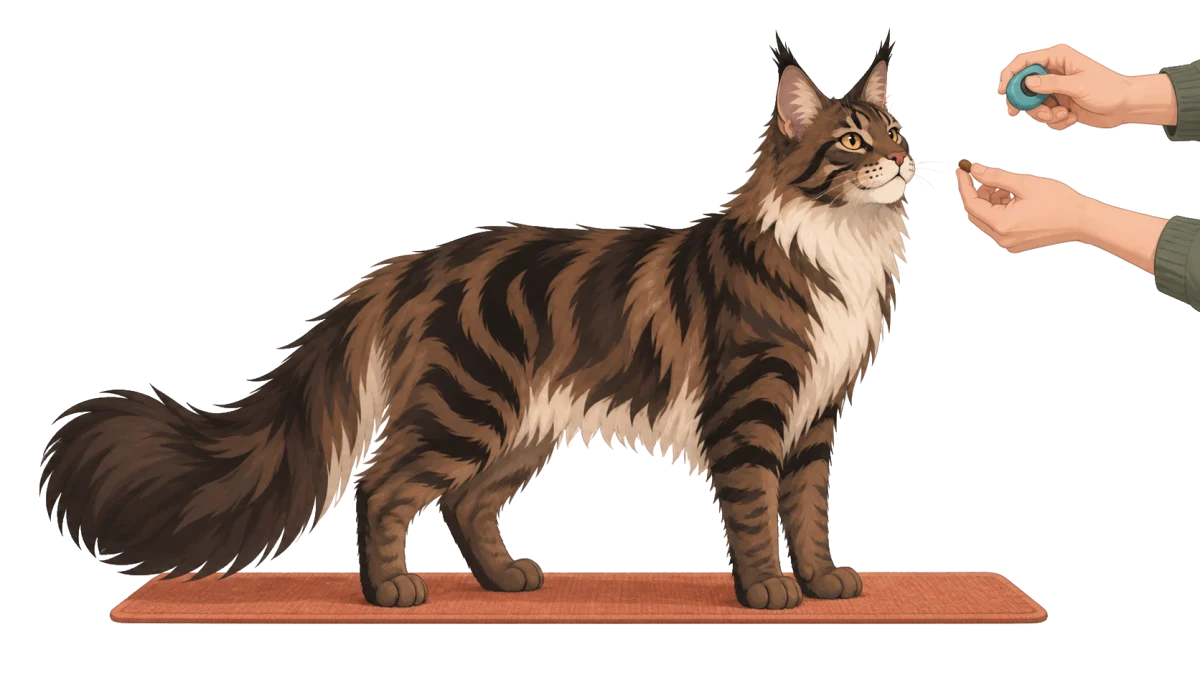
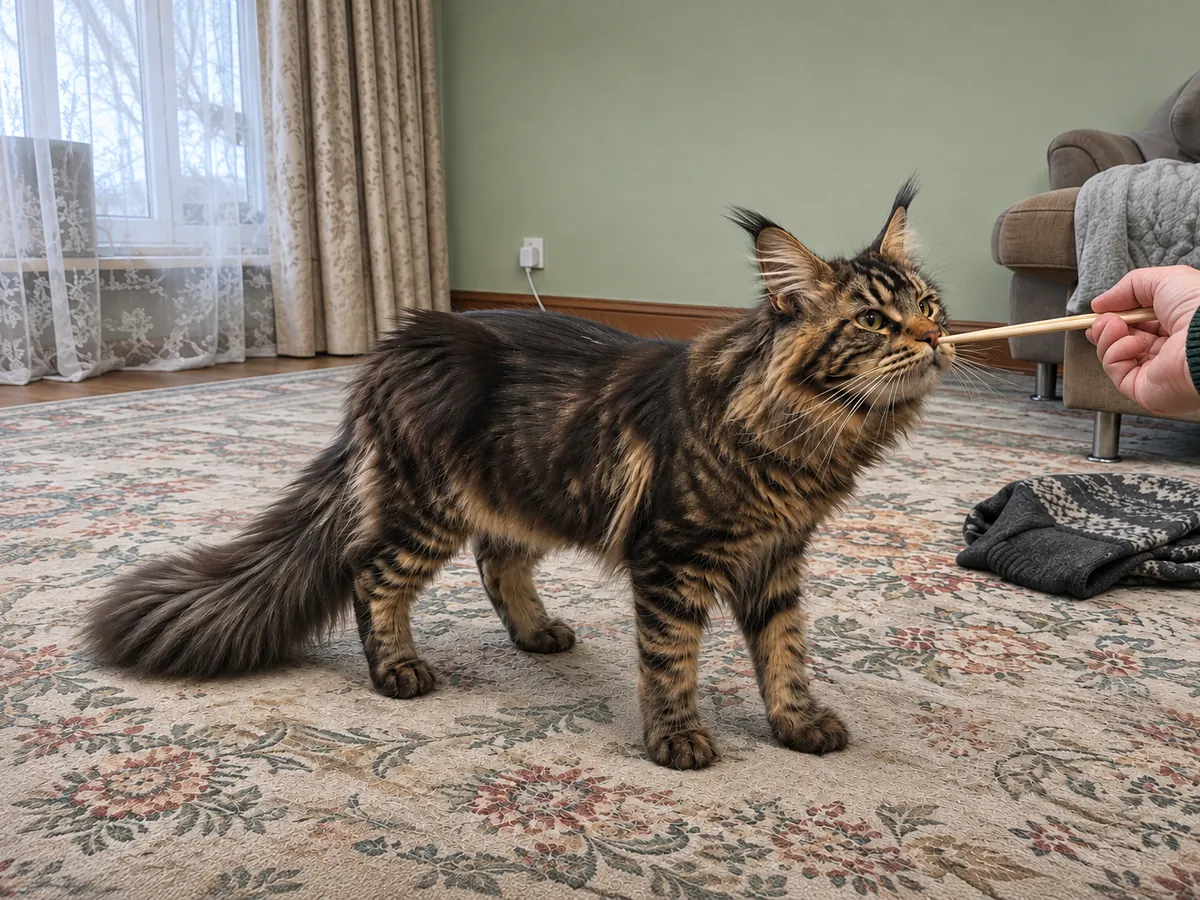
More shelter cats learned this than anything else in the study: 79%. The target there was a plastic chopstick or the trainer’s finger, touched with the nose. A target stick works, and so does your hand.
Hold the end of the stick close to your cat and wait. The moment their nose touches it, click and treat. Then move the stick a little further away each time.
Once your cat follows the stick, you can lead them to a particular spot. Cats Protection says that’s the start of a figure of eight around two cones, a walk through a tunnel, or getting into the carrier before a trip to the vet.
2. Come when you say their name
This trick is useful as well as sweet. Cats Protection says it can help bring your cat home when they’ve gone missing, or move them away from something dangerous.
Stand up with your cat sitting relaxed in front of you. Say their name once. When they look at you, say “yes” and give a small treat, ideally within two seconds. Keep sessions to three minutes at most.
When they answer every time, stand further away, or try it sitting down. Make the changes gradually. Try not to use their name outside these sessions for now, and if they don’t look, resist saying it louder. Make it easier and more exciting instead.
3. Sit
Hold a treat between the very tip of your finger and thumb, palm up, one to two centimetres from your cat’s nose. Raise it slowly. Once it’s about five centimetres up, move it a few centimetres back towards their tail. Their head follows the treat up and their bottom should go down into a sit.
As soon as they sit, say “yes” and give the treat. Then throw the next treat a short distance away, so they stand up and you can start again.
Over the next sessions, turn the lure into a hand signal: a small upward flick of the wrist, still rewarding every sit. Last, say a cue word one second before the signal. It can be any word you like, because your cat responds to the sound, not the meaning. With three three-minute sessions a day, Cats Protection hopes your cat will sit on cue within seven days, though some cats take longer.
4. Give a paw, then a high five
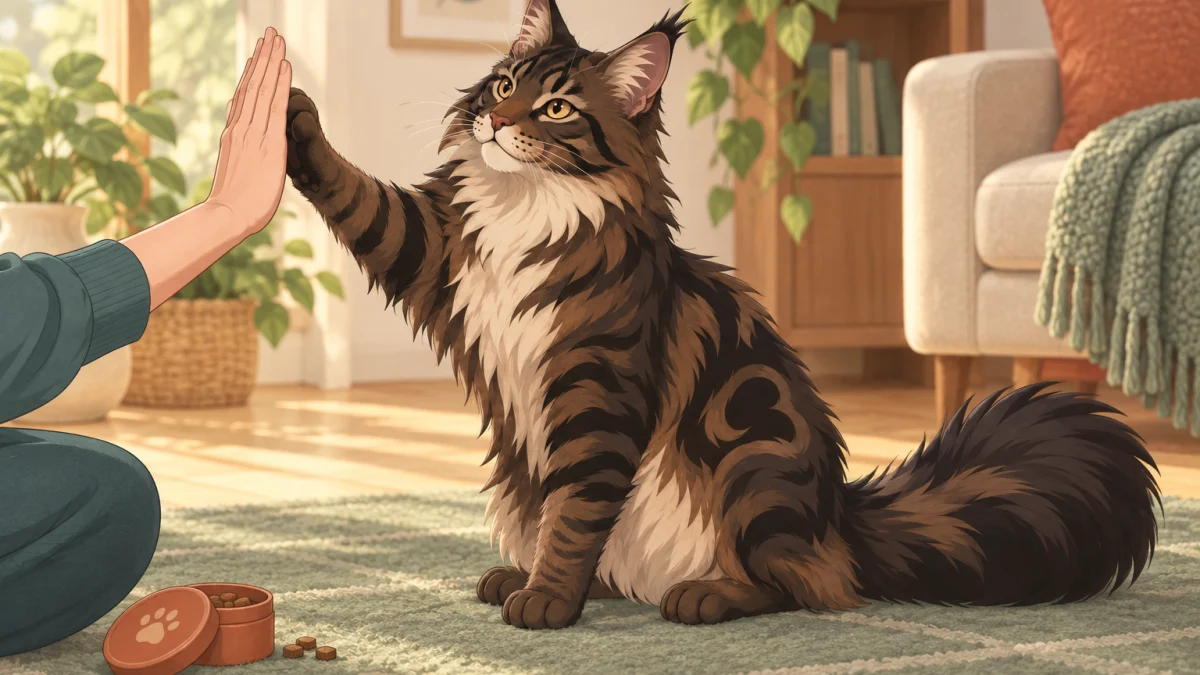
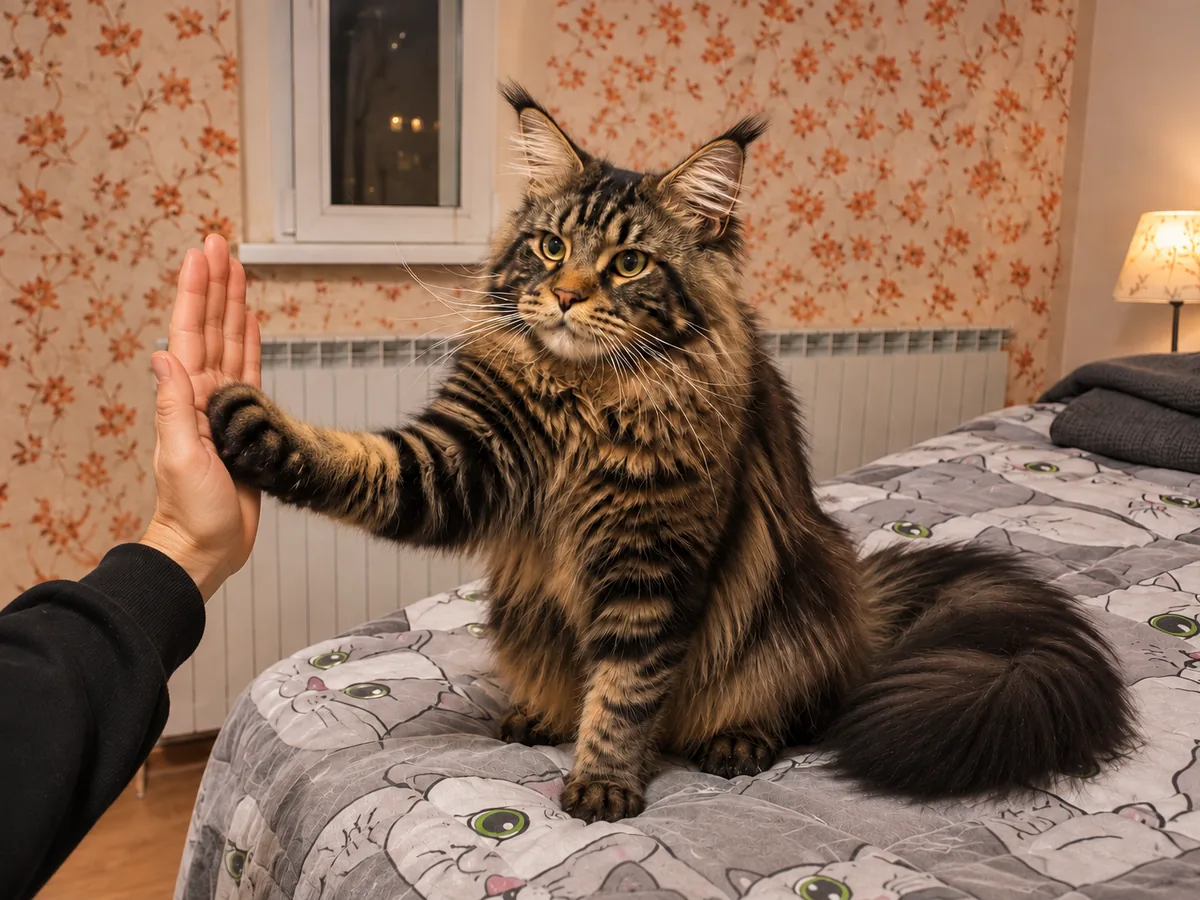
This one starts as a paw on your hand and ends as a high five. Battersea’s way: hold a treat in a closed hand close to the floor. When your cat touches your hand with a paw, say “yes” and give them the treat. Be patient, because it can take a while for a cat to work out that a paw on your hand is what earns it.
Over the sessions, slowly raise your hand until your cat lifts a paw to reach it. Then offer an open hand with no treat in it, then hold it up with your palm facing outwards, and finally above your cat’s head. Reward every touch.
Add the cue “high five” last, said at the moment the paw meets your hand. If you stop at the low, closed hand, you have a cat who gives a paw. In the shelter study, 31% of cats learned the high five in two weeks.
5. Stay still for a gentle touch
This trick makes grooming and handling easier. Cats Protection says it is only for cats who have a good bond with their owner but don’t like being touched in some places. It doesn’t suit a fearful cat who hides from people or lashes out at them: for that cat, it suggests a qualified behaviourist. If your cat shows any discomfort with handling, have a vet check them first, because pain can be the reason.
Pick a moment when your cat is relaxed and comes to you calmly. Say a word, such as “touch”, stroke a place they already like, such as the side of the neck, for one second, and give a treat straight after. Keep sessions to two minutes at most.
When that’s easy, move your hand a little towards a place they like less, for example from the side of the neck to the back of it. Then build up to two or three seconds. If your cat shows they’re uncomfortable, you’ve gone too fast, so go back a step. Let them walk away whenever they want, and never hold them still.
6. Walk into the carrier
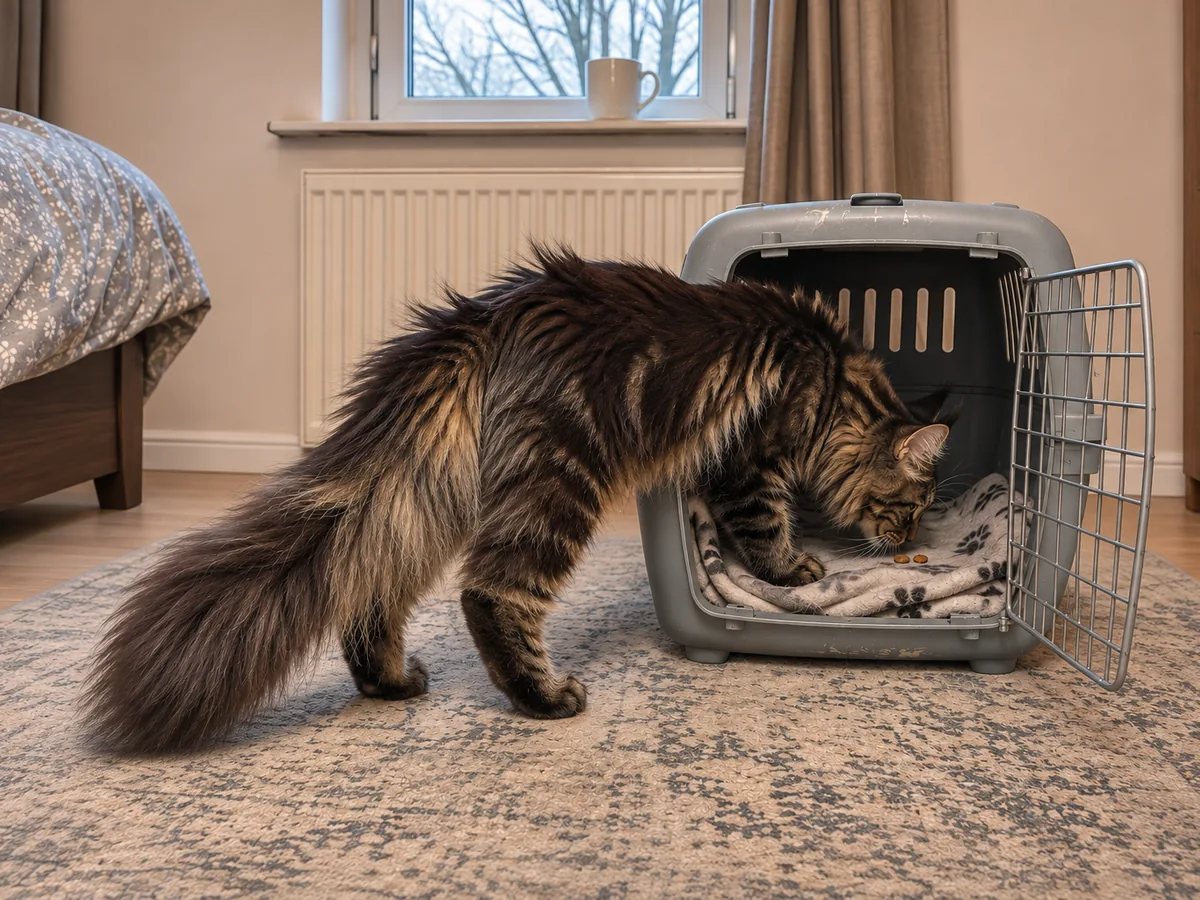
A cat who walks into the carrier on their own makes vet visits easier. Leave the carrier open in a quiet room so your cat can explore it at their leisure, and keep it out at home between trips.
For a nervous cat, start with their bedding next to the carrier, then move it closer and finally inside. A treat in the carrier gives them a reason to look in. While they’re inside, toss in a few biscuits or another treat. With a clicker, click and reward each time they go in.
Once your cat is happy spending a few minutes inside, start closing the door, then lift the carrier for a moment. Only move on when they seem completely comfortable. If they don’t seem happy at any point, go back and repeat the steps.
7. Roll over
Save this one for later. Your cat needs to lie down on cue first, and it suits a physically able, confident cat. Older or unwell cats may struggle.
With your cat lying down, hold a treat palm down, one to two centimetres from their nose. Move it slowly in an arc towards one ear, then diagonally towards the middle of their back. Their eyes follow it, they look over their shoulder, and they roll onto their side. Say “yes” and reward.
Bit by bit, the treat leads them onto their back and over to the other side. Then fade the treat out, keep the hand movement, and say “roll over” one second before it. Cats Protection hopes for a roll on cue within seven days. Some cats may not get it at all, and that’s fine.
What to teach your cat next
Once your cat has a few basics, Cats Protection suggests a fist bump, jumping through a hoop, fetch or ringing a bell. In the shelter study, 60% of cats learned to spin, turning their body in a circle.
As a trick becomes reliable, start to phase out the clicker and the treat. Reward every other time, then every fourth time, but never stop the rewards all at once, or your cat may stop answering. Ask for the old tricks every so often so they aren’t forgotten.
If you’d like help with the plan, a Lapka programme sets one short session a day and adjusts the next one after each.
Never force or punish your cat
Never push your cat into a sit or turn them over by hand. Cats Protection says forcing a cat into position stresses them and could lead to behavioural or medical problems. Your cat should always be free to stop.
Don’t punish a missed trick either. Battersea says cats should not be punished, and Cats Protection says never to punish a cat for not getting it right. If you notice you’re getting frustrated, stop and try another day.
Cats Protection also says never to train a nervous or scared cat, and nervous, shy and anxious cats may struggle with clicker training. For them, the tricks can wait.
A week of notes on the first trick
Mon: chopstick 2 cm from the nose. A sniff on the third try, click, treat. Eight treats, then off to the window.
Wed: touches it every time when it’s close. At 20 cm, looks at it and stays put.
Sat: follows it across the rug to the mat, three times out of five.
Notes like these show where your cat is, so you know when a distance is too much and when it’s time to move on.
When it does not go to plan
What is the easiest trick to teach a cat?
Touching a target with their nose. In a study of 100 shelter cats, 79% learned it in 15 five-minute sessions, more than any other trick. Sit came last, at 27%, so give it more time.
How do you teach a kitten tricks?
The same way, with tiny treats and very short sessions. Battersea says it’s best to start training from a young age, and Cats Protection says younger cats may pick it up more quickly. Cats can be trained at any age, though: whether it works depends more on temperament than on age.
Can you teach an older cat tricks?
Yes. The cats in the shelter study were 6 months to 12 years old, and age made no difference to how they learned. Cats Protection says older or unwell cats may struggle with some tricks, sit and roll over among them. Have a vet check your cat first, and start with something simple, such as a target.
How do you teach a cat tricks without treats?
Try attention or a toy. In a study that offered cats people, food, toys and scents, most chose time with a person first and food second. Battersea says some cats find stroking or a toy rewarding, and in the shelter study a few cats who ignored food were rewarded with petting instead. Battersea still says food is usually the best way to motivate a cat.
How long does it take to teach a cat a trick?
Anywhere from a few days to a few months, Cats Protection says. With three three-minute sessions a day, it hopes for a sit or a roll on cue within seven days, but some cats take longer and some never get a trick at all. End each session when the treats run out.
Sources and further reading
- Cats Protection — How to clicker train a cat
- Cats Protection — How to train your cat to sit on command
- Cats Protection — How to train your cat to respond to their name
- Cats Protection — How to train your cat to roll over
- Cats Protection — Train your cat to accept handling
- Cats Protection — How to choose and use a cat carrier
- Battersea — Cat training
- Battersea — How to teach your cat to high five
- Animals — Assessment of Clicker Training for Shelter Cats (2017)
- Behavioural Processes — Social interaction, food, scent or toys? A formal assessment of domestic pet and shelter cat preferences (2017)