Lapka
The short answer
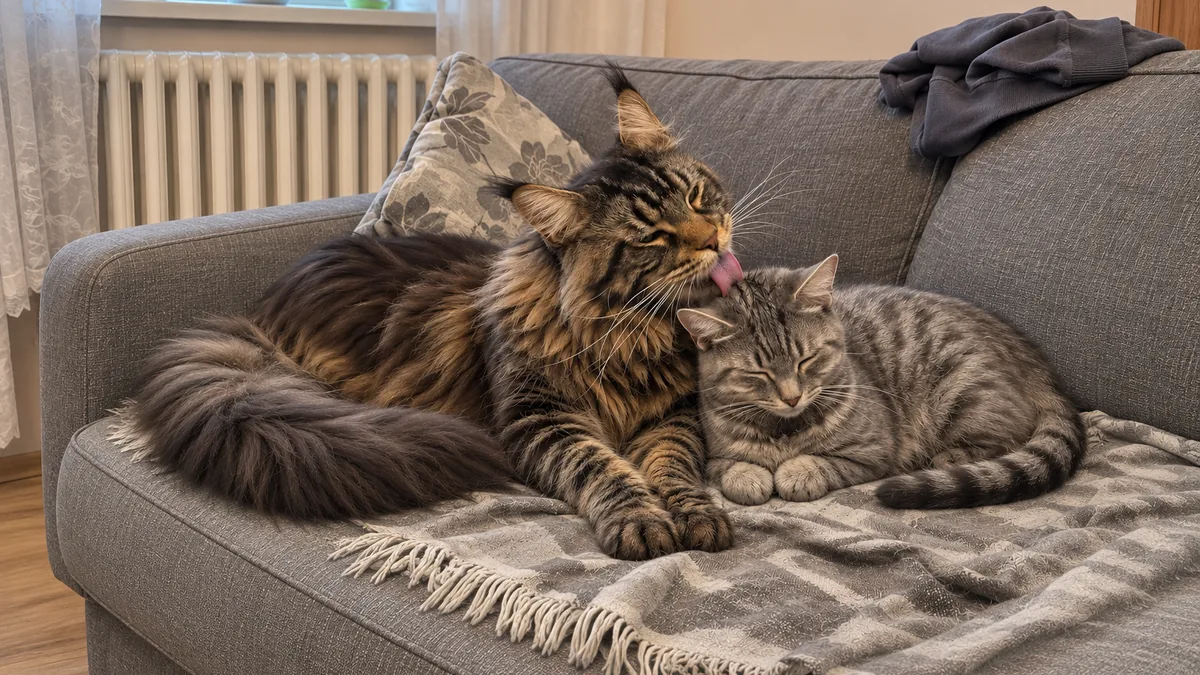
Cats who groom each other usually get on: Cats Protection counts mutual grooming, rubbing and sleeping touching as signs that two cats are in the same social group. Most licks land on the head and neck. Grooming that turns into a quiet wrestle can be the start of a game. Sometimes it carries tension instead, and then ears go back or one cat swats. Step in only if it becomes a real fight.
Why do cats lick each other, and what does it mean?
Usually it means the two of them get on. Cats Protection, the UK cat charity, lists three signs that cats belong to the same social group: they sleep touching each other, they rub against each other, and they groom each other. All three share and reinforce a common scent.
The licking carries that scent. Saliva makes the other cat smell more familiar, Cats Protection explains, so one sniff tells a cat the other is part of their group and can be trusted. Licking also releases endorphins, the brain’s feel-good hormones, and International Cat Care notes that cats often purr while they groom each other.
The proper word for it is allogrooming. Its partner is allorubbing, when two cats rub their bodies against each other to swap scent.
Why do cats lick each other’s heads and ears?
Most likely because those are spots a cat can’t easily reach with their own tongue. In a 2026 study from Ghent University, researchers went through home videos of 53 pairs of adult cats (106 cats) grooming each other. Of 163 grooming bouts, 142 (87.1%) went to the head and neck and 32 (19.6%) to the ears.
In the same videos the cats also washed themselves, 83 times. Then the picture flipped. They mostly did their body (60.2% of bouts) and front legs (42.2%), and only 15.7% of bouts went to the head and neck. The ears got one bout out of 83.
The ASPCA describes a trick that relies on this. When two cats who used to get along are being brought back together after a mild falling-out, some owners have had success dabbing a little tuna juice on their heads and bodies. Grooming is relaxing, so the cats are busy and less bothered by each other. If it goes really well, they groom each other, because they can’t reach the juice on their own heads.
Why do cats groom each other then fight?
It can be the start of a game. The Ghent team found grooming in two quite different settings: between cats who are close, and between cats with some tension between them.
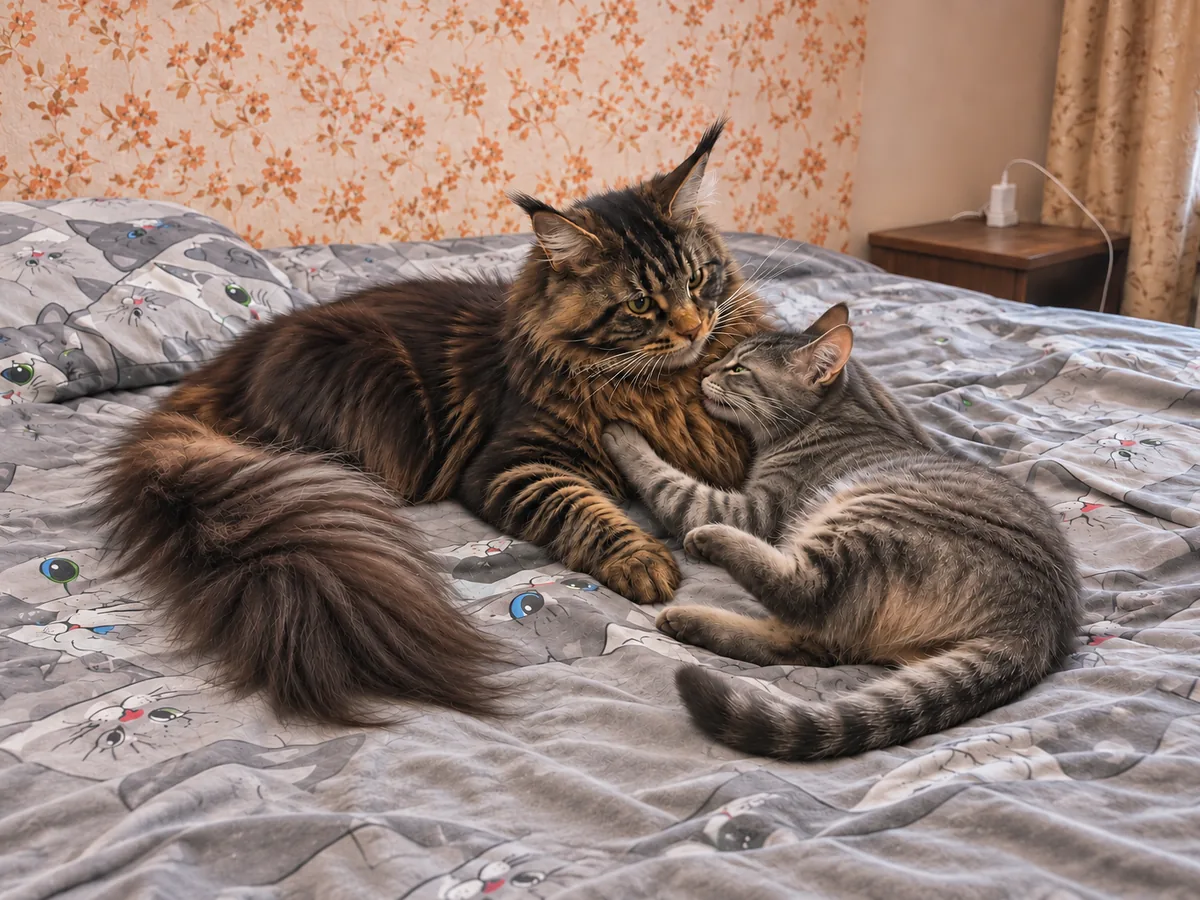
In the friendly setting, the cats look for contact first, often both of them. They lie or sit pressed together, often in the same position, and one grooms the other. Then the cat being licked turns their ears, and the pair wrestle, paw at each other and bite. The researchers saw this sequence often enough to name it as one of the main patterns around grooming, and they describe the wrestling that follows as a lead-in to play.
Cats Protection says bonded cats in particular love to play fight. So if your two also sleep curled up together, a lick followed by a tumble across the rug is most likely the friendly kind.
Why do cats lick each other then bite?
Sometimes the grooming carries tension. The Ghent researchers suggest that in a tense moment, grooming may help settle a conflict in one of two ways: as a peace offering that calms the other cat, or as a quiet threat.
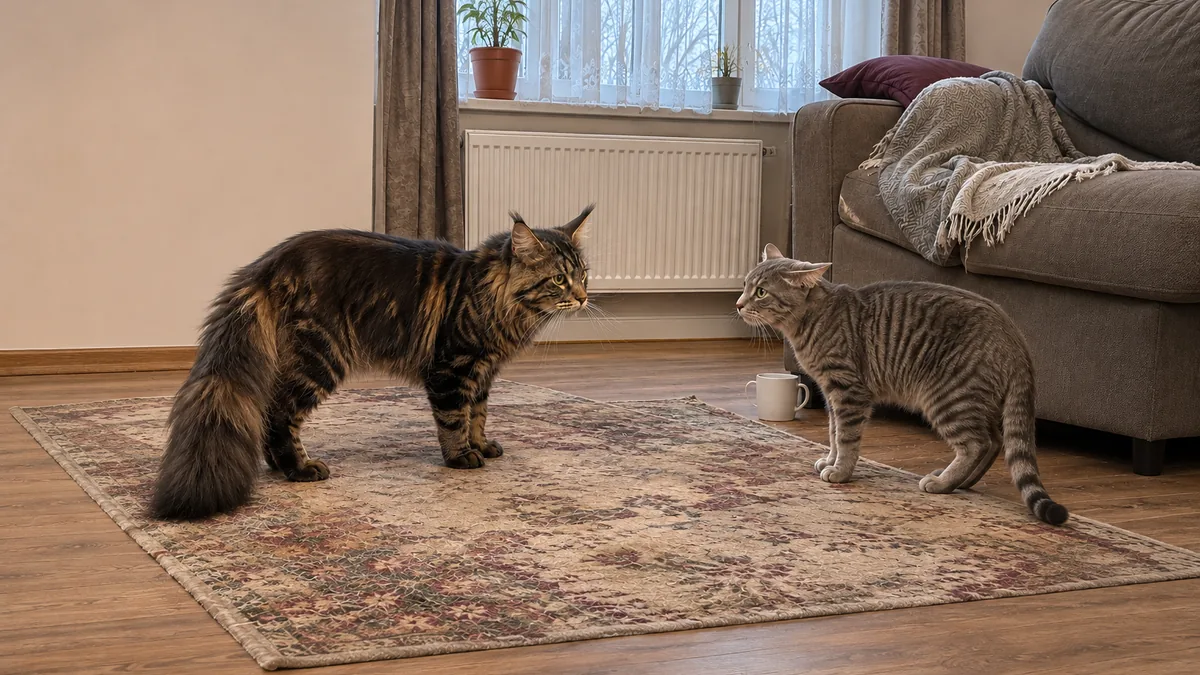
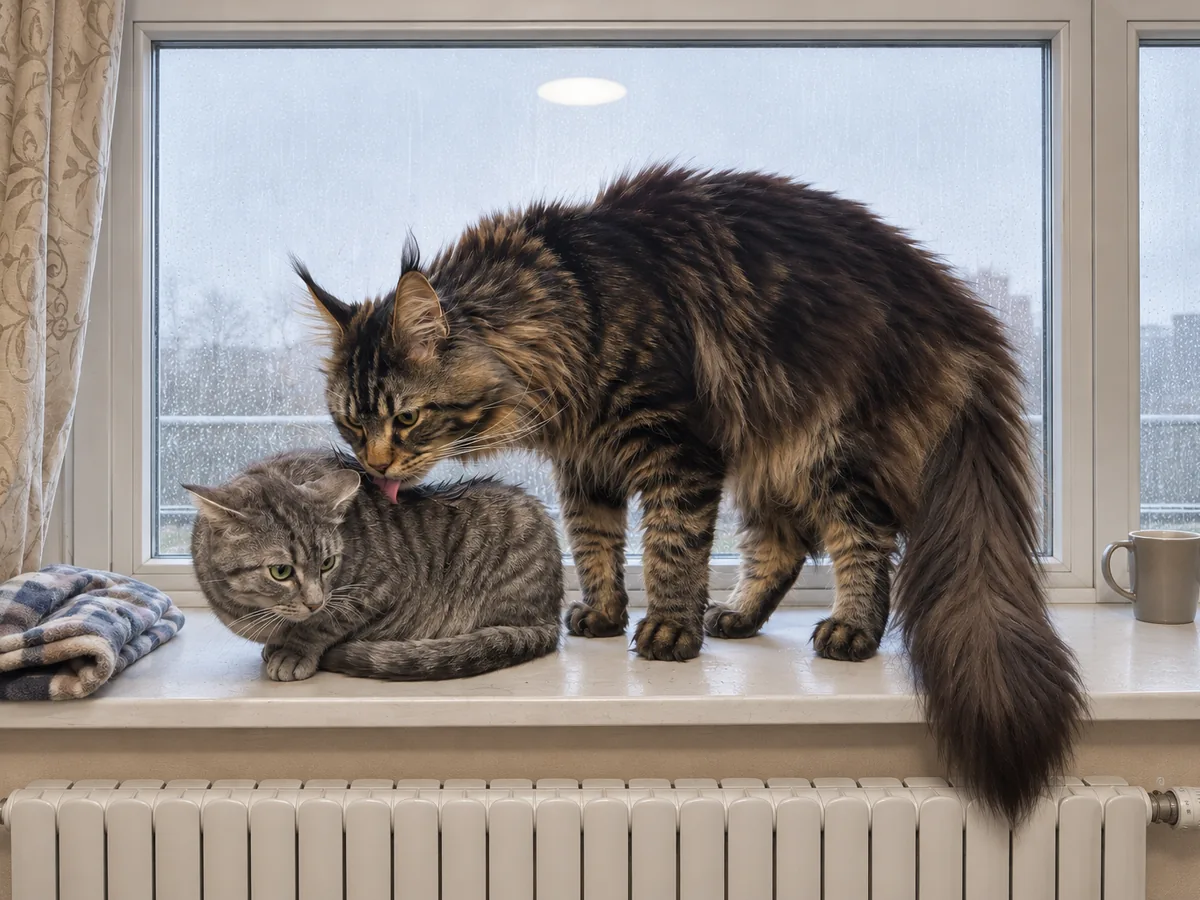
You can tell by the bodies. In the tense version, one cat leans over the other instead of lying alongside. Ears turn back. There may be lip licking or head shaking, the small out-of-place moves a cat makes when pulled two ways at once. It can end with a swipe or a bite.
An older study saw the same mix. Among 25 cats living together in a lab, aggression turned up in 35% of grooming interactions.
Are my cats playing or fighting?
Play fighting is usually quiet, Cats Protection says, with lots of little breaks while the cats wiggle into a new position or get ready to chase each other. Biting is normal but gentle, and claws usually stay in. The ASPCA adds that playing cats keep their ears forward, lean in rather than back, and swap roles often. If claws do come out, they don’t do damage. Afterwards both cats usually go back to normal, with no obvious tension left over.
A real fight looks different: flattened ears, a tense body, a swishing tail, and growling, hissing or screeching.
Some bouts sit in between. The Ghent researchers called the wrestling, pawing and biting that follows grooming “play-agonism-like”, which means it can look like play and like a squabble. So watch how it ends.
Why does my cat lick my other cat so much?
Most likely because they like that cat. Earlier research found that cats mostly groom preferred partners: cats they’re related to, or have lived with for more than seven months.
Grooming on its own doesn’t prove the two are friends, though. The common idea that grooming builds and keeps up a bond has little hard evidence behind it, the Ghent authors write. In their study, 24 of the 53 pairs filmed grooming were unrelated cats who hadn’t been introduced before 12 weeks of age.
So look at the rest of the picture. Cats Protection lists other signs of cats who are close: sleeping touching or intertwined, spending a lot of time near each other, and greeting each other with the tail up or by touching noses. No hissing doesn’t make them friends. Plenty of cats only tolerate each other, and that’s very common.
Even close cats can drift apart as they reach social maturity, between 18 months and four years of age, or after a stressful event such as a house move or a vet visit.
When should I step in?
Leave calm grooming alone, and a quiet wrestle where they take turns. Step in when you see the signs of a real fight.
Keep your hands out of it. Cats Protection suggests distracting them with a toy or a loud noise, which gets their attention and pauses the fight. The ASPCA suggests a loud clap. Don’t be rough or heavy-handed about it.
Never let them fight it out: the ASPCA says cats don’t settle things by fighting, and the fighting usually gets worse. Don’t try to soothe the angry cat either. Leave them alone and give them space: if you come close, they could turn on you. Battersea says cats have a lot of excess energy right after a fight and are best left for a while to calm down, so wait before you stroke or pick up either of them.
After a fight, check both cats
Scratches are usually easy to see, Battersea says. Bite wounds are harder: they’re often difficult to spot and can heal over quickly, trapping bacteria inside, so look closely. If a cat hides, or seems listless, withdrawn or lame after a fight, see your vet.
If a normally calm cat starts acting aggressively, Cats Protection suggests checking with your vet for an underlying medical cause. The charity also counts illness in one cat among the signs that two cats aren’t in the same social group, for example loss of appetite, a change in toilet habits, or more time spent hiding or sleeping.
If the fights keep coming, separate the cats and contact a qualified cat behaviourist as soon as possible. Your vet may refer you to one. Ask early, because a problem that has only just started may be easier to sort out.
How to help two cats get along
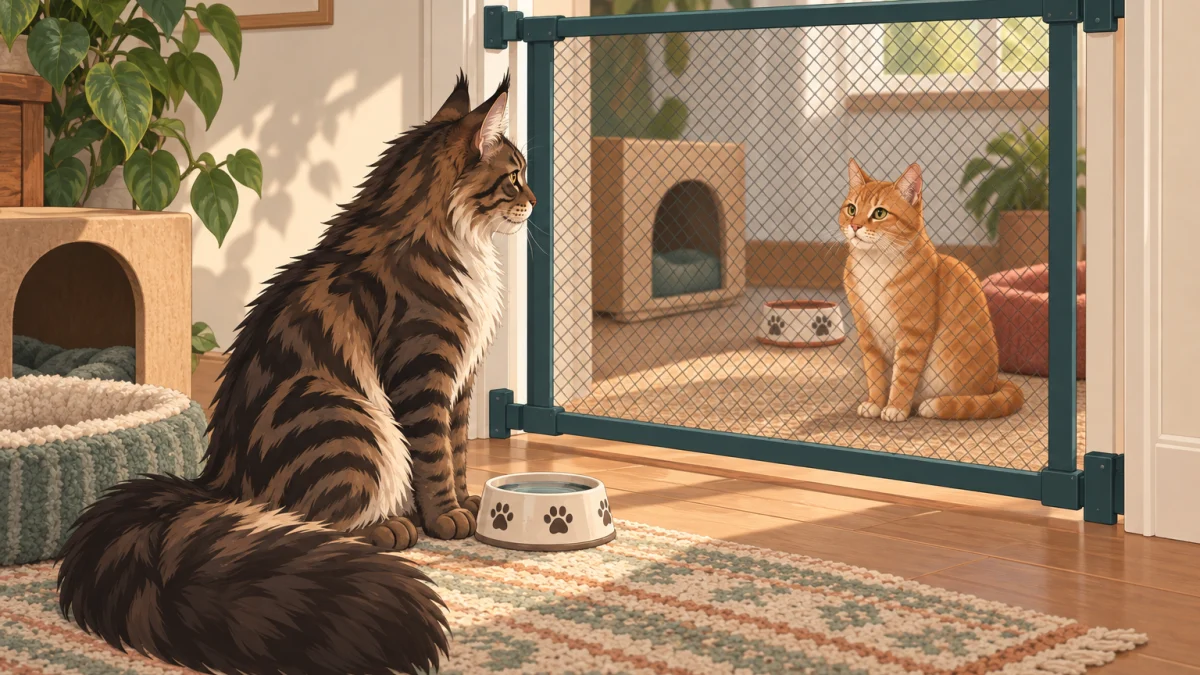
Cats are happier when they can choose when to be together, Cats Protection says. Give each cat their own food bowl, water bowl, litter tray, bed and hiding place, plus one extra of each, and spread them around the home. That makes it harder for one cat to block the other.
Blocking is quiet. One cat may simply sit on the other side of the room looking innocent, while the other only uses the litter tray once that cat has gone outside.
Attention counts too. Cats Protection names it next to food and a sunny spot among the things cats compete for, so give each cat some time with you on their own. If you’d like that time to teach each of them a trick, a Lapka programme plans the sessions and adjusts them after each one.
What a week of notes can look like
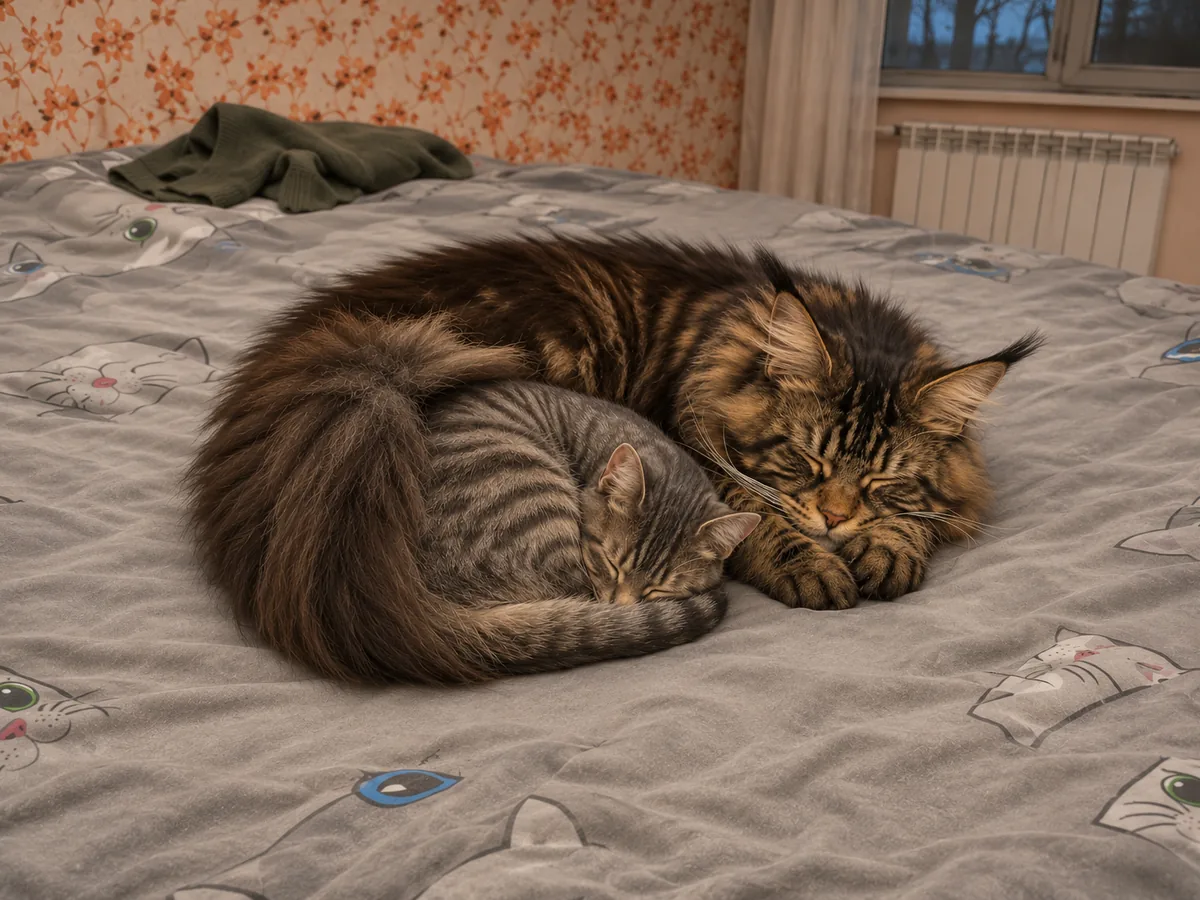
Mon, evening: Bruno licks Pip’s head and ears on the sofa, the two of them pressed together. She purrs. They fall asleep touching.
Thu, morning: on the windowsill Bruno leans over Pip and licks her neck. Her ears go back, she swats once and jumps down, and he keeps the windowsill.
Sat: a few licks, then a quiet wrestle on the rug, taking turns on top. Little breaks, no hissing. Both wash afterwards.
Notes like these show which kind of grooming you have. Here most of it is friendly, and the one tense moment was over a favourite spot. If the tense kind starts to outnumber the friendly kind, or one cat begins to avoid the other, you’ll have something concrete to show your vet or a behaviourist.
Questions people ask
Why do cats lick each other before they fight?
It can be the run-up to a game. In the Ghent videos, grooming tended to come just before the licked cat turned their ears, and that went with wrestling, pawing and biting. A quiet wrestle where they take turns is most likely play. Growling or hissing, flattened ears, or one cat leaning over the other point to tension.
Do cats groom each other aggressively?
Sometimes. The Ghent researchers think grooming can be a peace offering and also a quiet threat. The tense kind shows in the bodies: one cat leaning over the other, ears turned back, lip licking or head shaking, and sometimes a swipe or a bite.
Why do cats lick each other’s bums?
Between adult cats it seems to be rare. Of 163 grooming bouts in the Ghent videos, just one went to that area, while 142 went to the head and neck. Cats see to it themselves: it got 6 of the 83 bouts in which they washed themselves.
Do sibling cats groom each other more?
They may. Earlier research found cats mostly groom cats they’re related to or have lived with for more than seven months, and Cats Protection says related cats, such as littermates, are more likely to get along, though it’s not a guarantee. But a lab study of 25 cats found relatedness made no difference to how often they groomed, and in the Ghent study unrelated pairs groomed each other too.
Should I stop my cats grooming each other?
No. Calm grooming is one of the three signs Cats Protection lists for cats in the same social group. Keep an eye on how it ends instead. If it turns into a real fight, distract them with a toy or a clap, never with your hands.
Sources and further reading
- Applied Animal Behaviour Science — Unravelling feline social dynamics: a video-based observational study on allogrooming in domestic cats (Ghent University, 2026)
- Journal of Feline Medicine and Surgery — Decoding domestic cats: a video-based observational study on allogrooming in multicat households (2025)
- Cats Protection — Cats living together
- Cats Protection — Behaviour matters: Friend or foe? (The Cat, 2015)
- Cats Protection — Cats and fighting
- Cats Protection — Why does my cat lick me?
- International Cat Care — Cat communication
- ASPCA — Aggression between cats in your household
- Battersea — How do I stop my cat fighting?