Lapka
The short answer
Yes, a cat can eat an owner who has died, but it is rarely reported, and most documented cases involve dogs. When cats do it, they tend to go for the face, especially the nose and lips, and in the few indoor cases also the hands and feet. A forensic anthropologist thinks a cat may start out trying to wake the person. How soon is unknown: there is no systematic data, only first responders’ accounts.
Do cats eat their owners when they die?
It can happen, but it turns up rarely in the records. Cat owners often joke that their pets would eat them, Erika Engelhaupt writes in National Geographic, yet relatively few published accounts support the idea. A 2019 abstract for the American Academy of Forensic Sciences puts it plainly: scavenging by pet cats is “rarely reported”.
Part of the reason is that nobody counts. Forensic researchers noted in a 2023 article that no one formally tracks how often pets scavenge their dead owners. The psychologist Stanley Coren went looking for numbers and found no one tracking how often it happens or how likely it is.
Members of the cat family prefer to hunt, the same abstract notes, and reports of them scavenging are rare. For pet cats it suggests one possible reason: a cat may turn down a food she has never come across before.
Would my dog eat me first? Mostly, it’s dogs
Most documented cases of pets eating human remains involve dogs. Joseph Prahlow, a medical examiner in Michigan, sees signs of it at autopsy at least a couple of times a year, and usually the culprits are dogs, not cats. Dogs are generally the more opportunistic eaters, and less picky about whatever they come across.
A report from 2010, in the Journal of Forensic and Legal Medicine, shows the difference. A woman died of an aneurysm and was found the next morning. Tests showed that her dog had eaten much of her face, while her two cats hadn’t touched her. When cats do scavenge, National Geographic adds, they generally cause less damage than dogs.
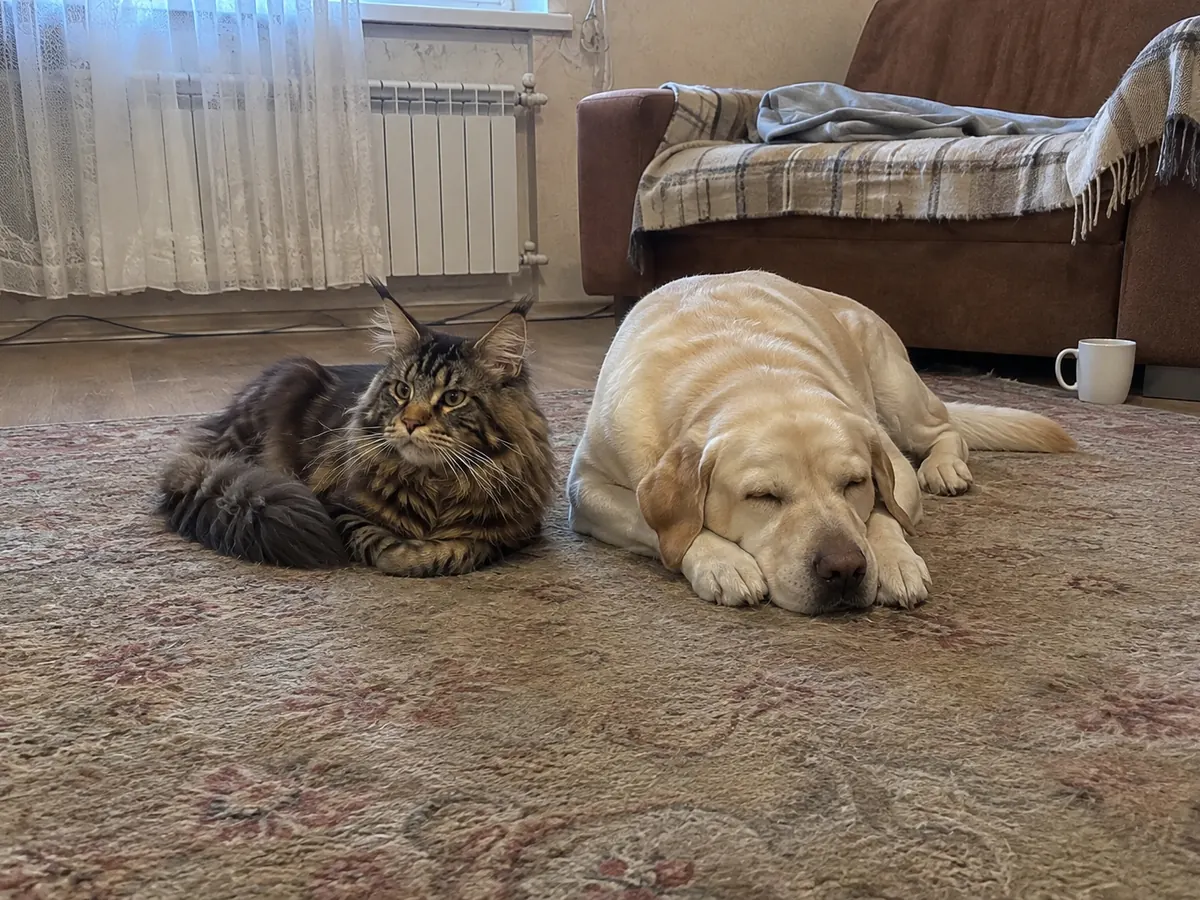
Do cats eat their owners’ face when they die?
If a cat does, the face is usually where she starts. Carolyn Rando, a forensic anthropologist at University College London, says cats tend to go for the face, especially soft parts such as the nose and lips.
The forensic abstract says the same about the few reported cases of pet cats indoors: the face, mainly the mouth and nose, and also the hands and feet. It takes this from a 1994 study of injuries caused by indoor pets.
Dogs indoors go for the face too: 73% of indoor cases with pet dogs involved bites to the face. National Geographic reads this as dogs interacting with their owner’s face, and not simply treating the body as food.
Why would a cat do it? She may be trying to wake you
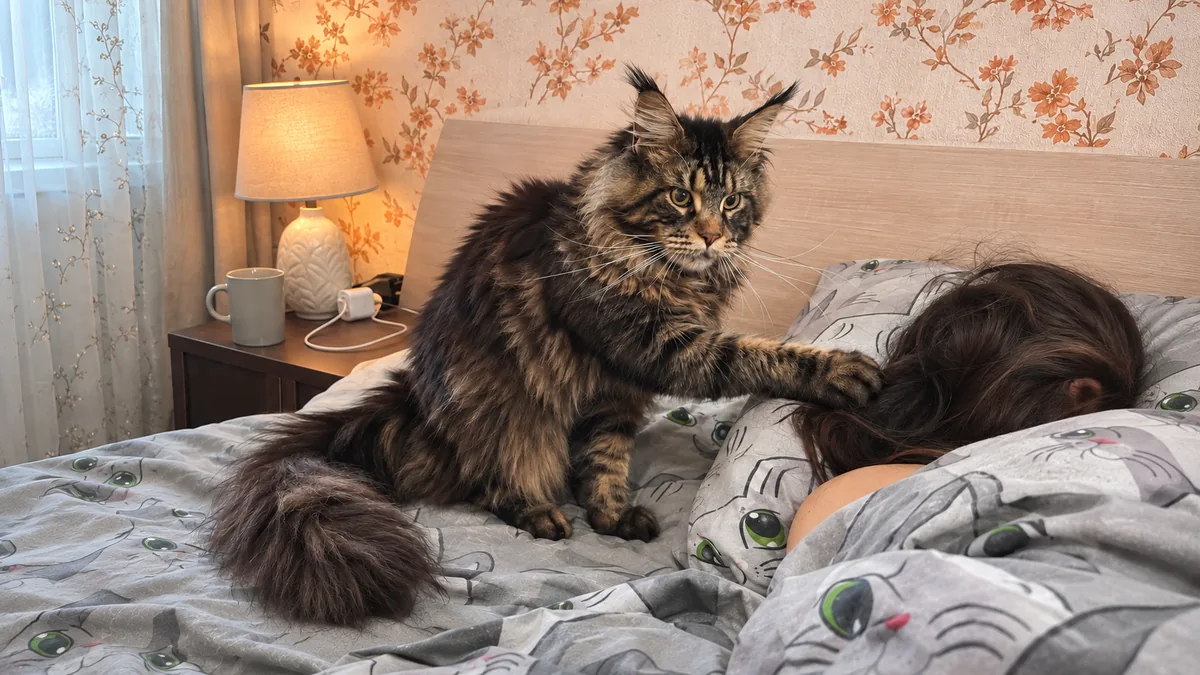
Rando has a guess, and it will sound familiar to anyone woken by a paw. When you’re asleep, she says, cats tend to swat your face to wake you up. So a cat might start out trying to wake an owner who has died, and begin to bite when that doesn’t work.
Markus Rothschild, a forensic examiner in Berlin, suggests something similar for pets in general. A pet first tries to help an owner who won’t respond by licking or nudging. When nothing happens, the animal can grow frantic, and the panic can lead to biting.
If your cat’s morning pats have become your daily alarm clock, a Lapka programme can plan short sessions that teach her a calmer way to say good morning.
Is it just hunger? A full bowl doesn’t settle it
It’s tempting to think a pet would only do this when starving. The cases that test the idea are all about dogs, and they say otherwise. In a 1997 case in Berlin, a German shepherd began eating parts of its owner soon after his death. He was found 45 minutes later, and a half-full bowl of dog food was still on the floor.
Many people assume a dog would only eat its owner if it were starving. Rothschild, the examiner in that case, wrote that forensic experience shows this is “clearly wrong”. In a 2015 review of 63 cases of dogs, some of the dogs had access to food they hadn’t eaten. The reports don’t answer the same question for cats.
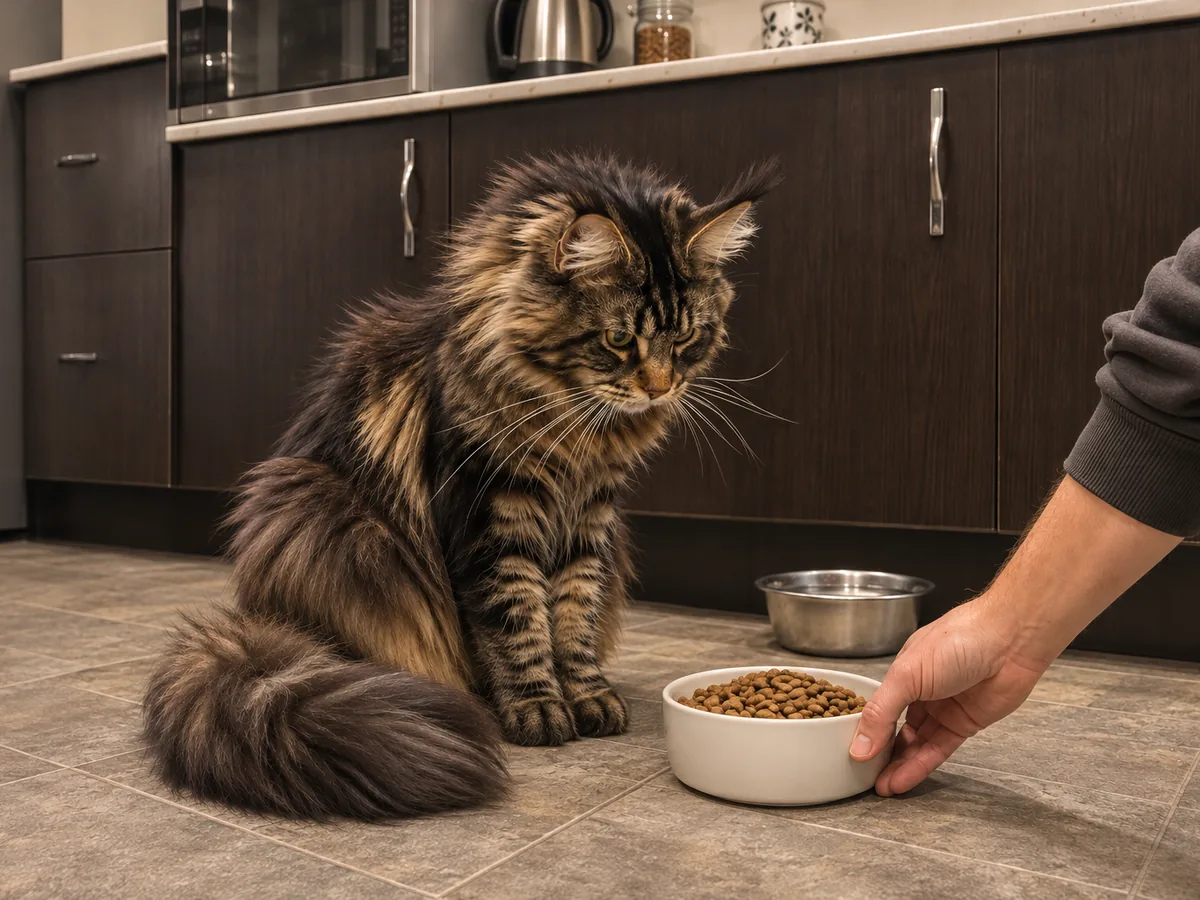
How soon would my cat eat me if I died?
Nobody knows for sure. There is no systematic data, so Coren asked three first responders what they had seen. All of them described pet cats and pet dogs behaving differently.
A retired police officer recalled that in at least half of the cases where the body was found within 48 hours, pet cats had been nibbling. A paramedic’s impression was that cats start chewing as soon as the body begins to cool. Dogs, they said, tended to leave a newly dead owner alone, stay close, or even guard the body.
These are memories from the job, not measurements. Coren calls his own view, that a cat would be more likely to eat him in the short run while a dog would wait a while, a “tentative conclusion”. For dogs there is one number: in about a quarter of the 63 cases in the 2015 review, less than a day had passed before the partly eaten body was found.
Feral cats outdoors behave differently
Everything above is about pet cats at home. At the Forensic Investigation Research Station in Colorado, an outdoor site where bodies are placed for research, two feral cats fed on two donors in separate cases. They went for the arms and chest.
Both kept coming back for weeks: one almost every night for about 33 days, the other for about 25 days. The first cat showed no interest in any of the 40 other donors nearby. The researchers found the pattern closer to a bobcat’s than to a pet cat’s.
Does it mean my cat didn’t love me?
The cases don’t point to a bad relationship. Writing about dogs, Engelhaupt found no history of abuse in any of the case studies she saw, and several reports noted that the owners had very good relationships with their dogs.
What pets do around an owner who has died looks more like distress. Their attempts to rouse the person suggest that losing them is a traumatic experience, she writes, and we can’t expect pets in that state to behave like people in mourning.
Will my cat eat me if I die alone? What helps
Rando’s advice is simple: make sure you have people who will stop by if they don’t hear from you. And if you have neighbours who are elderly, ill or vulnerable, check on them regularly.
The Cat Protection Society of NSW, an Australian cat charity, suggests carrying a card in your wallet that tells people you have pets at home in an emergency, and keeping the details of at least two friends or relatives who can look after your cat. If you live alone, it suggests keeping your cat’s details in a folder somewhere easy to see, such as by the phone, so whoever comes in knows a cat lives there.
In the UK, Cats Protection runs Cat Guardians for owners who want the charity to care for their cat when they die. It sends a wallet card, a window sticker and a keyring that tell people you have a cat, and you should let family, friends and neighbours know about the arrangement.
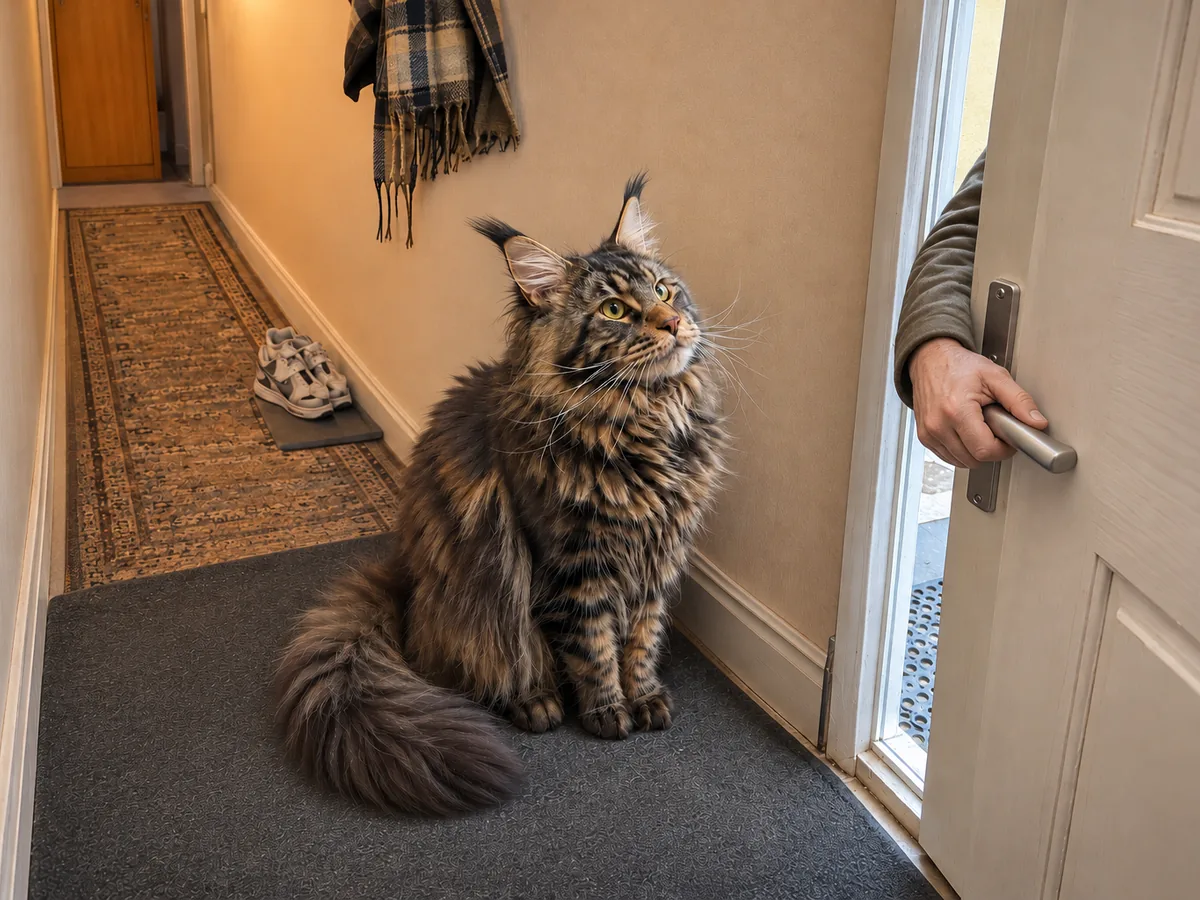
What a simple plan can look like
In my wallet: a card that says a cat lives at my address, with my sister’s and my neighbour’s numbers.
By the phone: a folder with what she eats, her vet’s number, and who can take her.
My sister and my neighbour both know: if they don’t hear from me, they come round.
A note like this tells whoever comes in that a cat lives here, and who can look after her.
Questions people ask
Will my cat eat me if I die in the house?
It can happen, but it’s rarely reported. In the few reported cases of pet cats indoors, it was the face, hands and feet. What lowers the odds most, according to Rando, is having people who stop by when they don’t hear from you.
Would my cat eat me in my sleep?
Nothing in the reports points to it: every case in them is about an owner who had already died. When you’re asleep, Rando says, cats tend to swat your face to wake you up, and that habit is what she thinks may lie behind the rare cases.
Do dogs eat their owners when they die?
Yes, and more often than cats: most documented cases involve dogs. In a 2015 review of 63 cases, about a quarter of the partly eaten bodies were found less than a day after death. Yet first responders told Coren that dogs often stayed near a newly dead owner and even guarded the body.
Does leaving extra food stop it?
Not for dogs, at least. In the 1997 Berlin case a half-full bowl of dog food was still on the floor, and in the 2015 review some dogs had access to food they hadn’t eaten. The reports don’t answer this for cats.
Can I make sure my cat never does it?
Not completely. National Geographic puts it bluntly: there’s no way to guarantee your pet won’t eat you, apart from not having pets at all. Even hamsters and birds have been known to do it now and then. The best way to lower the odds is people who check on you.
Sources and further reading
- National Geographic — Would your dog eat you if you died? Get the facts. (Erika Engelhaupt, updated 2024)
- American Academy of Forensic Sciences — The scavenging patterns of feral cats on human remains in an outdoor setting (abstract A56, 2019)
- Psychology Today, Stanley Coren — If you died alone, would your cat or dog eat you? (2024)
- Cat Protection Society of NSW — Planning for your cats
- Cats Protection — Cat Guardians: questions and answers