Lapka

The short answer
Most cats who bite feet are hunting in play. A foot that moves under the duvet, past a doorway or beside the bed at dawn gets the stalk, pounce and bite meant for prey. It’s most common in kittens and young cats, and in cats who don’t get enough play. Keep still, give the hunt a toy instead, never use your feet in games, and if the biting is new, see your vet.
Why does my cat bite my feet?
Usually, your cat is hunting. Cats Protection, the UK cat charity, says cats are natural hunters who enjoy stalking and catching things, and if they don’t have proper prey to hunt, such as cat toys, they may pounce on you instead. International Cat Care describes play as the whole hunting sequence: search, stalk, chase, pounce, catch and manipulate. Your feet are down at your cat’s level, and they move.
The ASPCA calls this play aggression and says it’s the most common type of aggressive behaviour cats direct at their owners. It’s made of ordinary hunting and play moves: stalking, chasing, attacking. Cats Protection puts it simply: your cat is overexcited and has misdirected some of their hunting behaviour onto you. A bite on the foot is usually a game aimed at the wrong target.
Why does my cat attack my feet under the blanket?
In bed, your feet are the only thing that moves. Cats Protection notes that someone who fidgets, moving their fingers and toes around a lot, may provoke a cat to attack more than someone sitting still and calm. Toes shifting under a duvet are exactly that kind of small movement.
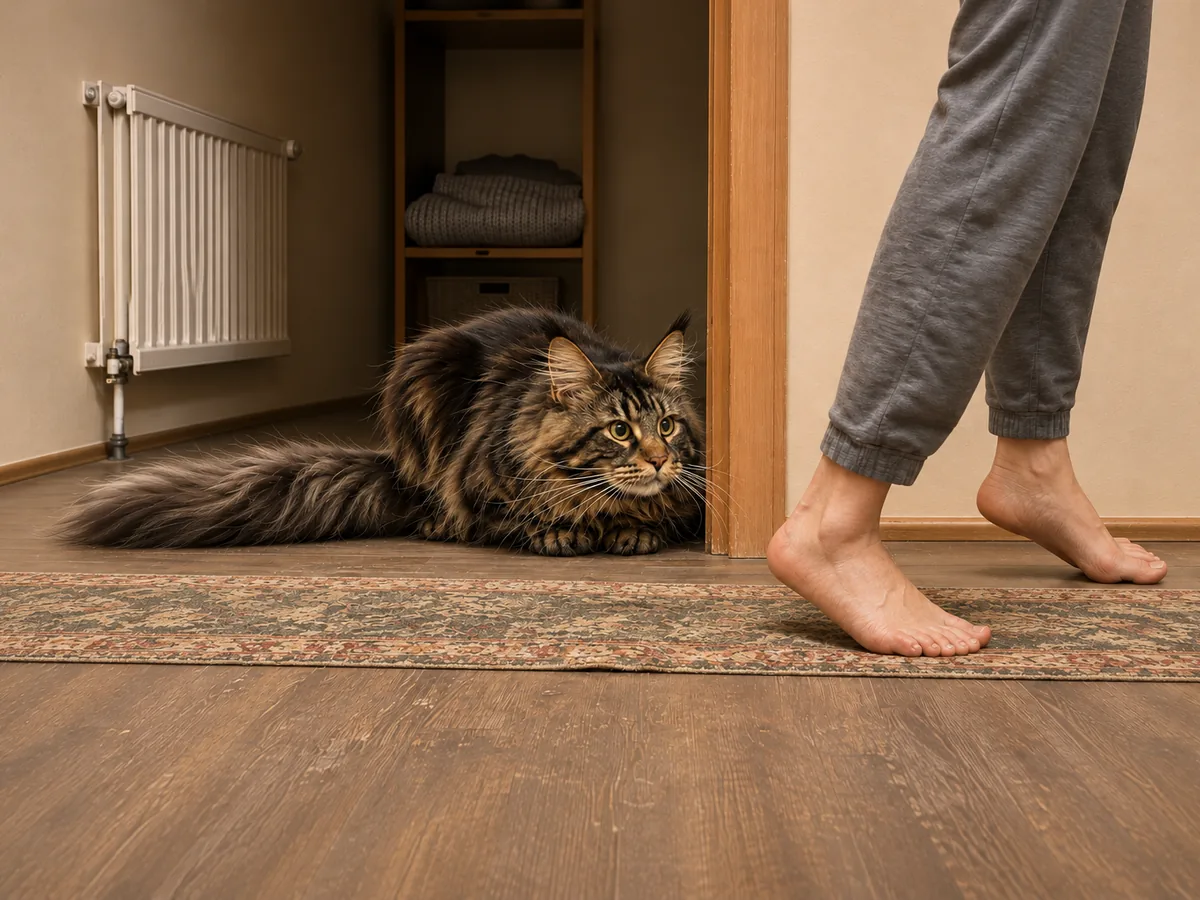
Cornell Feline Health Center says a cat in play aggression will often stalk their target and pounce from a hiding place as it passes by. A fold in the duvet, the end of the mattress and the gap under the bed all work as hiding places. Cornell even suggests blocking off the space under the bed if your cat hides there before pouncing.
Yanking your foot away tends to make it worse. Cats Protection says moving around can excite the cat more, and sudden movements and loud noises make another bite more likely.
Why does my cat bite my feet at night and in the morning?
Because that’s when cats are busiest. Cats Protection says cats are naturally more active at dawn and dusk, kittens and young cats in particular, and that a cat waking you early in the morning is normal cat behaviour. International Cat Care also says cats are naturally more active at certain times of day, often dawn and dusk.
So the hours your feet spend under a blanket are the hours your cat is most ready to hunt. Cats Protection’s answer is plenty of play during the day to use up excess energy. A fishing rod toy should do the trick, it says.
Don’t tell your cat off for it. The same page warns that some medical conditions make cats wake in the night, cry a lot or seem restless and disorientated, and that a cat who wakes you could be trying to tell you they’re unwell.
Does my cat attack my feet when hungry?
Hunger can make the game rougher. International Cat Care describes research in which the hungrier a cat was while playing with an object, the more intense and prolonged the play was. If the worst ambushes come just before breakfast, that’s worth noticing.
Hunting doesn’t wait for hunger, though. International Cat Care says cats will hunt when the chance comes, whether they’re hungry or not, and that a cat with no food from people can make as many as 10 to 20 kills a day. Food alone won’t stop the biting, but timing helps. Cats Protection suggests smaller, more regular meals through the day to stave off hunger, or an automatic feeder set to open in the night or early morning. International Cat Care suggests small, frequent meals through the day and night, closer to how cats eat naturally.
A puzzle feeder left out at bedtime gives your cat something to hunt that isn’t you. Cats Protection lists toys, cat trees and puzzle feeders among the things that keep a cat busy at night.
Why does my cat bite my feet and ankles?
The ankle grab is the same game in daylight. Cats Protection says that if your cat often tries to grab your ankle, goes for a scratch or bites you when they want to play, those could be signs of redirected play aggression. It’s more common in kittens and young cats, but cats of any age do it.
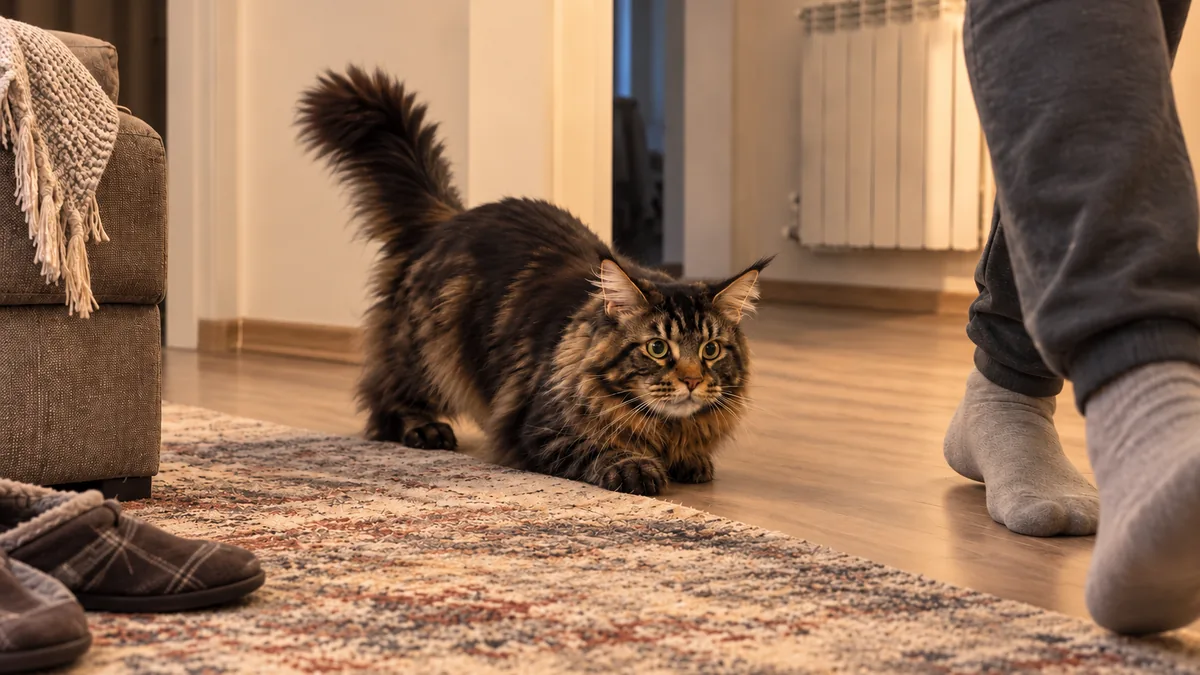
Cornell describes the classic version: the cat stalks from a hiding place and pounces as you pass. At home that might be a doorway or the end of the sofa. There’s a warning just before. The tail thrashes back and forth, the ears are pinned to the top of the head and the pupils go wide. A bell on a breakaway collar, Cornell adds, may help you know where your cat is.
If your cat wraps their front legs around your leg, bites and kicks with the back legs, that’s a hunting move too. Cats Protection says cats grab large prey with their front legs and bite it while ‘bunny kicking’ with their back legs.
Why kittens and young cats bite feet the most
The ASPCA says rough play is common and natural in kittens and young cats under two. It’s believed that young cats learn to hold back their bites by playing with each other, and those who were orphaned or weaned early might never have learned to tone their play down.
Cornell adds that kittens and young cats raised without littermates, or with few chances to play, show play aggression most often.
Then there’s what we teach them. Cats Protection says this kind of biting can come from kittens being encouraged to play with fingers and toes, and a cat who learns to see hands and feet as toys will keep attacking them when older, with much sharper teeth and claws. Battersea says to avoid playing with your hands or feet even when your cat is a kitten and their teeth and claws are fairly harmless, because it can be a hard habit to break.
Why does my cat bite my feet for no reason?
There’s usually a reason. It just isn’t obvious. Cornell’s first step is to look for a pattern in when and where the attacks happen. Write down a few days: the time, the room, what your feet were doing, and when your cat last ate and played.
Boredom is a common one. Cats Protection says biting that is new or growing can be a sign your cat is bored, which often happens with indoor cats, and that with too little play or ‘prey’, a cat may redirect the hunt onto people. The ASPCA adds long hours spent alone with no chance to play.
How to stop your cat biting your feet
In the moment, go still. Cats Protection says to stay as still and calm as possible, because sudden movements and loud noises make another bite more likely. Then take the game away. Cornell says that walking away and ignoring a cat in play aggression may teach them that rough play means no play at all.
Never punish. Cornell warns against physically punishing or even touching a cat at these moments, because it may make them fearful of people. Cats Protection says punishment, shouting included, only encourages more aggressive behaviour.
Then give the hunt somewhere to go before the next ambush. Cornell suggests heading attacks off with play, keeping any toy you use at a distance from your hands, and blocking the places your cat hides before pouncing, such as under the bed.
Give the hunt a proper target
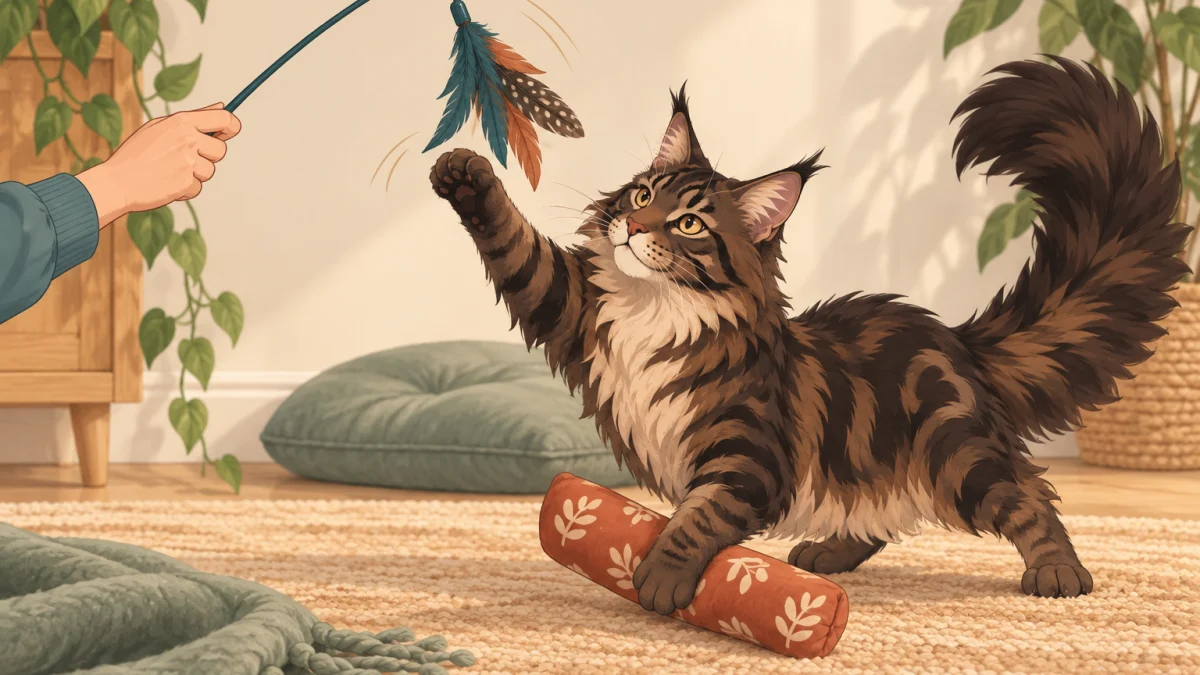
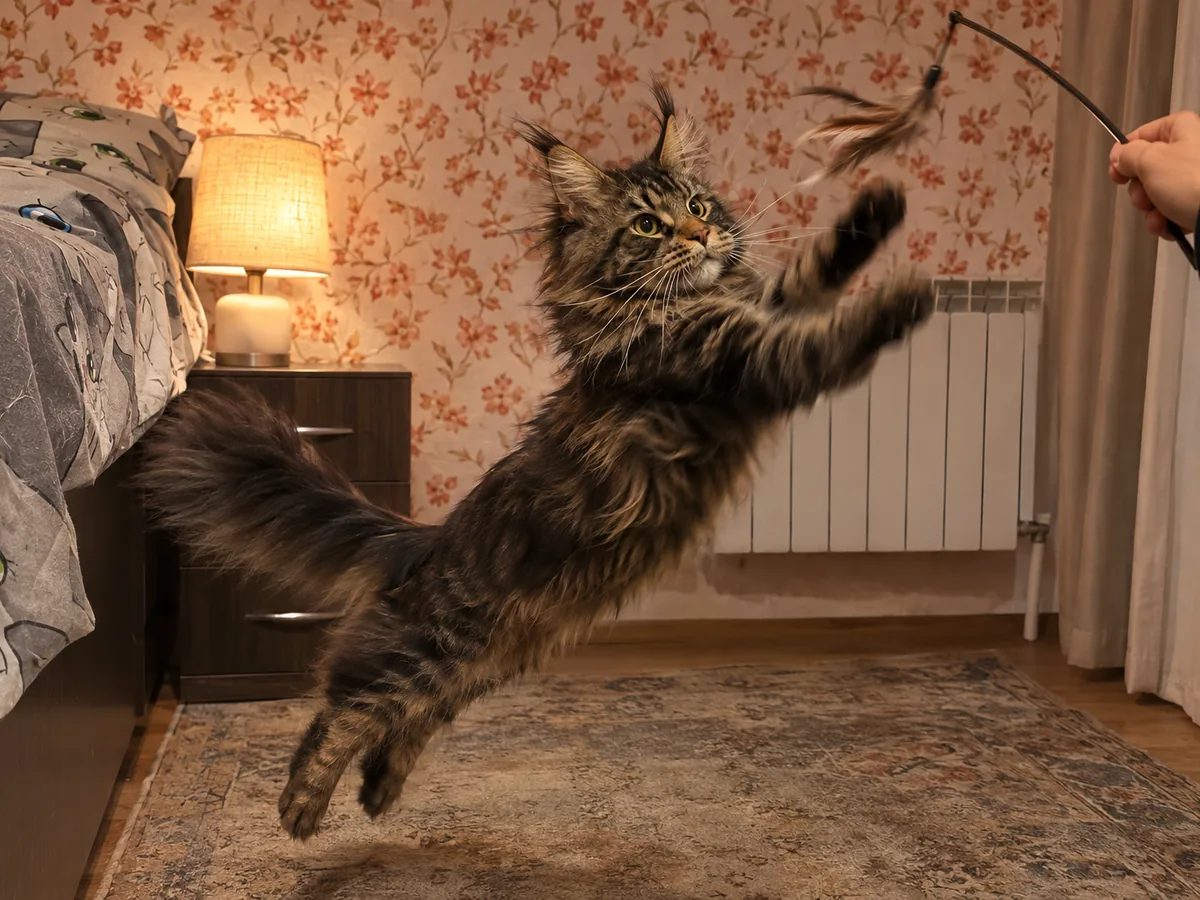
A wand toy keeps the prey away from your skin. International Cat Care says wand or fishing rod toys keep some distance between you and a kitten, which can help prevent accidental scratches or bites. Battersea suggests moving it the way a bird or a mouse would: short, sometimes erratic bursts with pauses in between. Let your cat catch it now and then.
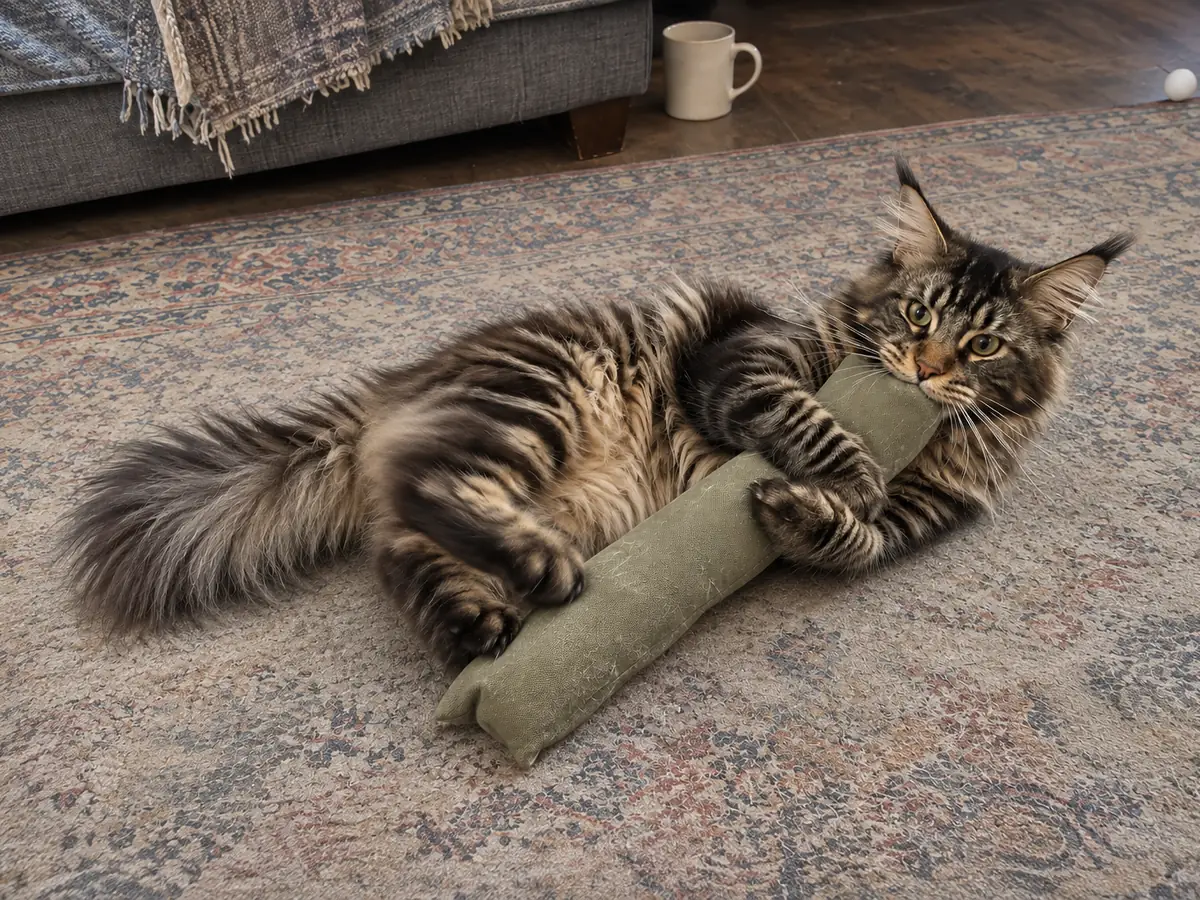
For the cat who grabs and kicks, give them something to grab and kick. Cats Protection recommends a kicker toy they can direct their bunny kicking onto, and says a larger one can work really well for it.
Short and often beats long and rare. International Cat Care says cats are sprinters rather than marathon runners, so one minute of frenzied play is a good result, and short, frequent sessions are closest to how cats hunt. Cats Protection says older cats will play three or four times a day and younger cats 10 times or more, and games of one to two minutes are fine. Put wand toys away afterwards. Battersea warns that a cat may get tangled in string toys left out while you’re not around.
A bedtime routine for a cat who bites feet
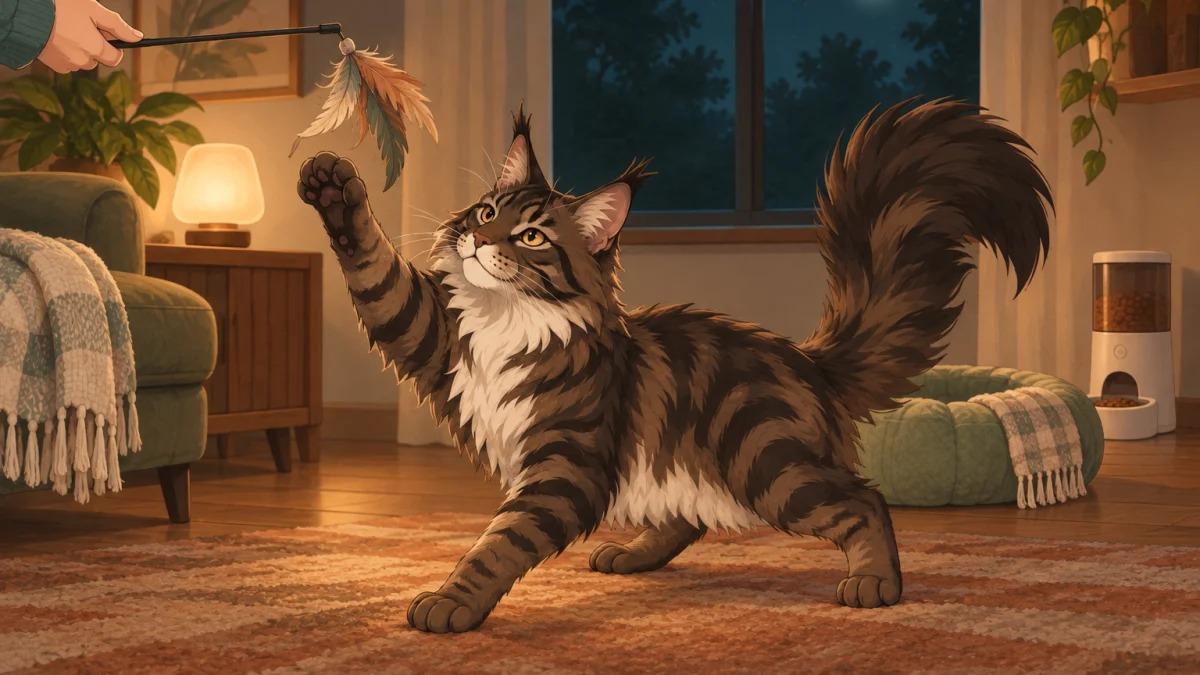
Plan the hunt for the hour before bed. Play with a wand toy, slow the game down towards the end, then give a small meal. International Cat Care’s advice for kittens is to end a game gradually and turn their attention onto something else, such as food, which helps prevent ambushes on people.
If the attacks start from under the bed, block it off for a while, as Cornell suggests, and leave the toys and the puzzle feeder out for the night instead.
If you’d like those evening minutes to teach a trick as well, a Lapka programme plans a short lesson each day and adjusts it after each one.
When to see a vet, and what to do about a bite
If foot biting is new for your cat, start with the vet. Cats Protection says new biting may be a sign of pain, and an adult cat who suddenly shows play aggression should be checked for medical problems. Cornell lists hyperthyroidism, osteoarthritis, dental disease and central nervous system problems among the diseases that may cause aggression. If your vet finds nothing, ask about a qualified cat behaviourist.
Take a bite seriously even when it was play. Cats Protection says to clean the area straight away, for at least five minutes with soap and water, whether the skin is broken or not, and to seek medical advice at once if a bite or scratch broke the skin or made it bleed. Even when a scratch leaves the skin unbroken, fever, headaches, local swelling, redness and pain soon afterwards mean urgent medical advice.
A week of notes on foot attacks
Mon, 5:40: pounces on my toes under the duvet. I pull my foot away and get two more bites. Breakfast is at 7.
Tue: ten minutes with the wand toy at 22:30, then a small meal. Quiet until 6:15.
Thu, 5:50: one pounce. I lie still, and the cat jumps down and goes to the puzzle feeder.
Notes like these show when the attacks happen and what came before them. Here they line up with the wait for breakfast and with evenings without play.
Questions people ask
What does it mean when a cat bites your feet?
Usually it’s play: hunting moves aimed at your feet. Cats Protection says a cat without proper prey to hunt, such as cat toys, may pounce on you instead. If the biting is new for your cat, it can be a sign of pain, so see your vet.
Why does my cat bite my feet and not my partner’s?
Cats Protection gives a few reasons a cat goes for one person more. That person may have encouraged play with fingers and toes, may react more when bitten (moving around excites the cat), may fidget a lot with their fingers and toes, or may simply be around and interacting with the cat more. Sometimes the cat is fearful of that person, for example someone new in the home.
Is it OK to play with my cat using my feet?
No. International Cat Care says never to use your hands or feet to play with a kitten, and Battersea says to avoid it even while teeth and claws are small, because it can be a hard habit to break. Use a wand toy or a kicker toy instead.
Will my cat grow out of biting feet?
Don’t count on it. The ASPCA says rough play is common in cats under two, but Cats Protection warns that a cat who learns to see feet as toys will keep attacking them when older, with much sharper teeth and claws. So give the game a toy now rather than waiting.
How do I stop my cat biting my feet at night?
Play with a wand toy in the evening, end the game slowly and follow it with a small meal. Leave a puzzle feeder or toys out for the night, and think about an automatic feeder for the early hours. When a pounce comes, keep still instead of kicking, and never punish. If the night-time biting is new, see your vet first.
Sources and further reading
- Cats Protection — Why does my cat bite me?
- Cats Protection — Cats and play
- Cats Protection — Cats at night
- Cats Protection — Why does my cat attack me?
- Cornell Feline Health Center — Feline behavior problems: aggression
- ASPCA — Aggression in cats
- International Cat Care — Playing with your cat
- International Cat Care — Understanding the hunting behaviour of cats
- Battersea — Playing with your cat