Lapka
The short answer
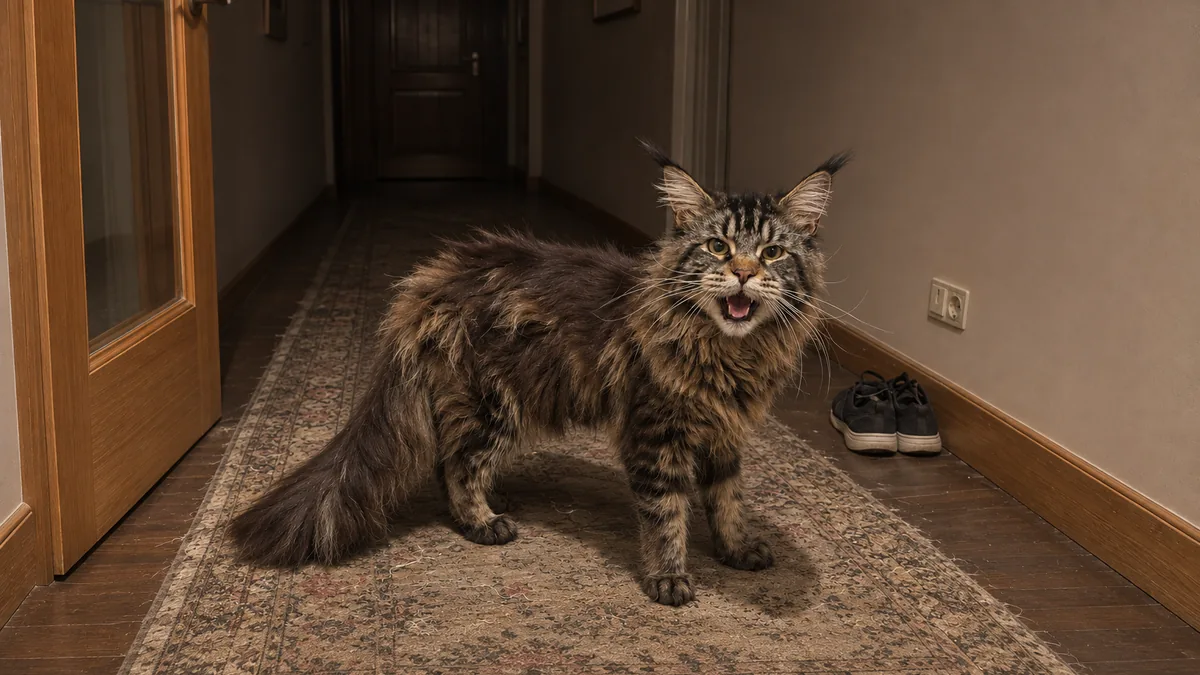
An old cat yowling at night is often confused, losing their hearing or sight, in pain, hungry, or unsettled when the house goes dark and everyone is asleep. Illnesses common in older cats, such as an overactive thyroid, high blood pressure and kidney disease, can cause it too. So start with a vet check, then help at home: the same routine every day, gentle play in the evening and a night light.
Why is my old cat yowling at night?
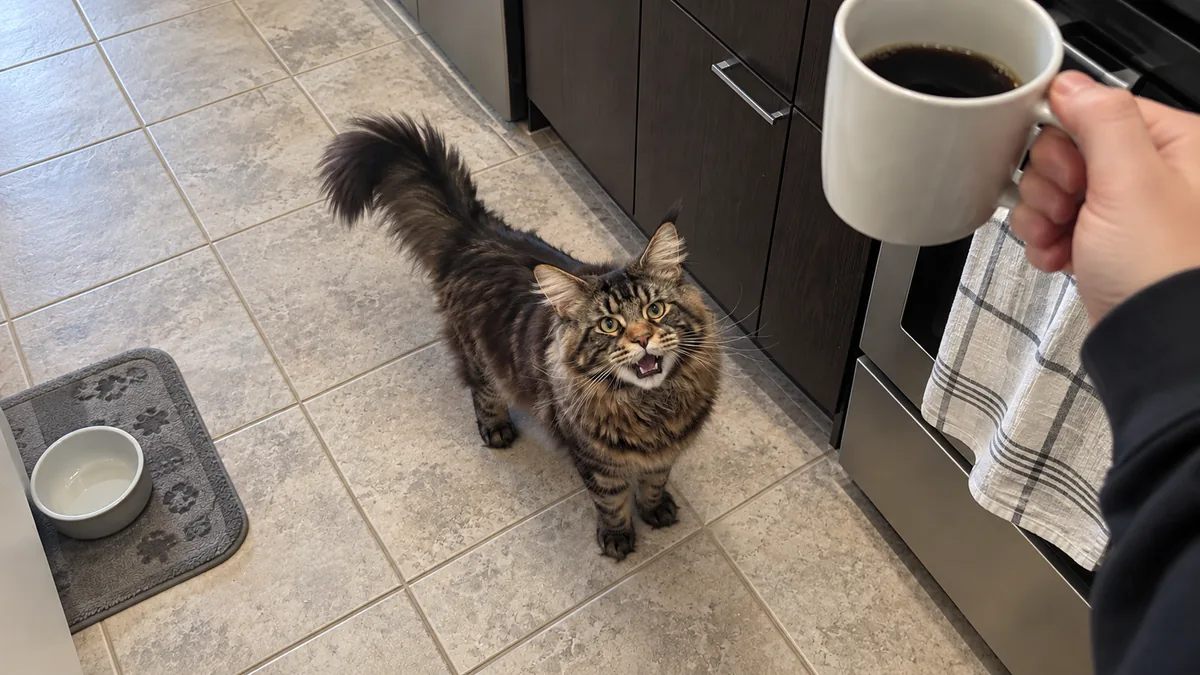
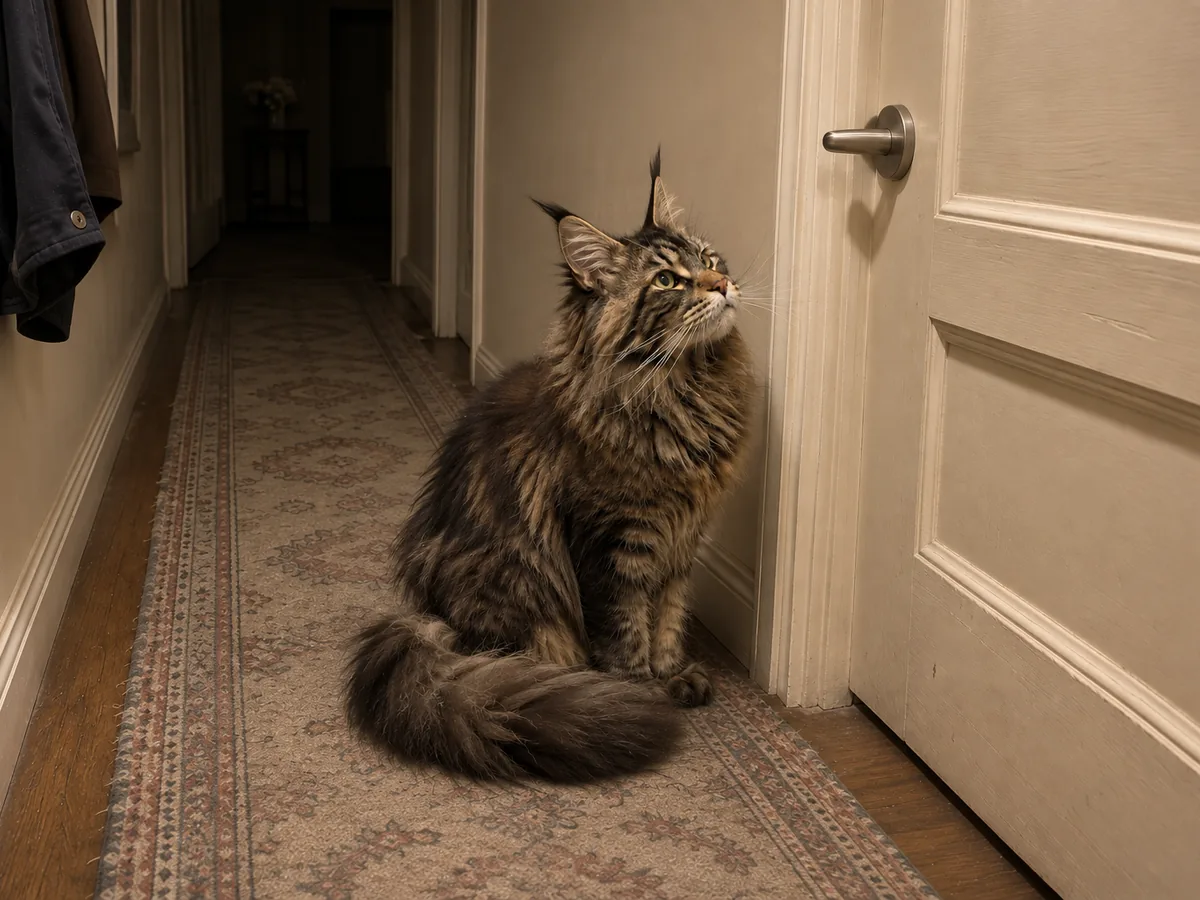
An older cat who has started yowling at night is telling you something has changed. Among the reasons, the ASPCA names disorientation, hearing loss and pain. Older cats can also get anxious at night, it says, about being apart from the family while everyone is asleep, or about finding their way around the house in the dark.
Cornell Feline Health Center lists loud yowling, often in the middle of the night, among the signs of cognitive dysfunction, and says these signs tend to become clearly noticeable from 10 years of age. Several illnesses of old age can cause it too, so whatever the reason turns out to be, the first step is the same: a vet check.
Confusion: dementia in older cats
Cats can get a form of dementia, which vets call cognitive dysfunction. The ASPCA estimates it affects more than 55% of cats aged 11 to 15 years and more than 80% of cats aged 16 to 20 years, and that disorientation shows in at least 40% of cats aged 17 and older.
International Cat Care lists what it can look like: getting stuck in corners, forgetting they’ve just been fed, being awake when they’d normally sleep and asleep when they’d normally be awake, toileting in the house, grooming less, wandering or pacing, and loud crying that can be disruptive at night. PDSA says pets with dementia can be more vocal than usual, often for no clear reason and usually at night.
Only your vet can say whether it’s dementia, and only once other conditions with similar signs have been ruled out.
Hearing and eyesight that are failing
Hearing loss is common in cats of advanced age, Cornell says, and the ASPCA names it among the reasons older cats yowl. Poorer hearing or eyesight can also change how deeply your cat sleeps.
Watch the eyes too. Cornell says diseases linked to high blood pressure can seriously and irreversibly harm a cat’s sight, and that blindness can lead to anxiety and confusion.
If your cat no longer seems to hear you, tell your vet. Cornell lists apparent deafness among the signs worth reporting.
Pain: sore joints and teeth
Cats Protection says excessive crying at night could be a sign that your cat is in pain. In an older cat, one possible cause is arthritis, which Cornell calls common in older cats. Most arthritic cats don’t openly limp, it adds.
Battersea lists the signs of pain: frequent unpleasant or urgent-sounding meowing or groaning, hiding away, eating less, crouching and hunching, and no longer jumping onto beds or other high places. Long-standing pain from dental disease or arthritis may show very little, so a cat can be sore without looking it.
If you think your cat may be in pain, Battersea says to have them seen by your vet as soon as possible.
Thyroid, blood pressure and kidneys
Some illnesses that are common in old age make cats noisy. Cornell says night-time yowling is relatively common in cats with an overactive thyroid or high blood pressure. The ASPCA says older cats are prone to an overactive thyroid and kidney disease, and either one may lead to excessive meowing.
An overactive thyroid mostly affects middle-aged and older cats. Cornell says the most common signs are weight loss, a bigger appetite, and more drinking and peeing, and it can also cause vomiting, diarrhoea and hyperactivity. With the right treatment, the outlook is generally good.
International Cat Care makes the same point about high blood pressure: it can be treated. That’s why an old cat who starts yowling is worth a vet visit, even when it looks like age.
Senior cat yowling after eating
A cat who yowls for food soon after a meal may have lost track of it. International Cat Care lists forgetting they’ve just been fed among the signs of cognitive dysfunction.
The hunger can be real too. The ASPCA says many diseases can make cats unusually hungry or thirsty, and Cornell lists a bigger appetite and weight loss as the most common signs of an overactive thyroid. If your cat is eating more and getting thinner, see your vet.
At home, feed at the same times every day. Cats Protection says a steady feeding routine means your cat doesn’t need to remind you, and if they’ve had their daily food and are still crying, to try a game instead. International Cat Care says a timed feeder can help with a cat who asks for food in the early morning.
Elderly cat yowling when alone at night
Some old cats start crying once the house goes quiet. The ASPCA says the night-time anxiety of older cats may come from being apart from family members who are asleep, or from finding the way around the house in the dark. Anxious yowling is usually a plaintive meow.
Your cat may wake you by calling, pacing in your room, purring by your head or pawing at you, the ASPCA says.
If your cat yowls in the daytime too, look at when they sleep. International Cat Care describes a cat who is awake when they’d normally be sleeping, and the other way round, as one of the signs of cognitive dysfunction.
If your cat is younger, or yowls mainly when it gets them fed or played with, the guide on why a cat keeps meowing is the better read.
What helps an old cat yowling all night
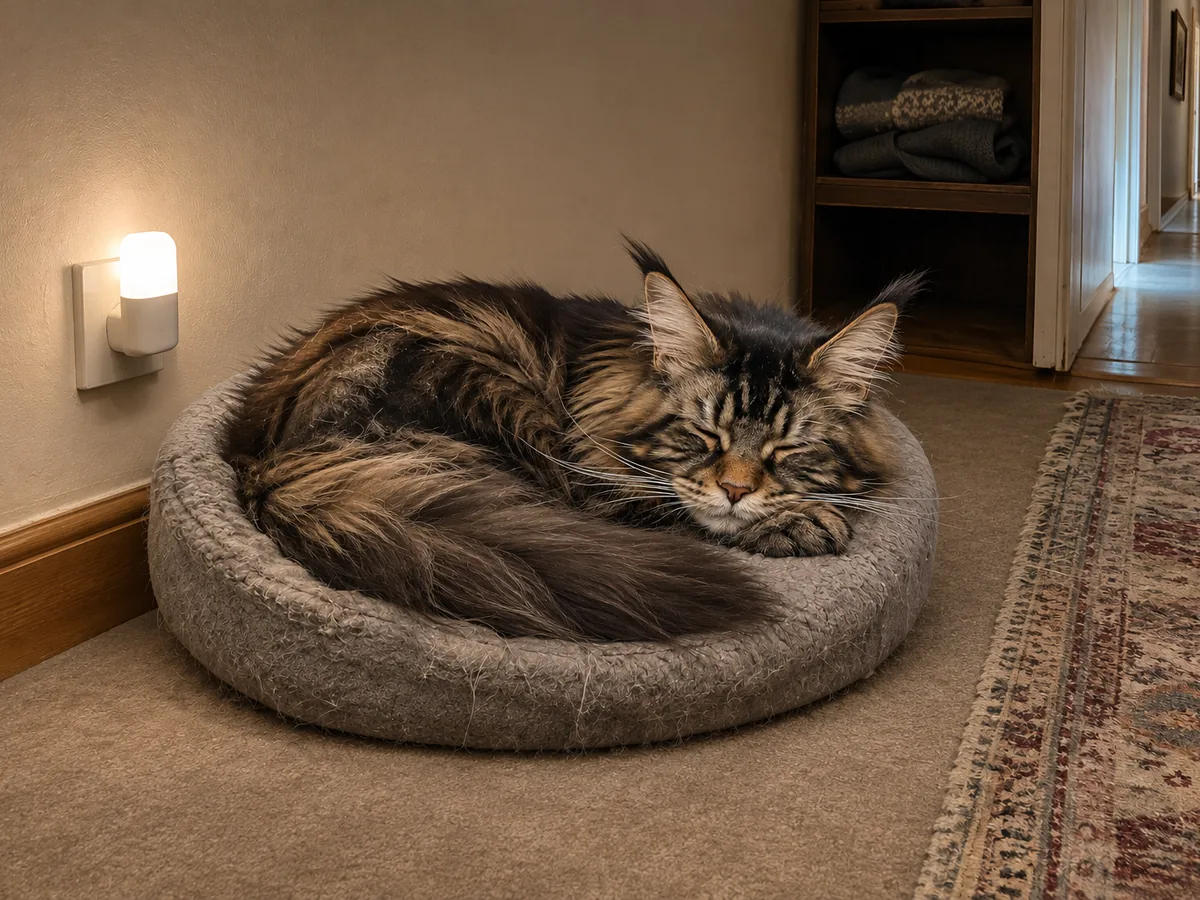
Make the night easier to get through. International Cat Care suggests a night light to help with finding the way and with confusion overnight, several comfortable beds in places that are easy to reach, and a heated bed for extra comfort.
Keep food, water and the litter tray easy to reach. International Cat Care says not to put bowls on high surfaces, and suggests large litter trays with low sides. If stairs have become hard, Cornell suggests ramps.
Keep the days the same. The ASPCA says a predictable home and schedule may reduce disorientation, and advises against changing your cat’s food, where it goes, the litter, or where the tray sits. International Cat Care says to make any change gradually, and that bringing home a new cat or dog can be very stressful for a senior cat.
Gentle play in the evening
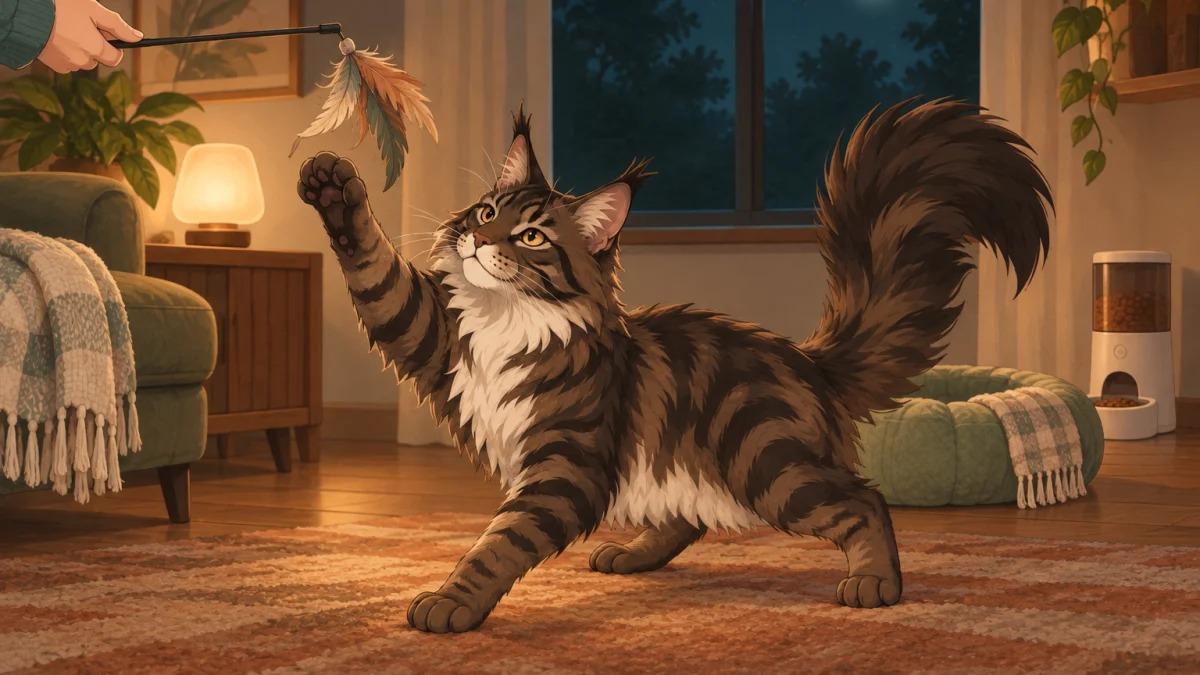
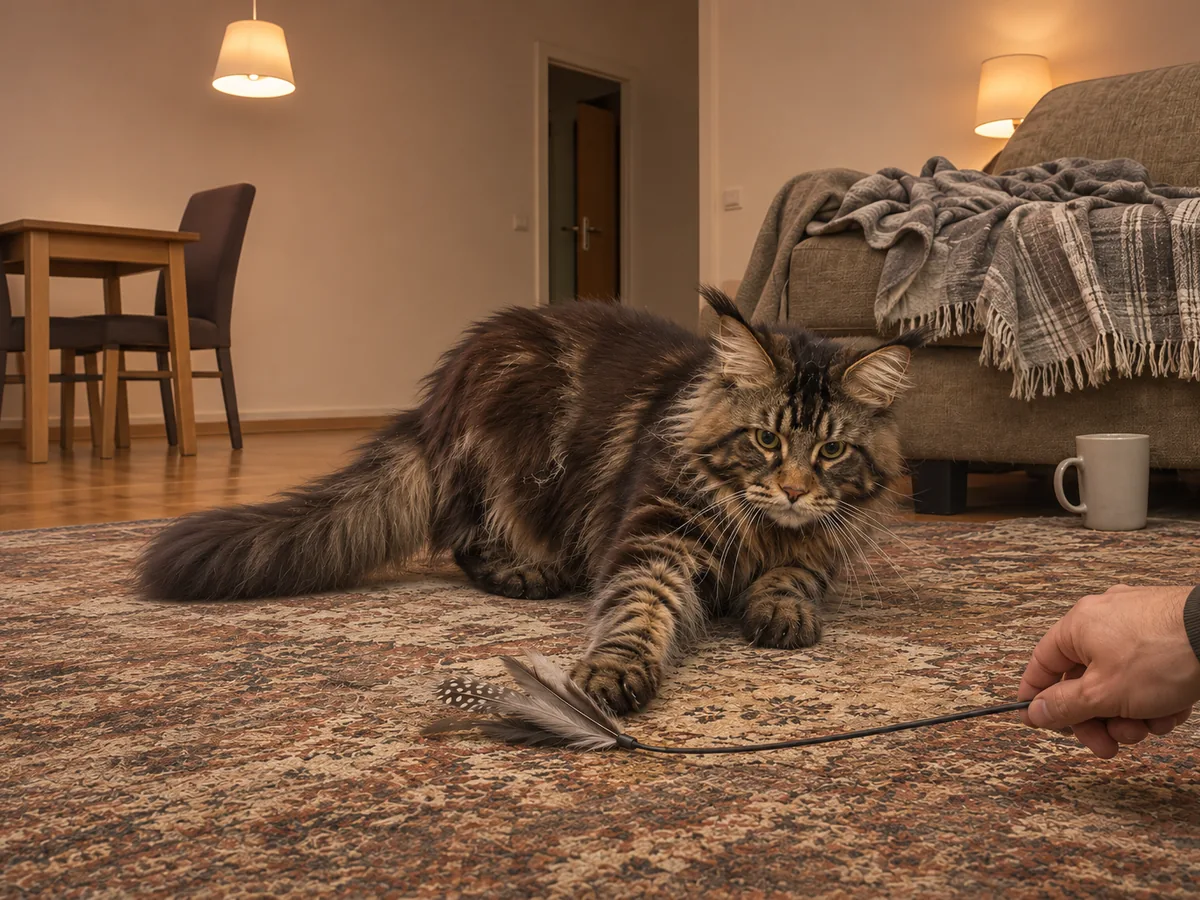
A cat who has been busy in the evening is more likely to sleep at night. The ASPCA suggests playing during the day and in the evening to raise an older cat’s activity, so they sleep at night.
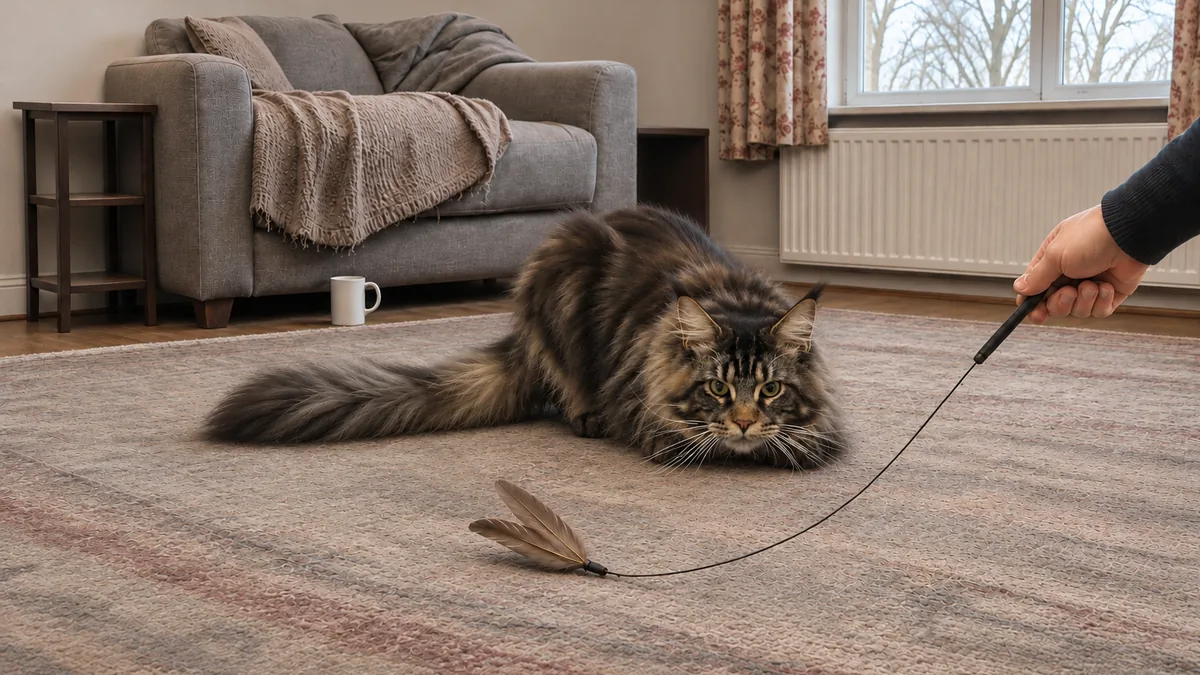
Keep it short and gentle. International Cat Care reminds owners that older cats often have sore joints. Drag a toy slowly along the floor instead of up in the air, so there’s no jumping, and stop while your cat is still interested.
If you’d like the evening game to become a short daily habit, a Lapka programme can plan the sessions and adjust them after each one.
Don’t scold, and don’t ignore
Shouting won’t help. The ASPCA says showing your frustration or punishing your cat for yowling can raise their anxiety and make the problem worse.
Ignoring an old cat is risky too. Unless you know for certain your cat is yowling to get something, the ASPCA says it’s safest to assume something is wrong. Check they can reach the litter tray, that the water bowl isn’t empty, and that they aren’t shut in somewhere.
If your cat is very distressed, the ASPCA suggests keeping them to a smaller space, such as one floor of the house, or one room in advanced cases.
When to see the vet
Book a vet visit as soon as an older cat starts yowling, and don’t put it down to age. The ASPCA says an elderly cat who has just started meowing a lot should be checked for medical conditions, sensory loss and cognitive dysfunction, and that a variety of treatments can help.
Go sooner if the yowling comes with other changes. Cornell’s list of signs to tell your vet about includes weight loss, drinking or peeing more, painful peeing, not using the litter tray consistently, collapsing or seizures, and fast breathing of more than 35 breaths per minute.
Your vet may suggest medicine or pheromone products for anxiety; the ASPCA says both may help. Write down when the yowling happens and what else has changed, and take the notes with you.
What a week of notes can look like
Mon, 2:40: yowling in the hallway for about ten minutes, again at 4:15. Ate breakfast fast and asked for more.
Wed: night light on in the hallway. One yowl at 3:00, quiet once I called from bed.
Sat: drinking more than usual, and a little lighter on the kitchen scales. Booked the vet.
Notes like these show your vet when the yowling happens and what comes with it. Here the hunger and the drinking matter as much as the noise.
Questions people ask
Why is my old cat yowling for no reason?
There’s usually a reason, even when you can’t see it. PDSA says pets with dementia can be more vocal than usual, often for no clear reason and usually at night. Hearing loss, pain or an overactive thyroid can be behind it too. A vet check is how you find out which it is.
Is it normal for an older cat to yowl a lot?
It’s common, but it isn’t something to put down to age. International Cat Care says senior cats may become more vocal, and lists uncharacteristic behaviour, such as excessive vocalisation, among the changes to book a vet appointment for.
Why is my senior cat yowling all the time?
Yowling day and night can come from a sleep pattern that has turned around, which International Cat Care lists among the signs of cognitive dysfunction. It can also come from pain or an illness such as an overactive thyroid, so start with your vet.
How old is a senior cat?
International Cat Care calls a cat mature once they reach 7 years, senior between 11 and 14, and super senior from 15. Cornell says many cats begin to show age-related physical changes between seven and ten years of age.
Can dementia in cats be treated?
It can’t be cured, International Cat Care says, but its signs can be reduced with the right care, and your vet can help you manage it. The ASPCA says the anxiety that comes with it can improve with medicine, and International Cat Care lists changes at home: a steady routine, a night light, and beds and litter trays that are easy to reach. Some conditions that look like dementia, such as high blood pressure, can be treated, which is one more reason to start with the vet.
Sources and further reading
- ASPCA — Behavior problems in older cats
- ASPCA — Meowing and yowling
- Cornell Feline Health Center — Cognitive dysfunction
- Cornell Feline Health Center — The special needs of the senior cat
- Cornell Feline Health Center — Hyperthyroidism in cats
- International Cat Care — Cognitive dysfunction syndrome (senility, dementia) in cats
- International Cat Care — Special considerations for senior cats
- Cats Protection — Why do cats cry?
- Battersea — How do I tell if my cat is in pain?
- PDSA — Dementia in pets